“Serious fiction is a dream which can become a nightmare.” (Brian Moore)

Thank you to everyone who left kind comments last week. Covid is dragging on with me but I do seem to be slowly improving – it’s not been great, despite my being tripled vaxxed (and very careful). I sincerely hope you all stay safe and well. Here is my second contribution to Reading Ireland Month 2022 aka The Begorrathon, hosted by Cathy at 746 Books. Do join in with the event if you can!

My choice this week was inspired by the Brian Moore at 100 readalong which Cathy also hosted throughout last year. I really wanted to join in, but my reading was pitiful. It’s not massively improved now to be honest, but it has improved enough that I was finally able to pick up this lovely hardback edition out of the TBR pile:

The only other Brian Moore I’ve read was The Colour of Blood, which I didn’t massively get on with. I didn’t dislike it, and I could tell it was really well written, but I just didn’t connect with it. All the Brian Moore love during last year’s event persuaded me to give him another try and I’m so glad I did. I Am Mary Dunne (1968) was an expertly written, engaging read and a complex character portrait.

We spend a day with the titular 32-year-old narrator, and it’s a bad day she’s having. A receptionist at her hairdressers asks for her name and she finds it escapes her. This sends her into a spiral of anxiety and reminiscences.

“When people say they remember everything that happened in their lives, they’re deceiving themselves. I mean if I were to try and tell anyone the story of my life so far, wouldn’t it come out as fragmentary and faded as those old snapshot albums, scrapbooks, and bundles of letters everyone keeps in some bottom drawer or other?”

She has been married three times, changing her name each time. With each of her husbands, escape seems to be motivating factor driving the marriage. She marries Jimmy in order to leave Canada and escape her home; she marries Hat to escape Jimmy; and she marries Tee because she wants to escape Hat, although with her third husband she also finds love and sexual satisfaction.

The narrative is fragmented, flicking back and forth between her past and present. We gradually piece together her life but Mary remains somewhat unknowable. Her husbands and her friend Janice – with whom she rows in restaurant – are more fully realised.  It’s a really clever piece of writing by Moore, where as readers we don’t get to know Mary despite the first-person narrative, because she doesn’t know herself.

“ ‘You’re an ingenue type.’ It was my acting epitaph, although I did not know it at the time. And in real life it’s no different. I play an ingenue role, with special shadings demanded by each suitor.”

Mary is attractive and Moore demonstrates how her physicality means people project their fantasies on to her. Because Mary is so obscure to herself, she easily gets lost in other people’s versions of her. She believes her first husband when he calls her insatiable, and she believes her second husband when he says she is a cold virgin. She accepts an older woman with a crush calling her Maria and attempting a Pygmalion scenario, and a full obliteration of her name through her third marriage “I am introduced to everyone as Mrs Terence Lavery”.

But Mary is not wholly sympathetic. She doesn’t always behave well, or kindly. She uses derogatory terms that I’m pretty sure would have been outdated and offensive in 1968. She sheds friends like she sheds identities. She changes people’s names too: Jimmy, Hat, and Tee are her husbands’ abbreviated names; the older Miss MacIver becomes Mackie. A man with a long-standing crush is amazed she doesn’t remember a nickname she gave him.

Mary refers frequently to an evil twin throughout the day, the part of her that behaves badly which she attributes to PMS. She says things she doesn’t mean and shakes uncontrollably. Part of the ambiguity around Mary is that by the end of the novel, I didn’t know if she was having a really bad day compounded by PMS (or PMDD); or whether she was seriously unwell. I did enjoy this bitchy thought that popped into her head about the portraits in her husband’s study:

“When I think of it, the arrogance of a man who could do the trivial work he does under the scrutiny of the likes of Tolstoy and Yeats. Proust gave up a world for his work. Terence wouldn’t even give up a party.”

I Am Mary Dunne sees the narrator having an existential crisis, fearing obliteration without any idea of who is being obliterated.

“I am beginning to die because some future me cannot keep me in mind.”

Yet I didn’t feel particularly hopeful by the end that the assertion in the novel’s title was any further realised than at the start of the story. It wasn’t a depressing tale, but Mary still seemed to have no idea of who she was. It was one of those stories that left me wondering what happened the next day, after the novel finished…

“I am no longer Mary Dunne, or Mary Phelan, or Mary Bell, or even Mary Lavery. I am a changeling who has changed too often and there are moments when I cannot find my way back.”

To end, a song about shifting identities by a master of reinvention:

“Idleness is an appendix to nobility.” (Robert Burton)

A little while ago I saw an epidemiologist on tv saying that eventually everyone will have had covid. And I thought, ‘no thank you all the same’, and carried on distancing as far as I could and wearing a mask. You can guess what’s happened, Reader. This post is brought to you from my covid-addled brain, apologies in advance if it’s even more waffly and incoherent than usual…

This is a contribution to Reading Ireland Month 2022 aka The Begorrathon, hosted by Cathy at 746 Books. It’s a great event so do join in if you can!

I’ve chosen two late novels by Molly Keane for this post and I really enjoyed revisiting this author who isn’t like anyone else. Her evocation of moneyed families in early twentieth-century Ireland is so deeply strange and disturbing, I always feel a sense of trepidation opening one of her stories…

Good Behaviour was published in 1981, when Keane had not published a novel for 29 years and nothing at all since the play Dazzling Prospect 20 years earlier. It was a huge success and shortlisted for the Booker Prize. It is a blistering, dark comedy of manners, perfectly paced and sharply observed.

It begins:

“Rose smelt the air, considering what she smelt; a miasma of unspoken criticism and disparagement fogged the air between us.”

I knew from that line that I’d love Good Behaviour, and now having finished the novel I can say it sets up the story and themes brilliantly: the domestic setting, sense of things rotting, the odd power dynamics, the uneasy roles, the undercurrents of anger.

Someone dies early on, in a way that leaves the reader uncertain as to how far they were nudged towards it, and this sense of not quite trusting that we are being given the full story continues as we are taken back in time by Aroon St Charles, daughter of an aristocratic family living in Temple Alice, a decaying pile, with her indifferent mother and philandering father.

“Behind him the green luminous gloom of glass within glass retreated inside the doors of a breakfront cabinet that filled one end of the dining room. Mummie had lined it with grey linen, so that all the glass objects floated and were lost in its spaces. It was like water or air at his back, as though the end wall were open to air or water. The austere outdoor look I knew had melted from him into the air, like the glass in the cupboard. Sitting there, he seemed extraordinarily dulled, dulled and happy.”

The novel is Aroon describing her childhood and early adulthood amongst the trappings of her class in 1920s Ireland. This being Keane, of course there is hunting and horses, but aside from a few pages where I thought the litany of dead animals was never going to end, it wasn’t too bad for squeamish readers such as myself.

Aroon does not fit in: she is not her adored brother Hubert; she is not physically adept; she is not charming and witty; and she is not beautiful. She enjoys food and is tall, in a time where women were expected to be flat-chested and dainty. She is not rich and so no men are interested in her. Her father likes her but is absent in various different ways throughout her life; her mother is at best indifferent to her but often mentally abusive.

“I turned away, my loneliness walking with me, taller than my own height as a shadow is tall – and irremediable as my height was.”

Aroon is a complex creation. At times I felt she couldn’t possibly be as naïve as her narration would have us believe. Did she really think the housekeeper was rubbing her father’s missing leg under the bedclothes to relieve phantom pain? Does she really not realise her brother is gay and his best friend is his lover? Does she really think she is concussed rather than completely sloshed? This isn’t me viewing it with twenty-first century eyes; other characters are perfectly aware of her father’s behaviour, the full extent of the housekeeper’s role, and her brother’s sexuality. They try to tell her but she doesn’t hear it and blunders on regardless.

Whether or not Aroon is an unreliable narrator or just hopelessly naïve, this characterisation is a master-stroke by Keane in balancing out the pitch black comedy of Good Behaviour. Aroon’s voice is so credulous, the novel written with such a light touch, that it means you whizz through the story without becoming hopelessly depressed at how grim Aroon’s situation is or how deeply unpleasant many of the people are. Good Behaviour is both eminently readable and deeply disturbing.

Queen Lear (also known as Loving and Giving, which I tell you so you don’t make the same mistake as me and end up blissfully unaware that you own two copies of the same novel) was published in 1988. Like Good Behaviour it features a female protagonist, Nicandra (named after her father’s favourite horse “the first Nicandra”), daughter of gentry, lonely and unhappy.

The story opens with eight-year-old Nicandra doing a round of the enormous home she lives in, visiting her parents and servants, barely tolerated by all. Again, the opening is lovely piece of scene-setting, telling the reader all we need to know about the characters and setting.

Nicandra’s mother is glamorous and engaging, and entirely uninterested in her daughter:

“When she was absent, the shadow of her presence was the assurance of a world of love. To earn her displeasure was to forgo all delight; through the days Nicandra devised love tokens, as much to stimulate interest towards herself as to express her deep affection.”

In one particularly unpleasant scene, Maman ties Nicandra to a chair, not to be released until she eats the cold spinach she hates. Her Aunt Tossie rescues her, much to Nicandra’s dismay, who was trying to psych herself up to eating the spinach and making this sacrifice for her mother.

In a novel full of selfish, unpleasant people, Aunt Tossie was the nearest I got to actually liking someone:

“She enjoyed nearly everything, even widow’s weeds, as her married life had not been as exciting as she might have wished”

That day, her mother runs off with one of the servants. She doesn’t say goodbye to her child, and no-one explains to Nicandra what has happened.

“Whatever it was that had come over her family today, Nicandra could not guess at. She had done her utmost to excite, please, soothe, serve; yet everything had gone awry. Pigeons, butterfly, bantams, Maman, Aunt Tossie – she had given her all to each, only Dada was left.”

From these inauspicious beginnings, the novel jumps forward to Nicandra as a young woman in the interwar years. Unsurprisingly, she has grown up naïve and desperate for love. She remains almost wilfully blind to everyone else’s relentless self-focus, to the extent where it’s hard to feel for her. She seems so determinedly oblivious as to be as self-obsessed as everyone else.  

There are also repeated references to her childhood bullying of Silly-Willie, a child on the estate who initially seems to have learning difficulties, expressed in the derogatory terms of the 1920s/1930s. Despite these prejudices, he grows up to essentially run the entire estate – albeit in a dilapidated condition due to Dada racing through money. Nicandra struggles with this arrangement as “a little incident” between them, buried in the past, is something she feels extremely uncomfortable about.

Nicandra of course falls for the first charming bounder to show her any interest, desperately seeking his love as she once did her mother’s, with about the same level of reciprocity.

“Although in manners bound, he held and played with her hand for the rest of the drive home, he felt he could have done instead with a nice talk about hunting.”

With very little else to occupy her, Nicandra marries Andrew. He enjoys her beauty and money, as well as an affair with her best friend Lal (this isn’t really a spoiler as the prospect is introduced almost simultaneously with the awful characters).

There are some very nasty elements for a novel titled Loving and Giving:  the bullying, and Andrew’s crass and cruel suggestion of how Nicandra should procure money from her family for an abortion (that she doesn’t want) “say it’s to drain the West Bog”. Repulsive.

What stops Loving and Giving from being absolutely relentlessly bleak in its portrayal of “cheap and amusing” lives where “tragedy gets tidied away” is the humour. We aren’t supposed to take these characters particularly seriously, or think that they are admirable or lead remotely useful lives. I particularly liked this pithy comment on the butler’s behaviour:

“the slight upwards twist he gave to the bottle took the place of the wry smile he would never allow himself to give”

And this observation on family politics:

“Properly speaking, Aunt Tossie should have presented Nicandra at court, which she would have greatly enjoyed doing. Dada, however, raised every obstacle and objection he could think of to baulk this plan because, as he put it, (only to himself), the dear old girl might feel her oats and something unfortunate could happen.”

Molly Keane is pretty blistering in her characterisation of the upper classes and in portraying the lives they live. Her novels are almost Gothic – certainly there are ruined buildings, hauntings from the past, almost ghoulish characters – but no supernatural elements. I enjoy her original phrasing and sharp observation, I even enjoy her awful characters (some of them anyway) when I’m in the right mood. I do find I need a palate cleanser afterwards though!

To end, a song about a family house, albeit a very different one to the those which Keane’s characters live in, and which provided the title of last week’s post:

“Sometimes me think, ‘What is friend?’ Then me say, ‘Friend is someone to share the last cookie with.’” (Cookie Monster)

This is a contribution to the wonderful #ReadIndies2 events hosted by Kaggsy and Lizzy.

The two books for this post were buried in my TBR, so I’ve put them together as they are linked by the theme of friendship.

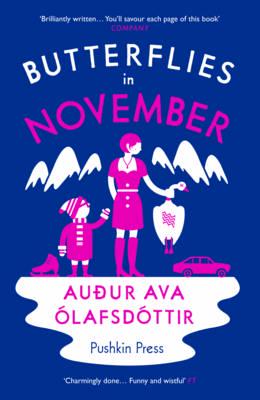
Firstly, Butterflies in November by Auður Ava Ólafsdóttir (2004 trans. Brian FitzGibbon 2013) published by Pushkin Press (which I thought was an indie, then panicked that it had been bought by Penguin, but which Lizzy has helpfully reassured me is definitely an indie!)

I really enjoyed Miss Iceland by this author so I was looking forward to this. Like Miss Iceland, this novel has a central female protagonist whose voice is bone dry, determinedly going her own way.

At the start of the novel, the unnamed narrator returns home to her husband after a meeting with her lover, one of her translation clients as she speaks 11 languages. She doesn’t seem especially attached to either man:

“After we had slept together for the first time, he looked surprised when I handed him the bill with the VAT clearly highlighted.”

Her husband announces he is leaving, to be with his pregnant girlfriend. This doesn’t seem like any great loss, given that as he’s going, he details her failure to live up to his ideals of womanhood:

“‘The amount of times I’ve prayed to God to ask him to make you buy a skirt suit.’

‘Wouldn’t it have been simpler just to ask me?’”

She moves to a new apartment but her wet blanket husband keeps turning up, so she starts daydreaming of foreign travel somewhere warm. However, her best friend Auður is pregnant with twins, and needs to stay in hospital for the late stages of the pregnancy. This means she finds herself driving round the Icelandic ring road which circles the whole island, with Auður’s son Tumi:

“a deaf four-year-old clairvoyant boy with poor eyesight and one leg three centimetres shorter than the other, which makes him limp when he is only wearing his socks.” 

There seems little worry that Tumi will miss any education, as his teacher demonstrates ableism, gender stereotyping and racism, all within a remarkably short conversation.

The plan is to travel east to a prefab cottage that she won in a lottery for the Association for the Deaf. This involves her returning homewards, and we get glimpses of her past which may explain some of her detachment, although things are never fully explained.

What follows is a road trip story – funded by her and Tumi winning another lottery, which they split 50/50 –  whereby the two meet a variety of characters. My personal favourite was the Estonian choir who kept turning up. There are also some lovers, as predicted by a clairvoyant at the start of the novel:

“three men in your life over a distance of 300 kilometres, three dead animals, three minor accidents or mishaps, although you aren’t necessarily directly involved in them, animals will be maimed, but the men and women will survive. However, it is clear three animals will die before you meet the man of your life.”

The animals: suffice to say there were passages I had to skip. But skipping those didn’t detract from the overall story at all so I would still recommend this novel, even if you share my sensitivities.

Tumi is a sweet, self-possessed boy “He always stands at the back of the group, avoiding conflict.” and I thought his relationship with the narrator was nicely evoked without sentimentalism.

Looking on goodreads, the reviews for this are a very mixed bag. My tolerance from whimsy is pretty high and I don’t mind things left unexplained, so I enjoyed this novel, and I do really like Ólafsdóttir’s detached female voices.

“A relationship for me is all about the right body and the right smell, the home is a shell for the body, not a place for exchanging existential views and having discussions. Even though you still have to load the washing machine and cook for the body.”

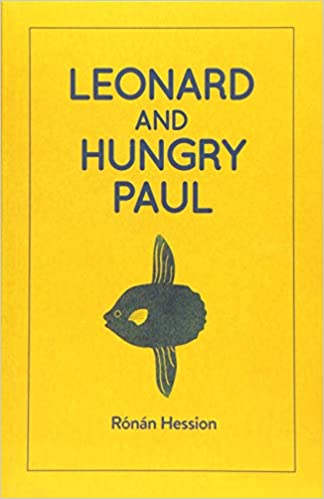
Secondly, Leonard and Hungry Paul by Rónán Hession published by Bluemoose Books, an independent publisher based in Hebden Bridge, whose manifesto explains “At Bluemoose our aim is to publish cracking stories that engage and inspire.”

I tried to read L&HP back in the summer and totally failed, but it had a lot of positive reviews in the blogosphere and so I gave it another shot. Now my reading is recovering somewhat I zipped through it with ease, so I’m sure my earlier troubles were indicative of my reading slump and not Hession’s writing.

The titular friends are men around their mid-thirties, who are easily overlooked. Leonard is grieving his mother, who he lived with in the family home until she died, never moving out because they got on well and there was no reason to. I found this relationship very touching. So often parent/child relationships are dramatized as being full of unspoken judgements and resentments, and it was a pleasant change to see someone who loved his parent, but also liked and respected them.

“Had he the courage, Leonard would have spoken up and said that his mother looked after everyone in her life as though they were her garden birds: that is to say, with unconditional pleasure and generosity.”

Leonard’s grief is of the quiet, ordinary kind where you still get up and go to work every day, carrying a deep sadness with you. In other words, the type pretty much everyone experiences.

“Leonard took off his noise-cancelling society-repelling headphones and went to the kitchenette for a mid-morning cup, even though he always disliked the awkward wait for the water to boil and the prospect of kettle-related time-killing small talk.”

I am with you Leonard.

Hungry Paul – whose attributive adjective is never explained – still lives at home with his parents, happy to bumble along, working as a casual postman and seeing Leonard regularly for their boardgame nights.

“He had no interest in, or capacity for, mental chatter. He had no internal narrator. When he saw a dog he just saw a dog, without his mind adding that it should be on a lead or that its tongue was hanging out like a rasher.”

Paul’s quiet stillness comes into its own when his mother insists he join her as a volunteer hospital visitor. While his extrovert mother chats away happily with one patient, Paul becomes the only one another patient will tolerate “He sat there calmly, simply sharing the moment with the woman.”

Not very much happens in L&HP but there is enough plot to pull the reader along. Paul’s sister Grace is getting married; Leonard begins a tentative romance; Hungry Paul enters a competition at the Chamber of Commerce. Really though, the novel isn’t so much about what happens as providing a glimpse into ordinary, quiet lives, and showing how they are worthy of attention:

“Their friendship was not just one of convenience between two quiet, solitary men with few other options, it was a pact. A pact to resist the vortex of busyness and insensitivity that had engulfed the rest of the world. It was a pact of simplicity, which stood against the forces of competitiveness and noise.”

I found L&HP to be a paean to the kindness and the gentleness found in the everyday small gesture:

“She was a person for whom kindness was a very ordinary thing, who believed that the only acceptable excuse for not having a bird feeder in the back garden was that you had one in the front garden”

(Or in my case, because you live in a London flat and the management company have banned them because the rats feast on them ☹)

It’s not an overly worthy novel though, there is plenty of humour. No-one is put down, but the absurdities of people are gently ribbed, such as Leonard’s colleague “Okey dokey. This will take just one minutiae. Take a load off, compadre,’ said Greg, unable to complete one conventional sentence.”

As an introvert who despairs at the relentless noise of modern life (why do shops think blaring out music will entice you to spend more time and money there? Why are cinema volumes now kept at ear-bleeding decibel levels?!) and who firmly believes in the meaning of the everyday, I was definitely the target audience for L&HP. If this sounds like you too, then I think you’ll enjoy this novel.

“We live in an age of cacophony.  Everyone talking and thinking out loud, with no space or oxygen left for quiet statements and silence.”

To end, one of the best TV theme songs ever, all about being a friend:

Novella a Day in May 2020 #2

From a Low and Quiet Sea  – Donal Ryan (2018) 181 pages

Last year I read The Spinning Heart by Donal Ryan for NADIM and was so impressed by his writing. From a Low and Quiet Sea has absolutely confirmed this view. He is such an understated, sensitive and evocative writer, he’s fast becoming a real favourite.

The story begins with Farouk, and his decision to take his family and leave his homeland after the political situation becomes intolerable.

“He’d measured the weights of his conflicting duties carefully, he’d told his friend in the letter, and he’d measured and measured again, and he’d mourned the time when such duties weren’t in conflict one against the other but were all part of a good life and all given to the same end, but this was now how the world was, and he was left with no choice to get his daughter and his wife to safety.”

Unfortunately Farouk’s story plays out in a way that we would expect from watching the news. Ryan shows the devastation of political violence for this family without ever being mawkish or sentimental. It is unquestionably a tragedy, and it is insane that such tragedy has become predictable. Farouk’s PTSD is captured with tenderness and compassion:

“And late one evening he walked from the camp to the water’s edge and he stood beneath the smirking moon and looked out across the sea, and he wondered at the stillness of it, as though its breath were held, as though it were too ashamed to reveal anything of itself to him, to admit the violence latent in it, to the things it held”

The narrative then shifts perspective to that of Lampy, a young man living with his mother and grandfather. He is nursing a broken heart after the love of his life goes off to Dublin to study at Trinity:

“Twenty-three years old, in the name of God, and still being babied. His mother would be twisting a tea-towel in her hands, back and forth, as though trying to wring some peace from it, some way of settling herself.”

Lampy is somewhat lost. He never knew his father and doesn’t quite fit in with his family at home. His mother and grandfather adore him but are cut from very different cloth:

“His grandfather was wicked; when he was in form his tongue could slice the world in two.”

Lampy’s story is ordinary, but in his own way he is quite desperate, and this is the power of his story. Ryan demonstrates the deep pain that can lie behind the people we meet every day, leading routine lives.

Finally, John is reflecting on his past: his family’s grief for a brother who died suddenly, the bullying of his younger brother, and his life of violence and disappointment.

“My little brother Henry, who came along behind us as an afterthought, a tiny, soundless incarnation of a short renaissance in my parents’ feelings for one another. He was always scared, his smallness and his way of slinking about unseen, inhabiting the background like a soft hiss of white noise behind the ceaseless hum and hubbub of life.”

John is not likable, and nor is he meant to be. It is his story, of a man that causes disruption and disintegration wherever he goes, that brings all three men together.

Its extraordinary that in a short novel split into the three parts, the characterisation of Farouk, Lampy and John is so well developed and fully realised. The way the strands tie together is believable and not at all clunky.

From a Low and Quiet Sea is a stunning novella, perfectly crafted and intelligently written. Unflinching yet beautiful.

Novella a Day in May 2019 #14

The Spinning Heart – Donal Ryan (2012, 156 pages)

I was first made aware of Donal Ryan on Cathy’s blog when she reviewed his short story collection, A Slanting of the Sun and the writing sounded wonderful. The Spinning Heart is Ryan’s first novel and was longlisted for the Man Booker and Guardian First Book Award, winning won Book of the Year at the Irish Book Awards. It reminded me of Jon McGregor’s Reservoir 13, in that it builds a picture of a community in quiet crisis through a variety of viewpoints. However, whereas McGregor uses omniscient narration, Ryan has each of the 21 chapters narrated by a different person. He manages this brilliantly, keeping the story flowing but still managing to convey different voices without jarring.

The story begins with Bobby Mahon:

“My father still lives back on the road past the weir in the cottage I was reared in. I go there every day to see is he dead and every day he lets me down. He hasn’t yet missed a day of letting me down. He smiles at me; that terrible smile. He knows I’m coming to check is he dead.”

This opening paragraph introduces many themes in the novel: families, abuse, inheritance (financial and psychological), uncomfortable but inescapable feelings. Each person in the story is linked to the others either directly or indirectly, and through their individual stories we get a rich portrait of a town, the people in it, and their shared lives.

It is a resolutely contemporary story. The collapse of the Celtic Tiger has had a devastating effect, and everyone is reeling. Bobby was foreman for Pokey Burke, the local building contractor who has fled leaving unpaid builders, unregistered for government help, destitute. There is a ghost town of a new estate with only two residents in it.

Young Brian is thinking of trying Australia for work. He has a good mind but sees no future in study, nor in Ireland itself, especially since breaking up with his girlfriend.

“On an intellectual level, I couldn’t give a shite about her. It’s a strange dichotomy, so it is; feeling and knowing; the feeling feels truer than the knowing of its falseness. Jaysus, I should write this shite down and send it Pawsy before I go.”

Ryan never deals in stereotypes despite many recognisable characters. There is Brian’s postmodern musings, and Lily, the  town’s aging sex worker’s poetic and tender feelings for her children.

“I love all my children the same way a swallow loves the blue sky; I have no choice in the matter. Like the men that came to my door, nature overpowers me.”

The character studies are individual and collective, like the town. So we learn more about how highly Bobby is thought of in the community, despite him introducing himself to the reader in that first chapter as damaged and failing. The builders respect him, women find him attractive, he’s a sporting hero and his wife is devoted. Long-time resident Bridie sums it up:

“There’s something in that boy, the way he looks at you while he’s talking, sort of embarrassed so that you want to hug him, and with a distance in his eyes even when he’s looking straight at you, that makes you think there’s a fierce sadness and a kind of rare goodness in him.”

It is what happens to Bobby that forms the plot of the novella.

The Spinning Heart ends on a note of hope but you still know things could go badly wrong. Ryan manages to convey the toughness of contemporary lives in dire straits caused by family histories and contemporary political mismanagement, without ever being didactic or depressing. It’s unflinching but hugely compassionate.

“the dead stillness I’d assume, the way I’d almost hold my breath while he spoke, it was the very same as when I’d be trying not to startle a wild animal”

And now I really must get to A Slanting of the Sun which I’ve been meaning to read ever since Cathy’s post…

Novella a Day in May 2019 #12

Two More Pints – Roddy Doyle (2014, 115 pages)

Last year as part of NADIM I looked at Two Pints by Roddy Doyle, so I thought this year I’d look the sequel. Like its predecessor, it is written entirely as dialogue between two friends meeting for the titular drinks, and set on specific dates, this time between September 2012 and June 2014. Once again, a warning for swearing – well, it is Roddy Doyle after all 😀

The issues in this period, lest we forget, include the financial crisis, horsemeat in burgers, elections of the new Pope and the deaths of various celebrities. All this occurs alongside family events and disagreements over football.

 – Fiscal cliff.

– He’s shite.

– Wha?!

– He’s just copying the other fella.

– Wha’ the fuck are yeh talkin’ about?

– The rapper.

– Wha’ rapper?

– Fiscal Cliff.

The humour doesn’t detract from the realities though.

– My young one is in trouble. An’ her fella.

– Ah, no.

– The mortgage, yeh know.

– They can’t handle it?

– They’re fucked, God love them. They’ve been into the bank an’ tha’, to try an’ sort somethin’. But –

– No joy?

– It’s fuckin’ madness.

I was disappointed not to hear more about Damien, the grandson from Two Pints who was fracking in the back garden with a magimix, but I think at such a turbulent time, Doyle chose to focus very much on current affairs. The dialogue still felt entirely authentic though, and never heavy-handed.

The conversation is wide-ranging, and even poetry gets a mention, despite the short shrift it was given in Two Pints:

– See Seamus Heaney died.

– Saw tha’. Sad.

– Did yeh ever meet him?

– Don’t be fuckin’ thick. Where would I have met Seamus Heaney?

– That’s the thing, but. He looked like someone yeh’d know.

– I know wha’ yeh mean – the eyebrows an’ tha’.

– He always looked like he liked laughin’.

– One o’ the lads.

– Except for the fuckin’ poetry.

– Wha’ would possess a man like tha’ to throw his life away on poetry?

– Although fair enough – he won the Nobel Prize for it.

– He’d probably have won it annyway.

– For wha’ – for fuck sake.

– I don’t know. Football, plumbin’ – annythin’. Tha’ was what was special about him.

Another affectionate portrait of the people of Dublin, and Ireland at a particular moment in time.

Novella a Day in May 2019 #7

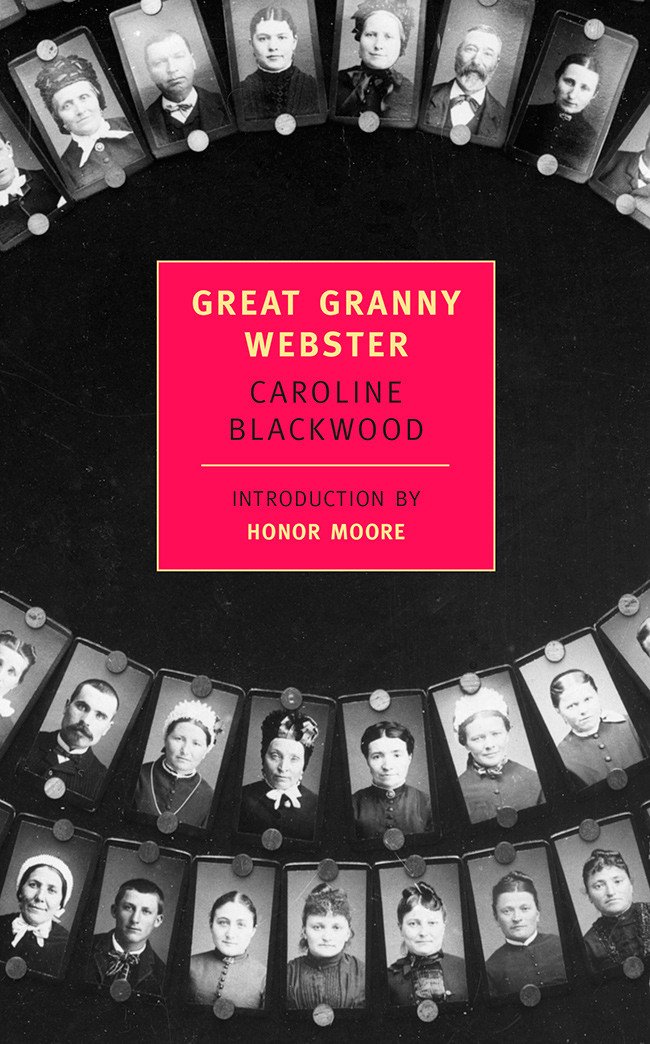
Great Granny Webster – Caroline Blackwood (1977, 96 pages)

My blogging slump meant I completely failed to take part in Cathy and Niall’s Reading Ireland 2019 (#Begorrathon) in March, and so I’m including a few Irish novellas this month. The first of these is by an author I’ve never heard of, which seems extraordinary given her quite astonishing life story.

The titular matriarch of this novel is a wonderfully Gothic creation:

“She had arranged her hair in two grey tufts that lay on her forehead like a couple of curly horns, so that what with the exaggerated narrowness of her elongated face, and her uniquely over-long upper lip, she often reminded me of a melancholy and aged ram.”

The narrator is sent to Hove to recuperate with her great-grandmother in 1947 when she is 14, as it’s thought the sea air will help her recuperate from an operation.  It’s totally bizarre that her family would think this a good idea, as Great Granny Webster lives in severe austerity in a damp and gloomy house, alone except for her aged and devoted retainer, Richards.

“All she wanted from each new day that broke was the knowledge that she was still defiantly there – that against all odds she had still managed to survive in the lonely, loveless vacuum she had created for herself.”

Unsurprisingly, this is not a warm and affectionate portrait of the generations of a family. It is however, witty, astute, sad, and incisive. Great Granny Webster is entirely uncompromising:

 “ ‘There really is nothing more unattractive than the sight of a young woman displaying a repulsive amount of arm. I am not going to mention this subject again.’

Great Granny Webster always told the truth. She never once referred to my sleeves or my arms again.”

We later learn that her daughter (the narrator’s grandmother) completely lost all sense of reality, trapped in the family castle at Dunmartin. The echoes of previous generations are heard down the years. As an adult, the narrator is contacted by her fragile, enchanting Aunt Lavinia who is having similar problems:

“One day Aunt Lavinia rang me up to say it was too maddening, she was in prison. When I sounded astonished she admitted that it wasn’t exactly a prison, but it was just as bad, for she was being detained in a hospital where she had been put by the police.”

What Blackwood captures brilliantly is how in families, people can be superficially polar opposites but underneath it all, so very alike, much to their own alarm:

“Aunt Lavinia’s house was very warm. She liked to have log-fires burning and her central heating turned on even in the summer. Although her bedroom was rather like a hot-house and fragrant with the smell of her lillies, I had exactly the same feeling of chill I had experienced in the bleak, cold, flowerless drawing room of Great-Granny Webster when that old lady had predicted that eventually I would be very like her.”

In such a short space, Blackwood achieves fully-rounded portraits of three generations of women in an idiosyncratic noble family. Great Granny Webster is, like its anti-heroine, bleak, funny and unique.

I read this in an old Picador edition, but I’m delighted to say the wonderful NYRB Classics have re-issued it.

Novella a Day in May #23

Two Pints – Roddy Doyle (2012, 89 pages)

Two Pints is a series of conversations between two men who meet in a pub. Doyle has an excellent ear for dialogue and his first novel, The Commitments, was very dialogue-heavy. This is even more so, with no description at all. It’s set on specific dates and documents the characters’ reactions to events in 2011 and 2012.

Before some examples, a trigger warning for language. Roddy Doyle presents authentic voices, and those voices are sweary. Something he is quite renowned for (I’ve included this clip before, but g’wan, you will!):

There is an ongoing conversation as to the whereabouts of Colonel Gaddafi:

“…An’ anyway, that’s when I see him.

– Who?

– Gaddafi.

– From the chipper?

– No the other one. From Libya.

– In Dublin Airport?

– Terminal 2.

– Fuck off.

– Swear to God. That’s where he’s hidin’.

[…]

– You’re sure it was him?

– Course I am. I winked at him.

– Wha’ did he do?

– He winked back.”

There are also discussions of cultural issues, both high and low:

“- D’yeh ever read poetry?

– Wha’?!

– D’you ever –

– I heard yeh. I just can’t fuckin’ believe I heard yeh.

-Well look it –

– G’wan upstairs to the lounge if yeh want to talk abou’ poetry.”


“- Wha’ does ‘thinkin’ outside the box’ mean?

– You were watchin’ The Apprentice last night, weren’t yeh?”

By the end I really felt as if I’d been in a pub overhearing two old friends talking. The simplicity of Two Pints doesn’t mean it’s prosaic though: the stories regarding a young member of the family, Damien, become increasingly surreal, with an escalating collection of exotic animals and his fracking in the back garden using a magimix. You’re never quite sure what will happen next.

“ – See the Queen’s goin’ to mention Ireland in her Christmas speech.

– Ah, great. I might mention her in mine.

-It’s a big deal.

– Not really. I just say a few words to the family.”

Warm, witty and wonderful.

“Adventure is just bad planning.” (Roald Amundsen)

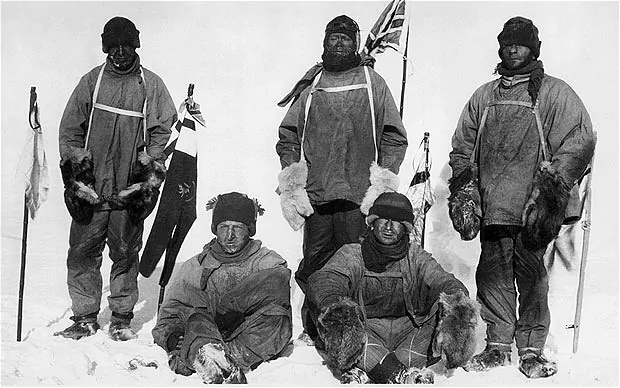
Happy New Year! My 2018 is rubbish so far but I’m hopeful of improvement – I’ve caught the horrible virus everyone is down with at the moment. According to fellow sufferer Rev. Richard Coles on twitter, it’s God’s way of telling you to watch a boxset.  My virus-addled brain can’t focus on the plot of a single episode of something at the moment, never mind a whole boxset (so this post may be even less coherent than usual). I’m fed up and bored and so I thought I’d look at people pushing themselves to physical extremes when I can’t even get off my sofa at the moment without a 5-point plan.  It will also be another stop on my Around the World in 80 Books Reading challenge, hosted by Hard Book Habit. Off to Antarctica!

Firstly, The Birthday Boys by Beryl Bainbridge (1991) which tells the story of Scott’s disastrous attempt to reach the South Pole. Five sections are narrated by different members of the party with Scott in the middle. It’s an effective approach, building a picture of the different personalities involved and the disintegration of their hopes.

Petty Officer Evans begins the tale, full of military loyalty to their leader.

“Being down a crevasse together is no excuse for stepping out of line. All I know is I’d die with the man, and for him, God help me, if the necessity arose.”

However, through Dr Wilson, Bainbridge articulates the changes taking place in society at the time of the expedition, just into the second decade of the twentieth century.

“All the things we were taught to believe in, love of country, of Empire, of devotion to duty, are being held up to ridicule. The validity of the class system, the motives of respectable, educated men are now as much under scrutiny of the magnifying glass as the parasites feeding off the Scottish grouse.”

The men are clinging onto ideas in the face of unstoppable forces, both societally at home, and environmentally in the Antarctic. They are doomed to failure.

Scott takes up the middle portion of the book and Bainbridge brilliantly captures all his contradictions. He is arrogant yet doubtful, single-minded yet insightful.

“justifying my actions would have been simply no good for morale. Like it or not, and God knows, half the time I don’t, someone has to take the decisions – along with the consequences.”

His motivations are mixed. He claims it as a scientific expedition for Empire, yet is furious when he is beaten to the Pole.

“I came to sanity under Bill’s tuition. He wisely said I must continue as if nothing happened, as if Amundsen didn’t exist. It was unthinkable that our scientific projects should be sacrificed in a vulgar scramble to reach the Pole.”

Yet Bainbridge never allows us to despise his hubris. To do so would mean we lose our empathy with the men who he led to their deaths, and the novel would lose its enormous emotional power. As Lieutenant Bowers observes:

“I think I know what ails the Owner. He’s absolutely sound as regards what’s right, but he lacks conviction. He simply isn’t stupid enough to be convinced his is the only way. In the circumstances, it’s a dangerous trait.”

That’s not say that by the time we get to sceptical, reticent Oates, I wasn’t pleased to hear someone expressing their anger and frustration at their leader.

“I’ve never known such a man for making mistakes and shifting the blame onto others.”

However, as the nearness of death, their body parts rotting, the tedium of days desperately clinging to life in an inhospitable landscape starts to send them all insane with desperation, even Oates admits:

“Truth to tell, I think he was the only one among us capable of making any decisions.”

Bainbridge is a wonderful writer and even though we know what happened, she still manages to create tension and drama from the men’s horrific situation. She is also able to capture the landscape as beautifully and evocatively as she does the men’s psychology.

“Those who envisage this place as nothing more than a godforsaken plateau of ice and snow are mistaken. For one there are outcrops of jet-black rock about which the wind blows so fiercely the snow can never settle; and for another, the ice, being subject to reflections of sun and sea, is never purely white but tinged with rose and cobalt-blue and every shade of violet, the whole set against skies, days or night, that run through all the colours of the spectrum.”

The Birthday Boys is a short novel (181 pages) but none the less for it. It is Bainbridge at the height of her powers and as such, it is immense.

Secondly, a quick foray into Antarctica by Claire Keegan (1999) because I’ve got quite carried away with Beryl. This is Keegan’s first collection of short stories and it’s remarkably assured with a strong narrative voice. I actually found the titular story the weakest, but I suspect maybe it’s dated a wee bit. My favourite stories in the collection were those set in rural Ireland. The Ginger Rogers Sermon was devastating. The narrator is a young girl on the cusp of adulthood, living on her parents farm in a place where there’s not much to do.

Don’t ask me why we called him Slapper Jim. My mother stamped his image in my head, and I was at an age when pictures of a man precede the man himself. The posters verify: Thin Lizzie with a V of chest exposed, Pat Spillane’s legs racing across my bedroom wall…I was the girl with the sweet tooth and a taste for men.”

The taste for men is problematic when you have feelings and knowledge, but not a great deal of understanding. Adulthood is approaching rapidly but childhood also lingers:

“Now that I am thirteen I am sectioned off from men. It happens in school too, in gym class. I play basketball and jump over hurdles and come back all red-faced and sweaty and talk non-stop in class. Nobody sits beside me because I smell like an afterbirth. I wear the pads and Lily of the Valley and go dancing down the pub. Slapper Jim is always there with the bantam. I waltz around in the cigarette smoke with old men my father knows.”

This is the tone of The Ginger Rogers Sermon exactly: matter-of-fact, unsentimental, funny and sad. A tragedy occurs, arising from disturbing circumstances, yet the ending contains some hope. As in many of Keegan’s stories, things are unresolved and the story is stronger for it.

Keegan has spent time in the States and some of her stories are set there. The final one, Passport Soup, is one of these, a sad tale of the parents of a missing child. Keegan is brilliant at capturing deep feeling without melodrama, in beautiful but sparse prose:

“Frank Corso has lost his appetite. He pushes his plate aside and gets up and puts the milk carton with his daughter’s photograph back in the refrigerator and goes to bed. The sheets are cold. He hears a wedge of snow fall from the eaves of the roof onto the drift beneath the window. Snow falling, compounding cold. Daylight bleaches the walls before he finally sleeps.”

This is a powerful collection of stories, and if you’re not keen on short stories but want to give them a go, it’s a good place to start. Keegan absolutely understands the form, she doesn’t waste a word. Unfortunately, she seems to publish rarely: her second collection came 8 years later, followed after another 3 years by a stand-alone ‘long short story’. That’s not a criticism though – quality like this is worth waiting for.

To end, a tasteful video for once (clearly I really am ill), narrated by the unsurpassable Sir David & full of arresting images (normal cheesy service will resume next week):

“Ireland is a great country to die or be married in.” (Elizabeth Bowen)

Firstly, in breaking news (in the sense that it’s not news and of zero interest or urgency) I’ve finally joined the cool kids over at twitter so please validate my fragile sense of self and join me @madame_bibi. More importantly, I’ve tried to follow as many of my bloggy friends as possible but if I’ve missed you please let me know & I will rectify the situation forthwith 🙂

On with the post! This is my second contribution to Reading Ireland 2017 aka the Begorrathon, hosted by Cathy at 746 Books and Niall at Raging Fluff. I’m hoping to just get this posted in time, as I was sick for a week and while this meant I could finally watch the entire series of Taboo that I had stacked up, I was incapable of reading the printed word  (my capacity for dribbling over Tom Hardy remained unaffected).  If I’m too late, I hereby proclaim that there are at least 32 days in March 😉

So, its Elizabeth Bowen all round as I look at two of her novels, simply because I was lucky enough to find these lovely hardbacks in my favourite charity bookshop a wee while ago:

Firstly, The Death of the Heart (1938), which I pounced on as soon as I saw it, remembering Jacqui’s wonderful review.  Portia, a sixteen year old orphan, moves to London following a transitory life in hotels with her parents, to live with her half-brother and his wife who she barely knows. Wiki quotes Bowen as describing the novel thusly:

“a novel which reflects the time , the pre-war time with its high tension, its increasing anxieties, and this great stress on individualism. People were so conscious of themselves, and of each other, and of their personal relationships because they thought that everything of that time might soon end.”

Certainly the individuals in the novel are self-conscious, but they’re not really aware of one another. Poor Portia finds herself part of a society of selfish individuals who don’t know what they want and so end up tormenting each other while they try and work it out. Portia’s step-mother Anna is unhappy, as is her brother, but neither are sure it is the marriage to one another that is making them miserable. A rejected lover of Anna’s, Eddie, seduces Portia to alleviate his boredom, not realising that to do so to a naïve and loving 16 year old is cruel and damaging. There is an all-round lack of intimacy:

“But something that should have been going on had not gone on: something had not happened. They had sat round a painted, not a burning, fire, at which you tried in vain to warm your hands.”

Portia is temporarily packed off to the seaside to stay with a family that the London set look down as being a bit common, but they are at least lively:

“Mrs Heccomb took off her hat for tea and Portia saw that her hair, like part of an artichoke, seemed to have an upgrowing tendency…This, for some reason, added to Mrs Heccomb’s expression of surprise.”

However, while the Heccombs see Eddie for the cad and bounder he is, they are neither able to convey this adequately to Portia, nor is she willing to listen.  What emerges as Portia tries to find her place in the world and warm relationships within it, is how deeply inadequate human beings can be at communicating with one another. Bowen is interested in the fantasies that are constructed in lieu of real understanding and how these can be sustaining but ultimately empty.

“Not for nothing do we invest so much of ourselves in other people’s lives – or even in momentary pictures of people we do not know. It cuts both ways: the happy group inside the lighted window, the figure in the long grass in the orchard seen from the train stay and support us in our dark hours.”

The novel lacks any sentimentality and is a sharply observed portrait of interwar society.  What stops it from being depressing is Bowen’s glorious prose, her dry sense of humour (I don’t think we are supposed to take the characters as seriously as they take themselves) and the sense that love – imperfect and in many different guises – is there to be found, sometimes in the oddest of places.

a8efa868a5cd8a6195a1bd9f99ef1419

Apparently hair like an artichoke was an actual thing, although I think Bowen had something more flamboyant in mind…

Image from here

Secondly, A World of Love (1955), which I thought absolutely stunning. Bowen has matured between these two novels and is telling less, showing more, to once again explore the complexities of human relationships with great subtlety. Lilia owns Montefort, a country house in County Cork, and her dead cousin Guy’s fiancé Antonia, lives there with her husband Fred, an illegitimate member of the family, who runs the estate so they live rent-free.

“Of this arrangement it had not yet been decided whether it worked or did not work, still less if it equitable or, if not so, at whose expense.”

Over the course of a few claustrophobically hot days in summer, Antonia and Fred’s daughter, Jane, finds love letters written by Guy to an unnamed woman which is assumed to be Antonia. This will act as a catalyst to bring the unspoken tensions between the adults into sharp relief:

“Almost no experience, other than Guy and their own dissonance, could they be said to have had in common; and yet it was what they had had in common which riveted them. For worse or better, they were in each other’s hands. Such a relationship is lifelong.”

Meanwhile, Jane is on the edge of burgeoning adulthood:

 “Not a straw stirred, or was there to stir, in the kennel; and above her something other than clouds was missing from the uninhabited sky.  Nothing was to be known. One was on the verge, however, possibly, of more.”

I really adored this novel. Again, it was sharply observed, psychologically astute, and with a wonderful undercurrent of dry humour. Bowen minutely dissects human relationships and exposes all their contradictions and conflict, but also how compromise and understanding can be reached. A World of Love felt tighter than The Death of the Heart, the containment of a few days in pretty much one place effectively conveying the claustrophobia that exists for the characters in their various ways, even as they roam a huge estate. Yet Bowen is almost baroque at times, her descriptions rich and layered and filled with meaning:

“No part of the night was not breathless breathing, no part of the quickened stillness not running feet. A call or calling, now nearby, now from behind the skyline, was unlocatable as a corncrakes in the uncut grass. Arising this was, on the part of the two who like hundreds, seemed to be teeming over the land, carrying all before them. The night, ridden by pure excitement, was seized by hope. .. All they had ever touched still now physically held its charge – everything that had been stepped on, scaled up, crept under, brushed against or leaped from now gave out, touched by so much as air, a tingling continuous sweet shock, which the air suffered as though it were half laughing, as was Antonia.”

I realise I may have lost some of you there. But if you don’t mind that sort of prose at times, especially when it’s surrounded by an astute unblinking eye for human foibles and a compassion for our frailties, please do given Bowen a try!

So that’s the end of a very hurriedly written post, please excuse all typos and general incoherence! Now to end with an Irish musician and a blatant grovel to my mother (as he is one of her favourites and I failed on Mother’s Day last weekend):