“Happiness is a very fragile thing.” (Barbara Comyns)

It was JacquiWine’s review of The Juniper Tree by Barbara Comyns (1985) last month that encouraged me pick this from the TBR in time for Novellas in November, hosted by hosted by Cathy and Bookish Beck.

I really enjoy Comyns’ individual voice. She can give a sharp edge to stories presented seemingly without guile which works well within the premise here, taking as a starting point the Grimm Brothers fairytale of the same name:

My mother she killed me,
My father he ate me,
My sister, little Marlinchen,


Gathered together all my bones
Tied them in a silken handkerchief,


Laid them beneath the juniper-tree,
Kywitt, kywitt, what a beautiful bird I am.

Thankfully Comyns writes a less cannibalistic/abusive version but there are fairytale motifs from the story scattered throughout. This gives the novella a somewhat unreal, atemporal quality, although references are made to the 1980s.

The striking opening scene directly draws on the Grimm tale, as Bella Winter (physically similar to Snow White, although she feels highly self-conscious of a facial scar) travels to Richmond in search of a job:

“I noticed a beautiful fair woman standing in the courtyard outside her house like a statute, standing there so still. As I drew nearer I saw that her hands were moving. She was paring an apple out there in the snow and as I passed, looking at her out of the sides of my eyes, the knife slipped, and suddenly there was blood on the snow.”

The affluent woman is Gertrude, married to Bernard.  Bella ultimately gets a job over the river in Twickenham with Mary:

“Her teeth were small and pointed rather as an animal’s, indeed she resembled an animal with her delicate boned face with its merry expression, perhaps a squirrel.”

But this doesn’t prevent Bella becoming more and more entwined in Gertrude and Bernard’s life. It’s not surprising that she is in search of a family. Her mother is cold and judgemental:

“There was one shadow that I kept in the back of my mind as much as possible, and that was my mother. To me she was almost like a wicked fairy, poor woman.”

Bella also left behind a selfish lover Stephen, who was driving when the accident occurred which left her with the scar on her face, for which he blames her.

But Bella has a young daughter Marline, also known as Tommy, who she loves dearly. Tommy is biracial and both she and her mother face racism throughout. However, they build a happy life, living above Mary’s antique/junk shop and transforming a “gritty” back yard into a pretty walled garden.

They regularly cross the river to Gertrude and Bernard’s abundant, if carefully curated, home. Bella enjoys sitting with Gertrude under the titular tree, where territorial magpies build their nest and watch the comings and goings.

It’s hard to say more without venturing into spoilers, but if this is sounding a bit contrived and fey, there are enough prosaic details to ground the story, and humour too:

“I was glad to return to the freedom of the shop and to be queen of my own home—eat cornflakes or baked beans for supper, wear a dressing gown for breakfast and read books that did not improve the mind in bed.”

I also thought there was scepticism regarding relationships between the sexes here, no guarantee of happy-ever-afters. As well as positive portrayals, both Stephen and Bella’s mother are abusive to partners, and Bernard is in an ambiguous Pygmalion role. Families are shown as places of anger and destruction as well as nurturing, and Bella has to chose her people to create a happy life.

The undercurrent of death also stops the story feeling whimsical, and there is a very upsetting death which takes place, precipitating Bella needing inpatient mental health care. Although not gratuitous or gruesome, it is something some readers would want to avoid so if you want to know, DM me!

The introduction to my NYRB edition mentions the ending being abrupt, but I have to disagree. The ending ties up everything as much as it can and I can’t see anywhere further the story could go, having fulfilled its fairytale basis and continued into a pragmatic 1980s conclusion.

To end, a very young Björk making her film debut in an adaptation of the Grimm Tale:

“The power of books, this marvellous invention of astute human intelligence.” (Mariama Bâ)

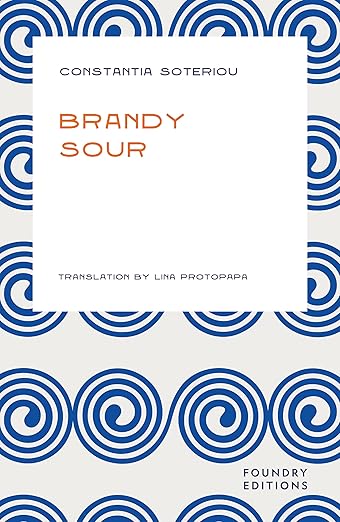
My Around the World in 80 Books reading challenge is much neglected, so I was pleased to find a novella from a Sengalese writer in my local charity bookshop/goldmine, in time for Novellas in November hosted by Cathy and Bookish Beck.

So Long a Letter by Mariama Bâ (1980, transl. Modupé Bodé-Thomas, 1981) is only 89 pages long but covers major themes, around choices available to women in 1970s Senegal; polygamous marriage; Sengalese society emerging from colonialism; and generational difference. It is framed as a letter from Ramatoulaye to her long-term friend Aissatou, but as one long letter with no reply, it doesn’t really feel like an epistolary novel.

At the start of the novel, Ramatoulaye’s husband Modou has just died. As she undertakes four months and ten days of mourning as part of her Islamic faith, she reflects on the pain caused when Modou took his second wife, Binetou, a friend of their eldest daughter.

“I have enough memories in me to ruminate upon. And these are what I am afraid of, for they smack of bitterness. May their evocation not soil the state of purity in which I must live.”

Ramatoulaye trained as a teacher and works at the university, but finds herself considering what she gave up for married life:

“How many dreams did we nourish hopelessly that could have been fulfilled as lasting happiness and that we abandoned to embrace others, those that have burst miserably like soap bubbles, leaving us empty handed?”

Having met her husband during training, she has been married for thirty years and raised twelve children. Now the children are older and with her husband gone, she finds herself caught between generations:

“It was the privilege of our generation to be the link between two periods in our history, one of domination, the other of independence. We remained young and efficient, for we were the messengers of a new design.”

Yet her daughters are the ones achieving a marriage of equal partners, and while Ramatoulaye welcomes this, she struggles with other behaviours such as wearing trousers and smoking:

“The unexpectedness of it gave me a shock. A woman’s mouth exhaling the acrid smell of tobacco instead of being fragrant.”

The full extent of Modou’s disregard of Ramatoulaye emerges later in the novel: he didn’t tell Ramatoulaye he was courting Binetou or considering marriage, but leaves one day not to return. His friends arrive at the house to explain he has married again and left the family.

A strength of the story is Ramatoulaye’s refusal to outright condemn the young second bride. She recognises that Binetou has been pushed by her mother to marry for financial gain.

“Binetou, like many others, was a lamb slaughtered on the altar of affluence.”

And when Binetou doesn’t behave kindly, Ramatoulaye frames it thus:

“A victim, she wanted to be the oppressor. Exiled in the world of adults, which was not her own, she wanted her prison gilded. Demanding, she tormented. Sold, she raised her price daily. What she renounced, those things which before used to be the sap of her life which she would bitterly enumerate, called for exorbitant compensations, which Modou exhausted himself trying to provide.”

There is a strong sense of sisterhood running through So Long a Letter. In writing to her recently divorced friend, the narrative remains between two women, creating an intimacy and a focus on unmediated female experience.

“I am not indifferent to the irreversible currents of women’s liberation that are lashing the world. This commotion that is shaking up every aspect of our lives reveals and illustrates our abilities.

My heart rejoices each time a woman emerges from the shadows.”

To end, a film adaptation was released this year. From the trailer, it looks faithful to the book:

“My nails are my rhythm section.” (Dolly Parton)

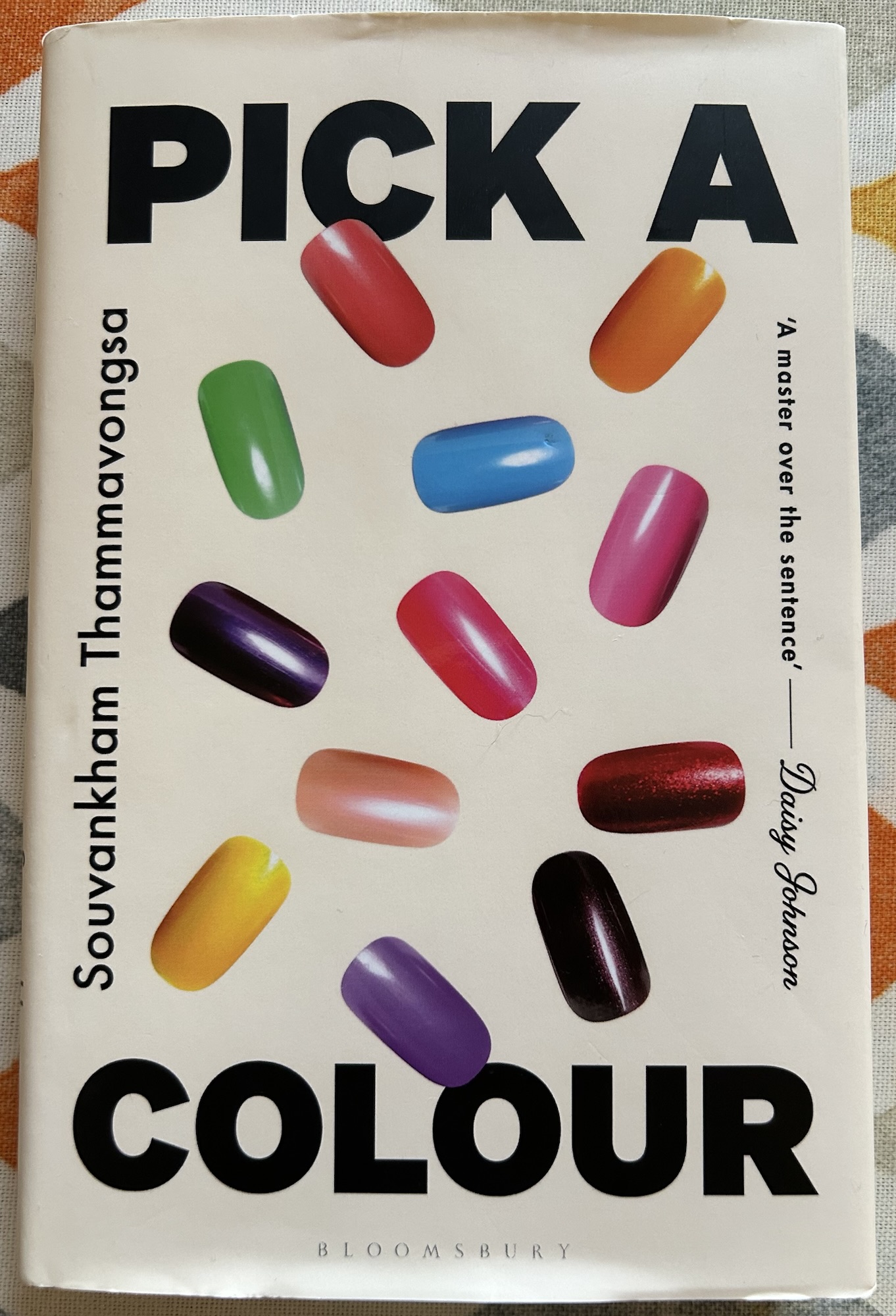
I mentioned buying two novellas in my post for A Room Above a Shop, and the other one was Pick A Colour by Souvankham Thammavongsa (2025). Once again, it was Susan’s enticing review which sent me in search of a copy!

Thank you so much to everyone who left good wishes when I mentioned finishing at work, and this post about a novella in a workplace seems apt for the update that I have a new job – I am extremely relieved! But I’ve a few weeks off between and so far I’m enjoying lots of reading and relaxation 😊

Earlier this year I read Marzahn, Mon Amour by Katja Oskamp which is set in a chiropodist/nail bar in a Berlin suburb. There’s something so appealing about a workplace setting, with disparate characters thrown together, and with a shop there’s the added unpredictability of who can walk in the door at any moment. Pick a Colour is set over the course of one day in Susan’s nail bar and manages all these elements so well.

Susan’s is owned by Ning, an ex-boxer who used to work for the bullying Rachel at the Bird and Spa salon a small distance away. Her nail bar has been open for five years and is called Susan’s because everyone who works there – including Ning – wears name badges with that name on it. The customers don’t notice.

“Looking at the two of us, them sitting on a chair above me, and me down low, you’d think I am not in charge. But I am. I know everything about them, whether or not they tell me. You look at something long enough and you begin to see everything in its details. And you’d be surprised what people tell you when they think you are a stranger and they’re never going to see you again.”

There is a strong theme of power, privilege and colonialism running through Pick a Colour. The city it is set in is unnamed, and the language spoken by the nail technicians is not specified, but they speak it in front of clients who don’t share it, and don’t understand that they are being appraised and gossiped about.

Quick-witted colleague Mai has a suggestion for Ning’s young, serial-dating and phone-obsessed client:

“She says quickly, ‘I know a guy for her.’ It is as if she’s been lining them up somewhere just for this moment.

‘What guy do you know.’

‘My dad,’ she says. ‘He’s single.’

We laugh because the man is old as a raisin that fell underneath the fridge from eighty years ago.

‘He doesn’t know how to text, though,’ I say. ‘So I don’t think it will work out for them.’

 I turn back to the waitress.”

Ning deliberately remains enigmatic: to her clients, her colleagues and as a narrator. A new staff member, Noi, joins and Ning is stern with her. She doesn’t join the others for lunch and for clients who ask about her life she makes something up. As readers we are privy to her memories of working for Rachel and her boxing coach Murch so we are aware of some of her trauma, but much remains unexplained.

“I look at the finger I don’t have. I’m actually quite proud of it and want to hold it up anytime someone sits in my chair. If my body has a centrepiece, it’s this space where something used to be.”

We follow Ning, Mai and Noi throughout the day as they expertly manage the logistics of the salon and the psychologies of their clients with skill, humour, compassion and also disdain when appropriate. Pick a Colour has a deceptive lightness of touch in its exploration of some major themes, encouraging consideration of what lays beyond the surface.

“I’m sure she has friends to talk to over brunch, maybe a therapist, but you don’t want to tell your friends stuff like this. Want to keep up the appearance of what everyone thinks happiness should look like.”

To end, I nearly chose My Name is Not Susan by Whitney Houston, but instead here are Dolly and Patti LaBelle demonstrating the title quote:

“All of my close friends are emotional train wrecks.” (Patrick de Witt)

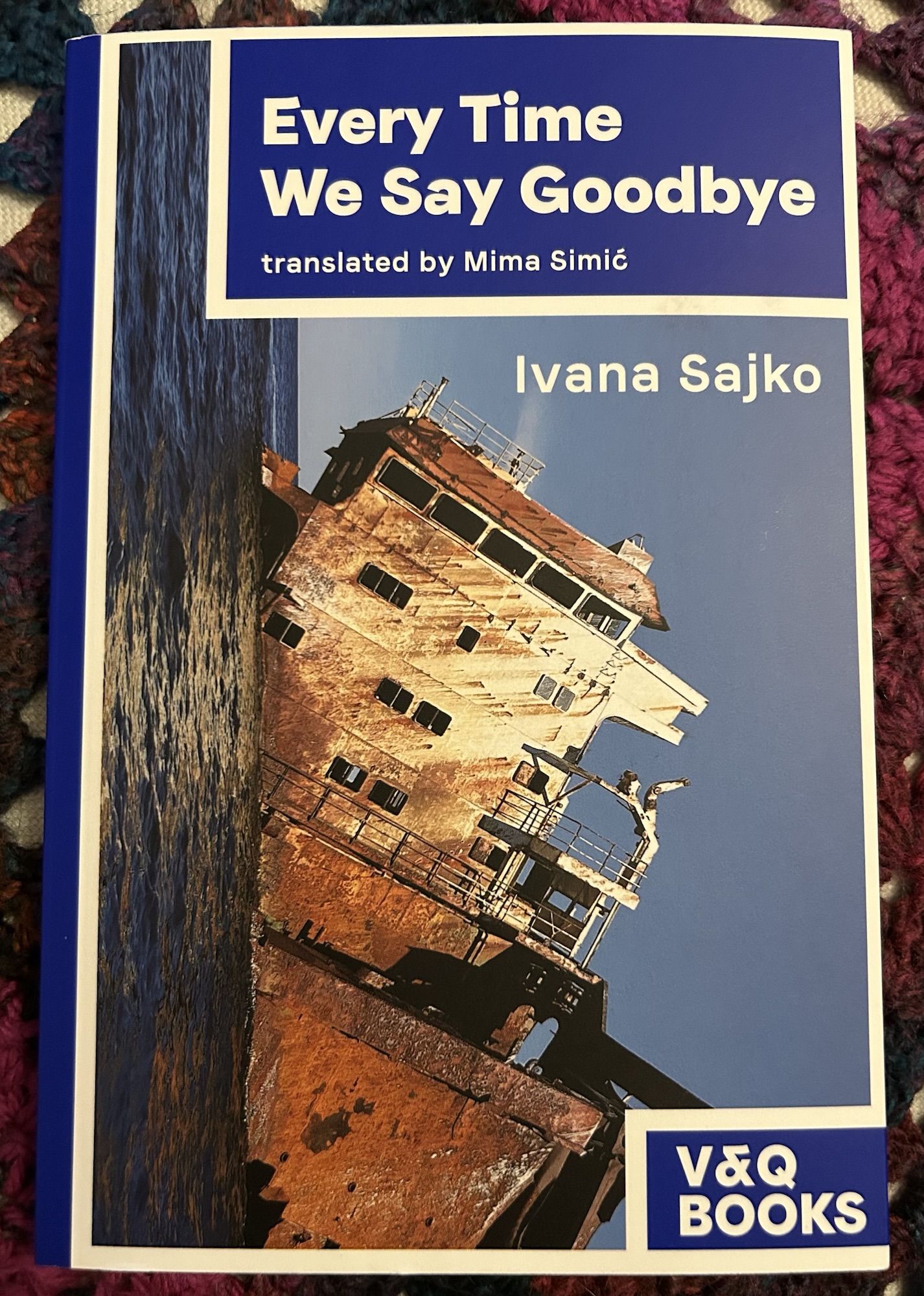
I don’t get many books sent to me by publishers, but I was really pleased to be offered Every Time We Say Goodbye from V&Q Books who specialise in writing from Germany. Ivana Sajko was born in Zagreb and her translator Mima Simić is Croatian, they both now live in Berlin. Back in 2023 I read Love Story from the same author, translator and publisher and found it powerful and unflinching.

With everything that’s been going on for me with work it’s taken me some time to get to it, but at 118 pages it’s a perfect Novellas in November read, hosted by Cathy and Bookish Beck.

A writer leaves his partner to catch a train from south-east Europe through to Berlin.

“Leaving nothing behind but the story of a man travelling through Europe hit by another crisis, boarding a train convinced that it doesn’t really matter why he’s leaving, as he has no reason to stay, the story of a man sinking into his notebook, grasping mid-descent at his messy notes, each of them opening a new abyss beckoning another fall, a man who still cannot bring himself to open the flat box of photographs from his mother’s drawer,”

Each short chapter is a single sentence, and while I know this sounds off-putting, I thought it worked brilliantly. The long, weaving sentences broken by commas perfectly captured the sense of memories surfacing back and forth against the physical rhythm of the train journey.

The narrator is not particularly likable but he is recognisable and believable. As he considers how his relationship failed and looks back on his life so far, his experiences are inextricably bound to the time and geography he lives within.

“Everyone left because they had to: my mother, my father, my brother, and all these goodbyes weren’t dramatic gestures but quiet moments of stepping onto a train or a bus, followed by long rides in uncomfortable seats with stiff legs, full bladders, a restless heart and the anticipation of the final stop, which meant a new beginning and facing expectations”

Twenty-first century Europe is shown as a place of dislocation, whether through wars, socio-economic pressures, or pandemics. The impossibility of the personal and political being distinct from one another is variously explored. The writer’s depression is at least partly due to what he witnessed as a journalist:

“I lay on the ground at Tovarnik station amid garbage and people now grown in distinguishable, on the filthy platform strewn with large stones, under the European Union flag that flapped ironically next to a border crossing sign that read ‘Croatia’ and ‘EU’”

And I particularly liked this observation about how international covid restrictions made explicit the shortcomings in his and his mother’s relationship:

“The plague was our internal standard, and now that it had also driven the rest of the world apart, our few metres gap became the global standard, the plague revealed the fatality of the smallest gestures and the significance of shortest distances, a single step towards or away from a person could help or harm them; gestures we’d used to hurt each other suddenly became protective, so we didn’t really need to make an effort to adopt the new regulations”

Grounded as it is the events and establishments of the day, Every Time We Say Goodbye still remains a slippery narrative, questioning the subjectivity and reliability of memory and how we understand our experiences:

“I’d like to write about him making faces and winking at me across the table, but none of that is true, I remember none of it, my brother has no face at all, he has no smile, no voice, no drops of sweat glisten on his skin, no scabs on his knees, he has no clear outline, there are no concrete details to him, every time I look in his direction, all I can see is a murky silhouette of a boy, he’s too far away”

There is a lot packed into this slim novella. It is undoubtedly a commentary on contemporary Europe; but it also portrays the inadequacy of human communication and understanding, and how this can wreak damage in our closest and most intimate relationships. Trauma is visited on large and small scales.

Not an easy read, but one I am glad to have read for its brave choices in style and subject matter. If, like me, you enjoy a Translator’s Note, there is a really interesting one from Mima Simić included.

To end, of course I was going to go with the obvious choice, an absolute classic:

“Small and growing businesses are the beating heart of our economy and the soul of our communities.” (Mary Portas)

I’ve finished at work now and my leaving gift was bookshop.org vouchers (to quote my colleague: “Tell me what you want so you don’t get some rubbish you’ll never use” 😀 ) which of course I started spending the same day! My first purchase was two novellas because it is #NovNov after all, hosted by hosted by Cathy and Bookish Beck.

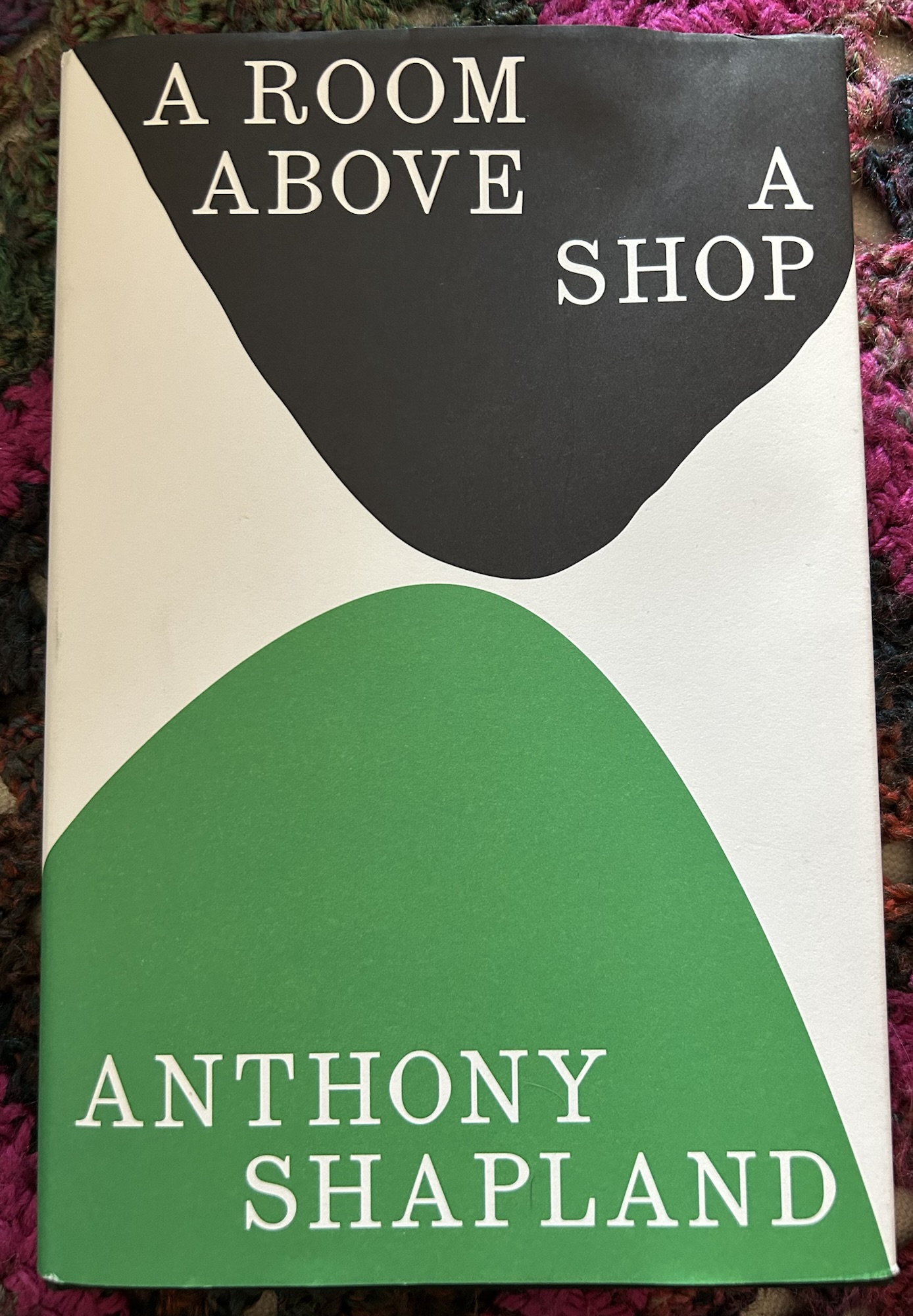
It was Susan’s review of A Room Above a Shop by Anthony Shapland (2025) which made it a must-read for me, and my astronomical expectations were met entirely. It’s a beautifully written, carefully observed and deeply moving novel.

M has inherited a hardware shop from his father. Part of the place for years and providing a community service, everyone knows who he is without knowing him at all.

“Keeping shop hours, he is the ear of the village, the listener. They never register his life at all, upstairs in that one room.”

He meets B, somewhat younger than him, in the pub, and invites him to meet on Carn Bugail on New Year’s Eve.

“He’s not quite sure what he’s walking towards. A pulling and pushing – his instinct says go; his anxiety says stay. Either choice feels wrong. He can’t not act.”

They know it is the start of something, they know there is attraction between them, but they live in a small community, still reeling from miners’ strikes and with increasing homophobia driven by a fear of a new illness, HIV.

“Paid work is fragile, rare. Divisions still run deep; picket-angry graffiti still visible, disloyal homes shunned. Pockets are empty, borrowing and mending and patching. Everything feels temporary. Desperate.”

When B takes a job at M’s shop and moves into the spare space upstairs, little more than a cupboard but useful for appearances’ sake, they build a life together. But it is a hidden life which takes place behind closed doors, and runs beneath the performance they undertake each day as colleagues in the shop. It is both familiar and filled with tension.

“This hill is a bright map of his childhood. A play track for stunt bikes, a den, a place to be lost, to disappear with siblings. Or away from them. A place to loiter and mitch dull school days out until the bell. The place to be alone with this feeling that he’s different to the others.”

Shapland achieves something remarkable in just 145 pages, with plenty of space on the page. He crafts a fully realised portrait of two people and their relationship within a clearly evoked setting. The historical details are light touches, just enough to give a flavour of the time and certainly enough to build the pressure that M and B are living under.

His writing is incredibly precise, so although the story is short, it is not a quick read. Every single word carries its full weight to create beautiful sentences. I found myself double-checking the author bio to see if he was poet as he writes with such sparse care, but apparently not.

A Room Above a Shop is so moving. Witnessing the silences that surround M and B, the way they are unable to make the most everyday, harmless expressions of love and care towards one another, or to have their relationship acknowledged by anyone other than themselves, is quietly devastating.

“No word or deed reaches the ground from this floating platform, on this mattress, this raft, on this ocean adrift in the afternoon sun. This room lightly tethered by stairs.”

To end, a scene of coming out in a 1980s Welsh mining village from Pride, and apparently pretty accurate of the real-life person’s experience:

“I am merely the canvas on which women paint their dreams.” (Rudolph Valentino)

I’m going through a bit of a reading slump at the moment, not a terrible one as I’m finding I can focus on my comfort reads, but I’m struggling with anything that needs more concentration. It’s very frustrating.

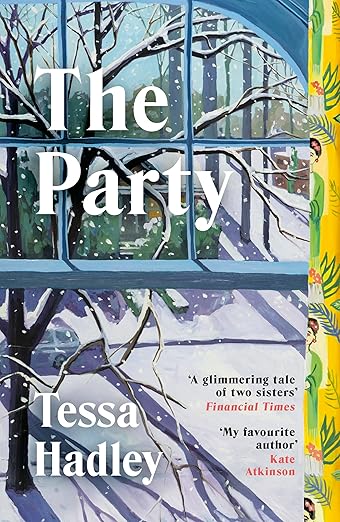
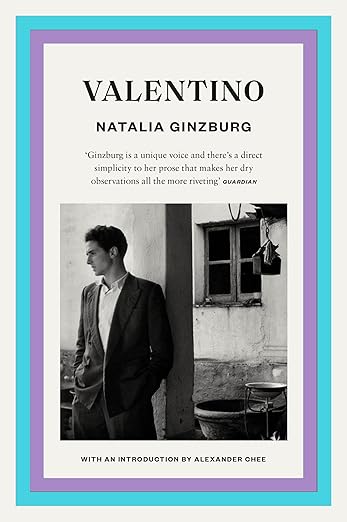
I wanted to take part in August’s Women in Translation Month, so I was hoping to recover my reading mojo in time. Having enjoyed All Our Yesterdays and The Dry Heart by Natalia Ginzburg previously, I thought her direct style would suit my addled brain well. Valentino (1957 transl. Avril Bardoni 1987)) is essentially a short story, just 62 pages in my edition (a Daunt Books reissue) and I whizzed through it on a short train journey to visit a friend in Sussex.

The story is narrated by Caterina, sister of the titular character:

“My father believed that [Valentino] was destined to become a man of consequence. There was little enough reason to believe this, but he believed it all the same and had done ever since Valentino was a small boy and perhaps found it difficult to break the habit.”

Valentino is vain and feckless, entirely undeserving of the faith his parents put in him and the sacrifices the whole family have made to finance his medical studies. He fritters away his time and routinely gets engaged to ‘teenagers wearing jaunty little berets’.

So when he announces his latest engagement, no-one takes it particularly seriously:

“It had happened so often already that when he announced he was getting married within the month nobody believed him, and my mother cleaned the dining room wearily and put on the grey silk reserved for her pupils’ examinations at the Conservatory and for meeting Valentino’s perspective brides.”

However, this engagement to Maddelena sticks. She is older, unattractive and incredibly rich. Valentino’s parents are heartbroken at his avariciousness being made so apparent. Caterina is more equanimous and she soon realises that Maddelena is caring and hard-working. Valentino is not worthy of his bride.

“It was not easy to explain to my sister Clara the turn that events had taken. That a woman had appeared with lashings of money and a moustache who was willing to pay for the privilege of marrying Valentino and that he had agreed.”

What follows is a carefully realised study of the family members and their dynamics, particularly around Valentino’s marriage. Caterina’s direct voice conveys the hurt Valentino inflicts, not through cruelty but through utter obliviousness and self-focus, without demonising him.

In such a short space, Ginzburg achieves a really moving portrait of familial relationships and how these exist under the pressures exerted by society.  There is sadness in the tale but also a deadpan humour. Caterina presents the situation without judgement, enabling a real depth to the characterisation.

Ginzburg is such an intelligent, insightful writer who never seeks to alienate readers with her cleverness. She presents knotty complexity with a deceptive simplicity of style. If you’ve never read her, Valentino is a good place to start.

“My emotions at that time were neither profound nor melancholic and I was confident that sooner or later things would improve for me.”

To end, Rudolph Valentino playing ‘a youthful libertine’ and dancing a tango, over 100 years ago:

Novella a Day in May 2025: No.31

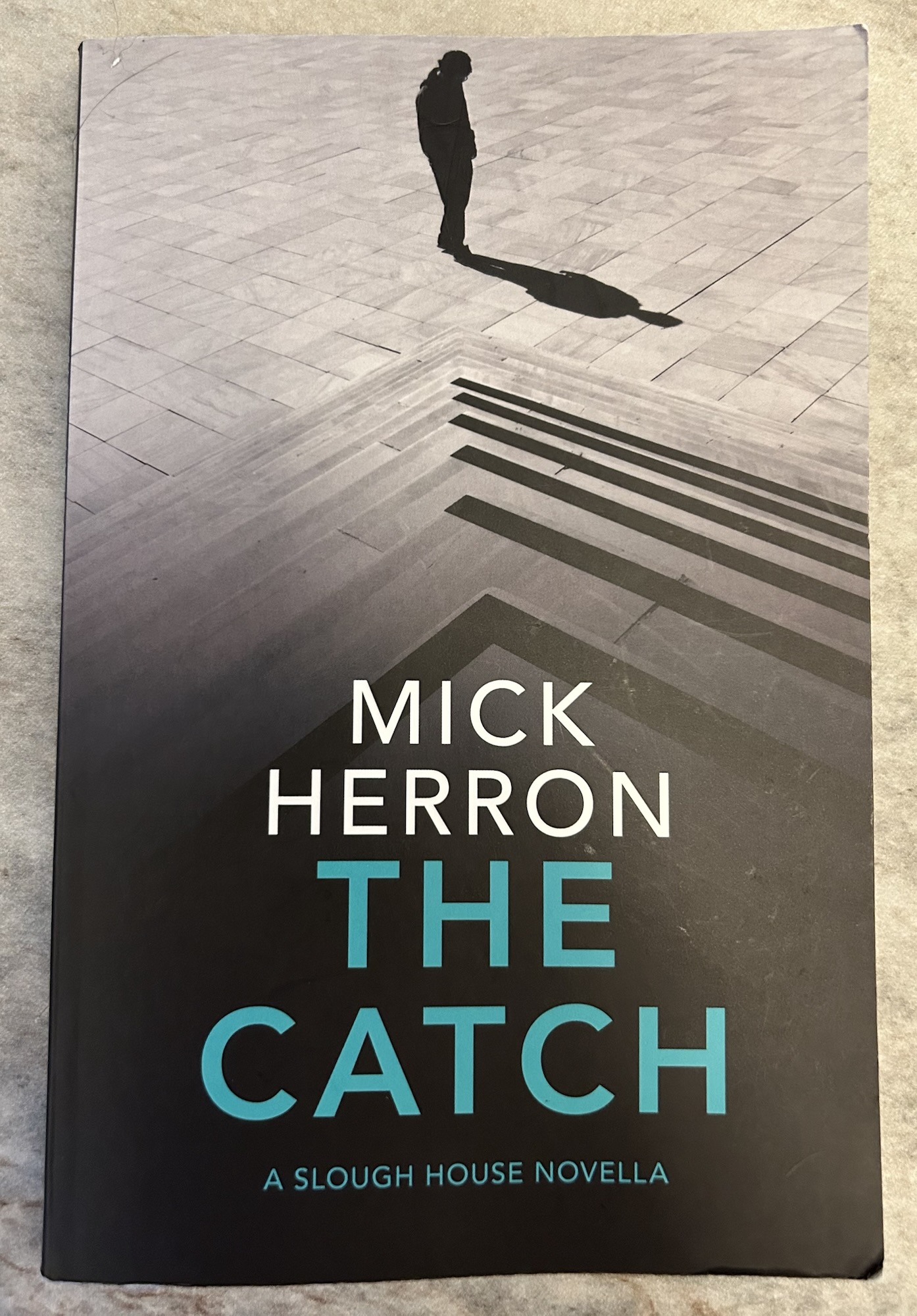
The Catch – Mick Herron (2020) 105 pages

For the final post of this year’s Novella a Day in May project: a bit of a departure for me, as it’s a spy thriller.

I don’t read spy novels at all really, but a million years ago, Lady Fancifull who sadly no longer blogs, recommended the Mick Herron Slough House series to me, and she was absolutely right. They are evocative, pacy, politically engaged, and funny. They are gaining even more attention now due to the wonderful Slow Horses adaptation with Gary Oldman in the lead (a casting I wasn’t sure about until the first moment he appeared on screen and all doubts immediately dissipated.) I highly recommend the series both in book and television formats.

The Catch is a standalone novella, part of the world of Slow Horses but only featuring the formidable Diana ‘Lady Di’ Taverner from MI5 as a familiar character (“reaching Desk level required drive, ambition, contacts, dress sense and at least a glimmer of sociopathy”.)

John Bachelor may not be a Slow Horse but he’d fit right in – a washed-up spy, trying to keep his head down. “Squeezing his feet into socks produced the kind of hyperventilation that running upstairs once triggered.”

He’s employed by the service as “a milkman”, which means he does the rounds of other old spies, checking in on them and keeping track. Except he’s lost one of his charges: Benny Manors, who has a history of blackmail.

One day John wakes up to find two Service agents in the flat he’s been living in illegally, and – he thought – under the radar.

“It was all very alarming. If they’d been thugs, he’d have known he was in for a kicking. But they were suits, which suggested a more vicious outcome.”

For reasons they refuse to divulge, they want Benny found. John is inept, out of practice, and he has two days.

I can’t say much more except it is just so impressive how Herron manages to weave a pacy spy novella, complete in itself, in so few pages. All his usual commentary and humour was evident, as well as a plot that piled machination upon machination.

Somehow Herron always evokes a recognisable London too, which so few novelists seem to achieve. He does it while writing about a side of life I know nothing about (and never will, I’d be the world’s most useless spy):

“Seven Dials. He seemed to recall an Agatha Christie with that in the title, which suggested he might encounter the usual suspects in the usual places: spinsters in the kitchen, colonels in the bar. Maybe a vicar or two in the library. As it was, Monmouth Street was just another London thoroughfare, cheerful in the sunshine and grubby round the edges, and peopled by the usual young, the usual old, the former acting like they owned the place while the latter actually did.”

To end, the trailer for the first series of Slow Horses, an absolutely pitch-perfect adaptation:

Novella a Day in May 2025: No.30

Mrs Caliban – Rachel Ingalls (1982) 117 pages

Earlier in the month when I reviewed Bear, Cathy mentioned Mrs Caliban. Well, it was just sat there as part of the same Waterstone’s display where I picked up Another Marvellous Thing, and it would take a stronger reader than me to walk away… 😀 It is also part of the lovely Faber Editions series and so a very pleasing thing in itself. By coincidence, Jacqui reviewed her favourite Faber Editions yesterday, including Mrs Caliban, so do check out her post.

In the opening passage of the novella Dorothy’s husband Fred is leaving for work:

 “He remembered that he had wanted to take the paper with him. Dorothy didn’t bother to say that she hadn’t finished with it yet herself. She just went back and brought it to him.”

I thought that was such an immensely clever detail. In so few words Ingalls has conveyed the distance between the couple, Dorothy’s domestic role, her apathy, and her lack of met needs.

Dorothy is a homemaker, but that home is hanging on in appearance only. She has experienced two immense bereavements – her young son Scotty during surgery, and a subsequent miscarriage. It is this grief which has largely contributed to forcing her and Fred apart.

And so it went on: silences, separateness, the despair thinking out conversations that they knew would be hopeless.”

We quickly learn that unsurprisingly, Dorothy’s mental health may be suffering. She is hearing messages directly addressed to her from the radio:

“She hadn’t thought she was going crazy, not straight away. She believed it was just her own thoughts forcing themselves into the low pitched sounds and their insistent rhythm.”

This affects the reading of the rest of the novella: it is Dorothy’s perception of events, but did it actually happen? This is left ambiguous and works well, because in a sense it doesn’t matter. What does matter is Dorothy’s experience.

When Dorothy hears that “Aquarius the monster man” has escaped from a nearby facility, she isn’t sure if it is a general news alert or one of her personal messages.

“She came back into the kitchen fast, to make sure that she caught the toasting cheese in time. And she was halfway across the checked linoleum floor of her nice safe kitchen when the screen door opened and a gigantic six foot seven inch frog like creature shouldered its way into the house”

Again, I thought that was so clever, moving immediately from the small domestic concern to something so fantastical, linking the two together in that immediate moment with the ‘And’.

Dorothy and the creature become friends and almost immediately lovers, with her nicknaming him Larry. He lives in the house and is easy to hide because Dorothy and Fred essentially have separate spheres.

(Incidentally, I’ve seen Dorothy referred to as Dorothy Caliban, including in the Foreword to this edition, but I don’t remember Dorothy and Fred’s surname being mentioned in the story. More than likely I missed it, but I thought the title was a reference to her bond with Larry, a Caliban-type creature, with him ambiguous in the way that Shakespeare’s creation could be too.)

What is interesting is that if Larry is Dorothy’s fantasy, what that fantasy says. He is physically strong and they have a sexual bond, but he is also unfailing polite and respectful, is interested in her, and enjoys helping with domestic tasks. The feminism running through Mrs Caliban is evoked skilfully and is undeniable.

Additionally, if he is Dorothy’s fantasy, Larry is violent towards those who seek to harm him. Although we never see Dorothy especially angry, why wouldn’t she be? Both her children died, her husband runs off having affairs, and she’s left with a house to manage – for whom?

“She had no interests, no marriage to speak of, no children. Now, at last, she had something.”

In case I’ve made this sound very heavy, there is plenty of humour in Mrs Caliban too:

“Most of the time, if she couldn’t explain something to him straight away, he didn’t push it. The last time she’d been stuck was when he said he didn’t understand ‘radical chic’.”

Although ultimately I found it a sad novella. In the same way that The Tempest doesn’t fit easily into particular genres, neither does Mrs Caliban. Like the play with the ‘monstrous’ Caliban, this story can be comedic, tragic, dramatic, and fantastical. Like The Tempest, it features a lot of grief and loss.

Prospero, main protagonist of The Tempest, is a man and a sorcerer, who is able to own his anger and command his environment. Dorothy commands her environment – it is domestic and it is what she is expected to do. But she is denied so much agency, and her relationship with Larry is the start of her claiming some back.

Ingalls is such a skilled writer and Mrs Caliban has enough ambiguity that it can be read a number of ways. Ultimately I read Mrs Caliban as a grief narrative,  where the grieving person starts to find their way in the world again after it has irrevocably changed, but the sadness remains.

Novella a Day in May 2025: No.29

Another Marvellous Thing – Laurie Colwin (1986) 130 pages

Last year a Waterstones opened up a few minutes walk from where I live. I try and ration my visits but you can probably guess how that’s working out 😀 Browsing there was how I found out about Laurie Colwin, who until now had somehow passed me by. I tend to treat jacket blurbs with a mountain of salt, but anyone described as “The Barbara Pym of 1970s New York” (Jonathan Lethem) was going to have me snatching their work from the shelf.

In Another Marvellous Thing Billy and Francis have an affair, despite both being married to other people. Francis is quite a bit older than Billy, though we’re never really told their ages. Both are involved in the field of economics but have wildly different views. They are wildly different in just about every way.

“It would never work. We both know it. She is to relentlessly dour, and too fond of silence. I prefer false cheer to no cheer and I like conversation over dinner no matter what.”

The first chapter is narrated in the first person by Francis, before shifting to a third person narrator for the remainder:

“In movies men have mistresses who soothe and pet them, who are consoling, passionate, and ornamental. But I have a mistress who is mostly grumpy. Traditional things mean nothing to her. She does not flirt, cajole, or wear fancy underwear.”

Despite the bafflement they both have for why they are involved with one another, their affair is rooted in love.

“We are as faithful as the Canada goose, more or less. She is an absolute fact of my life.”

“She did not want to have these feelings: she had been so much happier when she had been unaware she had them.”

Billy and Francis are also markedly different to each other’s spouses:

“Billy, unlike my gregarious party-giving wife, thinks that there is no hell more hellish than the hell of social life.”

“He has the body of a young boy in the air of a genius or someone constantly preoccupied by the intense pressure of a rarified mental life. Together he and Billy look not so much like husband and wife as co-conspirators.”

In other words, they are both much better suited to those they are married to. This means that Another Marvellous Thing avoids the pitfalls of a will-they-won’t-they get together plotline, and instead is more interested in these two disparate characters, and a year or so of their lives together.

“The topic of her dissertation turned Francis glassy-eyed: his passion for Billy did not mitigate his indifference to the medieval wool trade.”

Despite Billy’s interiority keeping her somewhat unknown to Francis, as a reader I loved her character. She was so idiosyncratic and believable, with her refusal to conform to societal expectations:

“‘A vision of radiant loveliness,’ Francis said.

‘I’m so sorry,’ Billy said. ‘The laundry ruined my filmy peignoir.’”

Unlike Francis who is quite equanimous about being unfaithful, Billy feels horribly guilty. Later in the book the affair has finished and the chapters focus on her life afterwards, where we see much more vulnerability than she allowed Francis to witness.

“In one of her snootier moments, my mistress said to me: ‘My furnishings are interior. I care about what I think about.’”

All in all I enjoyed my first experience of Colwin’s writing. There were so many great one-liners and it did feel very New York. But the wit didn’t stop emotional truth being fully realised, particularly with Billy and her husband Grey in the later chapters. I’ll look forward to exploring her further.

Being in love, he often felt, was like having a bird caught in his hair.”

Novella a Day in May 2025: No.28

The Lady and the Little Fox Fur – Violette Leduc (1965, transl. Derek Coltman 1967) 80 pages

I found this novella, only slightly longer than a short story, incredibly moving. It follows the daily life of a frail, impoverished woman, living in a dilapidated attic room in Paris which shakes every few minutes when the Métro passes overhead.

Violette Leduc is not an author I know, but in the Introduction to my edition Deborah Levy describes her novels as “works of genius and also a bit peculiar.” Certainly Leduc has a way of skipping between images and realities that continually pulled me up short. Despite its brevity The Lady and the Little Fox Fur can’t be read quickly; the sentences have to be considered.

“Her coat was turning green with age. So much the better: it was a proof that her verdigris candlesticks in the pawn shop had not abandoned her. When the sun came out, there were two torches to light her way, the sun itself and its reflection in the window of Joris’, the shop that accepted la Semeuse coupons.”

That strange logic about the candlesticks demonstrates the frayed reasoning of The Lady, but also Leduc’s skill in layering images to evoke scenes and draw elements of her story together so clearly.

Her stylistic skill never distances the characters. A long time is spent on the hunger of The Lady, both physical and psychological. She is desperate for food, and she is desperately lonely. Every day she roams around her home city, unseen and disregarded.

“Wheat pancakes, fifty francs. The batter was spreading across the hotplate, the woman was scraping away the drips and making the edges neater with the point of her knife. But she would draw her nourishment later on from the crowd in the Métro: one cannot have everything.”

“They were workmen whose job it was to keep the flagstones level, and they put up with her there because they didn’t know she was there. The bollard she was sitting on had such stability, the place itself was so historic that she became a peasant woman who had ridden in from the Perche country to sell a farmhorse many centuries ago.”

The second part of the novella sees her take out a raggedy fox fur, which she found in rubbish when hunting for an orange to eat, to sell for food.

“There were moments when she had no saliva left to remember with, not even the pale pink water ices that her parents used to eat.”

It is desperation which drives her, as the fox fur provides warmth and companionship. Like a child, she anthropomorphises the inanimate object (as she does bugs in the floorboards and some of her furniture), showering him with kisses and affection.

The Lady and the Little Fox Fur could have been unbearably sentimental, but Leduc’s way of writing meant it wasn’t so. The Lady doesn’t pity herself and the portrayal evokes compassion and empathy rather than sympathy. She endures, repeatedly, throughout the challenges of her daily life.

“Happily, she noted, it was still not six o’clock: she was the ribbon in a little girl’s hair, fluttering in the breeze. After six, the wind in Paris grows stronger and disarranges all our principles.”