Journey into the Past – Stefan Zweig (1976 German publication; trans. Anthea Bell, 2009) 84 pages
Although I’ve since read and blogged about The Post Office Girl, this was the first Stefan Zweig I’d read and at first I wondered why everyone rated him so highly as a writer. Then I realised what he was doing in Journey into the Past was immensely clever.
It tells the story of a love affair between a student, Ludwig, and the wife of his employer, who is not named. The story begins with them on a train in the 1920s, and with Ludwig’s thoughts travelling back into the past to remember how they first met before the First World War separated them.
At first, I thought the description of the affair overblown and naïve.
“From that first meeting he had loved this woman, but passionately as his feeling surged over him, following him even into his dreams, the crucial factor that would shake him to the core was still lacking – his conscious realisation that what, denying his true feelings, he still called admiration,respect and devotion was in fact love – a burning, unbounded, absolute and passionate love.”
At this point I was thinking Zweig perhaps wasn’t for me 😉
But as the story developed – they admit their love but it remains unconsummated, he goes abroad and then war breaks out, separating them for longer than they ever anticipated – it dawned on me that this style choice was entirely deliberate and conscious. What Zweig shows us is a world before modern technological warfare, a world that was brutally torn apart. These naïve young lovers are part of a society, a life, that was utterly destroyed.
So although we know they are reunited, it is not with the same youthful self-obsession or indulgent love that they had previously.
“‘Everything is just as it used to be, don’t you think?’ she began, determined to say something innocent and casual, although her voice was husky and shook a little. However he did not echo her friendly, conversational tone, but gritted his teeth.
‘Oh yes, everything.’ Sudden inner rage forced the words abruptly and bitterly out of his mouth. ‘Everything is as it used to be except for us, except for us!’”
Journey into the Past is not a depressing book despite portraying losses that are glimpsed and barely articulated. It is about the impact of international conflict on the lives of individuals in the smallest, most profound ways. Zweig questions whether those loses can be overcome, and I still don’t know what I think.
I feel foolish for my initial impression of this novella: I hadn’t realised I was in the hands of a master.
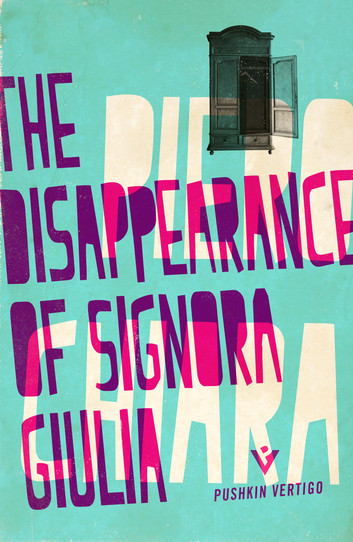
The Disappearance of Signora Giulia – Piero Chiara (1970, trans. Jill Foulston 2015) 122 pages
The Disappearance of Signora Giulia was initially published in an Italian newspaper as a serial and is now available in English translation thanks to Pushkin, as part of their Vertigo imprint. It is a quick, snappy crime thriller that does not aim for trite resolution but rather an exploration beneath the surface of a life to the murky depths.
Corrado Sciancalelpre is “blessed with a special form of intuition, that peculiar mental agility that enables great policemen to delve into the minds of criminals.”
Thankfully, he is also happy married and liked in the town in northern Lombardy where he works – no tortured alcoholic with a secret past here.
A powerful lawyer, Esengrini, asks Sciancalelpre to investigate the titular vanishing of his wife. Every Thursday, Guilia has been going to Milan to visit their daughter at boarding school, but now she has failed to return and two bags of her things are missing too. Sciancalelpre agrees and what follows is essentially a police procedural, but the short length of the story ensures the pacing remains tight.
Sciancalelpre is resolutely unsentimental but not without sympathy. The more he investigates, the more he feels for the missing woman:
“He didn’t say ‘Poor Signora Giulia to Esengrini when he visited him in his office every few days towards evening. With Esengrini, he spoke only of the undeniably disappointing results of a search conducted throughout the whole of Italy with Signora Giulia’s photo.”
It’s impossible to say much more about a crime novella without including spoilers. Suffice to say there are plenty of red herrings, people and relationships who are not what they seem. The Disappearance of Signora Giulia is a diverting read, when you’re in the mood for a crime novel you’ll finish quickly. It is not a simple tale though, and the resolution is a complex one that leaves questions unanswered. This wasn’t a source of frustration but rather felt realistic.
I really enjoyed this, Chiara’s first novel to be translated into English despite his huge popularity in Italy, and I hope there will be many more translations to follow.
Cliffs – Olivier Adam (2005, trans. Sue Rose, 2009) 147 pages
Set over the course of a single night, Cliffs shows the enduring damage caused to the child – now a grown man – of a parent who dies by suicide.
The narrator is sitting on a balcony on the Normandy coast in the middle of the night, gazing at the cliffs where his mother died, while his partner and child lie sleeping in the room behind him. As he sits and smokes, he reflects on his life with his abusive father and his traumatised brother:
“We weren’t supposed to breathe move speak feel. We weren’t supposed to need anything, pocket money or comfort or affection or smiles or advice, we weren’t supposed to expect anything except the slaps, smacks or wallops he dealt out”
Later he meets other damaged souls, drawn together by a mutual recognition:
“We’ve grown up in fear of our fathers, the troubled silence of our mothers, the empty space formed by abstract, imaginary places, without edge or centre.”
Cliffs isn’t a depressing book; it is a story of survival, of endurance even when we are irrevocably damaged by experience.
“This way of life didn’t cure me of anything, it was merely possible when I couldn’t cope with any other kind of life, particularly the one I’d just left behind. It was a life of silence, space and absence, of maintaining an acute presence within objects, the shifting play of light, the still motion of water, the perfumes, the texture of the air. It was a life in which I finally found a niche, quiet but peaceful, a body filled with air and fog, a mind completely given over to the noise of the sea and the wind, the company of birds.”
Cliffs is beautifully written, but the beauty in no way detracts from the raw hurt experienced by narrator. It is an intense read, haunting and memorable.
For a while now I’ve been enamoured of the novella. I enjoy sparse writing styles (not so good at this myself 😉) and at its best a novella gives us a narrative distilled to its essence for maximum impact. To spread novella love I’ve decided to post about a novella each day for the whole month. There’s no fixed definition of a novella so for my purposes I’ve decided its longer than 70 pages and shorter than 200. This will definitely work! It won’t peter out and die in a heap by 5 May at all! Onwards…
The Game of Cards – Adolf Schroder (trans. Andrew Brown, 2008) 143 pages
The Game of Cards is not ostensibly gothic or a thriller, and yet it is both these things. The story of how student Markus Hauser is employed by Selma Bruhns for a week to put several trunks worth of letters into chronological order is truly creepy and suspense-filled.
Selma is a terse, uncommunicative employer, who lives in an old house with a vast number of cats at varying stages of disease. Markus is constantly at the point of leaving, unable to stomach the “stench” of the house, the feral occupants, his awkward employer and the seemingly pointless nature of his repetitive task:
“He squatted down between the piles of letters lying on the floor, but when her resumed his work…looking for the pile in which he was putting the letters from 1943, laying the pages of the letter on it and reaching out for the next one, he paused, as if he’d only just realised that he had absolutely no idea what he was doing”
Gradually however, Markus is drawn into the letters, all written to a woman named Almut. Very little is given away, but Markus finds himself compelled to continue, without really understanding why.
“Words from the letters that he had read came alive. He found himself in streets where he had never been, heard the shrieking and whistling of creatures that he could not see but whose presence he surmised, felt on his skin the burning sun whose strength he had never yet felt, saw a woman coming up to him who spoke in a language that he did not understand.”
This chronology is interspersed with the investigation being conducted by Superintendent Berger, who suspects Markus of having strangled Selma with her own scarf on his last day of work. Thus we are drawn into not only the mystery of who Almut is and why Selma is obsessively writing to her, but also who killed Selma and why. Schroder jumps between the two timelines without preamble and so the reader is drawn into the disorienting, imperfectly understood situation of the all the characters.
“With a sudden move that took Markus by surprise, she threw the animal towards him, it crashed into his chest, and only because Markus reacted quickly and caught the animal could he prevent I from falling onto the ground.
‘You are working slowly and without much concentration,’ said Selma Bruhns, turning round and stepping into the house.”
There is also the question of what happened – and what the stake was – in the titular match between Markus and Selma…
The Game of Cards is a deeply disturbing read, and a powerful portrait of enduring psychological trauma. It will stay with me for a long time.
I live on a tiny grey island. This year Spring has been even greyer than usual and it felt like winter had gone on for eleventy million years. Now the weather is overcompensating by being unseasonably warm for a few days (just in time for the London marathon – kudos to those hardy runners), and so I’ve decided to celebrate by looking at two novels set on warm islands. They are two more stops on my Around the World in 80 Books Reading challenge, hosted by Hard Book Habit, and I’m sure by the time I’ve posted this my home will be back to service-as-usual grey and we’ll all know where we stand.
Firstly, Salt by Earl Lovelace (1996), set in Trinidad where Lovelace was born and still lives. I read The Dragon Can’t Dance years ago and really liked it, but for some reason I hadn’t picked up a Lovelace since. Salt is primarily the story of Alford George, but it is also a story about Trinidad.
“Maybe that madness seized Columbus and the first set of conquerors when they land here and wanted the Carib people to believe that they was gods; but, afterwards. After they settle in the island and decide that, yes, is here we are going to live now, they begin to discover how hard it was to be gods.
The heat, the diseases, the weight of the armour they had to carry in the hot sun, the imperial poses they had to strike, the powdered wigs to wear, the churches to build, the heathen to baptise, the illiterates to educate, the animals to tame, the numerous species of plants to name, history to write, flags to plant, parades to make, the militia to assemble, letters to write home. And all around them, this rousing greenness bursting in the wet season and another quieter shade perspiring in the dry.”
Alford dreams of leaving the island and decides the way to do this is to speak ‘English’. Lovelace shows the legacy of colonialism and how the language of the colonisers is still associated with power and accomplishment.
“His thinking was in another language and he had to translate. He began to speak more and more slowly to make sure that his verbs agreed with his subjects, to cull out words of unsure origin and replace them with ones more familiarly English. Caribbean words like jook, mamaguy and obzocky all had to be substituted. He felt his meanings slipping away as he surrendered his vocabulary.”
However, as time goes on, Alford stays on the island, becomes a teacher, fights for his students rights and becomes embroiled in politics. His identity becomes more bound with contemporary Trinidad, and it’s then that he realises that emancipation has been a false promise:
“manoeuvre them into accepting not freedom but the promise of being set at liberty, with no more attention given to their years if degradation and captivity and abuse than if they had been dogs”
There is a plethora of other characters in Salt and I can barely scratch the surface here. They are drawn vividly and with affection, a cacophony of voices that pick up Lovelace’s themes of identity, home and meaning. They exist within a beautifully evoked Trinidad whereby Lovelace is able to explore his weighty themes without becoming overly didactic.
This post is ridiculously long and I don’t have time to explore Salt properly, but I did just want to mention this beautiful portrait of the elderly Miss May:
“And with the laborious delicacy choreographed by her pains eased herself down unto the step where the sun was brightest and rested there, her eyes shut, her breath inhaled, the metronome of her mind keeping time to the rhythm of her distress, trying to find within the music of her pain a space in which to breathe.”
I think that’s a stunning piece of writing. Lovelace writes with clarity and a unique voice, and he has important things to say:
“The tragedy of our time is to have lost the ability to feel loss, the inability of power to rise to its responsibility for human decency.”
Secondly, By Night the Mountain Burns by Juan Tomas Avila Laurel (2008, trans. Jethro Soutar 2014) who is from Equatorial Guinea, and whose parents are from Annobon Island. The island in the novel is unnamed but shares a location and a history of Spanish colonialism with Annobon.
“We were on our own out in the middle of the Atlantic Ocean. People had given up hope of the boat ever coming back – the boat from the place where our fathers were.”
The narrator recounts his experience of childhood on the island. He lives with his silent, remote grandfather.
“I can’t say for sure whether my grandfather was or wasn’t mad. I saw him through a child’s eyes and through such eyes it’s impossible to tell whether an adult man, who lives in your house and who you’ve been told is your grandfather, is mad or not.”
“The house was close to the beach. And not any old beach either but the big village beach. Yet despite being so close to the shore, grandfather had built the house with its back to the sea…everything faced the mountain.”
Women on the island own the land, while the men undertake the fishing. Things are not easy on the island – there is poverty at times, white people arrive and trade sex with women for cigarettes and kerosene – but things deteriorate significantly during the period the narrator is recalling. There is a bush fire, then cholera wipes out a huge proportion of the population, and there is a horribly violent instance of scapegoating.
“Today, looking back, I see, or understand, that the incident and the cholera were part of the same sickness. And the cure for that sickness was beyond the reach of our adults for it was a sickness that was greater than them, and so it was able to dominate them. And on that island out in the middle of the Atlantic Ocean, nasty episodes unfortunately had to be explained somehow; something to satisfy people’s need for a cause.”
The island may be out in the middle of the Atlantic Ocean, and the faith of the people may be a mix of their traditional beliefs and Catholicism, but I felt what the narrator is speaking about was far from remote from me as a UK-based reader:
“For I know now that all people are not treated equally when it comes to apportioning blame for bad things that happen in communities. I know that, in this world of ours, how facts are judged depends on who’s doing the judging.”
I’m making this novel sound depressing, and it isn’t. The point of view of a child enables the story to be told but with a degree of distance that enables the reader to keep reading. This is not to suggest that Laurel obfuscates or pulls his punches. The brutal scapegoating is repeatedly returned to and described in detail. It is horrific. The repetitions of the story enable it to effectively capture the sense of reminiscences, and also how defining moments are those we return to time and again, informing our understanding of the past and who we are.
Towards the end we learn how this story is embedded within colonialism, and how what we are reading exists within this history. The narrator learned Spanish at school, a language that existed detached from meaning for him:
“We learned everything by heart, and I think that’s why we did it singing. In fact, although we sometimes saw books with the letters and pictures, I didn’t know that amapola, burro, cochino and dado were Spanish words for poppy, donkey, hog and dice, or that poppy, donkey, hog and dice were things we were supposed to have heard of. I didn’t know what any of them were, so I didn’t know the words were supposed to represent the letters and I didn’t associate the letters with the pictures in the books.”
As a result of this, he is able to tell his story to Spanish-speaking researchers who have come to the island:
“If this story becomes known, it will be because of some white people.”
Laurel writes with unrelenting power in beautiful prose about huge issues: society, colonialism, legacy, blame, belief. His writing is stunning and his anger palpable without overwhelming the narrative. Another great edition from And Other Stories, who are rapidly becoming one of my favourite publishers.
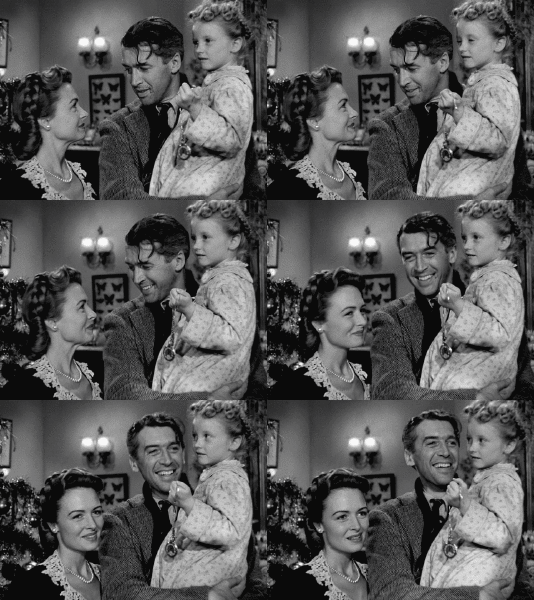
I hope you all had a wonderful Christmas! From my twitter feed, I know for some that means being as far away from relatives as possible 😉 If Christmas advertising were to be believed, we should all have families like this:
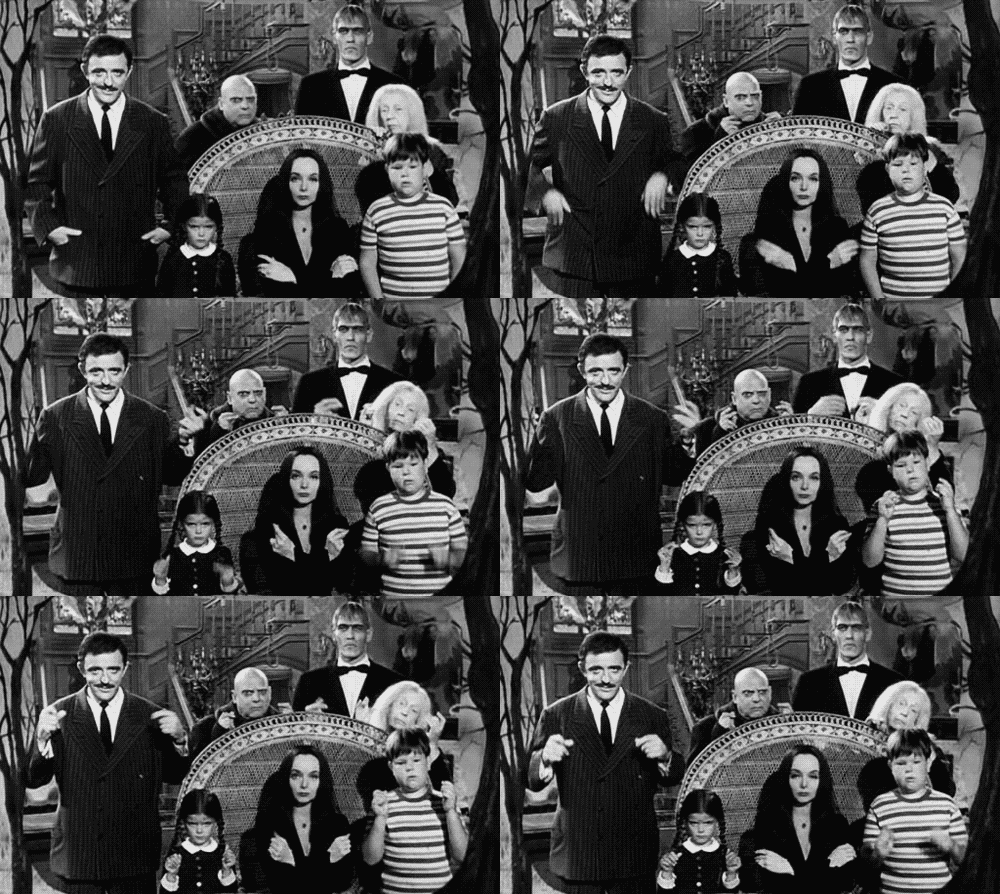
Whereas in fact the reality may be closer to this:
In which case I would say well done you, because I’m the only person alive who doesn’t like It’s a Wonderful Life *ducks for cover* whereas the Addams Family are awesome. Whether you spent Christmas with George Bailey or Uncle Fester, I thought this week might be a good time to look at families that are found in unexpected places.
Firstly, Plainsong by Kent Haruf (1999) which I picked up after loving Our Souls at Night so much and many bloggers recommended I start the Plainsong trilogy. All the things I enjoyed about Our Souls at Night were here: a gentle, unshowy voice, believable idiosyncratic characters, ordinary lives shown to have a delicate beauty.
Set in the fictional prairie community of Holt, Colorado, Plainsong focusses on a pregnant schoolgirl, Victoria Roubideaux, and one of her teachers, Tom Guthrie, who is splitting up with his wife. After Victoria is thrown out by her mother, another teacher, Maggie Jones, suggests to a pair of elderly brothers, Harold and Raymond McPheron, that they take her in.
“ You’re getting goddamn stubborn and hard to live with. That’s all I’ll say. Raymond, you’re my brother. But you’re getting flat unruly and difficult to abide. And I’ll say one thing more.
What?
This ain’t going to be no goddamn Sunday school picnic.
No it ain’t, Raymond said. But I don’t recall you ever attending Sunday school either.”
They offer Victoria a home, and the portrayal of their developing relationship with the young woman is just lovely. The brothers are set in their ways and unused to female company. Victoria is shy and unsure. The tentative gestures they make towards one another pay off and a tender, mutually nurturing affection develops.
“The brothers were watching her closely, a little desperately, sitting at the table, their faces sober and weathered but still kindly, still well meaning, with their smooth white foreheads shining like polished marble under the dining room light. I wouldn’t know, she said. I couldn’t say about that. I don’t know anything about it. Maybe you could explain it to me.
Well sure, Harold said. I reckon we could try.”
Meanwhile, Tom’s sons Ike and Bobby are struggling to come to terms with their mother’s depression and subsequent leave-taking. A similarly unexpected yet gentle cross-generational relationship develops between the boys and elderly, isolated Mrs Stearns who they know from their paper round.
“The timer dinged on the stove. They took the first oatmeal cookies out of the oven and now there was the smell of cinnamon and fresh baking in the dark little room. The boys sat at the table and ate the cookies together with the milk Mrs Stearns had poured out into blue glasses. She stood at the counter watching them and sipped a cup of hot tea and ate a small piece of cookie, but she wasn’t hungry. After a while she smoked a cigarette and tapped ashes in the sink.
You boys don’t say very much, she said. I wonder what you’re thinking all the time.
About what?
About anything. About the cookies you made.
They’re good, Ike said.”
Plainsong is a gentle tale about all that human beings can give and be to one another, but it is not remotely sentimental or rose-tinted. Haruf shows, he doesn’t tell, with a restraint and subtlety that is easy to underestimate but is absolutely masterful. I find his writing incredibly moving. It’s going to be a real strain on my 2018 book buying ban not to rush out and buy the novels of his I don’t yet own.
Secondly, Sweet Bean Paste by Durian Sukegawa (2013, trans. Alison Watts, 2017). Again, this is a simply told tale of ordinary people, and it is truly heartwarming. The main protagonist is the decidedly unheroic Sentaro. He has a criminal record and is employed by people he owes money to. He sells dorayaki – pancakes filled with the titular paste – with no pride in or commitment to his work. One day Tokue, an elderly lady with a visible disability in her hands and face arrives in the shop:
“ ‘I had one of your dorayaki the other day. The pancake wasn’t too bad, I thought, but the bean paste, well…’
‘The bean paste?’
‘Yes. I couldn’t tell anything about the feelings of the person who made it.’
‘You couldn’t? That’s strange.’ Sentaro made a face as if to show how regrettable that was, though he knew full well his bean paste could to reveal no such thing.”
Sentaro employs Tokue on the understanding that she will not interact with the customers who he thinks will be put-off by her disability. Tokue’s delicious bean paste brings more customers to the shop and business begins to boom. As Sentaro and Tokue’s relationship develops, he begins to understand that she has survived Hansen’s disease (leprosy) but is still subject to significant stigma around the disease. One of the schoolgirl customers, Wakana, becomes very attached to Tokue, and they visit her at the asylum she continues to live in although the government has passed an act which means those with Hansen’s disease are no longer kept in isolation.
“Nevertheless human lives had been swallowed up by this place and for a hundred years, continually spurned. It felt to Sentaro as if the singular silence rose from the very earth beneath their feet, steeped as it was in sighs and regrets.”
Sweet Bean Paste is about living life to the full even when society is circumscribing it in cruel ways. It is about friendship’s power to heal and to empower. It is also about opening ourselves to experience the world in new and surprising ways, no matter our age. Tokue has an almost mystical relationship with her cooking, which enriches both her and those who consume her food.
“When I make sweet bean paste I observe closely the colour of the adzuki beans faces. I take in their voices. That might mean imagining a rainy day or the beautiful fine weather they have witnessed. I listen to their stories of the winds that blew on their journey to me.”
And so in the end, I think Sweet Bean Paste is about nourishment in all its forms; it is there for the taking if we have the wisdom to see it and the open hearts to embrace it.
To end, never let it be said that I shy away from the obvious:
Temperatures have dropped in the UK and I’m writing this after coming in from a surprise snow flurry, while Scotland’s had proper snow, so I think now it’s December & officially winter. My choices this week are suitably wintry in theme, but they’re not a big tome to curl up with on a winter’s day. I’m going through a prolonged novella phase at the moment and these are excellent examples of how much can be achieved in a short space. They’re small, but powerful.
Firstly, A Life’s Music by Andre Makine (2001, trans. Geoffrey Strachan) which comes in at 106 pages. The narrator is stuck in a snowbound railway station awaiting the Moscow train:
“Suddenly everything is illuminated by a truth that has no need of words: this night lost in a void of snow; a good hundred travellers huddled here; each seems as if he were breathing gently upon the fragile spark of his own life; this station with its vanished platforms; and these notes stealing in like moments from an utterly different life.”
The notes come from a piano being played by an elderly gentleman, tears streaming down his face. When they finally board the train, he tells the narrator his story, and why the music makes him cry. It is a tale of war and persecution, and of shifting identities in order to survive:
“As a result of this fear, and the assiduity with which he copied the actions of others during those first few weeks, he did not feel as if he were engaged in combat. And when he was finally able to relax the constantly taut string within him, he found himself in the sin of a veteran soldier”
Makine is interested in human endurance, in cruelty, in love and in moments of transcendence. He is brilliant at using small moments to illuminate big themes.
“To his surprise he felt himself growing increasingly separate from the wind, the earth, the cold, into which he had almost merged. But more surprising still was this simple bliss: the warm line where the woman’s body touched his own at night. Just this line, a gentle, living frontier, more substantial than any other truth in the world.”
A Life’s Music is a haunting tale written by a master. Makine proves that you don’t need to write at length to create something substantial. Stunning.
Secondly, A Meal in Winter by Hubert Mingarelli (2012 trans. Sam Taylor 2013) which is only 138 pages long. The premise of A Meal in Winter is incredibly simple, and the themes it explores incredibly complex. Three German soldiers find a Jewish man when they are on patrol in Poland. They do not share a common language with the young man and they take him prisoner with ease . They then retreat to an abandoned cottage to cook their meagre rations on a freezing winter’s day before taking him back to their barracks to be shot.
“everything would be better once it was warmer. Smoking and eating in front of the stove! What could be better? We would smoke while we waited for the bread to thaw and for the cornmeal to cook.”
The focus on essential human need for food, warmth and shelter is a master stroke by Mingarelli. The men are human first, soldiers second. Will they recognise their common humanity with their terrified prisoner and what will it mean if they do?
Mingarelli is excellent at building characters, scenes and atmosphere in a few words, and the desperate situation for all concerned is brilliantly evoked, within a harsh, freezing landscape:
“Sky and earth had blurred into one, and there was no comfort to be found in either. While I packed the snow into our mugs, I wondered again how it was possible that we had once seen so many sunflowers here, and not so long ago either. The landscape had been so full of them, so completely covered, that it seemed their oil must have been flowing like a river somewhere.”
A Meal in Winter is a powerful and moving novella that does not offer simple answers; it has really stayed with me.
To end, I know it’s a wee bit early for Christmas tunes, but I’ve chosen it because of the excellent snowy outfits. Remember kids: real fur is cruel, and spandex leggings are not suitable winter attire.
I’m managing to squeeze in one final post for German Literature month, hosted by Caroline and Lizzy. Hopefully next year I’ll be better organised and able to participate some more, but for now I’m off to Austria, which is also another stop on my Around the World in 80 Books Reading Challenge, hosted by Hard Book Habit. Do join in with GLM next year or AW80Books, they’re great ways to read some wonderful books 😊
Firstly, The Post Office Girl by Stefan Zweig (trans. Joel Rotenberg 2008) which was found amongst his papers after he killed himself in 1942. This is a melancholy tale of the impact of war on individuals, in this instance the First World War. Christine is a titular provincial civil servant, who finds herself in her late twenties having only known penny-pinching and drudgery.
“The war stole her decade of youth. She has no courage, no strength left even for happiness.”
Christine is plucked out of her ordinary life by her aunt who is visiting the Swiss Alps. She invites Christine to stay and the naïve woman is enraptured by the whirlwind of new clothes, fine dining and bright young things of which she is suddenly in the midst.
“All the world’s sweetness might be in this one thin straw of scalding ice. Heart thumping, fingers trembling avidly, she looks about for someone or something to receive her overflowing gratitude.”
Christine is transformed from a drudge into a beautiful young woman that people want to be with.
“In this instant, shaken to her very depths, this ecstatic human being has a first inkling that the soul is made of stuff so mysteriously elastic that a single event can make it big enough to contain the infinite.”
Then, just as suddenly, it is all taken away. Back in her small Austrian town she finds herself unable to cope with the poverty of the people, her home and her job. She meets Ferdinand, a soldier whose war wound means he is unable to continue his work as an architect. He is cynical of governments and bitter regarding his experience:
“In our Tartar village we didn’t know if Vienna was part of Bohemia, or maybe Italy. And we didn’t give a damn. All we cared about was stuffing a crust of bread down our throats and getting the lice out of our hair and finding some matches or tobacco sometime in the next five hours.”
For Christine, this man is soulmate, but these two souls are so damaged, so hurt and isolated, that they can only offer one another the bleakest kind of companionship.
“Christine was taken aback. The man beside her had said just what she’d been thinking all this time; he’d expressed clearly what she’d dully felt – the wish to be given one’s due, not to take anything from anyone, but to have some kind of life, not to be left out in the cold forever while others were warm inside.”
Zweig is unblinking in his portrayals of people, showing them with all their flaws, vanities and foibles, but still with great compassion. You feel for the characters precisely because they are so believably imperfect. The tyranny they face from the ruling class – either elected or via money – is presented as inescapable. The Post Office Girl is a novel about desperation, and how financial poverty can wear people down to a poverty of spirit. It is beautifully written and absolutely devastating.
In the Afterword of my edition William Deresiewicz suggests the novel is unfinished. I’m not sure I agree. I don’t know enough about Zweig’s style to argue my point forcefully, but to me, the ending occurs exactly where it should. It is perfect: sad but defiant, with so much unknown.
Secondly, The Piano Teacher by Elfriede Jelinek (1983, trans. Joachim Neugroschel 1988). Marina Sofia reviewed Jelinek’s volume of 3 plays In den Alpen for German Lit Month, do read her fascinating post which explains how controversial the author is in Austria due to her critique of Austrian society. The Piano Teacher was the first of her novels to be translated into English and it was also adapted into a film in 2001, starring the wonderful Isabel Huppert and directed by Michael Haneke. I haven’t seen it but it looks a faithful adaptation:
I found The Piano Teacher an incredibly tough read. Jelinek does not pull her punches in any way. This tale of Erika, a woman living in a claustrophobic, abusive relationship with her mother, and her masochistic sexual desires seeking expression with one of her pupils is really hard going.
“They are enclosed together in a bell jar: Erika, her fine protective hulls, her mama.”
Jelinek creates the cruel, affectionate relationship between mother and daughter brilliantly. They are bound together in bitterness and a warped love.
“The daughter is the mother’s idol, and Mother demands only a tiny tribute: Erika’s life.”
Erika’s relationship with her mother and the abuse she suffers, and enacts, feeds into her sexual preferences, reminding me of The Blue Room. She is repressed (she shares a bed with her mother), and this expresses itself through the violence she metes out to her unsuspecting fellow commuters, and in one horrible instance, a pupil she is jealous of. She is a voyeur and attends peepshows and stalks couples in the park, but is incapable of becoming sexually aroused by what she witnesses. When a student, Klemmer, expresses an interest in her, the two begin a clumsy, stunted affair. It is no great love story:
“Klemmer is still concerned about that damned aged difference. However, he is a man, and that easily makes up for the ten years Erika has over him. Furthermore, female value decreases with increasing years and increasing intelligence. The technician in Klemmer computes all this data, and the bottom line of calculations reveals that Erika still has a wee bit of time before wandering into the tomb.”
The Piano Teacher is brutal. Jelinek’s imagery is disturbing, particularly around the sexual or body parts [the next quote is an example of this, don’t read if you think it will upset you, but I wanted to give a clear idea of a recurring theme in the novel]:
“Rot between her legs, an unfeeling soft mass. Decay, putrescent lumps of organic material. No spring breezes awaken anything. It is a dull pile of petty wishes and mediocre desires, afraid of coming true. Her two chosen mates will encompass her by crab claws: Mother and Klemmer.”
I was relieved to get to the end of The Piano Teacher, I don’t think I could have taken much more. Jelinek is a brilliant writer: her pacing and plotting are perfect and she has powerful things to say about the psychological warfare we wage on ourselves and others. But now I have to go and find a nice Golden Age crime novel with which to recover….
Regular readers will know that I do like to end on an 80s pop video and will shoehorn them into a post wherever possible. I’m delighted that my trip to Austria means I can end on this:
Well, I’m off to an unbelievably slow start with German Literature Month, hosted by Caroline and Lizzy, given that we’re more than halfway through the month and this is my first post. I’m hoping I’ll get some more posts in before the month is out, but clearly myself and productivity are not friends right now.
A picture of sloths in a pathetic and failed attempt to make my laziness more endearing
Firstly, The Glass Bees (Gläserne Bienen, 1957) by Ernst Junger (trans. Louise Bogan & Elizabeth Mayer, NYRB, 2000), which was frankly, completely terrifying. Generally I’m not one for sci-fi/speculative fiction and now I know why, because they scare me silly. Written in the 1950s, the story is set in an undisclosed time and place sometime in future. At the time of publication, my edition tells me it was dismissed as irrelevant. To which I can only respond:
And commend those critics for their optimism. See if you can find any contemporary parallels: a powerful and ruthless business man has developed advanced technology and uses this to assert control of society through media and entertainment. Now I think about it, a more appropriate David Tennant gif would have been:
The tale is narrated by Richard, a war veteran and ambiguous character, who is considering being employed by the Donald Trump/Rupert Murdoch hybrid business man Zapparoni as a security chief/spy on his workers:
“The people employed by Zapparoni were an extremely difficult lot. Engaged in a most peculiar kind of work – the handling of minute and often extremely intricate objects – they gradually developed an eccentric, over-scrupulous behaviour, and they developed personalities which took offense at motes in a sunbeam.”
Zapparoni uses microtechnology but he has also developed automatons who are more than human. There are those that look like him and enable him to be in more than one place at once, and those who are used to promote an idealised form through film and media:
“Thus one might say that these figures did not simply imitate the human form but carried it beyond its possibilities and dimensions…the movements and expressions indicated that nature had been studied and surpassed.”
Likewise, the titular bees are micro-robots much more efficient at collecting nectar than actual bees. This unstable reality is part of the novel’s overall feel of not being able to trust what you see and struggling to understand feelings that are evoked by such odd circumstances. Richard is a cavalry soldier, and as such is an anachronism, harking back to days of animal and human power when the world has moved on. He is virtually unemployable, which is what leads him to Zapparoni in the first place, wholly aware that if he takes the job, at some point he is likely to meet with an ‘accident’.
Events at his job interview are equally discombobulating, with the elderly Zapparoni living in surprisingly old-fashioned surroundings and sending Richard into the garden for a gruesome test. I won’t say much more for fear of spoilers as The Glass Bees is a short (209 pages in my edition), tightly written novel set over 2 days. It packs a lot into such a short space though, as Richard’s immediate experiences and reminiscences give much food for thought on the nature of human beings, their relationship with technology, how power is wielded, where morality lies… big questions which mean The Glass Bees certainly leads itself to re-reading.
It is not a bleak novel; there is an enduring faith in humankind:
“I came to recognise that one single human being, comprehended in his depth, who gives generously from the treasures of his heart, bestows on us more riches than Caesar or Alexander could ever conquer. Here is our kingdom, the best of monarchies, the best republic. Here is our garden, our happiness.”
However, this faith is constantly under assault and The Glass Bees acts as a stark warning on the human price of technological progress:
“Human perfection and technical perfection are incompatible. If we strive for one, we must sacrifice the other; there is, in any case, a parting of the ways. .. Technical perfection strives towards the calculable, human perfection towards the incalculable.”
I’m not sure we’ve really learnt the lessons The Glass Bees presents. As I said at the start, terrifying.
From a speculative future to a novel that shows the fallout of the recent past, The Emigrants (Die Ausgewanderten, 1992) by WG Sebald (trans. Michael Hulse, Harvill Press, 1996). The Emigrants is familiar territory for readers of Sebald, dealing with displacement, memory and loss with a deceptively simple voice and a narrative that blurs the lines between fiction and autobiography, complete with illustrative photographs. Narrated by an emigrant who comes to England and settles in Manchester, its four sections tell the stories of different emigrants with whom he comes into contact. The first section, ‘Dr Henry Selwyn’ tells of his eccentric landlord.
“Dr Selwyn liked to be out of doors, and especially in a flint-built hermitage in a remote corner of the garden, which he called his folly and which he had furnished with the essentials. But one morning just a week or so after we had moved in, I saw him standing at an open window of one of his rooms on the west side of the house. He had his spectacles on and was wearing a tartan dressing gown and a white neckerchief. He was aiming a gun with two inordinately long barrels up into the blue.”
As this passage captures, the short section (around 20 pages) is both whimsical and yet with an underlying sense of something much more serious. It shows how, following the second world war, what we see on the surface belies the enduring damage and pain that persists.
The second section ‘Paul Bereytyer’ begins with a suicide. The narrator’s childhood teacher has lain on the train tracks and the narrator pieces together his past in an attempt to understand why. Paul is a quarter Jewish and during the war “out of blind rage or even a sort of perversion” he returns to Berlin and gets called up into the artillery. What is truly haunting in this section is that the clues to his end are there all along for those who knew him:
“Railways had always meant a great deal to him – perhaps he felt they were headed for death. Timetables and directories, all the logistics of the railways, had at times been an obsession with him… I thought of the stations, tracks, goods depots and signal boxes that Paul had so often drawn on the blackboard and which we had to copy into our exercise books as carefully as we could.”
The third section tells the story of the narrator’s Great-Uncle Adelwarth who travels around the world but ultimately ends up in an institution. In the final section, ‘Max Ferber’, an artist tells the narrator the story of his mother and the impact of the holocaust on his family.
“Memory…makes ones head heavy and giddy, as if one were not looking back down the receding perspectives of time but rather down on the earth from a great height, from one of those towers whose tops are lost to view in the clouds.”
The Emigrants is an incredible novel. Sebald writes with simplicity yet great beauty, building a picture of enduring war wounds. He demonstrates how the legacy of conflict is still to be felt, if only we open our eyes to see it.
“I now sometimes feel that at that moment I beheld an image of death [it] lasted only a very short time, and passed over me like the shadow of a bird in flight.”
To end, the trailer for the most expensive German TV series ever made, apparently. It’s set during the Weimar Republic, I’m 4 episodes in and enjoying it so far (contains scenes of drug taking and sauciness):
Last week I looked at politics with a big P; this week I thought I’d look at politics with a small p, the civil servants and bureaucrats that keep the machine turning. Hence one novel about a postman and one about a clerk, and two more stops on my Around the World in 80 Books Reading challenge, hosted by Hard Book Habit.
Firstly, The Peculiar Life of a Lonely Postman by Denis Theriault (2005, trans. Liedewy Hawke, 2008) which I first heard about over at Naomi’s blog Consumed by Ink – do check out her review! This novella (108 pages) is a wee gem. It tells the story of Bilodo, the titular mail deliverer, who loves his job.
“He wouldn’t have wanted to swap places with anyone in the world, Except perhaps with another postman.”
He spends his days delivering mail and practising calligraphy, and his nights steaming open the (increasingly rare) personal letters which he subsequently delivers the next day. He is a loner who enjoys the drama of life at a step removed:
“Love in every grammatical form and every possible tone, dished up in every imaginable shape: passionate letters or courteous ones, sometimes suggestive and sometimes chaste, either calm or dramatic, occasionally violent, often lyrical, and especially moving when the feelings were expressed in simple terms, and never quite as touching as when the emotions hid between the lines, burning away almost invisibly behind a screen of innocuous words.”
Eventually though, he comes to obsess about one correspondence only, that between Segolene, a teacher in Guadalupe, and Gaston, a Canadian poet, which takes place through an exchange of haikus. Gradually Bilodo’s life becomes narrower and narrower as he is convinced he is in love with Segolene:
“Bilodo dreamt, and wished for nothing else; he wanted only to continue on like this, to keep savouring the dazzling dreams and ecstatic visions Segolene’s words conjured up for him. His only desire was that the pleasant status quo might endure, that nothing would disturb his quiet bliss.”
Needless to say, the status quo does not endure. Rather Bilodo’s life starts to rapidly unravel and reconstruct in a way that challenges who he is and his sense of self. I can’t say too much more for fear of spoilers in such a short book, but it is a beautifully written tale that has stayed with me. Miraculously, Bilodo seems sad and misguided rather than creepy and disturbing. The haikus are a great touch and a surprising source of comedy as Bilodo tries his hand and fails miserably. It’s most certainly a peculiar tale, melancholy yet playful, and with a truly surprising ending.
Secondly, All the Names by Nobel Prize- winning author Jose Saramago (1997, trans. Margaret Jull Costa, 1999). Superficially at least, this has many similarities with The Peculiar Life of a Lonely Postman. A male loner becomes obsessed with a woman he has never met, and his life is increasingly consumed in the quest for knowledge of her, whilst remaining removed from the woman herself. But All the Names has a very different feel to it, almost fabulist and bordering on the surreal.
Senhor Jose works in the Central Registry for Births, Marriages and Deaths. He thinks of himself as elderly although he’s only in his 50s, and is a reliable, unobstrusive worker.
“the Registry contains a record of everything and everyone, thanks to the persistent efforts of an unbroken line of great registrars, all that is most sublime and most trivial about public office has been brought together, the qualities that make the civil servant a creature apart, both usufructuary and dependent on the physical and mental space defined by the reach of his pen nib.”
However, Senhor Jose secretly flouts the Registry’s rules, by compiling records of celebrities, tracking the events in their lives and using the Registry’s documents to do so. In such a regimented place where everyone follows numerous rules, customs and protocols, the increased use of file documents is noted. At this point though, Senhor Jose accidently takes the file card of a perfectly ordinary woman, and subsequently becomes obsessed with piecing together her life without arousing the suspicions of his monolith employer.
“One of the many mysteries in life in the Central Registry, which really would be worth investigating if the matter of Senhor Jose and the unknown woman had not absorbed all our attention, was how the staff, despite the traffic jams affecting the city, always managed to arrive at work in the same order, first the clerks, regardless of length of service, then the deputy who opened the door, then the senior clerks, in order of precedence, then the oldest deputy, and finally, the Registrar, who arrives when he has to arrive and does not have to answer to anyone. Anyway, the fact stands recorded.”
As Senhor Jose pieces together the woman’s history, Saramago is able to explore enormous themes around life, death, purpose, memorial, memory, the state and individual free will. He does so with such wit and humanity that it is never a heavy going, but rather a careful balance of compassion and absurdity which makes for an unsettling, though-provoking read.
“There was almost an absolute silence, you could scarcely hear the noise made by the few cars still out and about in the city. What you could hear most clearly was a muffled sound that rose and fell, like a distant bellows, but Senhor Jose was used to that, it was the Central Registry breathing.”
To end, I know Pete Burns is singing about vinyl not paper, but there are surprisingly few pop songs about administrative record-keeping:
















 madame bibi lophile recommends