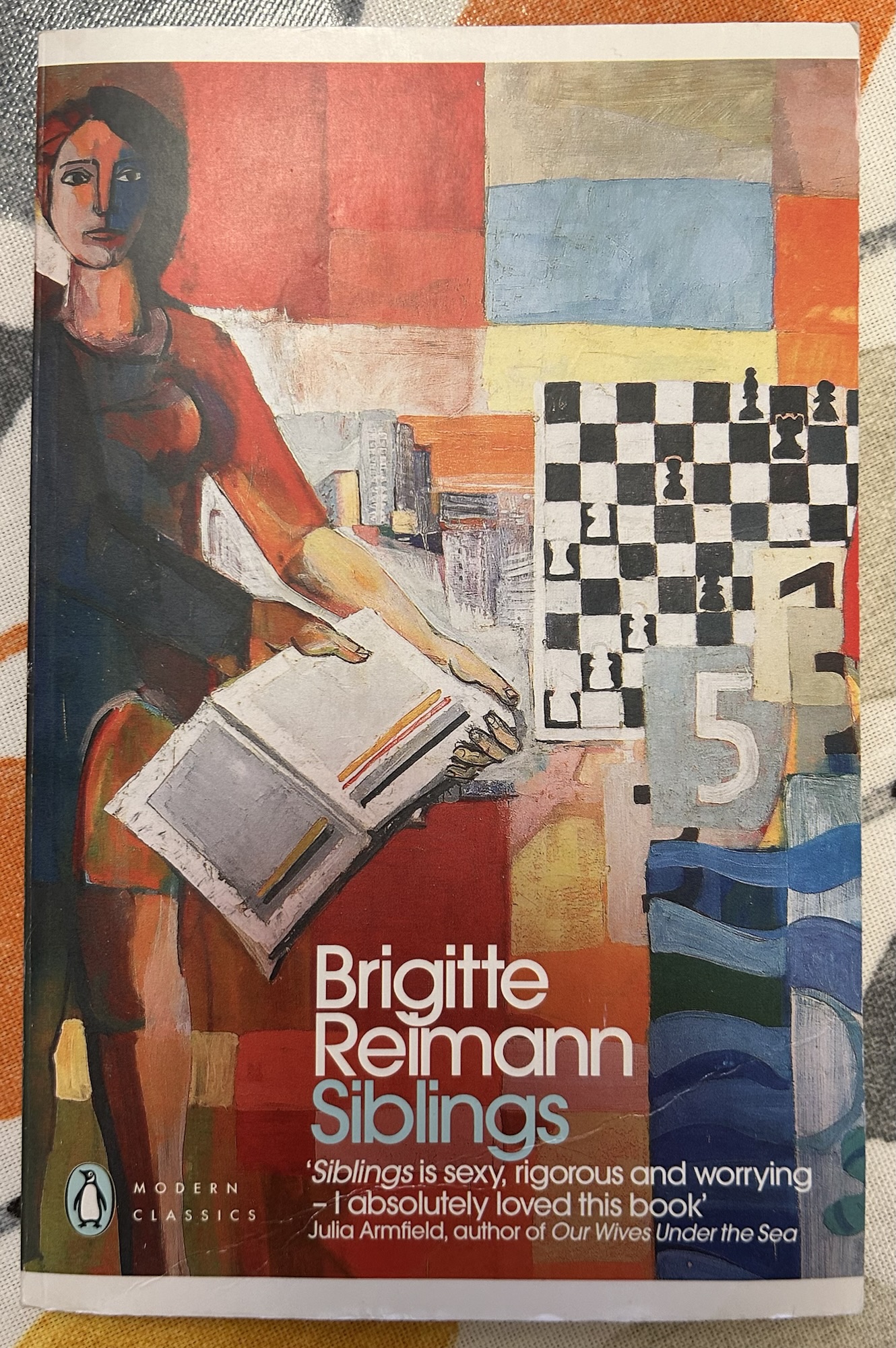
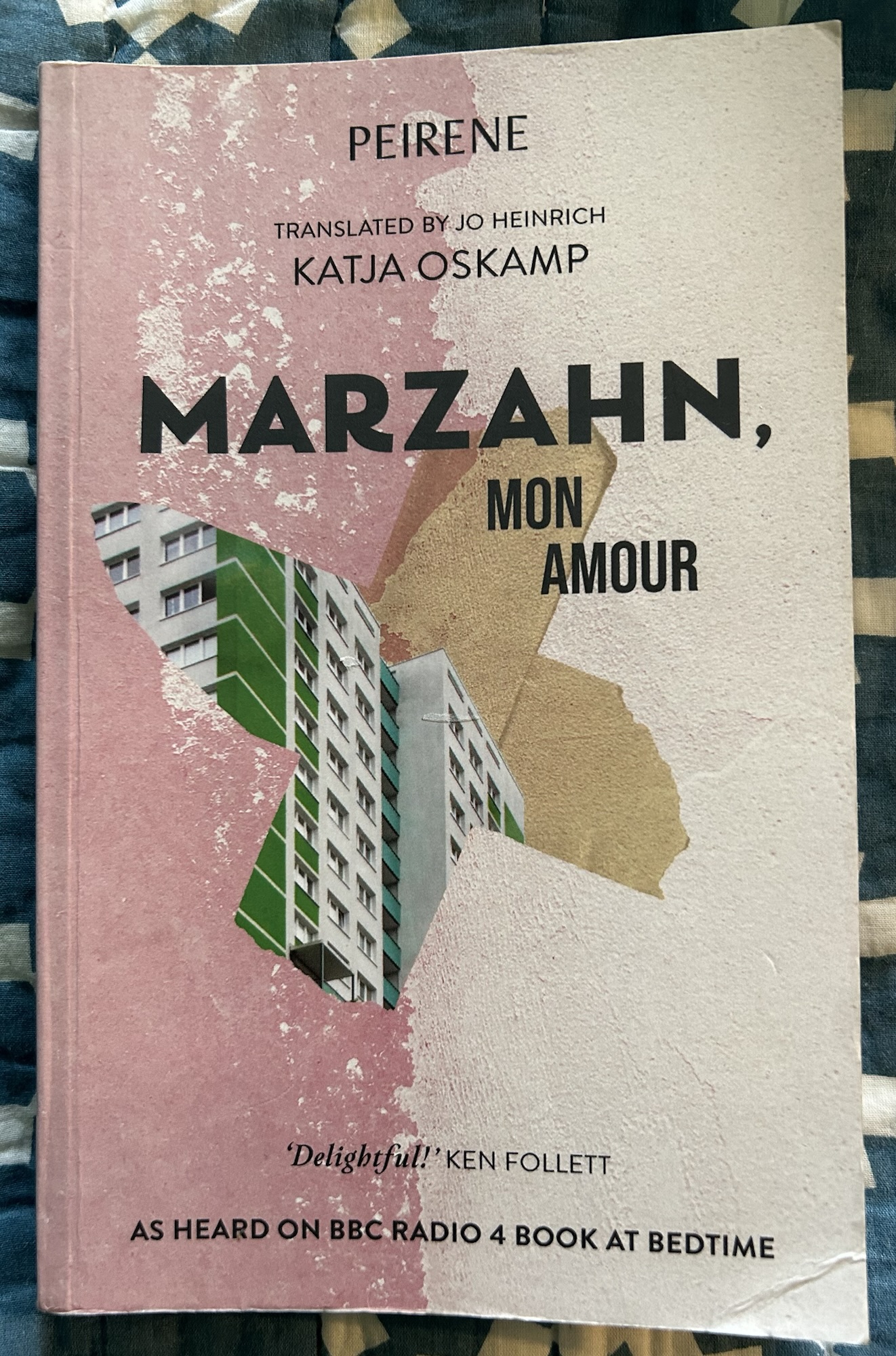
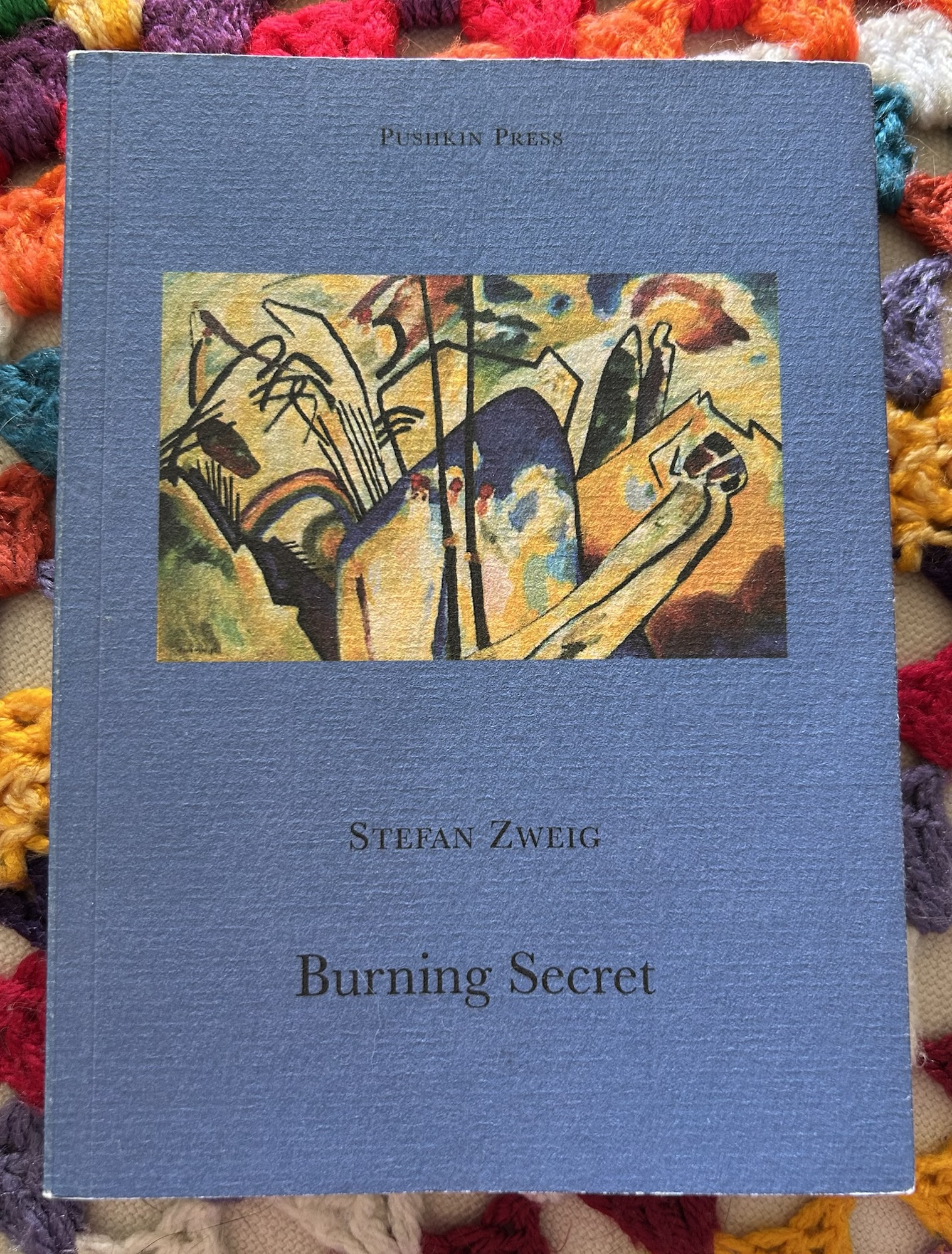
Blog Tour: Nightingale & Co by Charlotte Printz (2023, transl. Marina Sofia 2024)

I do enjoy a cosy crime novel, and one with a 1960s Berlin setting ticked so many boxes I jumped at the chance to take part in this blog tour from the ever-wonderful Corylus Books.  I hope they carry on asking me to take part in these tours even though I feel like my posts for their books are getting very formulaic: “I loved it! I want more translations!” Take a guess as to whether this one will be any different… 😉

Nightingale & Co. is the first in a series written by Charlotte Printz and translated by a blogger many of you know, Marina Sofia. Here is the blurb from Corylus Books:

“Berlin, August 1961.

Since the death of her beloved father, Carla has been running the Nightingale & Co detective agency by herself. It’s a far from easy job for a female investigator.

When the chaotic, fun-loving Wallie shows up at the door, claiming to be her half-sister, Carla’s world is turned upside down. Wallie needs Carla – the Berlin Wall has been built overnight, leaving her unable to return to her flat in East Berlin.

Carla certainly doesn’t need Wallie, with her secret double life and unorthodox methods for getting results. Yet the mismatched pair must find a way to work together when one of their clients is accused of murdering her husband.

Nightingale & Co is the first in a cosy historical crime series featuring the sisters of the Nightingale & Co detective agency in 1960s Berlin.”

The story gets off to a fun, engaging start. Carla receives a call from her aunt Lulu telling her she’s waving an airgun on the set of the Billy Wilder film One, Two, Three, seemingly in a deeply flawed attempt to secure a role. As Carla sets off across Berlin at pace, the 1960s city is evoked organically, without seeming like an info-dump.

This trailer for the film includes some external shots:

Yet despite the joy of these opening scenes, we are quickly shown the psychological impact of living in Berlin as the Wall goes up:

“‘They’re building a wall,’ said Lulu. The words were like a punch to her stomach. Carla felt faint. Ulbricht had lied to them. That was why there were so many guards at the Brandenburg Gate yesterday. How naïve of them to believe it was merely for the film set.”

Carla lives with her mother in the same building that houses the agency her father built. The domestic scenes with her bitter, passive-aggressive, baiting parent were so well-realised. Printz really captured the psychological warfare that people can tie themselves into, unable to see an escape route however desperately they want one. Carla is also grieving her father, who died in the crash which left her with enduring head injury symptoms.

When her half-sister Wallie arrives having been cut off from her home in the East by the rapid installation of the Wall, she couldn’t be more different. Physically Carla is compared to Audrey Hepburn, Wallie to Marilyn Monroe. Wallie gives free rein to all her appetites and doesn’t mind dubious means to achieve her ends, while Carla is controlled and keen to remain above reproach. Carla’s mother is entirely charmed by Wallie, although she believes her to be a cousin of her dead husband.

In less skilled hands the contrasting sisters could seem cliched and merely vehicles for dramatic tension. But both Carla and Wallie were entirely believable and well-rounded. The tensions between them arising from Carla not knowing about Wallie’s existence until she turns up on the doorstep, and what this means for her memories of her father, was lightened by their very different attitudes. Their growing but begrudging respect for one another as they find themselves an effective team made them an endearing pair.

The central strand of the story concerns Alma, a beautiful rich woman who asks the agency for help due to her husband’s domestic violence. Carla is sympathetic but realistic about Alma’s options:

“I’m afraid that’s no motive for divorce. A man who beats his wife is regarded by the courts as quick tempered and they usually advise the wife not to annoy him.”

The 1960s are a time of change but some changes aren’t occurring quickly enough. (I was reminded this week that it wasn’t until 1975 that women in Britain were allowed their own mortgage!)

When Alma’s husband is killed and her subsequent behaviour leads to her arrest, the sisters investigate. The plot is satisfyingly complex without being overly convoluted and frustrating.

The shadows of the war, less than twenty years previous, still loom large and Printz manages to capture how the fallout is interwoven with the modernising present.

 “Hadn’t they learnt anything from the past? It wasn’t enough to just stand there and repeat slogans. Everyone had to contribute.”

It’s hard to judge a translation when you don’t speak both languages, but I was struck by how Marina Sofia managed a sensitive balance in providing an English translation that flowed so well, yet also kept sense of place and contributed to Berlin being evoked so clearly in my mind. The significances of formal/informal address were conveyed without any clunkiness.

What I really enjoyed in Nightingale & Co was the mix of compassion and cynicism displayed by both the sisters in their different ways. It made them, and the story, humane without being sentimental, hopeful in the face of horrors.

“In the end, that was all that anyone wanted: forgiveness. And to be loved. Which made everyone predictable.”

So in summary: I loved it! I want more translations!

Here are the rest of the stops on the tour, do check out how other bloggers found Nightingale & Co:

“I began to understand the world outside the shadows of the family tree.” (Zuheir el-Hetti, The Baghdad Villa)

I’m hoping to complete my Around the World in 80 Books reading challenge this year. I want each book to be written by someone from that country and so at this stage I need to actively seek the books rather than just see what comes into my path. However, The Baghdad Villa by Zuheir el-Hetti (2016, transl. Samira Kawar 2023) did turn up in my local charity bookshop, helping me to add Iraq to my list.

Set in 2003 after the American invasion and toppling of Saddam Hussein, the narrative is from the point of view of Ghosnelban, a young woman from an aristocratic family who is racketing around the titular building, remembering the glory days of her relatives as life outside the grounds changes beyond all recognition.

“We had been brought up according to strict rules of speech and behaviour. The use of words that breached the limits of politeness and respect was prohibited. We had carefully preserved that strict moral linguistic code, which we shared with our few gradually vanishing acquaintances and relatives, fearing that its demise would signal the loss of our identity.”

Ghosnelban’s only company is her one remaining member of staff, the housekeeper Mamluka, and her brother Silwan, who is very unwell.

“He had been a soldier in an army that had been epically crushed in the battle to free the oil-rich desert. He came back to us, but did not return, because he had left his mind there, on the road between Basra and Nasiriya. He came back filled with horrifying nightmares, leaving behind all that was human. Then he began to endlessly narrate what he had experienced and seen on that accursed road, like an endless black waterfall.”

Ghosnelban knows her situation is unsustainable. At the start of the novel she receives a bullet in the post – a warning to leave her home or be killed. She meditates on seven artworks on the walls, Masters collected by her grandfather, each painting giving its name to a chapter in the book.

Ghosnelban is not likable. She is an elitist who freely admits to othering people who are not like her “Truly, did the lives of such human beings have meaning?” At the same time, clinging onto her elitism in the face of overwhelming destruction of her way of life is an act of defiance and resistance.

“I was, after all, the descendant of a highborn family and had learned to sculpt hatred and to turn it into a lethal weapon that I threw everyone to confront the vulgarity prevailing around me.”

As much as I didn’t like Ghosnelban, her voice was so distinctive and strongly evoked from the start, I was quicky drawn into her story. And as this develops, of course she becomes more complex than the superior, condescending snob the reader is initially introduced to.

She finds freedom in a friendship with sex worker Regina:

“I wanted to escape my own skin into which I had been placed by my family and it’s ancient history. She didn’t know who I was, was completely ignorant of my family’s history… and was totally uninterested in lineage.”

We also learn of Ghosnelban’s experience of love and passion with someone whose position makes the match entirely unsuitable. Perhaps it is this that encourages her to try and find who is when not defined by her family:

“My grandparents seemed supremely elegant, but cheerless. Their gazes expressed a hauteur that seemed natural to them, two people who never allowed colourful emotions to draw close […. ] Tears were an absolutely forbidden weakness. Displays of yearning were cheap. Love was demonstrated through action, not mawkishness; smiling was a feeling, not a meaningless stretching of the lips. We had learned that list by heart, and I remembered it nostalgically.”

While Ghosnelban seems to retreat into inaction, gazing at her grandfather’s paintings and reflecting, el-Hetti brilliantly builds the sense of impending threat and violence from which she cannot escape. Ghosnelban is not stupid and she knows she has to take a decision or inaction becomes a decision. For such a reflective, interior narrative, The Baghdad Villa becomes unbearably tense.

The Baghdad Villa is a compelling, complex character study which widens to explore the impact on individuals during moments of rapid societal and political change.  It demonstrates how moments of great humanity can exist in the most extreme circumstances; as well as the extremes to which human beings can be driven.

Much to my surprise, it became a real page-turner as I hoped Ghosnelban wouldn’t be destroyed along with her family’s villa. On finishing, I knew I was really going to miss Ghosnelban’s snooty, fierce and vulnerable voice.

“I’ve always looked at myself from above, as pleased as an omniscient narrator.” (Empar Moliner, Beloved)

Trigger warning: mentions childhood sexual abuse

This is my contribution to the wonderful Novellas in November 2024 hosted by Cathy at 746 Books and Beck at Bookish Beck.

I heard about Beloved by Empar Moliner (transl. Laura McGloughlin 2024) through Stu at Winston’s Dad’s blog. I was immediately tempted and it seemed a good choice for my resolution to buy a book a month from an indie press/bookshop. The lovely 3TimesRebel Press even included a tote bag 😊

The striking cover illustration is by Anna Pont, a Catalan artist. She died from cancer earlier this year and all the proceeds from Beloved are being donated to cancer research.

The paw is courtesy of Fred aka Horatio Velveteen aka Mike Woznicat (as like the comedian Mike Wozniak he has a handsome moustache). Anyway, enough of my blithering about my cat. On with novellas!

Remei is in her early 50s and going through menopause. She is married to a musician ten years younger and at the start of the novella she has a revelation:

“Falling oestrogen, combined with lactose intolerance and loss of near sight, makes me see the world through the light wings of a dragonfly. Because of this I can see, with utter clarity, that my man is going to fall in love with this other woman.”

The novella follows Remei as she works out how she will manage this, as she tries to cope with her bodily changes and memories of a traumatic past at the same time.

She is a witty, forthright, slightly sardonic narrator. I really enjoyed the distinctive voice of this resilient woman.

“I must point out I find modesty overrated: I’m still a good deal. What’s more, until now I’ve performed pre-feminist sexual positions with total dedication and delight.”

Her husband, whom she calls Neptune, is not as clearly drawn. But this is not his story: we are firmly in the first person narration of Remei. She and her husband don’t seem hugely well-suited:

“I like music much more than him and I’m an illustrator. But he likes comics much more than me and he’s a musician.”

“I like everyone, in one way or another. He likes hardly anyone, in one way or another.”

“That’s how we see life too, he and I. Me: everything and right now, so nothing is left over. Him: only what fits, even if what is discarded will rot.”

But she loves him and she loves being a mother to their daughter. Her career is successful, although not quite in the way she planned. However, she is not entirely happy. She self-medicates with alcohol:

“My whole life is a gallop between the pretentious and the epic, depending only on how many drinks I’ve had.”

As she goes for runs with her friends, she reflects on the sexual abuse of her childhood, sanctioned by her family. She is estranged from her brother, after she spoke about what was happening and they were taken into care. Remei seems very much alone, despite all the people that surround her.

She is blisteringly honest about her attitude to her husband and the confusion of feelings as she recognises future events:

“Do I want him to continue to love me as much as ever? Yes. No. I want to float along, no more. I want him to be frozen.”

There is a lot of humour too. Remei never demonises Cris, the young colleague of her husband, but wryly observes her behaviour:

“Punctual, efficient, her ovaries functioning at top speed.”

Beloved shows how control is only sustained through the lightest of ties. Remei is a functional alcoholic who could tip over at any time; she realises her relationship with her daughter is on the brink of change as the latter grows older and more aware; she attempts to control her body with running but aging is relentless; and she takes steps to manoeuvre her husband and Cris in a way that will allow her to cope with the affair, but where will this leave her?

Remei is so flawed, so honest, so tenderly vulnerable and spikily self-sufficient, I was really rooting for her to find a way through all the hurt.

To end, the ever wonderful Tracy Chapman singing about changes in life:

“I have looked for life, but I can’t find it.” (Vicki Baum, Grand Hotel)

November is the month of sooooo many reading events, and I’m hoping to take part in Margaret Atwood Reading Month and Novellas in November, but I thought I’d start with German Literature Month XIV, hosted by Caroline at Beauty is a Sleeping Cat and Lizzy Siddal at Lizzy’s Literary Life.

Grand Hotel by Vicki Baum (1929, transl. Basil Creighton 1930-1 revised by Margot Bettauer Dembo 2016) is a novel I’ve been meaning to get to for some time, republished by the wonderful New York Review of Books Classics.

I find a Weimar Republic setting always so enticing, and this novel was a bestseller in it’s day, originally serialised in a magazine. Sometimes with serials you can really see the joins when they are placed in novel form, but the episodic nature of hotel stays by various guests works well and Grand Hotel felt entirely coherent.

The titular building is opulent and glamorous:

“The music of the jazz band from the Tearoom encountered that of the violins from the Winter Garden, and mingled with the thin murmur of the illuminated fountain as it fell into its imitation Venetian basin, the ring of glasses on tables, the creaking of wicker chairs and, lastly, the soft rustle of the furs and silks in which women were moving to and fro.”

As readers we know that momentum for World War Two is building, but for the guests at this time it is the shadow of World War I which still looms large. Doctor Otternschlag’s face has been severely damaged by a shell. Every day he asks if a letter has arrived for him which it never has. We don’t know what this quiet, traumatised man is waiting for.

“Doctor Otternschlag lived in the utmost loneliness – although the earth is full of people like him…”

Glamour is brought by Grusinskaya, a prima ballerina desperately trying to hang on to physical vigour against the forces of aging. She is somewhat ambivalent, feeling driven to be as she has always been, and exhausted by it all:

“Perhaps the world would have loved her as she really was, as she looked now, for example, sitting in her dressing room – a poor, delicate, tired old woman with worn out eyes, and a small careworn human face.”

The most pathos occurs in the guest who doesn’t fit in: Kringelein, a clerk from Fredersdorf, given a terminal prognosis and determined to squeeze the pips from life before it’s too late. He chooses the Grand Hotel as his boss, Herr Preysing, stays there when in Berlin.

“He felt again, here in the bar of Berlin’s most expensive hotel, the same intoxication, a sense of exuberant plenty as well as of anxiety and alarm, the faint threat haunting the wicked joy of wrongdoing, the excitement of an escapade.”

Kringlein’s difficulty is, he is unsure of how to achieve his somewhat nebulous aim. Doctor Otternschlag tries to help but fails, unsurprising given his jaded, damaged view of the world. More successful is gentleman thief Gaigern, a dashing young nobleman who charms everyone:

“I am quite without character an unspeakably inquisitive. I can’t live an orderly life and I’m good for nothing. At home I learned to ride and play the gentleman. At school, to say my prayers and lie. In the war, to shoot and take cover. And beyond that I can do nothing. I am a gypsy, an outsider, an adventurer.”

He kits out Kringelein in fine clothes and takes him for fast drives in cars and up in a plane, but what are his motives? As Kringelein throws his hard-earned but limited money around, what will Gaigern do?

“Human kindness and warmth was so much a part of his nature that his victims always received their due share of them.”

Baum weaves together these disparate lives expertly, as they bump against each other within the Grand Hotel to a greater or lesser extent. There are overarching plots that draw characters together but Baum demonstrates that while hotels are places where change may occur, they do not lend themselves to resolution so easily. Hotels are by nature transitory and lives must be continued, consequences dealt with, once the guests pass through the revolving doors and back into the world.

Perhaps there is no such thing as a whole, completed destiny in the world, but only approximations, beginnings that come to no conclusion or conclusions that have no beginnings.

The tone is so well-balanced, with moments of light humour, almost slapstick, alongside darker elements. I did feel a constant undercurrent of sadness, but this highlighted the resilience of the characters who keep on keeping on during this interwar period, rather than being depressing.

Grand Hotel provides a compelling evocation of the Weimar era too, with glamour, seediness, riches and poverty all bound together in a vibrant, intoxicating, overwhelming Berlin. I’m so pleased to have finally read this novel.

“The room had taken on that utterly strange and enchanted appearance often encountered in hotel bedrooms.”

Grand Hotel was adapted by Hollywood in 1932, which despite my love of Garbo I’ve never seen. Time to remedy the situation!

Blog Tour: Black Storms – Teresa Solana (2010, transl. Peter Bush 2024)

Today I’m taking part in a blog tour for Corylus Books, a lovely indie publisher with a focus on translated crime fiction. For those of us in the northern hemisphere the nights are drawing in, and settling down with a crime novel that opens on All Saints Eve (Hallowe’en) felt like a perfect read for this time of year.

Here is the blurb from Corylus Books:

“Who murders an elderly professor in his university office – and why? Norma Forester of the Barcelona police force is handed the case and word from the top is to resolve it as quickly and as quietly as she can. Set against the backdrop of one of the most vibrant and exciting cities in Europe, Black Storms also highlights the darker side of Barcelona and its past, overshadowed by the bitter Civil War of the 1930s.

The past also touches Norma Forester, the granddaughter of an English International Brigades volunteer who didn’t survive to see his Spanish daughter.

This first novel in Teresa Solana’s is a fast-paced crime story that balances the hunt for a killer with Norma Forester’s colourful and complex personal life. She’s surrounded by her forensic pathologist husband, her hippy mother, and her anarchist squatter daughter whose father is Norma’s husband’s gay brother. Then there are Norma’s police colleagues and superiors – plus an occasional lover she can’t resist meeting.”

Black Storms begins with the murder from the point of view of the murderer. This wasn’t gory or gratuitous. There had also been a brief but effective portrayal of the victim, Professor Francesc Paradella who was an expert on the Spanish Civil War, which definitely evoked my sympathy without being sentimental.

We’re then taken to a birthday dinner at Deputy Inspector Norma Forester’s family home. I really enjoyed the portrait of Norma’s family, full of somewhat eccentric characters without seeming unrealistically colourful.

Her mother Mimí looks like “an old Hollywood actress who’d gone to seed or an eccentric fortune teller.”, in contrast to Isabel, her conservative mother-in-law. Her daughter Violeta briefly returns from living in a squat and also visiting is Aunt Margarida, Mimí’s step-cousin and a nun aka my favourite character:

she’d been living comfortably isolated from the world and its problems for eight years, reciting ancient prayers behind those impenetrable stone walls. However, occasionally, she did miss the freedom of her secular life and, now and then, invented an excuse to go out and took advantage of her escape to go to bingo sessions, drink cocktails in Boades and hit the town with Mimí.”

I also liked Norma’s husband, principled forensic examiner Octavi, angry that because the Professor was from a powerful family, his death is treated more seriously than others.

“There were class differences even among the dead: upper-class corpses that led to frantic investigations and second-class corpses that were processed routinely.”

The legacy of the Civil War is part of Norma and Octavi’s home, not only through the family history but in their present. Senta, Norma’s grandmother mistakes outside noises for those of conflict and becomes highly distressed. It’s a brief scene but so moving in how it demonstrates the enduring trauma of war.

The reader soon knows who the murder is, someone pathetic and seedy, and very believable. The mystery of Black Storms is not therefore whodunit, but why. The why enables Solana to look at the long shadows cast by the Spanish Civil War and the enduring corruption in society.

My knowledge of the Spanish Civil War is shockingly rudimentary and Solana did a great job of weaving the history throughout the story without ever info-dumping. Past events are evoked through characters; there is an excellent scene between Norma, whose grandfather was killed by state execution, and Gabriel, her second-in-command, whose grandfather was killed by FAI anarchists.

The most severe condemnation is saved for how the legacy has been mishandled: “the circus orchestrated in the corridors of power had succeeded in drowning the transition in a mist of amnesia”.

But the novel is also resolutely contemporary and Barcelona is wonderfully evoked, even the less salubrious sides: “A city for tourists with cirrhotic livers looking for cheap alcohol.” Ouch!

From the start Black Storms had an assured style and Solana is so accomplished in how she weaves together a crime plot, the legacy of the Spanish Civil War, and contemporary social commentary. It never felt remotely laboured and the story pace was never weighed down by the importance of the issues highlighted. I thought Black Storms was a hugely impressive novel. And now I want another in the series to be translated, because I am already missing Aunt Margarida!

Here are the stops from the rest of the tour, so do check out how other bloggers got on with Black Storms:

“In the besieged city everything is unusual but everything is at the same time ordinary.” (Alma Lazarevska)

For this year’s Women in Translation Month I’m trying to focus on countries I’ve yet to visit on my Around the World in 80 Books reading challenge. Today I’m off to Bosnia and Herzegovina via Death in the Museum of Modern Art by Alma Lazarevska (1996 transl. Celia Hawkesworth 2014) published by Istros Books.

Death in the Museum of Modern Art is a collection of six stories set during the siege of Sarajevo, although Lazarevska never names the “besieged city” that features in all the tales. Lazarevska is a Bosnian writer and survivor of the siege.

I always find it really hard to write about short story collections, so I’ll just focus on the opening and closing tales.  In Dafna Pehfogl Crosses the Bridge between There and Here, the titular character reflects on her long. “unlucky”, “clumsy” life, starting when the maid burned the last coffee listening to her mother’s labour screams. Dafna is something of a scapegoat for her family and remained unmarried as her suitors weren’t smart enough for her family. Now in old age she finds herself alone in the war-torn city. Her family on “the other side” have arranged her passage to safety.

“She stepped boldly and decisively. Freed from other people’s gaze and lengthy sighs. Her feet were light on the deserted bridge between there and here.”

This is the only story in the collection written in the third person, but it didn’t distance Dafna in any way. I really hoped she’d make it to safety…

The final story, Death in the Museum of Modern Art has a dry humour to it. The narrator is answering questions that will form part of an exhibition at MoMA, including “How would you like to die?”

“I would have liked to tell him about that terrible feeling I have of being late… the feeling that I have being overtaken and I’m losing my sense of being present. Neither here, nor there.”

Without heavy judgement, Lazarevska demonstrates how the lived experience of war is being simplified and packaged up for art consumers. The impossibility of the questionnaires even beginning to capture anything meaningful from such a situation.

“But for an American, one ‘easy’ is the same as another. Hence a visitor to the Museum of Modern Art may read that my friend the writer wanted to die easily. He understands that, but the writer does not. That word introduces confusion into the writer’s answer. Can wishes of this kind be expressed in a foreign language, particularly one that does not distinguish one ‘easily’ from another?”

Lazarevska writes in a constrained style, both tonally and structurally. She doesn’t waste a word and has a real command of the short story form – I thought the six stories in this collection were all equally strong.

Lazarevska writes about the siege of Sarajevo in a way that is evocative but not overly emotive, trusting that the circumstances are extraordinary and shocking enough that they don’t need embellishment. Her focus is broadly domestic, looking at how ordinary lives find ways to carry on. The result is a compelling and memorable collection that places the reader alongside the characters as they hold onto their humanity through the most brutal experience.

“The hand I write with his healed. If any new questions should ever arrive, I shall write my answers myself. I’m writing all of this with my own hand.”

“Why don’t words come automatically with threads that we can yank to pull them back inside ourselves?” (Jokha Alharthi, Bitter Orange Tree)

For this year’s Women in Translation Month I’m trying to focus on countries I’ve yet to visit on my Around the World in 80 Books reading challenge. This meant I was delighted to find a copy of Bitter Orange Tree by Jokha Alharthi (2016, transl. Marilyn Booth 2022) in my much-frequented local charity bookshop, as I’ve not read a book by an Omani author before.

I had completely missed Celestial Bodies for which Alharthi and Booth won the Man International Booker Prize in 2019. At that time Alharthi was the first Omani woman to be translated into English.

Bitter Orange Tree is a short novel, just 214 pages in my edition with quite large type, which I read entirely during a train journey back from Newcastle. (In fact, everyone around my table was reading a print book – it was like the olden days! For balance, I should say on the journey up I was sat next to someone who spent the whole time scrolling through TikTok and Insta, never watching any of the short content through to the end. I found it exhausting and had to mind my own business in the end 😀 )

The story is told from the point of view of Zuhour, a young woman who has left Oman to study in a nameless, cold, foreign city (most likely Edinburgh). She balances descriptions of her current life where a friend’s sister has fallen in love with a man her family wouldn’t approve of, with memories of Oman and particularly her grandmother-figure, Bint Aamir.

Zuhour harbours guilt regarding not staying with her grandmother, who has now died. A comment to a friend is the starting point for memories and reflections on Bint Aamir’s life:

“She always longed to own some land… just a tiny patch, with date palms growing on it, even if there was only space for five or so. And a few little fruit trees – lemon, papaya, banana, bitter orange. She would even plant those herself. She would water them and take care of them. And eat from them. And rest in their shade.”

Bint Aamir’s life is not easy, expelled along with her brother from her father’s house, she struggles for money. Gradually she finds a role in a relative’s home and while owning nothing, she provides almost everything.

“Bint Aamir’s feet were submerged in the soil that was the ground of our lives. She built the walls that made this household exist and thrive, mud brick by mud brick.”

Zuhour’s past and present conflate frequently, and I thought Alharthi conveyed so effectively the way memories underpin and inform the present. The conflation and the movement back and forwards between different times was seamless and never confusing.

“Tears run from my eyes, from both my eyes, from my two sound eyes. My tears spill over her one eye, which is damaged; over the herbal concoctions that were prescribed by ignorance; over the violence and harshness of childhood; over children orphaned by their mothers deaths and thrown out by their fathers, and over their brothers tragic ends; over a field she did not possess; over a companion she was never fortunate enough to have; over son who is not hers; over the grandchildren of a friend who died before she did.”

There’s also some humour, and I particularly liked this description of Zuhour’s friend Christine:

“Her cup of decaf coffee with soy milk was tall and skinny: it looked just like her. Here at this party, she was an exact scan of the figure I always saw at the university: T-shirt jeans running shoes ponytail nose ring tattoo long skinny cup.”

There were aspects of the story that were less successful for me though. Alongside the friends’ illicit relationship that Zahour has complex, unresolved feelings about, there is also a story of domestic violence involving her sister Sumayya. Both these sub-plots were too shallowly explored, before they petered-out. I felt that either Bitter Orange Tree needed to be longer, or one of these sub-plots needed to be cut and the other further developed.

While I liked the imaginative style, sometimes it became overly sentimental, particularly with regard to Bint Aamir. Although Zahour acknowledges “All her contentment was drawn from the happiness of the people for whom she cared.” she sometimes goes on flights of fancy regarding what her grandmother didn’t have in life, without knowing how her grandmother felt. These seemed clunky to me, although in fairness this may have been deliberate, to emphasise Zahour’s callow inexperience and inability to think beyond cliches at times.

But I only blog about books I like and I did like Bitter Orange Tree. The handling of past and present was so deft, and the style so readable. From looking online I think a lot of people preferred Celestial Bodies so I’d be keen to give that a try. If you’ve read Celestial Bodies I’d love to hear how you found it.

Shrouded – Sólveig Pálsdóttir (transl. Quentin Bates) blog tour

I’m always a bit trepidatious about agreeing to blog tours, which is why I don’t do many. What if I don’t enjoy the book? I only blog about books I like so what if I have to drop out? Thankfully Corylus Books have never done me wrong, consistently offering excellent crime novels in translation.

When they suggested Shrouded by Sólveig Pálsdóttir (2023, transl. Quentin Bates 2023), I had two questions: did it matter that I hadn’t read the others in the series? Was it gory (I can’t do gore)? Reassured on both counts, I’m so glad I took the opportunity to join in because I found much to enjoy in this novel.

My allotted date for the tour was 1 August so this is also my first post for Women in Translation Month (#WITMonth), a wonderful and well-established event running for the whole of August.

Here is the blurb from Corylus Books:

“A retired, reclusive woman is found on a bitter winter morning, clubbed to death in Reykjavik’s old graveyard. Detectives Guðgeir and Elsa Guðrún face one of their toughest cases yet, as they try to piece together the details of Arnhildur’s austere life in her Red House in the oldest part of the city.

Why was this solitary, private woman attending séances, and why was she determined to keep her severe financial difficulties so secret? Could the truth be buried deep in her past and a long history of family enmity, or could there be something more? Now a stranger keeps a watchful eye on the graveyard and Arnhildur’s house.

With the detectives running out of leads, could the Medium, blessed and cursed with uncanny abilities, shed any light on Arnhildur’s lonely death?”

The story opens with Arnhildur preparing to go to a séance. We are privy to her thoughts, her frustrations and her little vanities. In a very short space, Pálsdóttir creates a sense of Arnhildur so that when she is murdered, the injustice is fully realised. Although the reader is witness to the murder, it isn’t remotely gory or gratuitous. It’s a responsible and carefully balanced portrait which insists that the murder of an older woman, someone seemingly entirely ordinary, is taken seriously.

Having not read the rest of the series, when police detectives Guðgeir and Elsa Guðrún arrive to investigate I was expecting some clunky exposition to bring readers up to speed. This never happened, and instead we are presented with an established working relationship, respectful and gently teasing, in which we are expected to draw our own conclusions regarding the personalities of the individuals and the dynamic between them.

“‘It’s never this dark in Akureyri,’ Elsa Guðrún assured him, a tie between her teeth as she pulled her brown hair back into a ponytail.

‘Really?’ Guðgeir grinned. This north country pride that some would describe as conceit had always amused him. ‘All the same, it’s a good way further north than Reykjavík.’

Elsa Guðrún wasn’t going to accept Guðgeir’s straightforward geographical point.”

The relationships with the wider team are well drawn, with a sense of professionals rubbing along together as best they can with some tensions and frustrations – in other words, most people’s working lives. There is humour too, and I particularly enjoyed tightly-wound senior officer Særós’ penchant for Insta-type inspiration:

“As always, the week’s aphorism hung on the wall behind her, a print out with black letters on white in a simple IKEA frame. This week it said, Always be the best possible version of yourself.”

Arnhildur was resistant to change and technology, which means no mobiles with sophisticated GPS, laptops or tablets of hers are available to aid the investigation. This made for a police procedural that felt pleasingly traditional while still rooted in the modern world.

One shortcut that might have been available was the presence of Valthór, a medium. I know some readers whose hearts sink at the presence of a psychic in detective stories, but Pálsdóttir never uses the character as an easy way to resolve any plot, despite one of her detectives being open to the possibility of Valthór’s skills:

“Growing up in the west of Iceland, he had been aware that most older people had some belief in an afterlife, and that there were a few people with the ability to converse with the dead. Many of them also believed in premonitions, dreams and prophecies. The people with whom Guðgeir had grown up had fought for their existence, in close touch with the brutal forces of nature that regularly demanded people’s lives. These people had been more down-to-earth than any Guðgeir knew today, and he was still convinced that there was much about the world that could be neither felt nor seen.”

Valthór is a really affecting character, truly suffering in the aftermath of Arnhildur’s death and he enables a continued emotional resonance within the story as Guðgeir and Elsa Guðrún pragmatically and doggedly work to solve the crime.

They discover aspects of Arnhildur’s past that led to her estrangement from her family, and truly disturbing events touching her life before she died. There are a couple of very sinister characters that are deeply unnerving in their believability.

Shrouded is a quick pacy read that I whizzed through on a train journey to Liverpool. Initially I was smugly congratulating myself that I’d guessed certain elements and I was somewhat surprised that a novel which seemed so accomplished had resolved things rather straightforwardly. However, I was far too quick to pat myself on the back 😀 I’d made all the assumptions and deductions Pálsdóttir had guided the reader towards, and I’d missed others entirely, which meant the very end made for a surprising and really satisfying conclusion.

Shrouded is responsible in its treatment of the victim, it’s never sensationalist. It has plenty to say about how people who don’t easily fit in are treated. It demonstrates the complexities of relationships between flawed people (ie all of us) without having characters behave in ridiculous ways.

I realise I’m making it sound dull when it really isn’t! It makes important points without losing sight of the story. I really enjoyed Shrouded and now I need to read the preceding novels in the series; my TBR is never going down, is it…?

Here are the rest of the stops on the blog tour so do check out how other readers found Shrouded:

“The story of our lives still isn’t finished, and it never will be.” (Beatriz Bracher, Antonio)

Trigger warning: mentions mental illness and infant death.

Stu over at WinstonsDad’s blog is hosting Spanish Portuguese Lit Month for the whole of July and so this was the perfect opportunity to get to a novella by Brazilian author Beatriz Bracher which had been languishing in the TBR: Antonio (2007, transl. Adam Morris 2021) published by the wonderful Pushkin Press.

I want to start with the disclaimer that I don’t think I’ve really got to grips with Antonio, so this post is just some initial impressions. Although only 187 pages long it is incredibly densely written and it took me a week to read. Admittedly work has been really demanding lately, but usually it still wouldn’t take me that long to read a book of that length.

Also looking online, there are many effusive reviews praising the socio-political commentary of Antonio, which I’m sure I didn’t fully comprehend. I did pick up some, but I’m certain I need to re-read Antonio at some point.

The novella is told through the alternating viewpoints of three people: Raul, Isabel and Haroldo. Their silent interlocutor is Benjamim, who is awaiting the birth of his first child, the titular Antonio. The imminent arrival of his son has prompted Benjamim to probe into his family history in more depth.

“I’d like to think your mother was also a free person, and maybe you can hold onto that thought, instead of clinging to fear and rage.”

Benjamim knows that his father was Teodoro and that his mother was  Elenir.  Elenir had a son with Benjamim’s grandfather Xavier first, who they also called Benjamim and who died very young. The second Benjamim was raised by his father after his mother died in childbirth.  

Raul is his father’s friend, Isabel is his paternal grandmother, and Haroldo was Benjamim’s grandfather’s friend. They all provide histories of Benjamim’s family that echo and contradict each other, and none seem any more reliable or authoritative than any other. Each has their own truth.

The family is well-off and privileged in São Paulo, but their history is a troubled one. Both Xavier and Teodoro had periods of intense mental illness.

For Xavier, this occurred after the death of Benjamim. As Haroldo recalls:

“[Elenir] looked like a bent piece of wood. She didn’t cry. She received each condolence with correct politeness. Xavier was the total opposite: he was in pieces […] I managed to gain entry to that hell three times. The last time, I brought a team of nurses, to drag my friend out of there and take him to a sanatorium.”

Later, Xavier meets and marries Isabel and they raise a family. They are the generation that came of age in the 1950s and 1960s, idealistic and, in Isabel’s case, driven:

“In a family we’re always a me or and I who’s scattered and complex. It’s only at work, especially work that has to do with ideas, but it’s possible to feel ourselves out and let the contours assume the shape.”

Their youngest son Teo rejects the urban privilege he is born into and goes to live in rural Minas. He throws himself into village life but ultimately becomes rudderless and unwell. Isabel reminds Benjamim of his early childhood:

“You’re from this family, so you are this family. Your father wanted to be rid of all that, and shed himself along with it. The history that he crafted for himself in Minas was a non-history. He went too deep. By the time I brought him back, there was nothing left to hold onto, no handle I could use to hoist him back out: only damaged pieces.”

This is one of central themes of Antonio: how to live an authentic and conscious life, but not be overwhelmed by the search for meaning. How to truly find who you are, alongside the demands of daily life. Isabel believes the answer is hard work, but only Big Work. Haroldo points out:

“She raised a bunch of irresponsible ingrates who are incapable of the most basic displays of solidarity, like visiting their dying mother. Isabel cultivated a true horror of responsibility in them, and at the same time overloaded them with the responsibility to be nothing but the best.”

Isabel recognises that privilege brings responsibility, but she also remains an elitist. When she observes: “I never understood any language that wasn’t well spoken Portuguese.” she is being both literal and metaphorical. The family’s wealth isn’t what it once was and she is unhappy at her children’s middle-class existence.

To me Isabel was the strongest of the three narrators and I got a real sense of her. But Raul, living an ordinary life and baffled by what happened to his childhood friend, and the somewhat reprehensible, colourful Haroldo were also distinct characters if not entirely differing voices, and Bracher balances the three viewpoints well.

I’ve focused on some of the ideas rather than the events of Antonio and that is partly because the novella has some graphic scenes in it – of extensive mental breakdown, one of pig-killing and one of caring for a dead body by someone who doesn’t know what they are doing. None of these are gratuitous but they mean Antonio can be very difficult to read in places.

Bracher avoids conclusions about the causes of Xavier and Teo’s ill health and whether there is a genetic component or whether it is the demands of society on the individual. She vividly, sometimes viscerally, evokes the pressures of family and the search for self in late twentieth-century Brazil.

“To live long and stay well, stay away from your relatives.”

“The cat is, above all things, a dramatist.” (Margaret Benson)

This is my contribution to Reading the Meow hosted by Mallika at Literary Potpourri, a fantastic week-long celebration of literature inspired by our feline friends!

A Cat, A Man and Two Women by Junichiro Tanizaki (1936, transl. Paul McCarthy 2015) is published by the ever-wonderful Daunt Books and I really liked the simple cover:

There seems to have been a flurry in recent years of slightly whimsical stories about cats and I thought ACAMATW would be one of these, I’m not sure why. The prospect was fine with me, I don’t mind whimsy if I’m in the right mood and I adore cats. But in fact this wasn’t whimsical at all. It was a psychological study – albeit a gentle one – of three people and the catalyst (no pun intended but I’m happy its there 😀 ) of their shared pet.

I would just like to pause (paws?) here to let you know that my typing is being severely hampered by my calico cat sitting on my lap, demanding attention – and my tuxedo cat (her brother) has just arrived and there’s a bit of a turf war ensuing…

The titular cat of this novella is Lily, adored companion of Shozo. The story opens with his ex-wife Shinako appealing to his new wife Fukuko to let her have Lily. Her letter emphasises Shozo’s adoration of Lily and Shinako deliberately sets a cat among the pigeons (ha! I’m only a little bit sorry for this 😀 ) of the new marriage,

Even Shozo, feckless in the extreme, notices the change.  

“Could Fukuko be jealous of Lily? He considered this possibility for a moment but then dismissed it as making no sense. After all, Fukuko herself was basically fond of cats. When Shozo was living with his former wife, Shinako, he had sometimes mentioned her occasional jealousy of the cat to Fukuko who had always made rather scornful fun of this silliness.”

Shozo requests his wife cook meals she doesn’t enjoy, so he can share them with Lily. I’m not surprised Fukuko is annoyed:

“Fukuko had been prepared to sacrifice her own taste for her husband’s sake, while in fact it was for the cat that she cooked; she had become a companion to the cat.”

(Update: turf war won by the tuxedo. Calico has stalked off in disgust. Tuxedo determined to rest on my dominant hand and impede my typing.)

The tensions in the marriage centre around Lily, but really have nothing to do with her. She merely highlights Shozo’s lack of drive and inability to engage fully in relationships, except with his cat.

“When he heard people with no knowledge of a cat’s character saying that cats were not as loving as dogs, that they were cold and selfish, he always thought to himself how impossible it was to understand the charm and lovableness of a cat if one had not, like him spent many years living alone with one.”

Shozo isn’t unsympathetic. His mother is manipulative and choosing Lily seems to be one of the rare independent choices Shozo has made. He has had a longer relationship with Lily than either of his wives and his bond with the cat is meaningful to him.

“It was Lily, with whom he’d lived so long, who was more intimately bound up with many memories of his; who formed, in fact, an important part of Shozo’s past.”

Tanizaki does a great job of portraying Lily as a very believable feline, without attributing human motivations or emotions to her. He leaves this to his three human protagonists, who fail to see she is not a strategist in these adult negotiations.

Shinako gets her wish, and the cat she was indifferent to arrives at her sister’s home, where Shinako now has a room. Gradually, she finds herself discovering new emotional territory, thanks to Lily:

“When she thought of the link that bound them together, her anger faded; and she felt, rather, that both of them were to be pitied.”

“Other people had told her so often that she was hard hearted, she had come to believe it herself. But when she considered how much trouble she had put herself to recently for Lily’s sake, she was surprised, wondering where these warm and gentle feelings had been hiding all this time.”

But will Shozo want his cat back? Will Shozo and Fukuko’s marriage survive without Lily to blame for the irritations and lack of understanding?

Tanizaki has a great understanding of cats and of people which makes this novella really shine. The humour is gentle and the psychological observations astute. The ending is left very open which didn’t wholly work for me but this is a minor quibble in regard to this engaging and insightful novella.

ACAMATW was adapted into the film A Cat, Shozo and Two Women in 1956. The summary on Wikipedia makes me think the filmmakers opted for a less open-ended conclusion to the story. From this clip the cat actor looks a lot more tolerant than my two would be 😀