Trigger warning: this post mentions rape and sexual assault
Like Eudora Welty who I wrote about yesterday, it was last year’s NADIM that saw me finally pick up one of Nina Bawden’s novels (for adults, despite the fact I’d loved her as a child). Devil by the Seawas truly unsettling and I was keen to read more. The lovely Ali over at heavenali had sent me this novella with another which I won in her giveaway, and its confirmed my childhood view that Bawden is a brilliant writer 😊
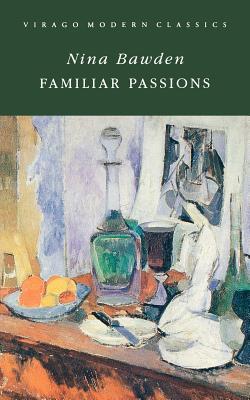
Familiar Passions begins with James telling Bridie, his much younger wife of 13 years, that he wants to leave her.
“After a brief interval he went on speaking flatly, in a measured voice, like a chairman reading a company report. ‘There are a couple of things I feel I ought to say. To sum things up. One is, that considered as a parental team, we haven’t done too badly. Adrian’s defection from the middle class norm, though disappointing, is not unusual for the times we live in.”
James is repugnant. At first he seems cold and self-serving, but its worse than that. The night they split up, Bridie wakes to find James raping her.
“She did not know she was afraid of James. If she had been told she would have laughed.”
Although James has suggested she stay on as a housekeeper so he has a nice home to return to in the UK while he works abroad (!) Bridie decides she is getting out.
“ ‘You don’t have to stay, you know,’ as if consoling a scared child.
The words came unbidden, without conscious thought, but as soon as she had spoken them she understood why she had addressed herself like this, as if she were someone younger and weaker than she was. It was the only way she could force herself to act.”
Bridie never seems a victim in this. She is still young – only 32 – having married James at 19, when he was a widower and raised his two children, as well as having a daughter together. She has no work experience and worries how she will get on in the world, but she is a good mother and her step-children both like her, probably more than they like their horrible father.
“The children’s faces sustained and calmed her. It came to her with the force of something she had always known but only now acknowledged, that they were the only reason she had stayed so long; their pictures, the only thing she would take with her.”
Bridie goes home to her parents. They adopted her as a baby and she has no idea about her biological parents. Her father Martin is a psychologist, her mother Muff was a nurse.
“She had always orchestrated her emotions in this way to get and keep her mother’s sympathy; softening down the discord of her coarser feelings and playing up the tender sounds that pleased her mother’s ear. Perhaps Muff’s liking for a sweet, clear tune was what was called bringing out the best in people. But it wasn’t bringing out the best in her, Bridie began to feel. Only something that, although not altogether false, was never quite the truth.”
Bridie housesits for a patient of her father’s, in Islington which is portrayed as rather rough and down at heel – how times have changed! She gradually adapts to and starts to enjoy her new life, but the ending of her marriage prompts her to find out about her birth and origins. In doing so, she uncovers way more than she ever bargained for…
Familiar Passions is a pacey novella but it never feels overplotted. The betrayals and revelations that emerge are the type that can exist in any family. It’s very much of its time – particularly regarding Bridie’s rape (and her later sexual assault) with her awareness of how few options she has. There is anger here for sure, about the limited roles and choices for women, but it never overwhelms the narrative or characterisation.
Familiar Passions is resolutely unsentimental about families but also shows how valuable they can be: how destructive but also how nurturing, in their own unique and deeply flawed ways. Ultimately it’s a hopeful novel, about realising who you are and finding your own way; bound up as both those things will be in who you have been in the past and where you have come from.
This was a really challenging read, and though an astounding work, I was grateful for the novella length as it was tough to take.
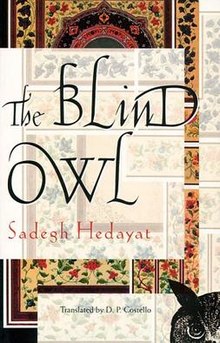
Sadeq Hedayat was an Iranian writer and is considered an innovative titan of Persian literature; he’s a best-selling author in his home country. This novel was initially banned on publication, and according to Wiki there is still censorship of his work (I’ve not linked to the Wiki page because much to my horror there’s a picture of his dead body on it). Sadly, he died by suicide, and The Blind Owl certainly feels authentic in its portrayal of someone losing all sense of reality and suffering mental ill health. I’m giving this post a trigger warning for some pretty disturbing imagery in the third quote, although I’ve not picked the worst in the novella, I wanted to give a true sense of it.
“Will anyone ever penetrate the secret of this disease which transcends ordinary experience, this reverberation of the shadow of the mind, which manifests itself in a state of coma like that between death and resurrection, when one is neither asleep nor awake?”
The unnamed narrator earns his living by painting pen cases. He may or may not have killed someone:
“How could I have resisted it, I, an artist, shut up in a room with a dead body? The thought aroused in me a particular sensation of delight.”
It’s a disorienting narrative. It’s not clear what is true or false: the events described could be entirely in the man’s head and what The Blind Owl describes is him lying on his bed, thinking/hallucinating. It’s a stream of extremely disturbed consciousness. Images and events recur and shift slightly, adding to a sense of disorientation and being witness to someone’s spiralling thoughts.
“A sensation which had long been familiar to me was this: that I was slowly decomposing while I yet lived. My heart had always been at odds not only with my body but with my mind, and there was absolutely no compatibility between them. I had always been in a state of decomposition and gradual disintegration. At time I conceived thought which I myself felt to be inconceivable.”
The narrator has no compassion for humanity and this is what adds to making The Blind Owl such a tough read. He is misanthropic, and so the coldly related details of violence, dead bodies and decomposition are truly horrifying.
I don’t want to put people off reading The Blind Owl because it is truly a brilliant piece of writing, but definitely one for when you’re strong enough to take it, with a comforting escapist read lined up for afterwards.
“Am I a being separate and apart from the rest of creation? I do not know. But when I looked in the mirror a moment ago I did not recognise myself.”
This week is Daphne du Maurier reading week, hosted by Ali over at heavenali. It’s also Ali’s birthday today, so Happy Birthday Ali!
I read Rebecca as a teenager and thought it was great, but somehow never read anything else by du Maurier. I had the NYRB collection of her short stories in the TBR, and yet I always gravitate towards the novels I have, so I’m glad #DDMreadingweek gave me the kick I needed, as it’s a great read.
I’m rubbish at reviewing short story collections so please bear with me. This is an excellent selection of nine stories, five of which are 40+ pages, the shorter ones coming in between 10-20ish pages. For me the longer stories were the stronger in the collection – although all are compelling reads – so I’ll concentrate on a couple of those.
The first two were made into incredibly famous films, so I won’t dwell on those as many of you will know the stories. What I will say is Don’t Look Now is just as creepy as the film but with a really dark humour to it, and The Birds is miles better than the film (I’m not really a Hitchcock fan) and totally freaked me out to the extent that I’ve been looking askance at every pigeon which has crossed my path since.
In Blue Lenses, Marda West has an operation to restore her sight. She is in hospital, intensely vulnerable, dependent on the nursing staff, her doctors and her husband. She has only what they say and the sound of their voices to go on. Already she feels unnerved, even around her husband:
“Now, for no known reason except that darkness, perhaps, had made her more sensitive, she was shy to discuss her eyes with him. The touch of his hand was the same as it had ever been, and his kiss, and the warmth of his voice; but always, during these days of waiting, she had the seed of fear that he, like the staff at the hospital, was being too kind. The kindness of those who knew towards the one who must not be told.”
She has the operation to fit the titular lenses as a temporary measure and is warned they will make everything monochrome. On using her eyes for the first time with the lenses, Marda is shocked to discover is that she now sees everyone with the head of an animal.
This could be funny, or ridiculous, but in du Maurier’s hands it is deeply upsetting. There is the suggestion that the animal Marda sees tells her something about the person. One nurse is a benign cow, the other a kitten. Her doctors are both terrier dogs, one a tenacious Jack Russell, the other a sweet natured Highland. Someone she trusted is a snake, possibly in cahoots with a vulture…
At first Marda believes it is an elaborate joke being played on her, but then she goes to the window:
“An elderly cod, leaning on two sticks, was being helped into a waiting car by the boar headed porter. It could not be plot. They could not know she was watching them.”
She is completely isolated. No-one will believe her and they will think she is mad. Who can she trust? The cow? The Highland terrier? What will Marda do with this newfound insight into people and their motivations? What will happen when the permanent lenses are fitted?
“The utter hopelessness of her position was like damnation itself. This was her hell. She was quite alone, coldly conscious of the hatred and cruelty about her.”
Blue Lenses takes a bizarre premise to question what we choose to see, how much we really know people, and to dramatise how vulnerable we are when we trust. The denouement is devastating.
Split Second begins like many a domestic fiction, and uses this familiarity to lull us into a false sense of security:
“Mrs Ellis was methodical and tidy. Unanswered letters, unpaid bills, the litter and rummage of a slovenly writing-desk were things she abhorred. Today, more than usual, she was in what her late husband used to call her ‘clearing’ mood […] First, she checked the linen. The smooth white sheets lying in rows upon their shelves, pillow slips beside, and one set still in its pristine newness from the shop, tied with blue ribbon, waiting for a guest who never came.”
So far, so deeply ordinary. Then Mrs Ellis goes for a walk, a walk she has done many times before, and when she returns it is to find strangers living in her house and no-one with any idea who she is. The police are called, but to Mrs Ellis’ horror it is she who is taken to the station:
“Could this officer and his subordinate be genuine members of the police force? Or were they, after all, members of the gang? This would explain their strange faces, their obvious mishandling of the situation. In which case they were now going to take her away to some lair, drug her, kill her possibly.
‘I’m not going with you,’ she said swiftly.
‘Now Mrs Ellis,’ said the constable, ‘don’t give any trouble. You shall have a cup of tea down at the station, and no-one is going to hurt you.’
He seized her arm. She tried to shake it off. The young policeman moved closer.”
Split Second is incredibly clever in how it positions the reader. It shows us the epitome of middle-class calm, we think we know the story we are getting, then like the experience of Mrs Ellis, everything is thrown in complete disarray. Twice I thought I had the answer to what was happening, and twice I was wrong, having followed the false trails du Maurier had set up.
Split Second is a sad story, and one that suggests we can attempt to create all the calm and order we like in our own small setting, it will be no match for the chaos and disarray of other people in the wider world.
The common theme across many of the stories is people doubting their view of reality: feeling isolated and threatened with nowhere to turn. It is this that makes du Maurier’s stories so unsettling and upsetting. The horror comes not from the more outlandish situations but from the feeling of dread, of creeping insanity with no sanctuary in sight.
I’m sure someone told me once that there’s a lot of snobbery around Daphne du Maurier, that she was seen as a popular writer and therefore not a very good one. It really is ridiculous; du Maurier is such a good storyteller, she draws you in from the start, holds you there until she’s ready to let you go, and makes it look easy.
To end, there are many cinematic adaptations of du Maurier to choose from, but I’ve picked the title story of this collection, as it was an adaptation she approved of (unlike The Birds):
The Hunting Gun – Yasushi Inoue (1949, trans. Michael Emmerich 2013) Pushkin Press 106 pages
Published by the wonderful Pushkin Press, The Hunting Gun tells of the fallout from an extramarital affair via three letters, from the daughter of the woman involved, the betrayed wife, and finally the woman herself when she knows she is going to soon die.
The letters are sent to a poet who has published the titular poem about a man he once saw.
“He had simply struck me, as he came along the path with his shotgun over his shoulder and a pipe in his mouth, as having a sort of pensiveness about him that one did not ordinarily see in hunters- an atmosphere that seemed, in the crisp early-winter morning air, so extraordinarily clean that after we had passed each other I couldn’t help turning back.”
The man, Misugi Josuke, recognised himself in poem and has sent three letters he received to the poet, in order to explain why he had that atmosphere about him.
The first letter is from Shoko, the daughter of Saiko, with whom Misugi had an affair. Shoko only learns about the affair from reading her mother’s diary.
“And then I heard, very distinctly, the sound of that stack of words I had seen in her diary the night before SIN SIN SIN, piled as high as the Eiffel Tower – crashing down on top of her. The whole weight of the building she had erected from her sins in the course of the past thirteen years, all those floors, was crushing her exhausted body, carrying it off.”
Shoko’s letter is full of anger and betrayal, at both her mother and Misugi, the family friend. In contrast, Misugi’s wife, Midori, is surprisingly measured and even funny. But she acknowledges she has known for many years, and the hurt is not as fresh as that first day.
“I am sure you have had the experience of going for a swim in the ocean in early autumn and discovering that each little movement you make causes you to feel the water’s chillness more intensely, and so you stand there without moving. That was precisely how I felt then: too frightened to move. Only later did I arrive at the happy conclusion that it was only right to deceive you the way you had deceived me.”
Finally we hear from Shaiko, mother to Shoko, best friend to Midori and lover of Misugi, writing a letter to be opened after her death.
“Even after I die, my life will still be waiting here hidden in this letter until it is time for you to read it, and the second you cut the seal and lower your eyes to read its first words, my life will flare up again and burn with all its former vigour, and then for fifteen or twenty minutes, until you read the very last word, my life will flow as it did when I was alive into every limb, every little corner of your body, and fill your heart with various emotions. A posthumous letter is an astonishing thing, don’t you think?”
The Hunting Gun is a short, simply constructed novel that manages to convey emotions and characterisation of real complexity. The affair is shown to involve so many more people than just the immediate couple, and how the fallout and hurt from such a betrayal cannot be anticipated. Inoue shows the capacity human beings have for causing deep, irreparable sadness in one another, but the tone is never judgemental. A beautifully observed novella.
“Why, when we had just formed a united front, so to speak, to battle for our love, why, at a moment that should have been the most fulfilling, did I tumble into that helpless solitude?”
My last post was about a romantically-involved couple for Valentine’s Day; this week I thought I’d look at a single person status much distrusted throughout literature: that of the spinster. Both my spinsters are inhabitants of beautiful Bristol, which I’d like to claim was down to well thought-through post-planning on my part, but was actually a total coincidence.
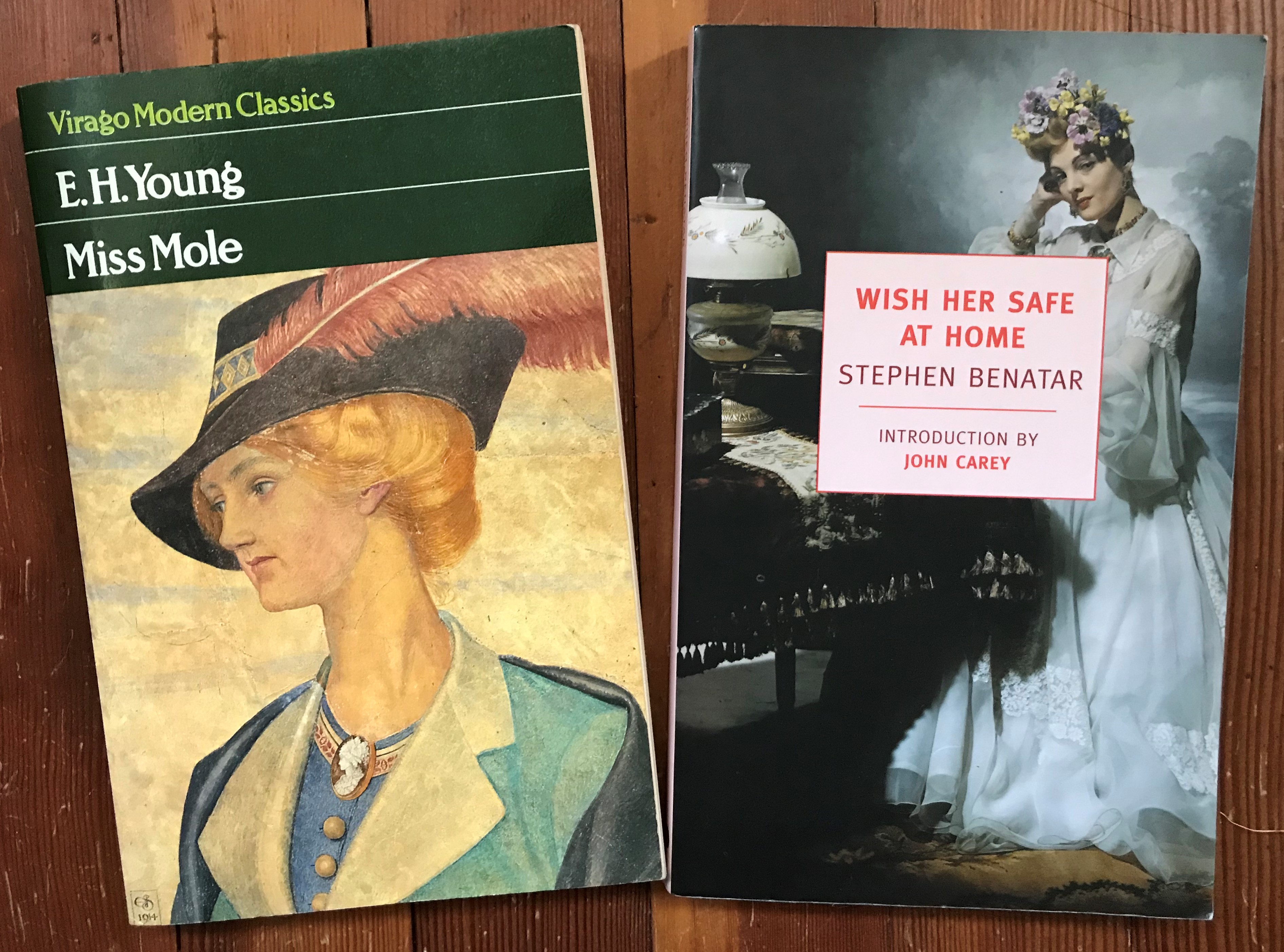
My first choice is the wonderful Miss Mole, titular heroine of the 1930 novel by EH Young. Hannah is in her late thirties, alone and shabby and the envy of no-one, yet she is a robust character who finds ways to survive and even enjoy life.
“She judged herself by the shadow she chose to project for her own pleasure and it was her business in life – and one in which she usually failed – to make other people accept her creation. Yes, she failed, she failed! They would not look at the beautiful, the valuable Hannah Mole: they saw the substance and disapproved of it and she did not blame them: it was what she would have done herself and in the one case where she had concentrated on the fine shadow presented to her, she had been mistaken.”
She is not delusional, rather she refuses to see herself as others see her -and why should she?
“This capacity for waiting and believing that the good things were surely approaching had served Hannah very well through a life which most people would have found dull and disappointing. She refused to see it so: it would have been treachery to herself. Her life was almost her only possession and she was as tender with it as a mother”
There is a strong streak of mischief in Hannah Mole too, and she enjoys teasing her well-to-do cousin Lilla, who finds her a job as a housekeeper to the reverend Robert Corder and his daughters Ethel and Ruth. This is not a remotely romantic set-up though. Corder is good at his job but he is also vain and self-centred, and enjoys his position in society because it means few people challenge him. Hannah sees him unblinkingly, and he does not like her.
“it would have horrified him to learn that he could not judge a clever or plain woman fairly. A clever one challenged him to combat in which he might not be the victor and a plain one roused in him a primitive antagonism. In failing to please him, a woman virtually denied her sex and became offensive to those instincts which he did his best to ignore.”
Hannah decides to improve things for his unhappy daughters, and feels a bond with his dead wife as she sets out to do so. She will manage things successfully, but in her own inimitable way:
“Hannah was not scrupulous about truth. She was not convinced of its positive value as human beings knew it, she considered it a limiting and an embarrassing convention.”
Hannah is realistic, but also hopeful and not remotely self-pitying. We also learn early on that she is brave, rescuing a suicidal man by smashing a window. She and a fellow tenant in her boarding house, Mr Blenkinsop, conspire to improve things for the man’s family, despite appearing to communicate at cross-purposes a great deal of the time. As she makes things work out for those around her, I really wanted things to work out for Hannah too, despite a shadow from her past looming – I think I viewed her with more compassion than she allowed herself:
“The desires, the energy, the gaiety were there, but they were ruled by an ironic conception of herself”
I really enjoyed spending time with Miss Mole. It’s a gentle novel, but it also doesn’t hide away from the realities of life for single women who are no longer young and without much money in the first half of the twentieth century, and how a judgemental society limits their choices.
Secondly, a spinster who would probably have done better without much money, Rachel Waring in Wish Her Safe at Home by Stephen Benatar (1982). Rachel is in her late 40s with a boring job and a flatshare in London. Then her Great Aunt Alicia dies and leaves her a house in Bristol, and everything changes.
“And the hitherto dull, diffident, middle-aged woman who said to the taxi driver ‘Paddington please,’ felt in some respects more like a girl of seventeen setting out for exotic climes”
Rachel moves into the house and is determined to make the best of this fresh start:
“I had often discovered the secret of happiness: courage on one occasion, acceptance on another, gratitude on a third. But this time there was rightness to it – certainty, simplicity – which in the past mightn’t have seemed quite so all-embracing. Gaiety, I told myself. Vivacity. Positive thinking. I could have cheered.”
Gradually however, this vivacity spills over into something more. She becomes obsessed with the slave trade reformer Horatio Gavin who lived in her house centuries ago. She sees a portrait in a shop she believes to be him:
“I saw the portrait in the window.
I laughed out loud. I laughed right there, standing on the pavement, a spontaneous burst of laughter that was partly the effect of my ecstatic recognition of him and partly an aid to his more sober recognition of me”
Wish Her Safe At Home details Rachel’s descent into serious mental illness. It is brilliantly done. Rachel begins as eccentric and gradually becomes truly unwell. The description of seeing the portrait is a perfect example. Most of us at some point have lost our filter in public: suddenly laughing at something remembered, or saying something out loud which we didn’t mean to. There are often experiences that we believe to be serendipitous for one reason or another. But Rachel suddenly takes this experience a step further in believing the portrait recognises her.
A novel from the first-person perspective of someone who is losing their mind is a tough read. I found it really got under my skin, more than any novel I’ve read in a long time. The first-person perspective also works brilliantly in positioning the reader in a place not exactly like Rachel’s, but certainly confused and paranoid on her behalf. There is a young couple, Roger and Celia who seem to like Rachel – why? Are they after her house? Do they feel sorry for her? Are they playing her from the start? Are they completely oblivious? Rachel’s unreliable narration means we cannot be sure.
“I don’t know when the following dialogue took place. Somehow it seems cut adrift from time, like a rowboat quietly loosened from its moorings, while its occupant, entranced, oblivious to each hill or field or willow tree upon her way lies whitely gleaming in her rose embroidered silk, trailing a graceful hand and sweetly carolling beneath a canopy of green”
That passage is meant to be overblown: Rachel is such a desperate character. Her delusions are romantic and an attempt to grasp a life so far half-lived, before it is too late. There’s nothing vindictive or cruel in her, and she is so incredibly vulnerable.
“Sometimes I felt utterly convinced I had been singled out for glory.
But not always. Far more often I felt I simply didn’t stand a chance”
I’ve not remotely done justice to the power, skill and subtlety of Wish Her Safe At Home. All I can say is: read it.
To end, the trailer for the film that apparently inspired Wish Her Safe at Home. The Ghost and Mrs Muir has had a special place in my heart since childhood. In all the times I’ve seen it, it’s never occurred to me that Mrs Muir is mentally ill. Wish Her Safe at Home has made me question everything…
A definite theme of the blog this year has been me being late for reading events. This will probably be my final post of 2018 so it’s apt to end on yet another belated entry, this time for Rebecca West Day in Jane at Beyond Eden Rock’s Birthday Book of Underappreciated Lady Authors, which was 21 December.
I’d hoped to do a post on two books, but the second half of this year has also seen me sluggish in both reading and blogging, so it’s just the one novel, The Fountain Overflows (1956), the first in the trilogy about the Aubrey family.
The story starts in 1900 and is narrated by Rose, one of four children of Piers and Clare. Piers is a gambling addict, and so although he and his wife are from genteel backgrounds, they survive on the brink of absolute destitution. The children grow up moving from place to place.
“We were experts in disillusion, we had learned to be cynical about fresh starts even before we ourselves made our first start”
Despite this, the children are not timid or anxious, but rather self-reliant and independent. Their mother is devoted to their father, as they all are, and the children clear-sightedly see their struggles.
“But I did not trust her. I loved her. Still I could see that she had been tripped by the snare of being grown up, she lay bound and struggling and helpless […] we children could always deceive her. Had it not been so we could not have provided for her happiness half as well as we did.”
West achieves a delicate balance in the portrayal of the Aubrey adults. It would be very easy to create to caricatures of a selfish, wastrel father and downtrodden female victim:
“ ‘Oh I am getting old and ugly, but it is not that. I cannot compete with debt and disgrace, which is what he really loves.’ “
Yet Clare never seemed especially weak to me. Her focus is music, and this takes priority over everything else. Rose and her sister Mary are gifted and practice incessantly, their brother Richard Quin is also talented but more interested in juggling and sports; their poor sister Cordelia has no talent and refuses to acknowledge it, egged on by a music teacher who is in love with her and so blind to her faults.
The Aubrey household is an intellectual one, with priorities very different to those around them in the south London suburb where they live.
“’You are allowed to read the newspapers now. I hope you will not attach too much importance to them. They give you a picture of a common-place world that does not exist. You must always believe that life is as extraordinary as music says it is.’”
West can be a colourful writer and there are elements of that here, with supernatural events and poltergeists related as matter-of-factly as trips to the House of Commons and music concerts. There isn’t a strong over-arching plot but enough to pull the reader along. The story has sadness in it, as any family with an addict in it will know, but it is not depressing because Rose’s voice is strong, unapologetic and funny in it’s unblinking assessment of those who surround her:
“Her colouring recalled a doll left out in the rain, she had the dislocated profile of a camel”
However, as a reader I found it very hard to indulge Piers as much as his wife and children did. To me he was utterly selfish and self-focussed even without his gambling, without the slightest scruple as to the risk he placed his family in.
“I had a glorious father, I had no father at all.”
The Aubrey’s practical cousin Rosamund and Aunt Constance frequently live them as they are also subject to a husband who refuses to provide, although in a very different way to Piers. There is plenty here about what led to first-wave feminism in the UK without being didactic. The men are fairly appalling but not judged harshly (except by me). Rather, West’s focus is the constraints which prevent women being able to sort things for themselves. There’s also a recurring focus on women’s clothes and how the start of the twentieth century saw female oppression made explicit through the fashions:
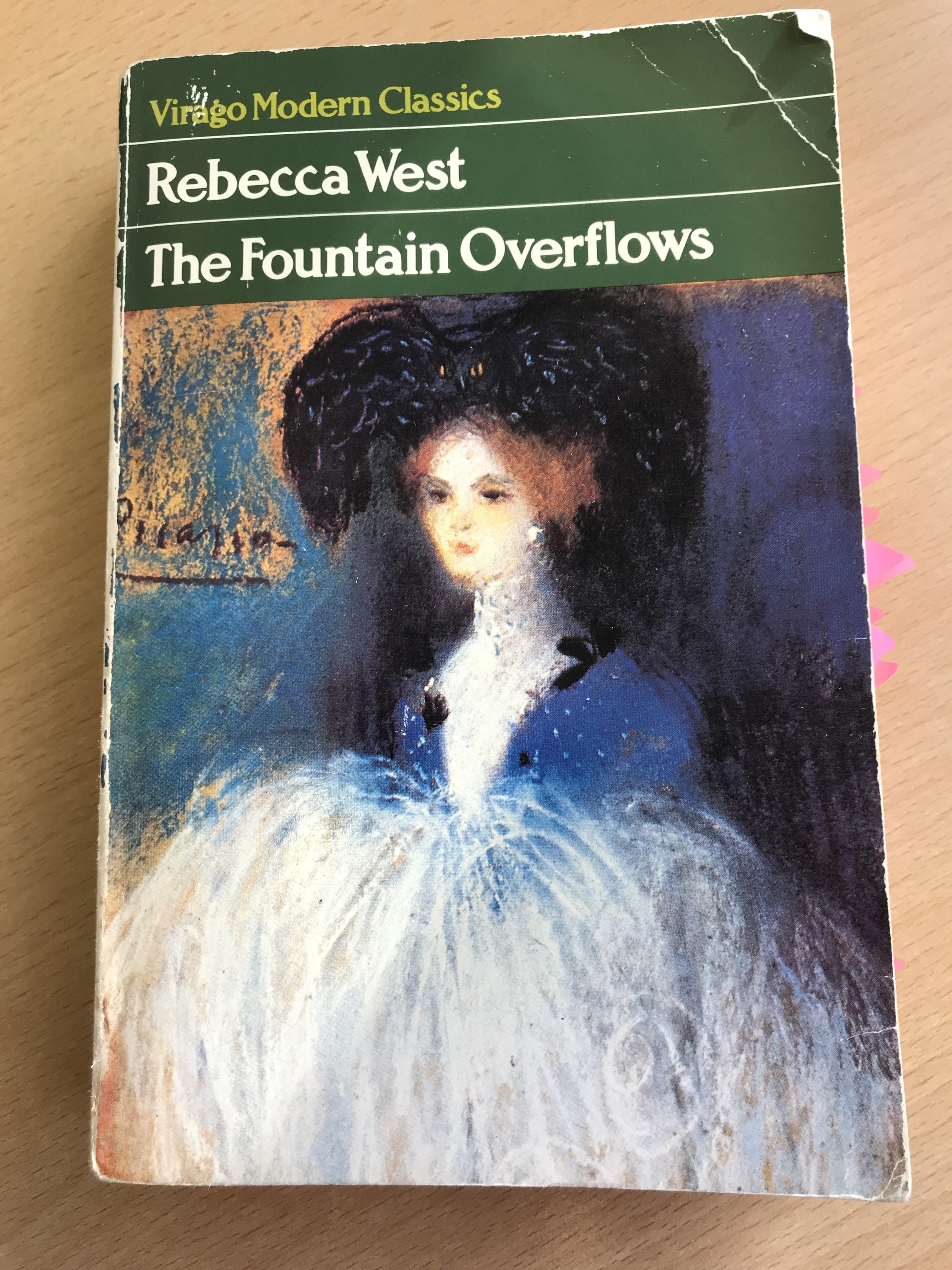
“ ‘Any tragic scene in those days necessarily appeared grotesque, because of the clothes worn by the women […] Today she would have the right to look like that, plain and distraught and like a hen, but she was compelled by the mode of the day to make herself as absurd as a clown by wearing a hat the size of a tea-tray, which dipped and jerked and swayed as often as she did, which was perpetually.”
Hence the Virago cover:
All in all I greatly enjoyed meeting the idiosyncratic, independent-minded Aubrey family. The characters were wholly believable, the evocation of a lost time done without nostalgia, and West had plenty to say about wider Edwardian society. I’ll look forward to spending more time with the Aubreys through the two sequels.
“We had very often been sharply warned against sentimentality, and though we might have been able to define it only vaguely as the way one should not play Bach, we recognised it.”
And so it just remains for me to wish you all the festivities of your choosing and leave you with a non-Christmassy song (because you may well be sick of them by now) from a great Christmas film which I watched yesterday, Scrooged:
Today is Rumer Godden Day in Jane at Beyond Eden Rock’s Birthday Book of Underappreciated Lady Authors. I’m so grateful that this prompted me to read the two by Godden I had in the TBR, as she’s quickly become a new favourite. Godden is such an accomplished writer; her books are so readable and her use of language is stunning.
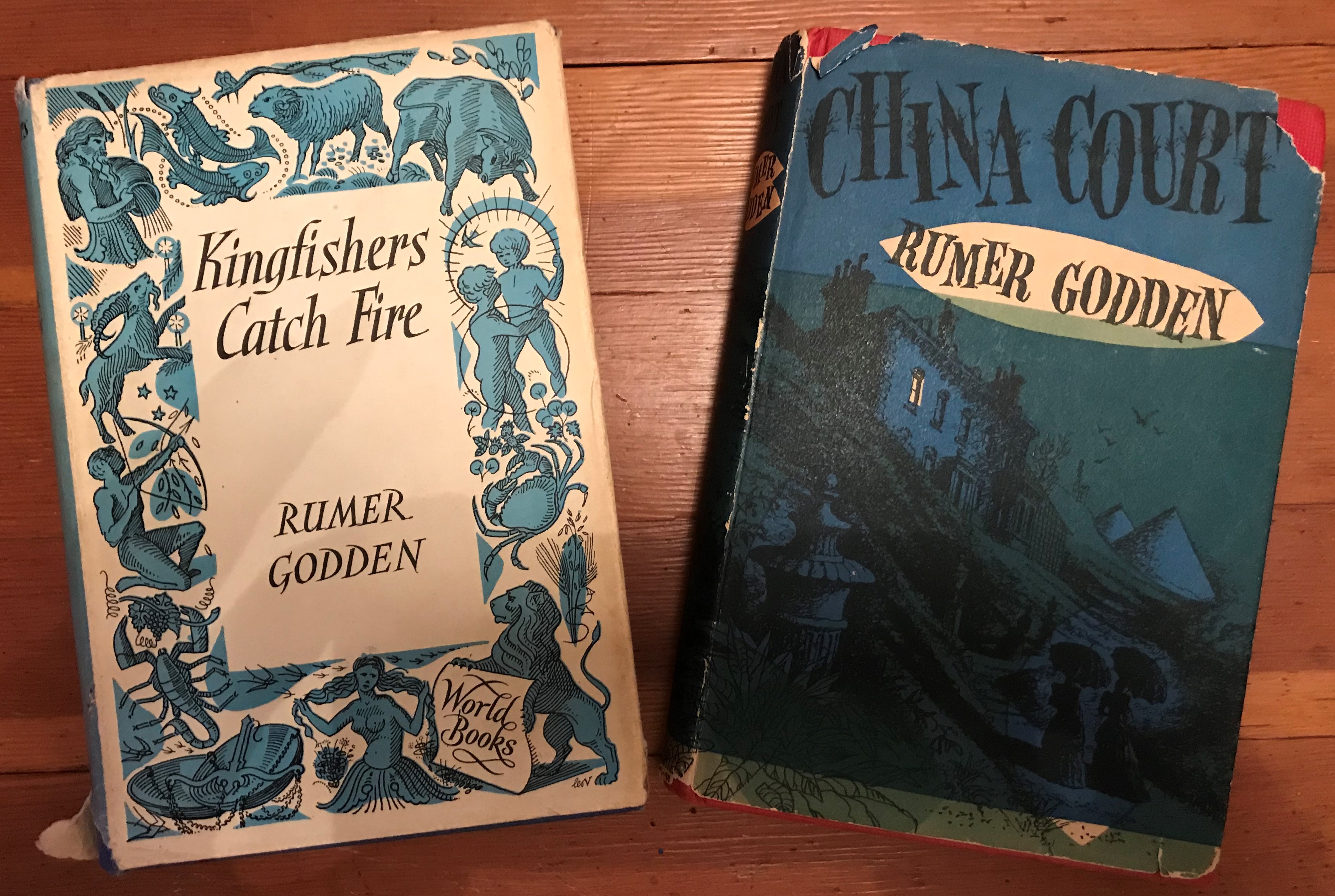
Firstly, Kingfishers Catch Fire (1953), which I started reading with some trepidation. I expected a novel about a 1950s English woman living in India to be filled with white entitlement and comic/exoticised portraits of the locals. Thankfully, Godden is far too sophisticated an author to do anything so crass, and the comic portrait is resolutely reserved for the clueless but well-meaning white foreigner, Sophie.
“To the Pundit, Sophie was precisely like any other European or American, only more friendly; the friendliness alarmed him. ‘These people are poor and simple…’ he began, but Sophie interrupted him.
‘We shall be poor and simple too,’ she said with shining eyes.
[…]
Sophie would not listen. Like many people there were some words about which she was sentimental; one of these was ‘peasant’. ‘Peasants are simple and honest and kindly and quiet,’ she said. ‘They don’t want what they don’t possess. They have the wisdom to stay simple. They don’t want to change.’”
This idealistic young woman crashes into Kashmir with her two children, estranged from her husband and determined to establish a life for herself. Yet the portrait of Sophie is a subtle one: she is oblivious to the needs of her children and to the cultural differences between her and her neighbours, but somehow not arrogant, just hopelessly naïve.
“Teresa could not count how many times they had moved, but each time the small ballast of hopes and plans they had collected was thrown overboard and everyone they had known was left behind.
Moo did not care. Like a little seed that is blown and can grow anywhere, on a rocky ledge, in a crack of earth, he lived a contained contented small life of his own no matter where he went. To Moo it did not matter but Teresa had roots, they were tender, soft and trailing…”
Poor Teresa. She is sensible and understands so much more than her adult parent. She also cares for Moo, who is probably on the autistic spectrum and in his own world.
In describing how Sophie and her children live in Kashmir, Godden adopts an interesting approach by having the story interjected with later reflections from Sophie and her family. So the narrative will be interrupted with comments like “‘But you were not qualified to teach Urdu,’ said Toby afterwards.” It’s not a technique I’ve seen before and it doesn’t jar as much as I would expect. The effect is to temper Sophie’s idealism and blind actions. It works to offset what sceptical readers (ie me) might be thinking: ‘but that’s just ridiculous, she’ll never make that work…’ etc. It keeps the story grounded even when the main protagonist ricochets from one ill-conceived action to the next.
Godden wrote Kingfishers Catch Fire based on her own experiences of India and her love of the land is obvious:
“There were no ceilings, only cross beams stuffed with dried furze as in most Kashmiri peasant houses. There was no glass in the windows, only hanging window shutters, no water system of course, no lighting, but it was a rarely beautiful little house. In summer it was hung with vines and honeysuckle and white-scented roses, and all around it were flowering trees….Above it all the mountain reared its head while below, lay the lake and its reflections and, far, the horizon of snow peaks.”
The plot is a deceptive one. I was enjoying what I thought was comic novel about the escapades of a fairly clueless woman; then suddenly things took a very dark turn and I found myself racing towards the end, desperate to know what happened and for things to work out well.
I loved the ending. This pithy comment on stealthy imperialism summed it up for me:
“The missionaries worked for the people but did not respect them. For all their love and zeal the wanted to bend them, bend them out of their own truth”
The message I took from Kingfishers Catch Fire was one of resolutely sticking to your own truth, whilst acknowledging and respecting other people’s. I just loved it.
Behold my slightly battered, kitschy-covered editions:
Secondly, China Court (1961). This is another story of a dilapidated house and the woman who loves it, but otherwise very different to Kingfishers Catch Fire. The titular pile is the Victorian home of five generations of the Quin family set in the Cornish moors and built on the proceeds of china clay works.
“When one of the…rose bowls or vases is rung it gives off a sound, clear, like a chime, the ring of true porcelain, so China Court gives off the ring of a house, a true home.”
The story begins with the death of Mrs Quin, the matriarch who has resolutely stayed in China Court against all her family’s wishes (except her granddaughter) and looks at what happens after her death as her family besiege the house for the reading of the will.
The story moves back and forth across the generations. There is no indication when this will happen; scenes cut between the various family members, all in present tense. Again, this stylistic experiment doesn’t jar nearly as much as I would expect. Instead it captures a sense of the house holding all the members of the family at any one time, the echoes of their steps and their voices all layered upon one another.
“Homes must know a certain loneliness because all humans are lonely, shut away from one another, even in the act of talking, of loving. Adza cannot follow Eustace in his business deals and preoccupations as she cannot follow Mcleod the Second or Anne or Jared – no one can follow Eliza. Mr King Lee, kissing Damaris, has no inkling of the desolation he has brought her, just as Groundsel only half guesses Minna’s; Jared hides himself from Lady Patrick, and John Henry and Ripsie, in their long years together are always separated by Borowis
[…]
Loneliness can be good. Mrs Quin learns that in the long companionship of the years after Tracy goes, when she and Cecily are alone in the house; companionship of rooms and stairs, of windows and colours; in the gentle ticking away of the hours, the swinging pendulum of the grandfather clock. ‘I was happy,’ Mrs Quin could have said. Contented loneliness is rich because it takes the imprint of each thing it sees and hears and tastes”
This for me was the central theme of China Court: the value of everyday domesticity. The characters who recognise it are fulfilled and live rich lives that outwardly appear narrow but in reality connect with something fundamental that enables a wider kinship with others.
The portraits of the individuals run seamlessly and as the novel progresses they weave together for a complex depiction of family, and how histories are cyclical, building on what has gone before.
Mrs Quin is an avid gardener, and as in Kingfishers…there are beautiful descriptions of the natural world, but also of food and the various meals the family have taken together over the years.
“Now Cecily brought in saffron cake, buttered scones hot in a silver dish, brown bread and butter thin as wafers, quince jelly and strawberry jam from China Court quinces and strawberries; she had made shortbread, fruitcake and because Tracy likes them as a child, thin rolled ginger-snaps filled with cream.”
Gradually the family histories build towards a brilliant denouement in the present day of the novel. It’s dramatic but believable and once again I found myself racing towards the end. And the end is where I encountered my first reservation about Godden’s writing. To discuss it I’ll have to include a SPOILER so skip to the end of this paragraph if you don’t want to know. Here it is: an act of domestic violence takes place, an act which is quickly forgiven and leads to sex. I think it’s a dramatic device to shock a couple who aren’t communicating well (a recurring theme in the novel) towards honesty and resolution, but reading this almost 60 years after it was written was just horrible. I know from films of the time that slaps and spankings were freely given, but I’d be very surprised if this worked for modern readers.
This one incident aside, China Court is a wonderful portrait of a house and a family, beautifully evoked and fully realised with fondness but without sentimentality.
“ ‘We were truly kin,’ says Mrs Quin, and it is true that Tracy is like her grandmother in many ways; for instance, both, from the moment they first see it, are enslaved by China Court.”
To end, regular readers will know there are no depths to which I won’t sink in order to shoehorn in an 80s pop video. So please pardon the pun that has enabled my childhood hair icons to be this week’s choice:
Yet again I’m posting late for a readathon. I hope Caroline at Beauty is a Sleeping Cat and Lizzy at Lizzy’s Literary Life I will allow for my tardiness with this late entry for German Literature Month 2018. I really need to get a grip on my blogging!
I had a couple of DNFs in my reading for GLM 2018, which really isn’t like me. One novel I suspect will never be for me, the other I think just the timing was wrong. Either way, it was with some relief that I turned to the safest of hands, Stefan Zweig, to finish my GLM reading on a high.
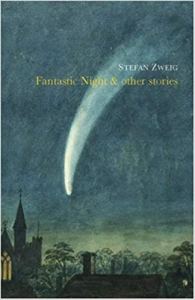
In Fantastic Night and Other Stories (1906-1929 trans. Anthea Bell 2004) the wonderful Pushkin Press have collected together five of Zweig’s short stories which are compulsively readable. I don’t want to say too much as Zweig is such a subtle writer that the joy, I think, is going into his writing without an idea of plot or subject, to just see how he unfurls a story of such beauty and psychological insight before you. So I’ll just give a flavour of the first two, the longest in the collection.
In the titular story, a series of events in one evening sees a nihilistic playboy learn the value of living beyond one’s own pleasures:
“Those yearnings that then stirred unconsciously in me at many moments of half-realisation were not really wishes, but only the wish for wishes, a craving for desires that would be stronger, wilder, more ambitious, less easily satisfied, a wish to live more and perhaps suffer more as well.”
Such is the skill of Zweig’s writing that this spoilt and vacuous man undergoes a transformative experience without it seeming rushed or contrived.
“Life is a great and mighty phenomenon and can never be hailed with too much delight. It is something only love grasps, only devotion comprehends.”
Letter From an Unknown Woman I knew from the Max Ophuls 1948 film, starring the luminous Joan Fontaine (some kind soul has uploaded the whole thing to YouTube here); I had no idea it was based on a Zweig short story.
The premise is as simple as the title suggests: a man receives a letter from a woman he has no memory of, proclaiming her enduring love for him. Her young son has died from influenza and she is writing a letter to him to be sent after she has also succumbed to the virus.
Once again, Zweig manages a feat of characterisation. A woman spends her life devoted to a man who does not know of her existence: how is she not a doormat, the tale ridiculous and sentimental? Primarily because the woman is determined and unapologetic. She has a strength that comes through so clearly and is undeniable.
“I know that what I am writing here is a record of grotesque absurdities, of a girl’s extravagant fantasies. I ought to be ashamed of them, but I am not ashamed, for never was my love purer and more passionate than at this time. I could spend hours, days, in telling you how I lived with you though you hardly knew me by sight.”
She never makes excuses, for her life spent in this unrequited state or for her work as a prostitute, which she views as reasonable and profitable for her. She also does not make excuses for the object of her affection, who she sees clear-sightedly:
“You did not recognise me, either then or later. How can I describe my disappointment? This was the first of such disappointments: the first time I had to endure what has always been my fate; that you have never recognised me. I must die, unrecognised […] I understand now, (you have taught me!) that a girl’s or woman’s face must be for man something extraordinarily mutable. It is usually nothing more than the reflection of moods which pass as swiftly as an image vanishes from a mirror.”
She is also never bitter. There is no regret or rancour in her words. She chose her love, and lived it as fulfilled as it could be, given the man it was for:
“You care only for what comes and goes easily, for that which is light of touch, is imponderable. You dread being involved in anyone else’s destiny. You like to give yourself freely to the world – but not to make any sacrifices.”
These words are not angry, but just stating fact. Zweig demonstrates why she loves him, what makes him compelling to her, and why these same traits mean he can never love her back.
Zweig’s short stories are masterful. How he manages to get so much telling detail, such beauty and such insight into such economical writing is truly astonishing.
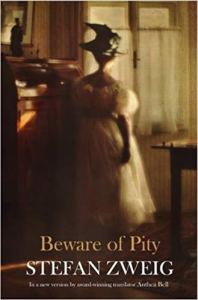
Secondly, Beware of Pity (1939) which was Zweig’s longest work, telling the story of the soldier Anton Hofmiller, who asks a young girl to dance at a party in the second decade of the twentieth century, unaware that she has a spinal cord injury which means she walks with braces and crutches.
“I had never been deeply moved by anything…Now, all of a sudden, something had happened to change me – nothing outwardly visible, nothing of any apparent importance. But that one angry look, when I had seen hitherto unsuspected depths of human suffering in a lame girl’s eyes, had split something apart in me, and now a sudden warmth was streaming through me, causing mysterious fever that seemed to me inexplicable…All I understood of it at first was that I had broken out of the charmed circle within which I had lived at my ease until now, and I was on new ground which, like everything new, was both exciting and disturbing.”
Out of pity, he repeatedly visits Edith Kekesfalva and is drawn into her life, and that of her father, a rich man driven to distraction over the fate served to his daughter:
“His obstinacy, his egocentric obsession, as if nothing in this world, which is full to the brim of unhappiness anyway, exists but his own and his child’s misfortune”
Hofmiller is callow; he doesn’t know what to do with the situation he finds himself in. The family doctor, Dr Condor, tries to warn him:
“pity is a double-edged weapon. If you don’t know how to handle it you had better not touch it, and above all you must steel your heart against it.”
But Hofmiller blunders onwards into more than one “compassionate lie” which will see all their lives unravel. How he behaves is completely believable, completely understandable, and completely devastating. For the modern reader who may not make such ableist assumptions as Hofmiller, certain situations that he crashes into seem to a certain extent avoidable, but he is naïve and well-meaning and completely oblivious.
Beware of Pity is a devastating read. The title warns of impending tragedy, but Zweig takes it a step further, by framing the story as a man looking back over what happened to a time before World War I, when World War II is just about to start. He shows how such notions of pity, honour and tragedy become swallowed whole under the terror and mass devastation of mechanised warfare. Ultimately though, Zweig suggests the need to keep hold of our humanity in such circumstances, however painful it may be.
“There are two kinds of pity. One, the weak and sentimental kind, which is really no more than the heart’s impatience to be rid as quickly as possible of the painful emotion aroused by the sight of another’s unhappiness, that pity which is not compassion, but only an instinctive desire to fortify one’s own soul against the sufferings of another; and the other, the only one at counts, the unsentimental but creative kind, which knows what it is about and is determined to hold out, in patience and forbearance, to the very limit of its strength and even beyond.”
To end, an Anglophone artist who was hugely influenced by German culture, singing one of his most famous songs in German:
Oh dear, I still haven’t quite got my blogging momentum back. I planned a few posts for German Literature Month 2018, hosted by Caroline at Beauty is a Sleeping Cat and Lizzy at Lizzy’s Literary Life but here we are at the end of the month and this is my first. Somehow I have a feeling improving my blogging is definitely going to feature on my New Year’s resolution list…
It certainly isn’t lack of good reading that is the cause of my blogging dip, as I really loved Zbinden’s Progress by Christoph Simon (2010, trans. Donal McLaughlin 2012), from the ever-reliable publisher AndOtherStories. It also fits with my love of novellas at only 172 pages long, and is one more stop on my Around the World in 80 Books Reading Challenge, hosted by Hard Book Habit, as much to my own surprise, I’ve not been to Switzerland yet.
The premise of the novel is incredibly simple: octogenarian widower Lukas Zbinden is walking down the stairs of the retirement home where he lives, holding onto the arm of a new carer, Kazim. As they make their way down seemingly interminable flights, Lukas recounts his life. Kazim is a silent interlocutor, as you feel many people are with Lukas Zbinden. He was happily married, to a woman who converted him to the joys of walking, although she preferred country walks and her irrepressible husband prefers sociable city walks:
“Emilie always said the one really essential thing was to remain lively, active and interested, and always open to whatever’s going on both in nature and within oneself. We could talk much more about that Kazim, if we went for a walk.”
“Emilie liked trees standing randomly in a landscape; I like trees in rows. I’ve nothing against cow pastures being built on, even to be replaced by hangars and shopping streets providing free entertainment. I yearn for tranquillity but can’t actually bear it.”
Lukas is an entertaining, endearing man although not without his faults. He is still fully engaged with life, enjoying the people he shares the home with, poking his nose into their business, and trying to convert everyone to the joys of ambulation.
“Do you know what it means to go for a walk? Going for a walk is acquiring the world. Celebrating the random. Preventing disaster by being away.”
He’s also aware of his own failings, and the progress of the title is psychological as well as physical. He misses his wife, he knows his relationship with his son isn’t that great, and he’s trying to be a better person.
“Emilie was so full of beautiful things she could share with others. Her whole life was sharing with others, just as I wish that for my own life. Believe me when I say that, it’s why I’m working on becoming inwardly rich. So that every time I’m with someone, I can share something with that person.”
Zbinden’s Progress was just the right book at the right time for me. Things are pretty bleak right now – watching the news is an endurance task. This novella is sweet but not sentimental, life-affirming but realistic. The overall message is that it’s never too late to reach out to people, to enrich your life and theirs with a connection. It’s also about how love, in its many forms, endures. And it’s about finding the right hobby:
“What counts is that you have the right leisure activity. An activity with which you can live when it gets very dark; that gives you support in the face of major challenges; for which there are no requirements in terms of age and ability; that requires no proof of an unimpaired ability to think; an activity during which you can die peacefully.”
Sounds like reading to me (so long as the dark is metaphorical not literal).
Zbinden’s Progress is funny and sad, but more the former than latter. It is about simple joys, and about finding what for you makes a life well lived.
“the end of my path is becoming more and more identifiable. I’ve started taking my leave of people, but they tell me it’s still too early for that.”
If I’ve failed to give you a good sense of this book, perhaps this will help – a pictorial representation by the author, helpfully enclosed with my copy:
Secondly, a book I read mainly for curiosity value, ThreePenny Novel by Bertolt Brecht (1934, trans. Desmond I Versey with verses trans. Christopher Isherwood, 1937). I know Brecht mainly as a playwright, and I’ve seen ThreePenny Opera a few times so I was curious to see what he did with the characters in novel form.
Macheath, ‘Mack the Knife’ is still the main focus, his famous activities of the ThreePenny Opera shrouded in rumour as he has established himself as a businessman, running a series of ‘B Shops’ which sell stolen goods incredibly cheaply. Brecht was a Marxist and his work is undoubtedly didactic, but he does it with bone-dry humour:
“years obscured by that semi-darkness which makes certain portions of the biographies of our great businessmen so poor in material; ‘giants of industry’ usually seem to rise, suddenly and astonishingly, ‘straight up’ out of the darkness after so-and-so many years of ‘hard and necessitous life’ – but whose life is usually not mentioned.”
Another businessman is Peachum, Polly’s father, who manages a group of professional beggars, ruthlessly and cynically:
“After a victory one must send out mutilated, dirty, miserable soldiers begging; but after a defeat they must be smart and clean and spruce. That’s the whole art.”
Polly marries Macheath, and Peachum is not happy. He wanted her to marry a man named Coax, who is organising a shipping scam to rip off investors and the Navy.
“His daughter was to blame for everything. Through her boundless sensuality, doubtless inherited from her mother, and as a result of culpable inexperience, Polly had thrown herself into the arms of a more sinister individual. Why she had immediately married her lover was a mystery to him. He suspected something terrible.”
Everything and everyone is terrible in ThreePenny Novel. The corruption is relentless. The coveting and accumulation of money is the only motivator and is pursued without scruple, facilitated by the bankers and financiers. It is incredibly bleak: sociopathic Macheath rises to the top through entirely legal means.
In this world there is no room for morals, compassion, or consideration. I didn’t find it depressing though. ThreePenny Novel is a satire, and so it’s wry portrayal of people and events lightens it enough. I thought it was a bit overlong (as I nearly always do for anything over 200 pages) but on finishing the novel I did find myself questioning what I could do to be less of a cog in corrupt capitalist machines so it was certainly effective from the political point of view, comrades 😊
Brecht’s work may seem dated: a Marxist treatise set in late Victorian London. But I really don’t think it is. Judge for yourself if this still seems relevant:
“There are some people who have the capacity for remaining entirely uninfluenced by the feelings of others, who can remain completely immune from actualities and can speak their thoughts openly and freely, without regard for time and place. Such men are born to be leaders.”
To end, there was only one song I could possibly end on. Here it is in the 1989 version of The ThreePenny Opera (trigger warnings for mentions of rape, murder, blood, assault, and stylised violence):
Last week I got an invite to a friend’s wedding. I know you won’t judge me, my bookish friends, when I say that I was pleased to get the invite and looking forward to it, but only became truly excited when I saw it was taking place in the birthplace of a favourite poet – roll on October!
Anyway….. me being a selfish friend aside, this prompted me to think that June is traditionally a month for weddings and so a suitable theme for this week.
Firstly, The Member of the Wedding by Carson McCullers (1946), which tells the story of twelve-year old Frankie over a few sultry days in late August, around the wedding of her older brother:
“She knew that her only brother, Jarvis, was to be married. He had become engaged to a girl in Winter Hill just before he went to Alaska. Frankie had not seen her brother for a long, long time and his face had become masked and changing, like a face seen underwater. But Alaska! Frankie had dreamed of it constantly.”
Frankie is a misfit – very tall for a girl (I thought she sounded entirely normal but then I was 5’10” by age 14), with hair she’s just shorn into a crew cut, kept company by her housekeeper Berenice and her cousin John Henry, who is half her age. Her mother died in childbirth and her father is a distant presence. She is deeply unhappy and pins all her hopes on her brother and his new wife taking her with them when they leave.
McCullers creates the stultifying atmosphere perfectly:
“The clock ticked very slowly on the shelf above the stove, and it was only quarter to six. The glare outside was still hard and yellow and bright. In the backyard the shade beneath the arbor was black and solid. Nothing moved. From somewhere far away came the sound of whistling, and it was grieving an August song that did not end. The minutes were very long.”
I don’t think it’s putting too much of a modern interpretation on the novel to say a dominant theme is about gender and identity. Frankie has a gender-neutral name and does not conform to a feminine ideal. John Henry wears a dress. Markers of identity shift: Frankie’s name changes to F Jasmine in the second part of the novel. Both children feel their ideal world would not contain gender binaries:
“She planned it so that people could instantly change back and forth from boys to girls, whichever way they felt like and wanted. But Berenice would argue with her about this, insisting the law of human sex was exactly right as it was and could in no way be improved. And then John Henry West would very likely add his two cents’ worth about this time, and think that people ought to be half boy and half girl”
At core though, it is a tale of a sad, lonely, misunderstood child who desperately wants to be seen and heard, and believes the wedding day will give her this chance:
“And since it was the day when past and future mingled, F Jasmine did not wonder that it was strange and long. So these were the main reasons why F Jasmine felt, in an unworded way, that this was a morning different from all mornings she had ever known. And of all these facts and feelings the strongest of all was the need to be known for her true self and recognised.”
What Frankie needs to recognise is what she already has: a deep intimacy with Berenice and John Henry who both love her.
“The three of them sat silent, close together and they could feel and hear each other’s breaths.”
The Member of the Wedding is an atmospheric, touching story that has many layers to it. It’s a tightly contained novel (188 pages in my edition) which still manages a remarkable richness of characterisation and setting.
The Member of the Wedding was a Broadway production and then a film with the same actors in 1952. I’ve not seen it but I believe it was acclaimed, although the claustrophobic quality probably worked better on stage:
Secondly, Cassandra at the Wedding, by Dorothy Baker (1962). Like The Member of the Wedding, the story centres not on the couple but on someone with a strong emotional investment in the proceedings. Cassandra is writing her PhD at Berkley and has to return home because her twin sister Judith is marrying a doctor she met in New York. The sisters are exceptionally, unhealthily close and Judith’s move to New York had sent Cassandra into a tailspin. At the start of the novel she is considering the Golden Gate bridge in term of a suicide vehicle:
“I think I knew all the time I was sizing up the bridge that the strong possibility was I’d go home, attend my sister’s wedding as invited, help hook-and-zip her into whatever she wore, take over the bouquet while she received the ring, through the nose or on the finger, wherever she chose to receive it, and hold my peace.”
Their mother is dead and their father self-medicates with alcohol. It becomes apparent that the twins’ claustrophobic relationship was an extension of the elitist, exclusive culture their parents encouraged. But Judith has realised that this was not a helpful way to live:
“as a family we’d always been something of a closed corporation…we had our own pinnacle to look down from. But when we went away to college we couldn’t quite keep it the way it was on the ranch.”
Judith has dared to want the ordinary: to be out in the world, to get married and to set up a home. The few days when they are both back at home will bring the twins’ differing needs into direct conflict.
“[I] stood up and looked down at Cass and knew I loved her, but that it was not the same thing as being married and feeling married, and that now it never could or would be. I felt very solemn about it, and solemn words came into my mind. ‘Whom God hath split asunder, let nothing join them together. Ever.’ “
Cassandra is an intriguing character: bright, funny, acerbic, incredibly vulnerable, and monumentally selfish and self-centred. Her obsession with Judith is in many ways an extension of self-obsession:
“To be like us isn’t easy, it requires constant attention to detail. I’ve thought it out; we’ve thought it out together. I’ve tried to explain to my doctor that it’s a question of working ceaselessly at being as different as possible because there must be a gap before it can be bridged. And the bridge is the real project.”
All the same I was rooting for Cassandra – not to get what she wanted, because that was a continuation of the destructively claustrophobic relationship with her sister – but to find a way through, for all involved.
Cassandra at the Wedding is a psychologically astute, funny and sad novel. Dorothy Baker balances the differing tones expertly; I’d definitely be interested to read more by her.
To end, The Dixie Cups in remarkable 1980s dresses (were wired hems a thing?), and looking like they’ve not bothered aging since their 60s heyday: