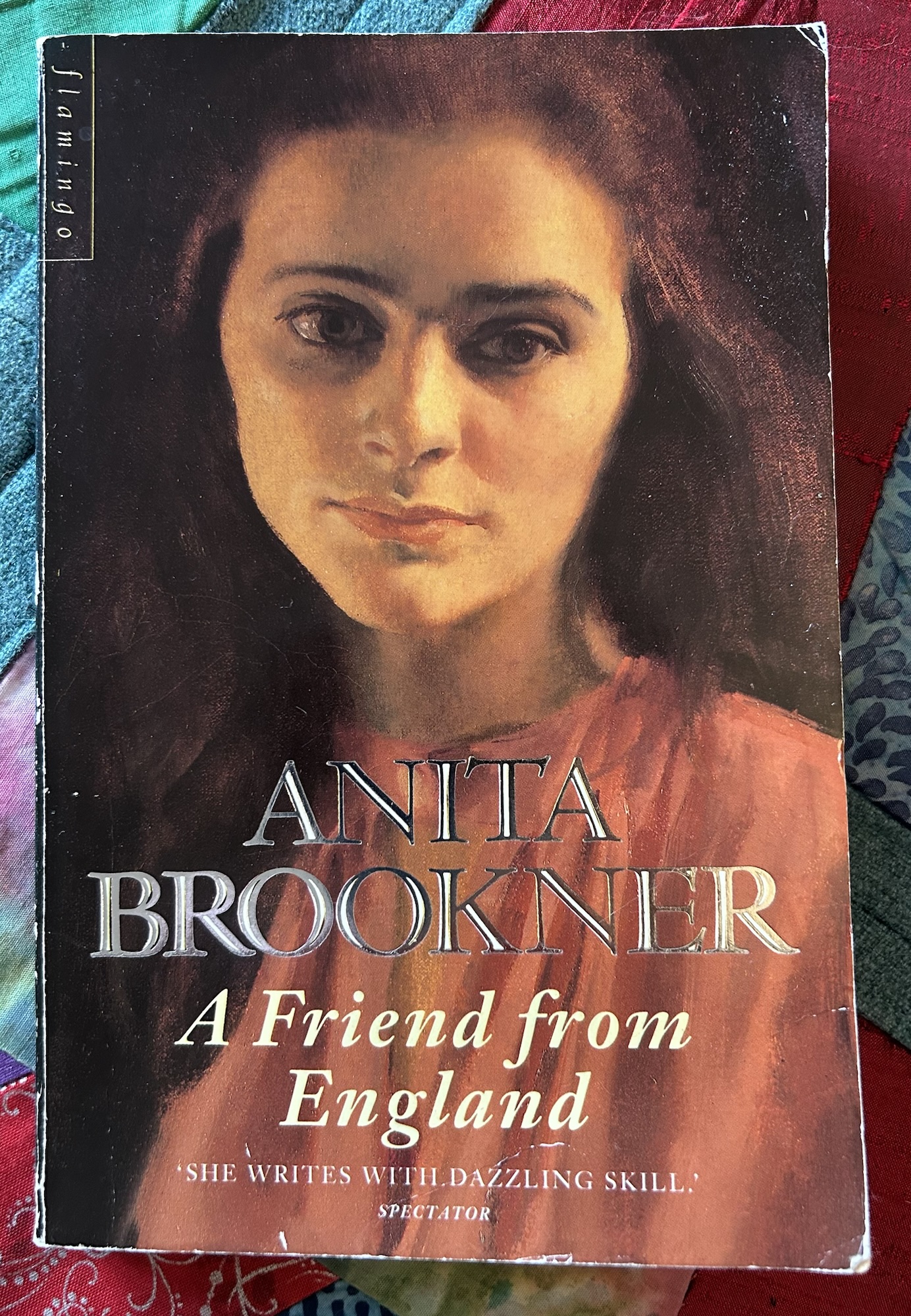
“Two English meals a day would have done for me.” (Antal Szerb, The Pendragon Legend)

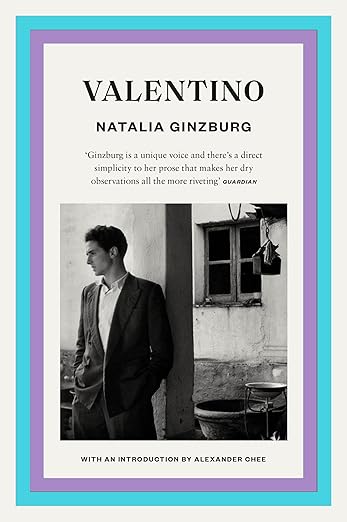
This month I started off my reading for Kaggsy and Lizzy’s #ReadIndies event with an author that the event had led me to discover last year: Gertrude Trevelyan. So it seemed apt to end this month’s reading with another author #ReadIndies had introduced me to last year: Antal Szerb. In 2024 reading Love in Bottle in February led to Journey by Moonlight for the 1937 Club in April. This time I’m looking at The Pendragon Legend (1934, transl. Len Rix 2006) which is published by the always reliable Pushkin Press.

The Pendragon Legend is Szerb’s first novel, and utterly bonkers. As I was reading it I remembered why I had enjoyed my previous Szerb reads so much: his wit, fun, intelligence without superiority, gentle ribbing without malice, make him such a joy.

The narrator Janos Bátky is a young scholar who spends his time hanging around the British Library Reading Room. Luckily for him, he has no need for money:

“My nature is to spend years amassing the material for a great work and, when everything is at last ready, I lock it away in a desk drawer and start something new.”

His current interest is Rosicrucians: “Nothing interests me more than the way people relate emotionally to the abstract.”  This ancient secretive organisation’s interests include: “Changing base metals into gold, deliberately prolonging the life of the body, the ability to see things at a distance, and a kabbalistic system for solving all mysteries.”

This leads to him being introduced to the Earl of Gwynedd who invites Janos to stay at Pendragon Castle and make use of his library. Janos heads off to Wales with some acquaintances in tow, unheeding the warnings of a mysterious telephone call… (why do people never heed mysterious telephonic warnings??)

Shortly into his stay there are both earthly concerns when bullets are stolen from his gun and metaphysical concerns where he seems to be haunted:

“Just to be clear on this: not for a moment did I think it could be any sort of ghostly apparition. While it is a fact that English castles are swarming with ghosts, they are visible only to natives – certainly not to anyone from Budapest.”

(This isn’t the only time Janos confuses England and Wales, despite the fact he encounters similar ignorance when people insist he must be German and that Hungary doesn’t exist: “’Come off it. Those places were made up by Shakespeare.’”)

There are femme fatales, reluctant heroes, knowing castle staff… my favourite character was the capable and blunt Lene Kretsch:

“This was how our friendship began: I set myself on fire and she put me out. I’d been sitting by the hearth with The Times. I’ve never been able to handle English newspapers – apparently one has to be born with the knack of folding these productions into the microscopic dimensions achieved by the natives – and, as I flicked a page over, the entire room filled with newsprint.”

And so The Pendragon Legend is a mystery, a thriller, a Gothic ghost story, a fable, and with the arrival of the Earl’s niece Cynthia, a romance, despite Janos’ callowness:

“I can never feel much attraction to a woman whom I consider clever – it feels too much like courting a man.”  

Maybe Cynthia has more tolerance for him as she comes from a family where: “At most, the Pendragons tolerate women within the limits of marriage, and even then without much enthusiasm.”

Szerb satirises romance along with all the other tropes and genres he employs, but always with affection and never with any disdain. Somehow Janos and assorted friends bumble their way through the mystery, despite the poisonings, blackmail and hauntings which dog their steps.

My one reservation is that it became a bit too esoteric towards the end, but this is a matter of personal taste and feels a bit mean-spirited in the face of such an affectionate and fun tale.

If you fancy a pacy, ridiculous, learned adventure, The Pendragon Legend is for you.

“I was filled with the tenderness I always feel – and which nothing can match – when I encounter so many books together. At moments like these I long to wallow, to bathe in them, to savour their wonderful, dusty, old-book odours, to inhale them through my very pores.”

“An Edwardian lady in full dress was a wonder to behold, and her preparations for viewing were awesome.” (William Manchester)

Last year Kaggsy and Lizzy’s brilliant #ReadIndies event led to me discovering Gertrude Trevelyan’s novels Two-Thousand Million Man-Power (1937) and William’s Wife (1938). These are published by Boiler House Press, part their Recovered Books series edited by Brad Bigelow, founder of www.neglectedbooks.com, which brings “forgotten and often difficult to find books back into print for a new generation to enjoy.”

#ReadIndies 2025 felt a perfect opportunity to return to Gertrude Trevelyan and her 1934 novel, As It Was In The Beginning, also part of the Recovered Books series.

This was quite different in style to her other novels I’d read, sustaining stream-of-consciousness. This approach lent itself perfectly to the story, as a woman lies dying in a nursing home, remembering her life.

“Alone with the white sheets and the polished floor and the fire crackling jerkily in the sunken grate and the sun beating against the yellow blinds, and the dull white furniture. All quite clean. Everybody finished up and gone.”

Millicent is well-to-do, formerly Lady Chesborough. She isn’t particularly likeable: she is grouchy, ill-tempered, and rude to the nursing staff. We are privy to her dismissive, judgmental thoughts about those who care for her.

“Oh, so it isn’t the pink-cheeked one this time. Thin and sallow. Dark. Sister, that’s it. Scrubbed all the pink out with the carbolic. Suppose a Sister has been scrubbed longer than a nurse.”

Millicent is also vain about looking younger than she is, about her slender frame and her hair. The reader is aware that she may no longer look as she thinks she does. In this way her vanity is almost defiant, a refusal to accept what is happening to her. It is also bound up in her affair with a younger man, Phil, who used her for money after her husband died.

“That slow smile that seemed to pick things up and weigh them and find they weren’t worth your while and put them down with gentle derision: knowing it was nothing, but not wanting to hurt too much.”

Millicent’s awareness of Phil’s caddishness comes and goes. Her reminiscences are interwoven with her present, muddling her memories with visits from her niece Sonia, the doctor on his rounds and the nurses she is so rude about.

This so well done, meaning the reader becomes a detective, working out what is real, what is imagined, what is memory; what is Millicent’s self-delusion from the time and what is delusion now.

We are then taken back to her marriage with Harold, and Trevelyan deals frankly with Millicent trying to fit in with the expectations for a privileged woman at the start of the last century, and how this stifles her needs and wants, including sexual desire.

“It wasn’t a woman Harold married, but a shell: that’s the truth of it. Something correct in white satin, labelled The Bride.”

Trevelyan doesn’t demonise Harold, but shows how he and Millicent are both products of their time. (Although never specified, I’ve assumed Millicent was born around the 1880s, to be in her fifties or thereabouts when the novel was published, and coming of age in Edwardian England.) They are unable to voice what is lacking for them, and struggle to understand this lack when they have done all that is expected. Millicent has a brief outburst of passion which shocks Harold, and they retreat into distance.

“It was that way of appropriating his surroundings; everything having to fit into a relationship with himself. My house. My wife. Yes, that’s it: Harold’s wife, not myself. That’s what I felt, all those years. My wife, my dog: though he was courteous enough: I’m not fair to Harold. Never could be fair to him. He was too fair himself in that cold way. Not that I ever wanted him to be anything but cold: it was just that which made things bearable: that routine of courteous remoteness we’d settled into.”

This leaves her vulnerable to the later manipulations of Phil, who offers her sexual passion in return for her money.

As Millicent leaves the present further behind, the narrative focuses more and more on her reminiscences. It is expertly done, as the nurses and the clinical surroundings fade further away.

We learn of her childhood, and her struggles as she is taught societal expectations. Her relationship with her first love, a childhood friend, is affected negatively when she becomes old enough to have to put her hair up and can no longer play with him as they used to, as she is now considered a woman rather than a girl.

Millicent’s past explains her choices – and lack thereof – so clearly. As a child she found her body cumbersome. She feels she failed Harold by not giving him a child. She worries she is not enough for Phil because she is nearly old enough to be his mother.

“Don’t want to be a little girl. Don’t want to be a grown up either, grown-ups are silly. They don’t know anything. Don’t ask so many questions: that’s when they don’t know things. Don’t be silly, you’ll know that when you grow up, you’ll find that out soon enough, plenty of time for that when you’re older, little pitchers have long ears, little girls should be seen and not heard curiosity killed the cat.”

Trevelyan uses Millicent to explore the disproportionate focus put on (privileged Edwardian) women’s appearance as their main role and contribution. She has her vanities because society has told her this is her value. There is a sense that as she leaves her body behind, Millicent is achieving the freedom she always wanted.

“I don’t know why people should look at me like that. I suppose they can see I’m not anything. I don’t see how they can see I’m not anything. They’re all solid and I’m hollow, but they can’t see that.”

I would absolutely urge anyone to pick up Trevelyan, but As It Was In The Beginning is probably not the best starting point. I’m fine with stream-of-consciousness, but I thought the first part with the memories of Phil was slightly too long and could have done with an edit. The other two novels I have read by her I thought were stronger, and more approachable in style.

However, I thought stream-of-consciousness was perfect for this story. As It Was In The Beginning provides a powerful exploration of the role of women at that time in a way that is intensely personal, while making astute observations about society. Trevelyan is such an accomplished writer who always manages to drive home her wider points without ever losing sight of her characters. I’m so glad Boiler House Press have rescued three of her novels as she deserves to be so much better known.

“Have you practised swooning?” (Ruby Ferguson, Apricot Sky)

This is my contribution to Dean Street December, a month-long celebration of this wonderful indie publisher, hosted by Liz at Adventures in Reading, Running and Working from Home.

Dean Street Press’ imprint Furrowed Middlebrow focuses on early and mid-twentieth century women writers, and it’s from this collection that I’ve chosen my read, Apricot Sky by Ruby Ferguson (1952 – please note for Simon and Kaggsy’s 1952 Club running next year!)

I must confess that rather than a DSP edition, my copy is a nice little hardback I found in my local charity shop, inscribed with the author’s love to Flossie and John 😊 I picked up her later novel The Leopard’s Coast at the same time, also given with the author’s love, so I wonder if Flossie and John lived near me and their books have been cleared out…?

Aside from the Jill pony books I read as a child, I only knew Ruby Ferguson from Lady Rose and Mrs Memmary  (1937) republished by Persephone Books. But I’d enjoyed that so much that I felt confident enough to swoop up the two books when I saw them; and what a total joy Apricot Sky turned out to be.

Set in 1948 in the Highlands of Scotland, the story follows the MacAlvey family through the events of one summer. A descriptive passage on the first page sets the tone:

“The charm of islands which changed their colour every few minutes, of lilac peaks smudged on the farthest horizon, of white-capped waves on windy days, of distant steamers chugging romantically on their ways, of little boats with faded brown sails scudding before the breeze, of sudden storms pouring fiercely across the terrific expanse of sky and water, of thousands of seabirds planing and diving, of floods of sunshine scattering millions of diamonds upon the rippling waves, all this made-up the view about which the MacAlvey’s visitors had so much to say while the MacAlvey’s themselves listened indulgently and with inward amusement.”

The MacAlvey’s are a nice family living a life not without trials but without any great drama, comfortably well-off and settled.

“Kilchro House was noted for its hospitality. It was a gay house where a gay family gave charming entertainment and never tried to descend into banality by prattling about themselves.”

The MacAlvey’s younger daughter Raine is due to marry Ian, brother of the Laird of Larrich. This is the thread which runs through the novel, as the wedding gathers apace for the September ceremony.

Raine’s older sister Cleo is back from three years in America, everyone expecting her much changed, but her heart stayed with her Highland home, and Neil, the Laird. Whenever she sees him she becomes utterly tongue-tied, and feels entirely inadequate alongside the charms of Inga Duthie, a sophisticated widow who is new to the area.

“Cleo MacAlvey could think of no worse desolation than that those she liked should not like her. She was a great deal more diffident than her sister Raine, who barged through life without caring whether people liked her or not, and was about as introverted as a fox-terrier puppy.”

Alongside these adult concerns are the younger children, left to their own devices. Primrose, Gavin, and Archie were orphaned by the war and live with their grandparents. The whole summer stretches before them:

“At Strogue there was no promenade and no cinema or skating-rink and only about three shops, and you couldn’t move without getting yourself in a mess with tar and fish and stuff left about, but everything you did there was full of exhilaration and had a way of turning out quite otherwise than you expected.”

They love boats and beaches and being out of doors. The only blight on their idyll is distant cousins Elinore and Cecil who come to stay for a few weeks. They are refined and self-contained, and in the case of Elinore, an unmitigated snob.

The children’s adventures are reminiscent of the Famous Five: there are islands, swimming and a big focus on picnics. There is post-war rationing to contend with, but it is seemingly straightforward to overcome – they frequently manage sweets, pies, jam, sandwiches and fizzy drinks.

For the adults, the trials are tedious houseguests in the shape of Dr and Mrs Leigh, and the appalling Trina, married to their son James. Mrs MacAlvey loves having guests though, and loves her family and her garden. Her part of the world gives her all she needs and she feels no desire to venture any further:

“She found herself unable to picture it, for she had never been to England, and always thought of it as being full of successful people living in Georgian houses.”

Despite being so rooted in her domestic life, she remains blissfully unaware of what her grandchildren get up to all day, and how tortured poor Cleo is by her unspoken love for Neil:

“Nobody talked about their feelings at Kilchro House, it was considered one stage worse than talking about your inside.”

I thoroughly enjoyed my summer with the MacAlvey family in a beautifully evoked part of the world, far away from chilly London. The stakes were soothingly low, and the humour was gentle. Any drama was short-lived, and things worked out exactly as they should.

If you are looking for a warm-hearted, escapist read, Apricot Sky will serve you well.

“‘All right,’ said Raine, holding out a ten-shilling note. ‘I’ll try anything once, even altering the course of history.’”

“I loved all of Harlem gently.” (Louise Meriwether, Daddy Was a Number Runner)

The 1970 Club is running all week hosted by Karen at Kaggsy’s Bookish Ramblings and Simon at Stuck in a Book. The Club weeks are always great fun, so do check out the posts!

Whenever the club weeks are announced I always go straight to the TBR to see what I’ve got available. 1970 didn’t yield as many fruits as 1937 Club back in April, but it did offer four choices. Unfortunately I don’t think 1970 is my year as far as my TBR pile goes…two DNFs and a third I wish I had DNF’d rather than ploughed through. Thankfully the fourth I found to be excellent!

Daddy Was a Number Runner was the first novel by Louise Meriwether and widely acknowledged to be bona fide classic in its evocation of 1930s Harlem, through the eyes of a twelve-year-old girl, Francie Coffin. In the Foreword, James Baldwin writes:

“she has so truthfully conveyed what the world looks like from a black girl’s point of view, she has told everyone who can read or feel what it means to be a black man or woman in this country. She has achieved an assessment, in a deliberately minor key, of a major tragedy.”

From the opening lines as Francie helps her father with his titular illegal lottery, her voice is so direct and distinctive. As she runs home to try and get to school on time, we are thrust into a hot summer’s day in Harlem.

“The air outside wasn’t much better. It was a hot, stifling day, June 2, 1934. The curbs were lined with garbage cans overflowing into the gutters, and a droopy horse pulling a vegetable wagon down the avenue had just deposited a steaming pile of manure in the middle of the street.

 The sudden heat had emptied the tenements. Kids too young for school played on the sidewalks while their mamas leaned out of their windows searching for a cool breeze or sat for a moment on the fire escapes.”

Francie’s family are incredibly poor, and running the numbers brings some money in. If lotteries are a tax on hope, Harlem is full of hope. It’s also full of bed bugs, rats and roaches. Poor Francie is eaten alive every night and has to go armed into her favourite pastime:

“I was sitting at the dining room table reading a library book, armed with my usual supply of weapons. Tonight I had a hammer, a screwdriver, and two hairbrushes. When I heard a noise I threw the hammer toward the kitchen and the rats scurried back into their holes. When I got down to my last piece of ammunition I would give the dining room up to the rats and go on to bed.”

Reading and schooling are seen as a way out of the ghetto. Francie’s older brother Sterling is bright and just about staying in school. Her other brother, James Junior, found school hard and, much to the worry of his loving parents, he is running with the local gang:

“He wasn’t mean enough to be an Ebony Earl nohow. How could he ever mug anybody, good-natured and nice as he was. Why, when he smiled his whole face laughed. He wasn’t like old Sterling who didn’t like anybody and whose narrow, old man’s face was full of dark, secret shadows.”

Francie’s parents are loving and kind, and how they hold onto those traits against the relentless grind of poverty is a miracle.

“[Mother] was always either soaking clothes or scrubbing them or hanging them out on the line. With all of that activity we should have been super clean but somehow we weren’t.”

“Daddy played by ear and could swing any piece after he heard it only once.”

Francie’s father is proud and doesn’t want to accept state relief or for his wife to work. But eventually he has to give in on both counts:

“They don’t give you enough money to live on so you have to bootleg some kind of work, then they deduct that from your relief check, too. I wonder how they expect you to live. Didn’t I tell you I didn’t want to mess with those people?” But for once he didn’t shout, seeming to be more tired than angry.”

The structural racism faced by Francie, her family, and everyone she knows is brilliantly evoked. Meriwether displays it through various characters, and there is an enormous tragedy looming for several families. The fallout on children is vivid, through Francie but also her peers. Her best friend Sukie is always filled with fury, which young Francie fails to see is due – at least in part – to Sukie’s father seeking release in alcohol and her sweet sister China Doll working for a violent pimp who beats her in front of onlookers.

Meriwether also articulates issues directly to the reader in her portrayals of, or references to, real life characters who Francie encounters, such as Reverend Adam Clayton Powell, Father Divine, Marcus Garvey, and the Scottsboro case.

There is so much hardship in Daddy Was a Number Runner, and outside of the home Francie has to navigate violence and sexual attention from many that grows into assaults. There’s also a horrible scene with a cat. What stops the novel being unremittingly bleak is her loving parents; her love of books; and Francie’s resilient, honest, humorous, indignant voice.

“I walked to 110th St and looked across Central Park at the lights twinkling in the skyscrapers. That was another world, too, all those lights way over there and this spooky park standing between us. But what good would those lights do me anyway?”

“Real conflict for me at least always turns out to be wordless, which is why I find drama and the theatre so unreal.” (Margaret Drabble, The Garrick Year)

Back in June I was inspired by heavenali’s a year with Margaret Drabble to read the author’s first novel, A Summer Bird-Cage (1963). I was really impressed by what she’d achieved when she was just 24, and so I was keen to pick up her second novel The Garrick Year (1964), which was written only a year later. Once again I found the sure style really striking.

“All that strange season, that Garrick year, as I should always think of it, which proved to me to be such a turning point, though from what to what I would hardly like to say.”

Emma is an ex-model and mother to toddler Flora and baby Joe. She’s a bit adrift as to what she wants to do with her life, but is keen when offered a newsreader’s job. Unfortunately her selfish, self-serving husband David also gets offered a job, which involves moving from London to Hereford for a year so he can act in the local theatre productions by acclaimed director Wyndham Farrar.

At first David seems an outright pig, telling Emma she has no choice and he’s already signed the contract. It turns out this isn’t true and Emma never thought it was. Still, they both know it might as well be. This is the early 1960s and while staying behind for a year might be theoretically possible for a married woman with small children, it’s not hugely likely even with a nanny.

“I could hardly believe that marriage was going to deprive me of this [job] too. It had already deprived me of so many things which I had childishly overvalued: my independence, my income, my twenty-two inch waist, my sleep, most of my friends who had deserted on account of David insults, a whole string of finite things, and many more indefinite attributes like hope and expectation.”

Drabble captures that compelling mid-twentieth century time where women are starting to have a sense of more possibilities and life choices opening up, but these options still don’t seem wholly obtainable.

So David isn’t quite as dreadful as he first appears, but neither is he particularly likable. And he’s about to get worse, as he brings his roles home with him:

“this time I was condemned to a whole season of Flamineo who happened to be a self-centred existentialist pimp.”

As in her first novel, The White Devil by John Webster is heavily referenced. I’d be interested to know why this slightly bonkers, bloody Jacobean play seems so significant for Margaret Drabble at the start of her career. (And I say that as someone whose MA was on ritualistic bloodshed on the early modern stage – bonkers and bloody theatre is right up my street 😀 )

But The Garrick Year isn’t a pity-fest for Emma in contrast to David. She’s young and self-centred too, an intellectual thinker but not personally reflective. She can be quite bitchy, describing ingenue Sophy “as stupid and as shiny as an apple”, but I don’t think we’re supposed to take pronouncements like: “The provinces have never appealed to me, except as curiosities.” entirely seriously. Emma knows she can be a snob, and contrary.

“I feel that I’m insulting something when I am bored… My tastes are shallow; My life is shallow; and I like anonymity, change and fame. In Hereford I could have none of these things: I was condemned to familiarity, which beyond anything I find hard to maintain with ease.”

Her insight is limited, so when she starts an affair with Wyndham, she doesn’t really understand why she would do such a thing. It’s not particularly passionate, and remains unconsummated for the majority of its frankly tedious duration (tedious in terms of events, not portrayal!)

Drabble balances really well the spiky, sharp observations of Emma with a degree of sympathy for her. I don’t think as readers we’re supposed to necessarily like her, but not despise her either. Rather we’re encouraged to recognise how incredibly thwarted and frustrated she is, at a time when she has agency and choices but not enough of either.

“I personally, I myself, the part of me that was not a function and a smile and a mother, had been curled up and rotten with grief and patience and pain.”

I’ve read somewhere that Drabble goes off the boil in later novels, but these early ones are really hitting the spot for me now. I find women’s lives in this period endlessly interesting, and she captures that time so well. She’s not afraid to make her characters recognisably real even when they are not particularly appealing, and she incorporates her intellectual considerations seamlessly so they never obscure characters or plot. I’m looking forward to exploring her further.

To end, I may be a fellow Londoner but I’m baffled as to Emma’s problem with lovely Hereford:

“In the besieged city everything is unusual but everything is at the same time ordinary.” (Alma Lazarevska)

For this year’s Women in Translation Month I’m trying to focus on countries I’ve yet to visit on my Around the World in 80 Books reading challenge. Today I’m off to Bosnia and Herzegovina via Death in the Museum of Modern Art by Alma Lazarevska (1996 transl. Celia Hawkesworth 2014) published by Istros Books.

Death in the Museum of Modern Art is a collection of six stories set during the siege of Sarajevo, although Lazarevska never names the “besieged city” that features in all the tales. Lazarevska is a Bosnian writer and survivor of the siege.

I always find it really hard to write about short story collections, so I’ll just focus on the opening and closing tales.  In Dafna Pehfogl Crosses the Bridge between There and Here, the titular character reflects on her long. “unlucky”, “clumsy” life, starting when the maid burned the last coffee listening to her mother’s labour screams. Dafna is something of a scapegoat for her family and remained unmarried as her suitors weren’t smart enough for her family. Now in old age she finds herself alone in the war-torn city. Her family on “the other side” have arranged her passage to safety.

“She stepped boldly and decisively. Freed from other people’s gaze and lengthy sighs. Her feet were light on the deserted bridge between there and here.”

This is the only story in the collection written in the third person, but it didn’t distance Dafna in any way. I really hoped she’d make it to safety…

The final story, Death in the Museum of Modern Art has a dry humour to it. The narrator is answering questions that will form part of an exhibition at MoMA, including “How would you like to die?”

“I would have liked to tell him about that terrible feeling I have of being late… the feeling that I have being overtaken and I’m losing my sense of being present. Neither here, nor there.”

Without heavy judgement, Lazarevska demonstrates how the lived experience of war is being simplified and packaged up for art consumers. The impossibility of the questionnaires even beginning to capture anything meaningful from such a situation.

“But for an American, one ‘easy’ is the same as another. Hence a visitor to the Museum of Modern Art may read that my friend the writer wanted to die easily. He understands that, but the writer does not. That word introduces confusion into the writer’s answer. Can wishes of this kind be expressed in a foreign language, particularly one that does not distinguish one ‘easily’ from another?”

Lazarevska writes in a constrained style, both tonally and structurally. She doesn’t waste a word and has a real command of the short story form – I thought the six stories in this collection were all equally strong.

Lazarevska writes about the siege of Sarajevo in a way that is evocative but not overly emotive, trusting that the circumstances are extraordinary and shocking enough that they don’t need embellishment. Her focus is broadly domestic, looking at how ordinary lives find ways to carry on. The result is a compelling and memorable collection that places the reader alongside the characters as they hold onto their humanity through the most brutal experience.

“The hand I write with his healed. If any new questions should ever arrive, I shall write my answers myself. I’m writing all of this with my own hand.”

“A sister can be seen as someone who is both ourselves and very much not ourselves – a special kind of double.” (Toni Morrison)

Many of you will know that Ali who blogs at heavenali is doing a year with Margaret Drabble throughout 2024. Ali’s posts of her Drabble reading so far have been really enticing and so I was determined to pick up this author whom I had never read.

A Summer Bird-Cage (1963) was Drabble’s first novel and was published when she was just 24. It’s a really impressive achievement and has definitely encouraged me to read more by her. (Which is lucky as someone cleared out their Drabble collection into my local charity bookshop recently, so there were several Penguin paperbacks with appalling 1980s covers available. Yes, I know it was preposterous to buy them all, but there was something about them all coming from the same reader and staying together that I liked. Also I’ll justify my book-buying any which way 😀 I think the same reader also cleared out their Penelope Livelys and I’m trying to resist…)

(I am genuinely perverse because I honestly wish, if I am going to have these monstrosities, that they were all the same style and the worst one, which to my eyes are the ones with the faces and the dark backgrounds. I just have to reassure myself that they’re all pretty terrible 😀 )

A Summer Bird-Cage is the examination of the relationship between two sisters, from the point of view of the younger one, Sarah, recently graduated from Oxford. She feels directionless and is returning from tutoring in Paris to see her older sister married. Louise also went to Oxford and she is academically less successful than Sarah; she is also breathtakingly beautiful.

A Summer Bird-Cage is an interesting period piece in many ways, as it captures that time when women had more freedom and more choices, but not quite enough. The expectations and pressures towards domestic fulfilment are still significant.

“I thought about jobs, and seriousness, and about what a girl can do with herself if over-educated and lacking a sense of vocation. Louise had one answer, of course. She was getting married.”

The sisters are not close at all and A Summer Bird-Cage is written with a refreshing lack of sentimentality but also a lack of any real jealousy. (Drabble’s sister was AS Byatt and they were both quite open about the fact that while they had a reasonable relationship most of the time, they also weren’t close.) At times Sarah may envy Louise her beauty, and the choices brought by her husband’s wealth, but most of the time she has a bemused indifference.

“There is just this basic antipathy, this long rooted suspicion, that kept us so rigorously apart.”

Sarah is definitely not jealous of Louise’s cold, snobbish husband Stephen, and I really liked this scene from a conversation she has with him at the wedding reception as Stephen pontificates on Art with a capital A:

“ ‘No no, the well-observed norm, that is what art is about. The delicacy of the perception will compensate for any lack of violence.’

 I think he was quoting from one of his reviews.”

We don’t really get to know Louise because Sarah doesn’t know her, and Drabble resists the temptation for fully-drawn, psychologically rounded portraits which would compromise the first-person point of view. Instead the novel portrays the unknowingness of other human beings, even those who are consistently in our lives to a greater or lesser degree.

“I wondered why she was such a mystery, why she didn’t fit together, why she was so unpredictable.”

There isn’t a plot as such, rather we follow Sarah through her first year out of university while her boyfriend is at Harvard; the unhappy lives of her friends; and the unhappy marriage of Louise. Sarah is young, and she can be snarky and judgemental. But what stops her being unbearable is that she fully acknowledges her own shortcomings, and will direct her snarkiness towards herself as much as anyone else:

“Sometimes it seems the only accomplishment my education ever bestowed on me, the ability to think in quotations.”

It’s astonishing to me that Drabble wrote A Summer Bird-Cage at just 24. There is the occasional sentence that is a bit too clever-clever and clunky, and the denouement felt a little bit clumsy given the way the sisters’ relationship had been portrayed up to that point, but these are really minor quibbles. If this is what she achieved in her first novel I can’t wait to see what heights she climbs to later in her writing.

“I don’t know why, but it was only then that I began to realise she was vulnerable. It seemed at the time like a clever and perceptive discovery, but I suppose that in fact it was extremely belated.”

You can read Ali’s wonderful review of this novel here.

To end, a trailer from the RSC’s 2014 production of The White Devil by John Webster, which is where the title of the novel comes from. Of course Sarah would name her book through a literary reference:

“The cat is, above all things, a dramatist.” (Margaret Benson)

This is my contribution to Reading the Meow hosted by Mallika at Literary Potpourri, a fantastic week-long celebration of literature inspired by our feline friends!

A Cat, A Man and Two Women by Junichiro Tanizaki (1936, transl. Paul McCarthy 2015) is published by the ever-wonderful Daunt Books and I really liked the simple cover:

There seems to have been a flurry in recent years of slightly whimsical stories about cats and I thought ACAMATW would be one of these, I’m not sure why. The prospect was fine with me, I don’t mind whimsy if I’m in the right mood and I adore cats. But in fact this wasn’t whimsical at all. It was a psychological study – albeit a gentle one – of three people and the catalyst (no pun intended but I’m happy its there 😀 ) of their shared pet.

I would just like to pause (paws?) here to let you know that my typing is being severely hampered by my calico cat sitting on my lap, demanding attention – and my tuxedo cat (her brother) has just arrived and there’s a bit of a turf war ensuing…

The titular cat of this novella is Lily, adored companion of Shozo. The story opens with his ex-wife Shinako appealing to his new wife Fukuko to let her have Lily. Her letter emphasises Shozo’s adoration of Lily and Shinako deliberately sets a cat among the pigeons (ha! I’m only a little bit sorry for this 😀 ) of the new marriage,

Even Shozo, feckless in the extreme, notices the change.  

“Could Fukuko be jealous of Lily? He considered this possibility for a moment but then dismissed it as making no sense. After all, Fukuko herself was basically fond of cats. When Shozo was living with his former wife, Shinako, he had sometimes mentioned her occasional jealousy of the cat to Fukuko who had always made rather scornful fun of this silliness.”

Shozo requests his wife cook meals she doesn’t enjoy, so he can share them with Lily. I’m not surprised Fukuko is annoyed:

“Fukuko had been prepared to sacrifice her own taste for her husband’s sake, while in fact it was for the cat that she cooked; she had become a companion to the cat.”

(Update: turf war won by the tuxedo. Calico has stalked off in disgust. Tuxedo determined to rest on my dominant hand and impede my typing.)

The tensions in the marriage centre around Lily, but really have nothing to do with her. She merely highlights Shozo’s lack of drive and inability to engage fully in relationships, except with his cat.

“When he heard people with no knowledge of a cat’s character saying that cats were not as loving as dogs, that they were cold and selfish, he always thought to himself how impossible it was to understand the charm and lovableness of a cat if one had not, like him spent many years living alone with one.”

Shozo isn’t unsympathetic. His mother is manipulative and choosing Lily seems to be one of the rare independent choices Shozo has made. He has had a longer relationship with Lily than either of his wives and his bond with the cat is meaningful to him.

“It was Lily, with whom he’d lived so long, who was more intimately bound up with many memories of his; who formed, in fact, an important part of Shozo’s past.”

Tanizaki does a great job of portraying Lily as a very believable feline, without attributing human motivations or emotions to her. He leaves this to his three human protagonists, who fail to see she is not a strategist in these adult negotiations.

Shinako gets her wish, and the cat she was indifferent to arrives at her sister’s home, where Shinako now has a room. Gradually, she finds herself discovering new emotional territory, thanks to Lily:

“When she thought of the link that bound them together, her anger faded; and she felt, rather, that both of them were to be pitied.”

“Other people had told her so often that she was hard hearted, she had come to believe it herself. But when she considered how much trouble she had put herself to recently for Lily’s sake, she was surprised, wondering where these warm and gentle feelings had been hiding all this time.”

But will Shozo want his cat back? Will Shozo and Fukuko’s marriage survive without Lily to blame for the irritations and lack of understanding?

Tanizaki has a great understanding of cats and of people which makes this novella really shine. The humour is gentle and the psychological observations astute. The ending is left very open which didn’t wholly work for me but this is a minor quibble in regard to this engaging and insightful novella.

ACAMATW was adapted into the film A Cat, Shozo and Two Women in 1956. The summary on Wikipedia makes me think the filmmakers opted for a less open-ended conclusion to the story. From this clip the cat actor looks a lot more tolerant than my two would be 😀

“It was an uncertain Spring.” (Virginia Woolf, The Years)

This is my final post for the brilliant1937 Club, which has been running all week and hosted by Kaggsy at Kaggsy’s Bookish Ramblings and Simon at Stuck in a Book. In the end I did stick to my planned reads for the week:

Apparently Leonard Woolf thought The Years the poorest of Virginia’s novels, but it was also far and away her best-selling work. So I was intrigued to know how I’d find it…

The titular years of this novel are 1880;1891;1907;1908;1910; 1911;1913;1914;1917;1918; and the Present Day. And so Woolf covers the end of the Victorian era to World War I and beyond, through the lens of the middle-class Pargiter family. Except for 1880, she portrays one day in their lives, some with significant events, others very ordinary.

In 1880, Rose Pargiter, mother to young adults Eleanor, Morris and Edward, teenagers Milly and Delia, and pre-teens Martin and Rose, is in bed in their London townhouse, dying from a long illness. Woolf captures the conflicted feelings and strain for the family around this time, particularly for Delia:

“She longed for her to die. There she was – soft, decayed but everlasting, lying in the cleft of the pillows, an obstacle, a prevention, an impediment to all life. She tried to whip up some feeling of affection, of pity. For instance, that summer, she told herself, at Sidmouth, when she called me up the garden steps…But the scene melted as she tried to look at it.”

Over in Oxford where Edward is studying, their cousin Kitty is trying to find a role for herself and struggling against the constraints of late Victorian womanhood:

“”When I was your age,” Miss Craddock continued, remembering her rôle as teacher, “I would have given my eyes to have the opportunities you have, to meet the people you meet; to know the people you know.”

“Old Chuffy?” said Kitty, remembering Miss Craddock’s profound admiration for that light of learning.

“You irreverent girl!” Miss Craddock expostulated. “The greatest historian of his age!”

“Well, he doesn’t talk history to me,” said Kitty, remembering the damp feel of a heavy hand on her knee.”

Each time Woolf jumps forward, she trusts the reader to keep up and doesn’t get bogged down by lots of explanation or exposition. We are given a snapshot the characters, whoever she is focussed on, and we fill in the gaps to a greater or lesser extent.

There are phrases and echoes across the different sections, tying them all together and giving a coherence to what could have been a more fragmentary, less satisfying novel. I also liked the repeated motif of starting each section with a birds-eye view of the time of year. I was particularly fond of this opening to 1908:

“It was March and the wind was blowing. But it was not “blowing.” It was scraping, scourging. It was so cruel. So unbecoming. Not merely did it bleach faces and raise red spots on noses; it tweaked up skirts; showed stout legs; made trousers reveal skeleton shins. There was no roundness, no fruit in it. Rather it was like the curve of a scythe which cuts, not corn, usefully; but destroys, revelling in sheer sterility. With one blast it blew out colour – even a Rembrandt in the National Gallery, even a solid ruby in a Bond Street window: one blast and they were gone. Had it any breeding place it was in the Isle of Dogs among tin cans lying beside a workhouse drab on the banks of a polluted city.”

As the above shows, Woolf grounds her tale in a recognisable topography and as always I found her descriptions of London detailed and realistic, and of Oxford too, even all these years later.

Alongside these recognisable realities, there was also plenty to enjoy regarding Woolf’s unique and arresting descriptive powers. I’m a big fan of Woolf and I just love her way of capturing inner moments, especially unreal, discombobulating moments, such as Eleanor at a dinner party during an air raid:

A little blur had come round the edges of things. It was the wine; it was the war. Things seemed to have lost their skins; to be freed from some surface hardness; even the chair with gilt claws, at which she was looking, seemed porous; it seemed to radiate out some warmth, some glamour, as she looked at it.”

Woolf brings all the characters together in the final section for a party given by Delia. She emphasises the fallacy of a reunion by highlighting the aloneness felt by many of the family. North, son of Morris, is back after many years abroad and feels detached from everything. His sister Peggy is somewhat bitter and frustrated. She tries to get Eleanor to talk about the Pargiters childhood, but Eleanor is much more interested in life now.

“That was odd, it was the second time that evening that somebody had talked about her life. And I haven’t got one, she thought. Oughtn’t a life to be something you could handle and produce? – a life of seventy odd years. But I’ve only the present moment, she thought. Here she was alive, now, listening to the fox-trot. […] Yes, things came back to her. A long strip of life lay behind her. Edward crying, Mrs. Levy talking; snow falling; a sunflower with a crack in it; the yellow omnibus trotting along the Bayswater Road. And I thought to myself, I’m the youngest person in this omnibus; now I’m the oldest…Millions of things came back to her. Atoms danced apart and massed themselves. But how did they compose what people called a life?”

There isn’t a plot so much in The Years, only as much as there are plots to any life. Woolf captures times and places for a particular family without trying to drive the novel unrealistically. Yet The Years is still a pacy read, the driving forces being the times that are lived through and the human will to carry on.  

To end, some footage of 1930s London, although I doubt Virginia ever got herself caught up with rush hour workers:

“Domestic life in the past was smelly, cold, dirty and uncomfortable, but we have much to learn from it.” (Lucy Worsley)

I’ve really enjoyed the three EH Young novels I’ve read but it’s been ages since I picked her up. I’m thankful to the 1937 Club, running all week and hosted by Kaggsy at Kaggsy’s Bookish Ramblings and Simon at Stuck in a Book for prompting me to get back to her!


Like the other novels by Young that I’ve read, Celia is set in the fictional Upper Radstowe (based on lovely Clifton in Bristol) amongst middle-class domestic life. Celia is forty-five, living in genteel shabbiness with her husband Gerald and their son Jimmy and daughter Catherine. She is quietly despairing.

Gerald is an architect who designs unimaginative houses that Celia despises: “here was the same puzzle of gain and loss, more money for the family and a little less beauty in the world.”

Young portrays with frankness that Celia and Gerald have a sexless marriage, because Celia cannot bear the thought of physical intimacy with her husband:

by neglecting some of the duties of a good housewife, she stored the energy necessary for avoiding friction; by avoiding as much as possible, Gerald’s demonstrations of affection, and she had almost perfected her technique, she could give him the friendship and the kindness which vanished when more was asked of her.”

But in all honesty, she also neglects those other housewife duties too because they hold no real interest for her. She is an indifferent housekeeper (I can definitely relate) and cook, and spends a lot of her time at step removed from her surroundings. She dreams of a lost love – Richard, the brother of schoolfriend Pauline – and talks to herself.

“She had always a secret pride in its intangible persistence, its difference from a love nourished by the senses, and a more secret fear that what gave it life was its dreamlike quality.”

Those around her are used to vagueness and detachment. Living nearby is her “very stupid” sister May, her solicitor husband Stephen and their daughters including Susan. Celia’s brother John inherited the family drapery business and also lives close by, with his wife Julia and their various offspring. Another sister Hester is living a scandalously single life in London.

May and Julia form a pair, keeping each other company with their distracting daily small rivalries.

“She was congratulating herself on a superior wit because these two had supplied her with so much unintentional amusement, but she knew she had supplied them with something they valued more than laughter, an opportunity for criticism and disapproval.”

As the above quote shows, Celia can be judgemental of others. There are times when she is really quite cruel to her relatives, telling them what to do and not being entirely kind about it. But she is also fond, loving, intelligent, silly and funny. She’s a wonderful, fully-rounded, very believable creation.

The least likable character is her brother John: “John’s sense of duty towards his family was chiefly confined to criticism.” Even loving wife Julia loses patience with him at one point:

“She was enraged by John’s masculine belief in the sufficiency of his lasting passion for her, his primitive conviction that she was honoured by it and for its sake must gladly endure his faults of character and his intolerance of her own. In this rarely candid moment, she searched her mind for any other reason why she should like him and could not find one, but he was a habit and she would have been lost without him.”

We follow the extended family through various dramas, some larger than others. Stephen takes himself off for a few days, leaving May wondering if she’s been abandoned. John has to face his eldest son not wanting to follow him into the business. Celia’s son Jimmy has a crush on May’s daughter Susan (first cousins – eek). Celia has to wrestle with her mother-in-law, and there various intrigues which amount to very little. As Celia observes:

I live in a teacup and forget it isn’t the whole world.”

However, Celia isn’t a comfort read. It is concerned with the realities of married life at a time when divorce was very rare and opportunities for women generally were very limited. Young portrays the frustrations, sadnesses, tedium, and even fear her characters experience alongside the small joys, affection and love in their lives.  It feels very real, and while it is not depressing it also doesn’t offer any false hope or sentiment either.

“The art of living, the only one Celia tried to practise, was as exacting as any other.”

By end of the novel the characters know themselves and each other slightly better, and have gained some wisdom and insight through small incremental steps. There are no major epiphanies and no huge outward changes. It is a finely written and closely observed tale of interwar middle-class lives that above everything else, carry on.

While it was an involving and affecting novel, I didn’t feel Celia was the strongest of Young’s work that I’ve read – there were too many superfluous characters and the light plotting couldn’t quite sustain the length. For me, it would have benefitted from cutting one branch of the family and around 100 pages. But EH Young not at her tip-top best is still so very good and there is a great deal to enjoy in Celia.

“She had a calm indifference to what anyone might think of her, not because she herself was indifferent people, but because while she was interested in herself, as any intelligent person must be, she did not expect or wish to arouse interest in others, she had no apologies to make for what she was not, or explanations of what she was.”

To end, a Bristolian classic: