“Would you like a little cheesy-pineapple one?” (Beverly, Abigail’s Party, 1977)

Trigger warning: This post mentions rape

Here’s my contribution to the 1977 Club, hosted by Kaggsy at Kaggsy’s Bookish Ramblings and Simon at Stuck in a Book. It’s running all week, do join in!

Firstly, Penelope Fitzgerald’s first novel, The Golden Child, which she published aged 60 (it’s never too late, budding writers!) This is a typically slim Fitzgerald novel, just 189 pages, and while I didn’t love it as much as the others by her which I’ve read (The Bookshop; At Freddies) there’s still a lot to enjoy.

The title refers to an exhibit that is on loan to a London museum. It is hugely popular with people queueing for hours on end to see the tiny dead Garamatian king covered in gold, and his ball of gold twine. The story concentrates on behind the scenes: the relationships and internal politics of the museum.

“At the sight of his tiresomely energetic subordinate, Hawthorne-Mannering felt his thin blood rise, like faint green sap, with distaste. He closed his eyes, so as not to see Waring Smith.”

It is from the energetic Waring Smith’s viewpoint that the story unfolds. He realises that certain deals have been done, certain backs have been scratched, in order for the museum to gain the exhibit.

“He had a glimpse for the first time of the murky origins of the great golden attraction: hostilities in the Middle East, North African politics, the ill-coordinated activities of the Hopeforth-Best tobacco company. Perhaps similar forces and similar shoddy undertakings controlled every area of his life. Was it his duty to think about the report more deeply and, in that case, do something about it?”

Things take a sinister turn when someone tries to strangle him with the golden twine, and two of his colleagues end up dead in highly suspicious circumstances. Waring Smith is sent on a farcical trip to the USSR (as it then was) to consult with an expert regarding the exhibit. On his return, he becomes embroiled with Special Branch, and has to decipher a code on a clay tablet which might hold a clue as to what on earth is going on.

“The Museum, slumberous by day, sleepless by night, began to seem to him a place of dread. Apart from the two recent deaths, how many violent ways there were in the myriad of rooms of getting rid of a human being! The dizzy stairs, the plaster-grinders in the cast room, the poisons of conservation, the vast incinerators underground!”

There’s a great deal to enjoy in The Golden Child but it doesn’t quite work as a mystery – some of the solving takes place ‘off-screen’ and Waring Smith is then told about it, so it doesn’t quite match what it sets itself up to be. Its strengths are Fitzgerald’s wit and her satire of politics big (The Cold War) and small (workplace); it’s a quick, fun read.

Image from here

Disclaimer, and a note for those of you who, like me, were born around the time of this Club: I’m aware that part of my enjoyment of this novel came about because of a very specific reason, which may have coloured my view somewhat. As a child one of my favourite TV programmes was The Baker Street Boys, which showed what the Baker Street Irregulars got up to when they weren’t helping out a certain world-famous detective. My favourite episode was The Adventure of the Winged Scarab, involving mystery, museums and mummies. Anyone else who remembers this series fondly can indulge in a nostalgia-fest because I’ve just discovered some kind soul has uploaded the whole lot to YouTube.

Image from here

Secondly, Injury Time by Beryl Bainbridge, which is set over the course of one evening. Edward has agreed that his mistress Binny can give a dinner party and he will invite his colleague Simpson and Simpson’s wife Muriel along.

“He gave her so little, he denied her the simple pleasures a wife took for granted – that business of cooking his meals, remembering his sister’s birthday, putting intricate little bundles of socks into his drawer.”

I loved that line which comes early in the novel and so I settled into what I fully expected to be full of the joys of Bainbridge: acerbic wit, idiosyncratic characters, acute social observation. For much of the novel, this is exactly what Injury Time provided. None of the characters seem to know exactly what they want and the changes taking place in 1970s Britain leave them all slightly baffled.

“It was astonishing how fashionable it was to be unfaithful. He often wondered if it had anything to do with going without a hat. No sooner had the homburgs and the bowlers disappeared from the City than everyone grew their hair longer, and after that nothing was sacred.”

The dinner party never really takes place. Binny is an appalling housekeeper and her home is filthy (Bainbridge based Binny on herself and Edward on a lawyer she had an affair with). Before anyone arrives she’s thrown the hoover into the backyard and stuffed the pudding behind the fridge.

“Though most of her life she had rushed headlong into danger and excitement, she had travelled first-class, so to speak, with a carriage attendant within call. The world was less predictable now…in her day dreams, usually accompanied by a panic-stricken Edward, she was always being blown up in aeroplanes or going down in ships.”

The less predictable world erupts violently into the evening of Binny, Edward, Simpson, Muriel and Binny’s inebriated friend Alma. It’s here that I have a bit of trouble with Injury Time. A character is raped. For me, this jarred uncomfortably in what until that point had been a funny, sharp novel puncturing 1970s social mores and pretensions. The rape itself is dealt with oddly: it’s part of a section that verges on surreal and is filled with non-sequiturs; the character it happens to is weirdly detached, which may be shock but this is never made clear. Looking at reviews online, I was really surprised that so few reviewers even mentioned this event. For many Injury Time remains an unproblematic comic novel. So I wouldn’t want to put anyone off reading it; I adore Bainbridge and still do, but for me how the rape was portrayed and contextualised was a problem.

I don’t want to end on a downer when so much of Injury Time is funny, so I’ll end with this quote which is pure Bainbridge. I wonder how far Binny was based on her and whether she actually did this?

“There had been too that incident when he couldn’t see Binny because he wanted to prune his roses, and she’d threatened to come round in the night and set fire to his garden, Later, a small corner of the lawn had been found mysteriously singed, but nothing had been proved.”

To end, the UK number one from this week in 1977. AHA!
“We’ll have to put a stop to this bookworming. No future in that.” (Molly Keane, Good Behaviour)

This is my final contribution to Reading Ireland Month 2018, hosted by Cathy at 746 Books and Raging Fluff. Do check out the posts from the month, it’s been great 😊

I had 2 Molly Keane novels in my substantial TBR, so this seemed a perfect opportunity to get to know an author so many seem to enjoy. I began with her first novel, the wonderfully titled The Knight of Cheerful Countenance (1926). Unbelievably, she wrote this at the age of 17 to supplement her dress allowance (!) and chose the pseudonym MJ Farrell to hide what she was doing from her friends, who were all huntin’ shootin’ fishin’ types. Molly Keane wrote the introduction to my Virago edition and it’s well worth a read, to hear tales of friends with uncles called Major Hyacinth Devereaux and the butler shrouding the parrot before morning prayers. I’d love to know if she ever met the Mitfords.

mw74333

Image from here

The plot of The Knight of Cheerful Countenance is slight: Allan comes to visit his Irish cousins, falls in love with one who loves another, while his other cousin falls in love with him. It’s full of horses and slightly less full of bloodsports, thankfully. There were about 2 passages I skipped because I just really don’t want to read about such things. And yet despite these unpromising qualities, I thoroughly enjoyed the novel.

In her introduction Keane fully acknowledges that the incredibly privileged, oblivious existence of her childhood and young adulthood is gone forever. The novel makes passing reference to the political situation of the time, but Allan and his cousins Ann and Sybil are walled up on an estate away from it all:

“Deeds of unbelievable foulness and treachery were still – judging by the newspapers – of almost daily occurrence in the land, but they seemed to leave untouched the district of Bungarvin. Yet wrecked police barracks and courthouses, country houses standing empty, and the charred walls of what had once been country houses, all went to show how little of a myth was the state of civil war in Ireland.”

As the title suggests, the novel is a romance and there is most certainly an escapist quality to it (the first publishers were Mills & Boon, although I think they published a wider range then than they do now).

“Dennys St Lawrence presented as good a picture of young manhood as one could wish to see on any glorious summer morning. With his bare dark head and his grey eyes, his handsome horse, and his easy seat in the saddle, he belonged to this Irish morning with complete entirety.”

This isn’t straight romance though. Keane views the events and the people with a fond, humorous eye:

“Silence, however, never reigned for long when Allan was anywhere about.

‘Jolly little successful what-not, what?’ he observed affably, by way of starting the conversation.”

The Knight of Cheerful Countenance is a short novel (272 pages) and so it doesn’t flag, and I would never have guessed it was written by a 17 year old. It’s not the most accomplished piece, but it’s not juvenilia either. I don’t really feel I’ve done it justice here. It’s very readable and good fun, and it certainly made me want to read more by Molly Keane.

Which is exactly what I did. Loving Without Tears (1951) was Keane’s tenth novel and she was also a successful dramatist by this time, so it is a much more sophisticated novel than her first. It is much darker than The Knight of Cheerful Countenance, centring around a wholly manipulative matriarch, the inappropriately monikered Angel, who bends her children, niece and faithful retainers to her will.

“Each worshipped her and each lamp should have its due portion of oil to feed that flame of worship, and from each she would obtain the maximum of that slave labour which is the expression of such a love.”

She is an absolute tyrant, all the more despicable because her tyranny is couched in expressions of maternal love and concern. But things are about to change. Her son Julian has returned from the war with a fiancée who is (shock!) American, and a woman of the world. She sees through Angel and will not be manipulated, unlike Angel’s daughter Slaney, who is oblivious to her mother trying to split her up from the man she loves:

“As a gardener tends nectarines, so did Angel minister anxiously to skin and hair and health of body. As well, she disciplined the beautiful body towards an excellence in the sports best calculated for its exhibition – a garlanded, shampooed young heifer, her looks a miracle, her thoughts unknown, Angel led her daughter by a ribbon towards the supreme sacrifice and glory of the right marriage.”

There’s also a niece, Tiddley, who Angel abuses despicably, bribing her to help with her plans to disrupt her children’s lives. The nanny Birdie, sees things as they are:

 “the love she’s pinching out from each of us, same as I’d disbud a rose”

Yet the brilliance of Keane’s writing means that while I desperately wanted everyone to wake-up to what Angel was up to, and for her to get her comeuppance, I didn’t want her punished too badly. Loving Without Tears is an astute psychological study of a woman who behaves appallingly, but it is done without heavy judgement and you are left to fill in some gaps as to why Angel behaves as she does. To some extent it is a comedy of manners; if only everyone can cast aside convention and have an honest conversation, everything will work out. So it is funny, but with a cynical undertone running through it which stops it being fluffy. I enjoyed watching it all play out pretty much as I expected (not a criticism, I enjoy Austen for the same reason) and the ending was entirely satisfying.

To end, a song about another famous Irish Molly:

“There is nothing so intractable as a calendar.” (Margery Sharp)

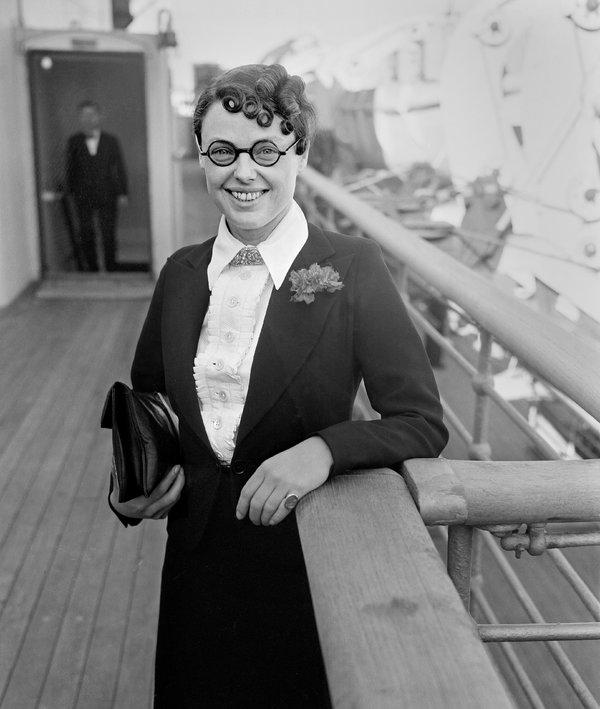
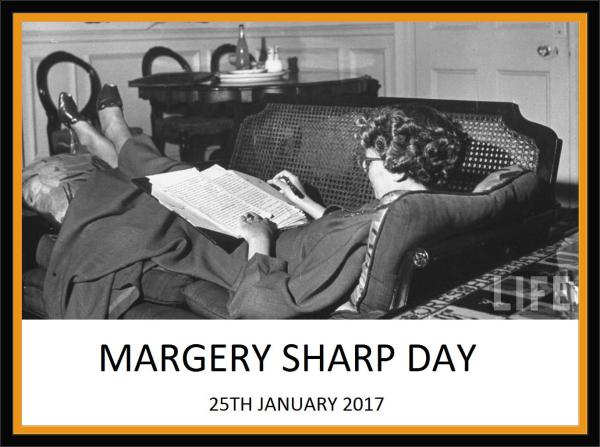
I thought the title quote rather apt, as I’m late to Margery Sharp Day this year, but I couldn’t let it pass after falling for the author since reading two of her novels for Margery Sharp day 2017. She’s so witty, she writes with such brio, and also with such humanity and warmth that I’m a confirmed fan.

13Enthusiast--articleLarge-v2

Image from here

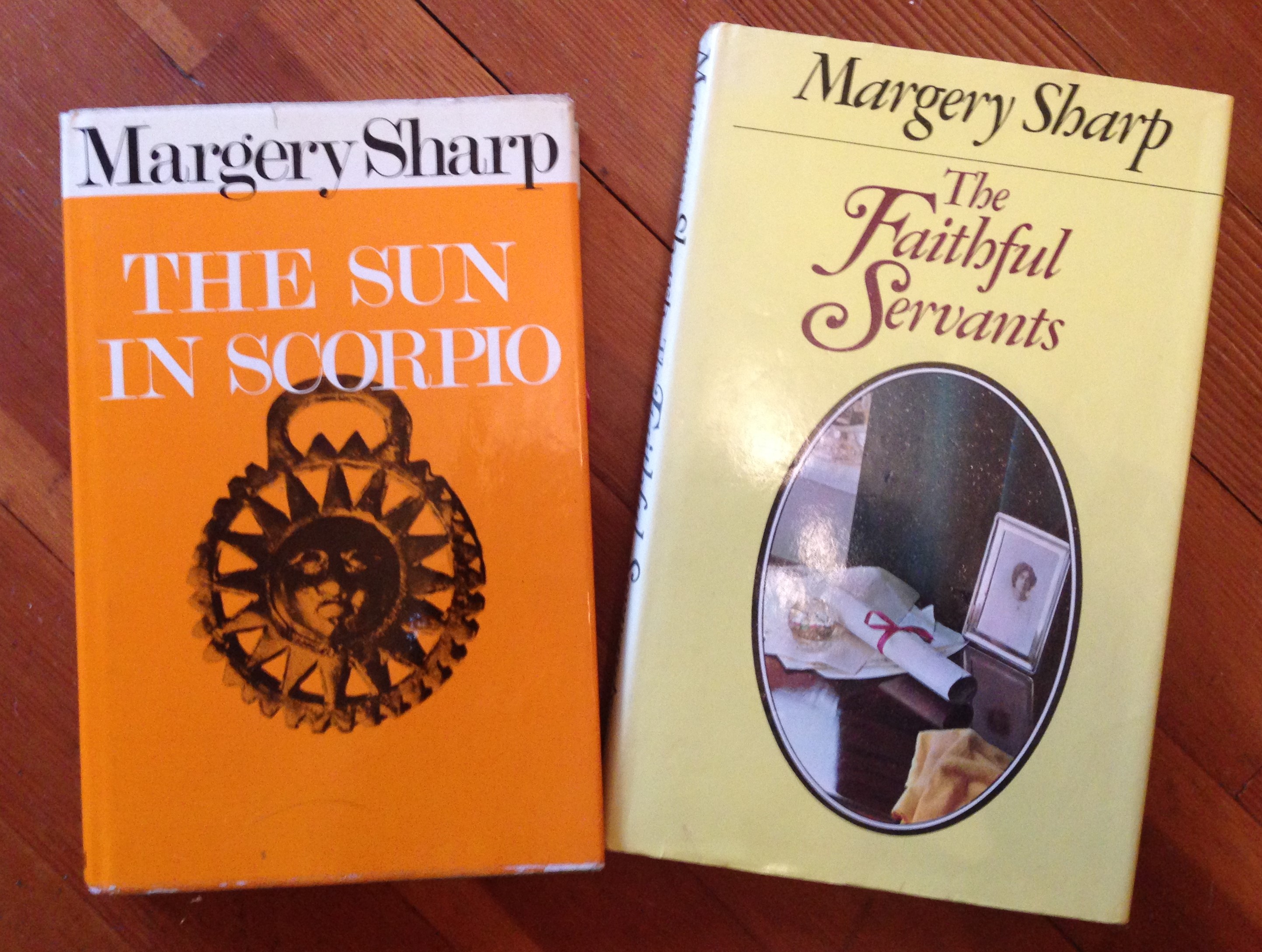
And yet, when reading The Faithful Servants (1975), these wonders of Sharp’s writing were not quite so evident. Jane from Beyond Eden Rock, who organises Margery Sharp Day and is a great champion of her writing, had said that her later novels were not quite as good, and how right she was. The Faithful Servants is absolutely still worth reading, but Sharp’s penultimate novel is not as sparkling as her earlier work.

It’s a great idea: a trust is established at the end of the nineteenth century by dissolute Jacob Arbuthnot for aged servants down on their luck. In portraying the requests to the trust, Sharp is able to track the huge societal changes that took place between the start of the trust and well into the twentieth century, by which time the welfare state has been established and the servant class almost entirely disappeared. The various visitors to the trust’s offices are colourful and the staff only slightly less so. But…. it doesn’t quite work. The characters are all well-observed as I would expect from Sharp, and there are are some lovely touches, such as the gentle relationship established between two beneficiaries, Miss Xavier and Miss Quartermaine, of whom “neither had the least idea that they were Lesbians.”  Sharp’s wit is also in evidence:

“ ‘Lady P. simply meant that the children should drop whatever they were doing to make up the rosettes for a Tory party candidate, or sew bean bags for a Tory fete. As you know by now dear, I’ve always been a convinced Liberal; but I can assure you I didn’t object from party politics. What I objected to was the assumption that absolutely any activity took precedence over Moliere.’ ”

But it just doesn’t have the verve of her other novels. It reads more like a series of sketches, which in a sense is exactly what it is. Of course, this is a series of sketches by Margery Sharp, and so they are entertaining, sly and funny, with strong women in evidence:

“Mr Blackburn thought of her as a field flower plucked from its native heath; Mr McIntyre, as some shy little creature of the woods. Of course neither mentioned the fancy.

Then in 1874 she was arrested on a charge of murder, To be explicit, of having introduced arsenic into her employer’s night cap of tea.”

The Faithful Servants did not diminish my love for this author, but if Margery Sharp is new to you, this would not be the best place to start. A clever idea, not entirely fulfilled, but with moments of witty brilliance which act as a reminder that Sharp off her game is still better than many at their peak.

Secondly, back to 1965 and The Sun in Scorpio, which sees Sharp very much on form. The Pennon family live on a small outpost of the fading British empire, “The Next-Door Island” to Malta.

“They weren’t Army, and they weren’t Navy, they were irretrievably civilian; it was a measure of Mrs Pennon’s social insecurity that she always felt nervous before giving a dinner-party in case no-one came. At least they weren’t Trade however, and she always made a point of explaining her husband’s chest was weak.”

Sharp writes about the warm climate wonderfully and casts a similarly acute eye towards the familial relationships. The children Muriel, Cathy and Alan don’t particularly get on, and neither do their parents. Cathy especially loves the island and its warmth, and she has a formative moment with the governor, a bachelor the ex-pat ladies flutter around. However, the start of the Second World War sees Cathy wrenched away as the Pennons return to England, where their shortcomings are made even more apparent.

“Indeed, their new, heavier clothing swamped them all, diminishing individuality, and as it were underlining the fact that whereas on the Island (among some few hundred of the Ruling Race), they’d been at least petty someones, at Home (amongst some fifty millions) they were nobodies.”

Cathy in particular struggles under the grey skies of Britain. Muriel thrives as a hockey-playing school leader and Alan finds girls to fall in love with, but Cathy doesn’t excel at anything.

“In general they were a sulky lot, and Cathy was amongst the sulkiest. It was very hard on Mrs Pennon, but she had developed such a technique of losing herself in a novel, a daughter’s obvious misery disturbed her no more than a husband’s equally obvious lack of any will to live.”

Sharp follows them through the years, and while Alan is able to move away for work and Muriel turns into a unbearably smug married suburban mother, Cathy remains somewhat adrift. Once her parents are dead, she is financially bereft and has to live with Muriel. This situation depresses all involved, and when the opportunity arrives for Cathy to become a nanny to the daughter of landed gentry she gratefully escapes to Devon.

The mother of her charge is very beautiful, and very much younger than her husband.

“ ‘Alas!’ sighed Lady Jean (probably the only woman of her generation who could sigh alas and get away with it.)”

She is also manipulative and unfaithful, and her charm in referring to Cathy as her “attendant sprite” is not entirely successful. Cathy has no great affection for her small charge, but she also has no real choices in life. Sharp’s depiction of Cathy’s domestic situation is highly entertaining as she is wholly unsuited to being a nanny and has little in common with the media and image-obsessed small girl she is nannying:

“ ‘Poor gwandpa!’ lisped Elspet – out of flannel and into frills again. ‘Mummy says he’s tewwibly pwessed for money.’

‘Nonsense, he must be worth a million,’ said Cathy bracingly.

‘But all in land,’ pointed out Elspet. (It occurred to Cathy to wonder whether besides reading Vogue and Tatler her charge ever dipped into the Financial Times…..)

‘You don’t own entailed land, it owns you,’ explained Elspet. ‘Poor grandpa! I can’t go to sleep for worrying about him. You must read to me out of Peter Pan.’ “

The years pass and we see what happens to Muriel and Alan, and also Jacko, an islander who was friends with Cathy and taught her poker, who similarly finds himself in London. The main focus remains mainly on Cathy however, and Sharp doesn’t trouble to make her likable. Cathy has nothing particularly to recommend her and she isn’t very nice, but she is also unhappy, and as a woman in the early part of the twentieth-century she doesn’t have enough control over her life to try and remedy the situation.  It doesn’t matter one bit that Cathy is so unlike a heroine though. It’s actually refreshing, and realistic, and told with Sharp’s wit, economy, and verve it’s a hugely enjoyable journey towards a perfectly realised ending. The Sun in Scorpio is an absolute joy.

To end, the wonderful Harry Belafonte singing a song Cathy would appreciate:

“I think Isambard Kingdom Brunel would be a good chap to have supper with. Anyone who builds a railway and then builds a steamship when he gets to Bristol and can’t go any further must be a good chap.” (Fergus Henderson)

This week I’ll be briefly visiting the beautiful city of Bristol for work, so in preparation I’ve read 2 books by EH Young, who fictionalised Bristol as Radstowe throughout her novels.


bristol-2312860_960_720

EH Young’s world is one of genteel middle-class, and at first I wasn’t sure The Misses Mallett (1922) was for me. The descriptions of the beauty of Radstowe were somewhat overblown, and I wondered if it was going to be clumsy Austen-lite. I’m pleased to say I was completely wrong. The Misses Mallet is acutely observed and Young’s characterisation is excellent. Those who people her world are complex, not always likable but always so believable.

Caroline and Sophia are elderly unmarried Mallet sisters who spend their days reliving past glories, which may not be exactly as Caroline remembers:

“ ‘And men like what they fear,’ Caroline added.

‘Yes dear,’ Sophia said, A natural flush appeared round the delicate dabs of rouge. She hoped she might be forgiven for her tender deceits. Those young men in white waistcoats had often laughed at Caroline rather than her wit; she was, as Sophia had shrinkingly divined, as often as not their butt, and dear Caroline had never known it; she must never know it, never know it.”

The elderly Miss Malletts are comically but fondly drawn, with their frills and lace, their make-up which doesn’t hide their age, Caroline’s mistaken belief that she is wordly, and their constant self-mythologising. Rose, their younger step-sister, is different:

“restraint and a love of danger lived together in her nature and these two qualities were fed by the position in which she found herself, nor would she have had the position changed. It supplied her with the emotion she had wanted. She had the privilege of feeling deeply and dangerously yet of preserving her pride.”

She is in love with Francis Sales, but realised it too late and he married another. As Young details above, this arrested love affair quite suits her. Sales’ wife is housebound in constant pain since a fall from a horse that she believes Rose engineered. They are locked in a co-dependent, vindictive relationship bound up in what has not been said, in blame and in guilt.

Yet overall the lives of the Misses Malletts are calm and routine.

“the Mallets did not criticise their actions or analyse their minds”

This all changes with the arrival of Henrietta, their young orphaned niece.

“the Mallets don’t marry, Henrietta. Look at us, as happy as the day is long, with all the fun and none of the trouble. We’re terrible flirts, Sophia and I. Rose is different, but at least she isn’t married. The three Miss Malletts of Nelson Lodge! Now there are four of us, and you must keep up our reputation.”

But Henrietta may not be quite so ready to adopt the Miss Mallett way of life. She also falls for Francis Sales, whilst being courted by the socially awkward Charles Batty:

“He was plain; he was getting bald; his trousers bagged; his socks wrinkled like concertinas; his comparative self-assurance was quite unjustified.”

What follows is a novel written with great lightness of touch, but it is the excellent characterisation that stops it being cosy or sentimental. It is a world that has passed, but it is a world that is fully realised and Young shows that it, and the people in it, can still be recognised and understood. The Misses Mallett, and those who surround them, will stay with me a long time.


Secondly, William which came 3 years after The Misses Mallett. I found the descriptive writing in this a lot more restrained and so I wonder if either 3 years saw the maturing of EH Young’s writing style, or if she was actually having a sly dig at purple prose romances in The Misses Mallett and I missed the pastiche. Either way, William is brilliantly written and was her most successful novel. It is primarily a character study of the titular man, a self-made shipping magnate.

“William Nesbitt had no yearnings for the sea: he had had enough of it in his youth, but the thought of it was always with him and would have been with him even if his business had not compelled him to constant communication with it; and the fact that it lay down there beyond the river and out of sight, was like the presence of a woman, still beautiful, whom he loved no longer with desire, but with knowledge, understanding and satisfaction.”

William is someone who life has treated well, and he has an affection for it:

“Life was interesting, a great adventure, enlivened by countless minor episodes. It was difficult to believe anybody could find it dull. Every personality was more or less of an excitement to him – Kate, Janet, Lydia, the captains of his ships, the clerks in his office, the ships themselves, the very gulls swooping for garbage in the river, cutting the air with wings like swords.”

However, although he has worked hard and continues to do so, he has never really been tested. This is about to change. One of his five children, his daughter Lydia, leaves her husband to live with her lover. The post-war times are a-changing, and William finds himself in opposition to his wife as they cope with the fallout. William finds he is able to love his children unconditionally. His affection for life is undiminished and expanded.

“ ‘I’ve told you Kate, we can’t have them as we want them. We’re lucky to have them as they are.’”

His wife on the other hand, is outraged at Lydia’s unconventional choice and becomes embittered as she realises she holds absolutely no power to change the situation.

“He had lived with her for nearly forty years, not deceiving himself into the belief of perfect union, but in accord, with humour, with much happiness, and now, in the face of first trouble, he had lost touch with her, as though his consort were only for smooth waters.”

William is a rich novel despite not being overly long (a good thing to my way of thinking). Once again, EH Young displays excellent characterisation and psychological insight, not only towards her main protagonist but also the characters of his wife and their children. There is sadness in the novel, with Kate’s moral rigidity causing her deep pain and William’s realisation that although his marriage is basically happy “He had missed ecstasy”. However, it is not a sad novel. Rather it captures the human impact of societal change and it does so without preaching, showing how both human beings and love endure. EH Young challenges the institution of marriage (she lived in a ménage a trois for many years) whilst also showing its advantages:

“‘There’s a great deal of humbug about marriage… and a forced loyalty is the devil. And if Oliver couldn’t hold Lydia by love, why should he hold her by law?’”

It is a testament to EH Young’s writing that while society has moved on to an extent that the central dilemma no longer exists, William remains a deeply moving and compelling novel.

These were my first two novels by EH Young and I’m already a huge fan. In this year of my book buying ban, I’m pleased to find I have 4 more of her novels in the TBR mountain (it’s this kind of excess which has led to the aforementioned ban); I’ll definitely be reading them soon.

To end, a band that named themselves after their home town near Bristol:

“Cauliflower is nothing but cabbage with a college education.” (Mark Twain)

Hey freshers! If you’re reading this, it means only one thing: you survived Fresher’s Week! Congratulations! Now get yourself dosed up on alka seltzer and down to the GUM clinic, pronto.

If there’s one thing I’m expert on, other than TV detectives and cheese, its being a student. I’m ridiculously overqualified and not studying anything for the past 2 years is the longest I’ve ever gone without sitting a course of some kind, probably ever. I’m feeling decidedly twitchy and trying to decide what I want to educate myself in next (current contenders: whisky tasting/dry stone walling (not a huge demand in London, admittedly)/ French language) but until that time I’ve gone back to college via 2 wonderful novels. And for all those students out there, pay attention to your older, wiser Madame B, and remember:

Image from here

Firstly, Stoner by John Williams (1963), which is something of a rediscovered classic in recent years, with effusive praise heaped on it from all quarters. In this instance I thought the hype was absolutely deserved. Stoner is a beautifully written, acutely observed portrait of an ordinary life which is deeply moving.

William Stoner grows up on a farm without books, until his father takes the remarkable decision that Stoner should study agriculture at the University of Missouri, which he joins in 1910. What no-one foresees, least of all Stoner himself, is that he will fall in love, with literature:

“As his mind engaged itself with its subject, as it grappled with the power of the literature he studied and tried to understand its nature, he was aware of a constant change within himself”

And so we follow Stoner as he becomes a student of literature, then a teacher, and never leaves the university.

“Sometimes he stood in the centre of the quad, looking at the five huge columns in front of Jesse Hall that thrust upward into the night out of the cool grass… Grayish in the moonlight, bare and pure, they seemed to him to represent the way of life he had embraced, as a temple represents a god.”

The life Stoner leads is very ordinary: he makes a disastrous marriage but they stick it out, he becomes an OK teacher, he makes friends and enemies, he has a loving but complex relationship with his daughter… nothing happens and everything happens. The writing is so good that you are pulled along through this everyday story just as much as you would be through a heavily plot-driven thriller.

Stoner is undeniably a sad novel. Stoner has a lot of loneliness in his life and he is victim to circumstances which he cannot control and which are grossly unfair, engineered by people who vent their pain on him. Yet it is not depressing, because he endures and he finds joy. For the bibliophile, there are some beautifully realised passages describing why we love literature:

“the epiphany of knowing something through words that could not be put into words”

More generally, there is peace to be found in accepting the things we cannot change, and there is plenty Stoner cannot change:

“As he walked slowly through the evening, breathing the fragrance and tasting upon his tongue the sharp night-time air, it seemed to him that the moment he walked in was enough and he might not need a great deal more.”

I highly recommend this quietly heart-breaking novel.


Secondly, The Art of Fielding by Chad Harbach (2012), which I never would have picked up, thinking it was a sports novel, if it wasn’t for Kate at Books are My Favourite and Best reassuring me that it definitely was about more than baseball (she’s right); you can read her review here.

The Art of Fielding follows Henry Skrimshader’s career at Westish College, where he is accepted due to his prowess on the baseball field. He is recruited there by Mike Schwartz, an ambitious jock whose knees are giving out; he rooms with Owen Dunne, a beautiful clean-freak who is also a highly talented player and who begins a problematic affair; and President Affenlight discovers a new love of baseball alongside other more surprising things, just as his troubled daughter Pella returns home.

“If Affenlight were to list the things he loved, he wouldn’t include Westish – that would seem silly, like saying you loved yourself. He spent half his time frustrated with, ambivalent about, annoyed at the place. But anything that happened to alter the fortunes of Westish College, Affenlight took more seriously than if it were happening to himself.”

Henry’s career at Westish does not go smoothly and his crisis affects all those around him. There is quite a lot about baseball in the novel and it all went over my head seeing as how I’ve never watched a game in my life and don’t really plan to change this, but it didn’t affect my enjoyment of the novel in the slightest. Harbach’s writing reminded me a bit of Richard Russo, in that it captures a slightly old-fashioned, all-American life, but is involving and affecting because of this, rather than nostalgic and distancing. The focus is very much on well-drawn, idiosyncratic characters and their relationships, so that you feel absolutely drawn into their lives.

I may not know much about baseball, but what Harbach taught me is what I’ve always suspected, that for people who get it, sports and life are one and the same:

“What would he say to her, if he was going to speak truly? He didn’t know. Talking was like throwing a baseball. You couldn’t plan it out beforehand. You just had to let go and see what happened.  You had to throw out words without knowing anyone would catch them – you had to throw out words you knew no one would catch. You had to send your words out where they weren’t yours anymore.”

Really, The Art of Fielding is about love. Love between friends, parents and children, siblings, lovers, team mates, teacher and student, platonic, romantic, familial… in all its guises. And in that it is deeply moving. The ending isn’t sad but it still made me cry on the bus, dammit.

To end, a song I heard last week for the first time in years, and which took me straight back to my first foray into further education:

“The pollen count, now that’s a difficult job. Especially if you’ve got hay fever.” (Milton Jones)

Normally I celebrate the end of June thusly:

Unfortunately due to the weird summer we’re having (unseasonably hot/unseasonably cold on repeat) the scourge of my life, the devil’s seed, aka grass pollen, is still in abundance and I am refusing to go anywhere that isn’t made of concrete/steel/brick, or some combination thereof.

Well, I’ll tell you, Leo. You live through books of course, same as always. So this week I’m visiting my favourite London park, Regent’s, via two wonderful novels.

Firstly, The Heat of the Day by Elizabeth Bowen (1948), where protagonist Stella lives near Regent’s Park and where the opening scene sees counterspy Harrison flirting with Louie, an ordinary young woman who is open to affairs while her husband is away fighting the war.

“The very soil of the city at this time seemed to generate more strength: in parks outsize dahlias, velvet and wine, and the trees on which each vein in each yellow leaf stretched out perfect against the sun blazoned out the idea of the finest hour. Parks suddenly closed because of time-bombs – drifts of leaves in the empty deckchairs, birds afloat on the dazzlingly silent lakes – presented, between the railings which still girt them, mirages of repose.”

This eerie quality pervades the whole novel. While there is a plot – Harrison wants Stella to spy on her lover Robert, who is spying for the Germans – I felt this was not the driving force of what Bowen is writing about. Instead I think what she is considering is a very specific generation of people at an extraordinary moment in time.

 “Younger by a year or two than the century, [Stella] had grown up just after the First World War with the generation which, as a generation, was come to be made to feel it had muffed the catch. The times, she had in her youth been told on all sides, were without precedent – but then so was her own experience: she had not lived before.”

There is a sense throughout the book of things left unsaid, sentences unfinished, and yet a deep understanding that exists between everyone living through the war.

“So among the crowds still eating, drinking, working, travelling, halting, there began to be an instinctive movement to break down indifference while there was still time. The wall between the living and the living became as solid as the wall between the living and the dead thinned. In that September transparency people became transparent, only to be located by the just dark flicker of their hearts.”

People behave in ways that they wouldn’t normally, but they can barely remember what normal is, or why they would behave that way in the first place. Bowen tends to overwrite, but as with the other novels of hers that I’ve read, this quality didn’t bother me as much as it does usually, and I felt it particularly apt here. I just let the writing and the atmosphere wash over me. Thankfully, I’ve not lived through that type of war, but to me Bowen seemed to have done an incredible job at capturing the heightened yet oddly detached experiences that would have occurred:

“But they were not alone, nor had they been from the start, from the start of love. Their time sat in the third place at their table. They were the creatures of history, whose coming together was of a nature possible in no other day”

The Heat of the Day is about the tragedy of war in the widest sense, where no guns go off and people carry on whilst feeling torn apart. Sad, desperate, quiet, and beautifully evoked.

Regent's_Park_bandstand

Next, Mrs Dalloway by Virginia Woolf (1925) and my shortest review ever. Here it is: Virginia Woolf is a genius and Mrs Dalloway is pretty much a perfect novel. That is all.

I really don’t think I can review Mrs Dalloway. I find Woolf’s writing so rich, multi-layered and complex I feel I can’t possibly do it any kind of justice. Woolf’s treatment of a day in the life of society hostess Clarissa Dalloway and shell-shocked Septimus Smith is so sensitive and sophisticated, I feel like a gibbering idiot.  Instead here are some passages:

Clarissa: “She could see what she lacked. It was not beauty; it was not mind. It was something central which permeated; something warm which broke up surfaces and rippled the cold contact of man and woman, or of women together.”

Septimus in the park with his wife: “Happily Rezia put her hand with a tremendous weight on his knee so that he was weighted down, transfixed, or the excitement of the elm trees rising and falling, rising and falling with all their leaves alight and the colour thinning and thickening from blue to the green of a hollow wave, like plumes on horses’ heads, feathers on ladies’, so proudly they rose and fell, so superbly, would have sent him mad. But he would not go mad. He would shut his eyes; he would see no more.”

The recurring motif of the chiming of Big Ben: “The leaden circles dissolved in the air.”

Finally: “It was a splendid morning too. Like the pulse of a perfect heart, life struck straight through the streets.”

*Sigh* Even if you’ve already done so, please read Mrs Dalloway. And then read it again.

To end, the most wonderful cinematic ending: Withnail and I, and the wolves of London Zoo viewed from Regent’s Park.


“It is better to break one’s heart than to do nothing with it.” (Margaret Kennedy)

This is my very, very late contribution to Margaret Kennedy Day, which is hosted by Jane over at Beyond Eden Rock. It took place on 20 June but Jane very kindly said that latecomers were welcome 🙂 Do head over to Jane’s blog to check out the other, more timely, contributions to Margaret Kennedy Day 2017!

Firstly, The Constant Nymph (1924).  This was a bestseller in its day (more than any other novel in the 1920s), adapted for stage and screen but fell into obscurity somewhat until Virago republished it in 1983.  In all honesty, I’m still working out how I feel about it. To me it was an odd novel, well-written and psychologically astute, but a strange, unsettling tale and tonally difficult to place. I do think my struggles with it show its worth though – better to be a challenging novel than one easily dismissed.  (I felt very uncomfortable that a grown man was sexually interested in the fourteen-year old nymph of the title, but Kennedy deals with this carefully so I’ll leave this to one side for the rest of the discussion, along with the anti-Semitic opinions voiced by various characters which were just horrible).

Albert Sanger is an unpleasant, selfish composer living in the Austrian Alps with his “Circus”: his most recent mistress, children by 3 different women, and assorted hangers-on. Amongst the rabble, fourteen-year old Tessa is quiet and steady and knows herself to be different:

“Living in a family of artists she had come to regard this implacable thing which took them as a great misfortune. Oddly enough it had missed her out; alone of the tribe she was safe from it. She did not believe that she would ever be driven to these monstrous creative efforts.”

When Sanger unexpectedly dies, leaving his huge family destitute, the Circus are split up. Tessa’s cousin Florence arrives on a mercy mission to rescue three of her relatives. Unfortunately for Tessa, this brings Florence into the orbit of Lewis, an aforementioned hanger-on, who Kennedy doesn’t even try to make appealing, and with whom Tessa has been in love since she was a child. Florence and Lewis fall in love, although there is a good mix of ambivalence in there too. Having proposed to Florence in a church, Lewis reflects:

“Once outside in the sunlight and traffic he could hardly make out how it had happened. The thing was absurd, unforeseen and unreasonable. But irrevocable now, and, on the whole, very pleasant. He was betrothed. Also he was very thirsty…”

Tessa is inconsolable, and yet the melodrama is tempered with humour and everyday considerations amongst the high-flown feelings:

 “the tears poured down her face…until she conceived the idea of trying to water a primula with them. Immediately the flood was dried, after the manner of tears when a practical use has been found for them.

‘And it would have been interesting,’ said Paulina sorrowfully, ‘to see if it would have made any difference to the primula.’”

The novel follows the love triangle back in England, as Tessa and her siblings try and adjust from their free-living Bohemian lifestyle to the strictures of an English boarding school, and Lewis and Florence’s marriage begins to disintegrate. Even Florence’s father sees how ill-matched they are:

“Lewis was a fool! If he had married little Tessa she would have made a man of him, whereas mated with Florence he was nothing but a calamity.”

The characterisation is excellent: Lewis is a distinctly unheroic, petulant protagonist and completely believable as a musician who struggles against his own shortcomings to realise his talent. Florence is complex; initially sweet-natured and gradually challenging our sympathies as she deals with her jealousy by being vicious to the blameless Tessa. Although Tessa is in many ways an archetypal faithful virgin, Kennedy stops her being emblematic by the gentle humour poked at the earnestness of adolescence.

The novel is also not wholly a romance, but also a consideration of art and how to create it, how to pursue it, the value we attach to it and the various ways in which it is consumed. This is done with a lightness of touch and Kennedy never lets the broader themes get in the way of the plot:

“Music, with all these people, came first; that was why they talked about it as if nobody else had any right to it. Once Florence had liked them all too well; now she understood them better she was frightened of them.”

The Constant Nymph is an intriguing novel, and I suspect one that I won’t entirely work out my feelings for until I re-read it. It’s certainly impressive, and Kennedy’s talent, for me, was never in doubt.

“She tilted her face up and they kissed, a clinging embrace that was more like a farewell than a greeting. To her than instant brought a pang, a dim echo of times past; to him, an apprehension of change, a foreshadowing of loss and grief to come.”

The Constant Nymph was made into a film four times. Here is the trailer for the 1943 version with the lovely Joan Fontaine as Tessa:

Secondly, Together and Apart (1936).

This sat more comfortably with me than The Constant Nymph and I thoroughly enjoyed it. Yet again, Kennedy manages to populate a novel with not very likeable people, but they are so wholly believable that the fascination is in witnessing their interactions and how situations play out.

Betsy has a privileged, comfortable life married to Alec. For reasons which are never entirely clear, she asks him for a divorce. She doesn’t care about his long-running affair, but feels she wants more from life and Alec is in her way:

“Now she was thirty-seven and she had never known real happiness. She had been cheated. Life had left her always hungry, always craving something and unable to put a name to it. She was perpetually craving for something that never happened. She looked forward to events, they happened, they were past and it was if nothing at all had happened.”

From my twenty-first century perspective I would say Betsy needs a job, and something beyond herself to think about…

Alec is, as he admits himself, an incredibly weak person who is steered by others, and so he grants the divorce despite not really wanting it, and promptly begins an affair with the children’s nanny. What follows is a brilliant study of the fallout of this everyday sadness on the couple, their new partners, their children and their friends. It is set in a time when divorce was becoming more common but still unusual, when attitudes were markedly different to today:

“Every petty grievance is raked up, even to little things that must have been forgiven and forgotten years ago. In 1920 he pushed her and she fell downstairs. Good heavens! One push is surely allowed in every marriage. I nearly told her that I once knocked you out with a hot water bottle.”

The children are spoilt, but also suffer, and Kennedy is brilliant at showing how the divorce causes their son Kenneth to unravel:

“He accepted nothing and pitied himself hysterically. He felt a grudge against the world because it had turned out to be a less pleasant place than he supposed.”

While their daughter Eliza grows up too quickly, forced into a domestic role she isn’t quite ready for.

I don’t think it’s a spoiler to say everything works out in the end. Which is not to say things work out perfectly. Lives are messy and Together and Apart shows how much of that mess is of our own making, but how we are myopic regarding our own situations and so clear-sighted regarding others. Once again, there are piercing, but sympathetic psychological insights:

“His body was always betraying him like this. It would not take fences which his soul so easily could have cleared.”

And some beautifully phrased observations, like young Kenneth and his friend on the beach:

“Even in bathing suits they had certain clerkly traits, a forward hitch of the shoulders as though long scholars gowns should have been streaming behind them in the salt wind.”

Margaret Kennedy is such an astute, funny and profound writer. I’m grateful to Jane for introducing me to her 🙂 And next Margaret Kennedy Day I’ll try and be on time!

To end, continuing the theme from last week of strange 80s spin-off pop groups (The Jam/The Style Council, now The Specials/Fun Boy Three), here is a wonderfully cynical take on marriage set to a tango:


“The difficulty of writing a second novel is directly proportional to how successful the first novel was, it seems.” (Khaled Hosseini)

A few weeks ago I went to the Royal Society of Literature’s panel at the British Library as part of their move to find the Nation’s Favourite Second Novel (as they pointed out on the night, this had caused no end of confusion as lots of people thought they were seeking out the Nation’s Second Favourite novel).  You can read all about the unsurprising but deserving winner here.

I’d thought growing up in London, with a mother who instructed me in no uncertain terms when I was about six that I was never to approach famous people even if they were Adam Ant, meant I was celebrity immune. But apparently this is because I’m crossing paths with the wrong type of celebrity. Put me in a room where Evie Wyld is on the panel and Eimear McBride is in the audience and the result is mass evacuation because I have spontaneously combusted with excitement.

Anyhoo….this rambling preamble is to say I’ve chosen second novels as the theme for this post, one from the RSL list and one off-piste.

Firstly, Thirst by Kerry Hudson (2015) which I was looking forward to because I’d really enjoyed Tony Hogan Bought Me an Ice Cream Float Before He Stole My Ma. It tells the story of Alena and Dave as they fall in love over the course of a hot summer in London.

“he’d forgotten the sickness, right down to the soles of your feet, of wanting. To want and maybe allow yourself to have it and maybe be wanted back. He’d forgotten how terrifying wanting and having could be.”

It’s a sweet story, and about two people who aren’t often represented in literature: someone on low wage living above a kebab shop and an illegal immigrant. It’s a simple tale in many ways, charting the course of a romantic relationship. But there are potential complexities from the past of both Dave and Alena. Neither has behaved particularly well, and their secrets threaten the happiness they find with each other. Alena especially is in genuine danger:

“Dave only ran in the mornings but she was running all the time. She sustained herself on a diet of him, his kisses, his voice, his nearness. She sustained herself on promises, and silent deals and thoughts of three days time.”

Thirst is not as strong as Tony Hogan, which had verve and raw tenderness that this doesn’t quite match.  However, it’s a touching story and Hudson’s talent lifts the story above its rather simple premise. She excels at capturing beauty in places where it’s seldom recognised. She has a compassionate but unsentimental understanding of people and of both the damage and healing that can occur through love.

“As if she knew, lurking in the dark parts that had stayed, unbidden, inside her, that as soon as autumn did come, bringing the reek of dead leaves and fires and a cold that whispered across your skin like a lie, her old bad luck would be back too.”

Secondly, from the RSL second novels list, Fiesta: The Sun Also Rises by Ernest Hemingway (1926). This thinly-disguised biography describes the lives of American ex-pats living in Paris in the 1920s, who then travel to Pamplona to see the running of the bulls and enjoy the fiesta.

“We ate dinner at Madame Lecomte’s restaurant on the far side of the island. It was crowded with Americans and we had to stand up and wait for a place. Someone had put it in the American Women’s Club list as a quaint restaurant on the Paris quais as yet untouched by Americans so we had to wait forty five minutes for a table.”

It is narrated by Jake, a veteran whose war wound has rendered him impotent. He is in love with aristocratic Brett Ashley who ricochets from man to man.

“The dancing kept up, the drinking kept up, the noise went on. The things that happened could only have happened during a fiesta. Everything became quite unreal finally and it seemed as if nothing could have any consequences.”

There is also much evidence of Hemingway’s love of bullfighting, which thankfully is not dwelt upon; there was only one passage that this blood-sport adverse reader had to skip.  Jake loves the bullfight so much he is accepted by the aficionados as one of their own:

 “Somehow it was taken for granted that an American could not have aficion. He might simulate it or confuse it with excitement, but he could not really have it. When they saw that I had aficion, and there was no password, no set questions that could bring it out, rather it was a sort of spiritual examination”

At first I thought this might be the end of my love affair with Hemingway. His simple prose style which offers such distilled beauty in his later writing seemed too basic here. But then I realised this was absolutely a stroke of genius. The novel is about the lost generation, the title taken from Ecclesiastes, referring to the insignificance and transience of humans:

One generation passeth away, and another generation cometh: but the earth abideth for ever. The sun also ariseth, and the sun goeth down, and hasteth to his place where he arose.

The simple, almost detached, documentary style of the novel effectively captures the numb rootlessness of a generation who have endured great trauma and are now surviving without knowing exactly what their purpose is. This isn’t depressing – there is humour, such as the wise aphorism I’ll certainly bear in mind: “Road to hell paved with unbought stuffed dogs.” But there is bleakness to it, not least the anti-Semitism voiced by some characters, foreshadowing the devastation of the Holocaust.

Fiesta is a brilliantly observed, deceptively simple portrait of a particular group at a particular time, but with something to say beyond its immediate context, about the struggle of the individual to find meaning in the world.

“There was much wine, an ignored tension, and a feeling of things coming that could not prevent happening. Under the wine I lost the disgusted feeling and was happy. It seemed they were all such nice people.”

To end, totally unrelated to the post: over Easter I was given a delicious haul of cheese and now I’ve eaten so much I’m worried I’ve become half-human, half-dairy product:


“An intellectual carrot! The mind boggles.” (The Thing (From Another World), 1951)

This is my contribution to the 1951 Club, hosted by Karen at Kaggsy’s Bookish Ramblings and Simon at Stuck in a Book – do join in!

Firstly, A Game of Hide and Seek by Elizabeth Taylor. I loved Mrs Palfrey at the Claremont so once I saw Taylor had a novel published in 1951 this was an easy choice for me. Like Mrs Palfrey, it is a finely observed portrait of a life lived quietly, with its sadness not shied away from but without being depressing.

One summer after World War I, as she is on the brink of adulthood, Harriet falls in love with Vesey. I’ve no idea why as he seems proof that it’s possible for jellyfish to take on human form and he is wholly self-centred, but fall for him she does. It’s testament to Taylor’s writing that the male love-object being determinedly unheroic does not detract from the story at all. People fall for all sorts of unsuitable types and this is one example. Also, Taylor is a nicer person than me and does not judge him as harshly:

“The streak of cruelty which Lilian had perceived in him was real enough, but used defensively. He would not have wished to be cruel to Harriet, who had not threatened him. Indeed it had begun to seem to him that only she was set against the great weight of disapproval he felt upon him. His mother treated him, at best, with an amused kindliness. Among her friends she drew attention to him as if he were a beloved marmoset on a chain, somehow enhancing her own originality, decorating her.”

Their love affair is marked by very little happening. It is a series of minor misunderstandings, things unsaid, feelings unexpressed. This is absolutely Taylor’s strength: she is brilliant at depicting small devastations.

“All through the long winter and the spring, she would not have him near her; yet now, standing so close beside him, the moment which should have been so precious was worse than useless: it shrank, and stopped and curdled. These blue flowers she carried in her hand she would surely hate for the rest of her life.”

The novel then jumps forward fifteen years. Harriet is married to Charles, they have an adolescent daughter who is in love with her teacher, and Harriet has learnt to be a good wife:

“When she married Charles, she had seemed to wed also a social order. A convert to it, and to provincial life, and keeping-house, she had pursued it fanatically and as if she feared censure. No one had entertained more methodically or better bolstered up social interplay. She had been indefatigable in writing letters of condolence, telegrams of congratulation; remembered birthdays and anniversaries; remembered bread-and-butter letters and telephone messages after parties…”

When Vesey reappears, so do Harriet’s long-buried feelings. They embark on an affair, but again, it’s strangely uneventful. Given that Harriet’s mother was a suffragette and is best friends with Vesey’s aunt, the next generation of their families lack volition.

A Game of Hide and Seek is a wonderful novel filled with Taylor’s unblinking observations, humour and compassion. The supporting characters of Harriet’s husband, daughter, work colleagues and dreadful mother-in-law are all brilliantly drawn. There is ambiguity around some fairly major points in the novel, not least the ending. This is not a novel to read if you want answers and ends tied up neatly.  But if you want to have your heart broken just a little bit by a portrait of lives lived in quiet desperation, this is for you.

“Against him, against his calm and decision, she felt confused and incoherent; and, looking back on her married life, it seemed a frayed, tangled thing made by two strangers.”

Secondly, The Ballad of the Sad Café by Carson McCullers. This is a collection of short stories, of which the titular story makes up half,  which I’ll focus on.  This was my first foray into both McCullers and Southern Gothic and I found it compelling. The Ballad of the Sad Café tells the story of Miss Amelia, a lynchpin in her local community despite being wholly unsympathetic to those around her. She runs the store and brews the alcohol and practices effective folk remedies.

“…when a man has drunk Miss Amelia’s liquor. He may suffer, or he may be spent with joy – but the experience has shown the truth; he has warmed his soul and seen the message hidden there.”

A hunchback arrives in town professing to be a distant relation of Miss Amelia and she adores him.  He is manipulative and untrustworthy, but things tick along.  He persuades her to turn the store into the café and she gives him all he desires, and probably a few things he doesn’t, such as her kidney stones set in a watch chain.

“For the lover is for ever trying to strip bare his beloved. The lover craves any possible relation with the beloved, even if this experience can cause him only pain.”

Things change when Miss Amelia’s estranged husband is released from jail. He adored Miss Amelia and has taken her rejection of him badly. He arrives back in town and tensions begin to build.

“Any number of wicked things could be listed against him, but quite apart from these crimes there was about him a secret meanness that clung to him almost like a smell. Another thing – he never sweated, not even in August, and that surely is a sign worth pondering over.”

McCullers increases the tension throughout this short tale expertly, and her cast of characters are idiosyncratic but never caricatures.  Similarly, the gothic elements are not overwrought and fit well within the heady, tense atmosphere.  A short portrait of a small town tragedy.

The cultural significance of The Ballad of the Sad Café has been recognised through that most prestigious of accolades: a Sesame Street parody. If I was McCullers I’d be overjoyed 😀

“It is the gift of all poets to find the commonplace astonishing, and the astonishing quite natural.” (Margery Sharp)

This is my contribution to today’s celebration of Margery Sharp Day, hosted by Jane at Beyond Eden Rock. Happy Birthday Margery!

margery-2017

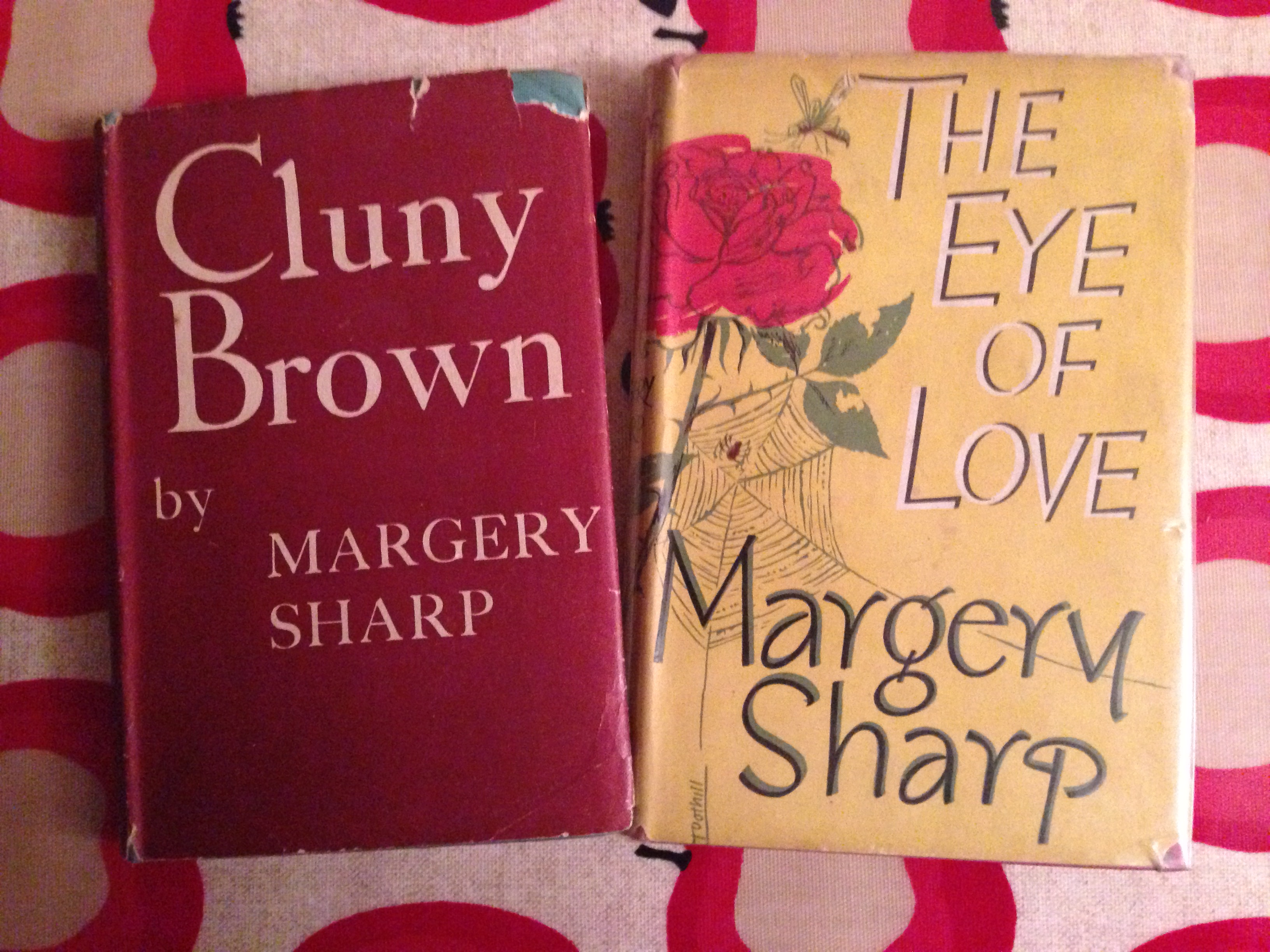
First, Cluny Brown (1944) which portrays one of the most original, idiosyncratic and appealing fictional heroines I’ve encountered:

“She looked like no one on earth but Cluny Brown, and at the same time, stepping in with the milk, she looked as though she belonged intimately to her surroundings.”

Cluny is a young woman, living with her plumber uncle as both her parents have died. She resolutely goes her own way and harms no-one, and can’t understand why people find her habits – such as the decision to stay in bed all day eating oranges – so objectionable.

“She had got to the Ritz. She had got as far as Chelsea – put her nose, so to speak, to a couple of doors – and each time been pulled back by Uncle Arn or Aunt Addie, people who knew what was best for her, only their idea of the best was being shut up in a box – in a series of smaller and smaller boxes until you were safe at last in the smallest box of all, with a nice tombstone on top.”

After a misunderstanding which sees Cluny fix the blocked sink of an amorous older man in Chelsea, Uncle Arn sends her away to service in Devon.

“She wasn’t resigned, for she was never that, but she felt a certain expectancy. At least something was happening to her and all her life that was the one thing Cluny Brown consistently desired.”

At the country house, Cluny encounters certain types: an upright colonel, a horticulturally obsessed matriarch, the feckless heir, a young society lady leaving a trail of broken hearts in her wake… yet in Sharp’s hands these portraits are wholly believable rather than clumsy stereotypes. A tentative love affair begins, and Cluny Brown is nothing if not contrary…

I won’t say any more for fear of spoilers. This novel is an unmitigated joy.  Comic and affectionate, Cluny Brown would be easy to dismiss as lacking depth. But it is so superbly written, with such verve and understanding of human beings, that to do so would be mistake. Invite Cluny into your life, she’ll charm you, I promise…

img_0841

Secondly, The Eye of Love (1957), the middle-aged love story of Harry Gibson and Dolores Diver.

“For ten years they’d given each other what each most wanted from life: romance. Now both were middle-aged, and if they looked and sounded ridiculous, it was the fault less of themselves than of time.

To be fair to Time, each had been pretty ridiculous even at the Chelsea Ball.”

To outsiders they appear ordinary, and laughable.  But to one another, viewed through the eye of love, they are brave, noble and glamorous:

“ ‘My Big Harry! My King Hal!’ cried Miss Diver.

‘My Spanish rose!’ cried Mr Gibson.

They clung together in ridiculous grief, collapsed together on the Rexine settee.”

The grief is due to Harry needing to marry the daughter of a business rival, in order to amalgamate the businesses and save his shop.

“He wanted her to want to be married, as he himself wanted not to be made a bankrupt; he had an idea that as between man and woman it came to much the same thing.”

And so it is a novel with lovers parted. We follow Harry’s attempts to integrate into a new family, and Miss Diver’s attempts to earn money without his support by taking in a lodger (Mr Phillips, who finds the house – which he believes his landlady owns – very attractive). Meanwhile, around the edge of all this trauma, is Miss Diver’s niece, Martha. A self-contained child who Sharp frequently describes as “stolid” Martha does as she pleases. She doesn’t attend school – Miss Diver didn’t arrange it and Martha has no inclination to go – and instead walks around town, sees her shopkeeper friends, and soon discovers an all-consuming passion for drawing.

“To say she didn’t like the new lodger would have been an over-simplification: and the true root of her malaise lay so deeply entwined with her innermost feelings, she couldn’t bring it to light. Put briefly, while Martha didn’t mind carrying up Mr Phillips tray, to have to look at him and say Good morning represented an imposition of alien will.”

I adored Martha. Stubborn, self-possessed, strong-willed and lacking any sentimentality, she was just wonderful. Sharp wrote two sequels about this unforthcoming heroine,  Martha in Paris and Martha, Eric and George, which I will hunt down forthwith.

Back to the adults. The Eye of Love is quite a feat, because while Sharp does not expect her readers to view Harry and Miss Diver as they view each other, at the same time she does not present them as harshly as the other characters judge them (particularly Miss Diver’s pretensions of Spanishness (real name Dorothy Hogg)). Her writing is acutely observed, with dry humour, but it is also kind.  The foibles of the characters are funny but oh-so-human.

 “At least once a day he took out Dolores’ comb, and warmed it back to life between his hands. He had to hang on hard to his Britishness, not to press it to his lips. A sad and ridiculous sight was Harry Gibson – large, stout, fifty years old – holding himself back from mumbling a wafer of tortoiseshell, as a child hangs back from sucking a forbidden sweet.”

Poor Harry. Poor Dolores.  Will they find their way back to one another? All I’ll say is, as with Cluny Brown, I thought the ending of The Eye of Love was perfect.

Well, it’s early days in 2017 but already things are looking up. I’ve met a new love in my life and I make no apologies for the gushing superlatives she inspires in me. Margery: where have you been all my life?

13Enthusiast--articleLarge-v2

Image from here

If you’d like to know more about this wonderful author, do check out The Margery Sharp blog as well as all the other posts today 🙂

To end, I was going to go for a song from the period, but ultimately I chose this, as I think Cluny and Martha would approve of the sentiment: