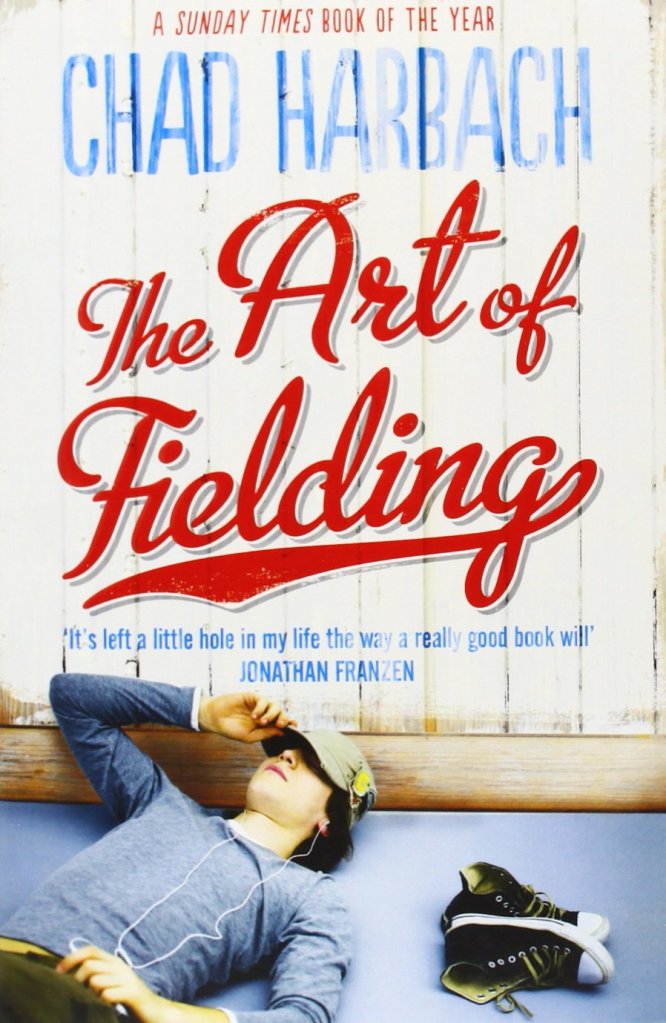
“It is better to break one’s heart than to do nothing with it.” (Margaret Kennedy)

This is my very, very late contribution to Margaret Kennedy Day, which is hosted by Jane over at Beyond Eden Rock. It took place on 20 June but Jane very kindly said that latecomers were welcome 🙂 Do head over to Jane’s blog to check out the other, more timely, contributions to Margaret Kennedy Day 2017!

Firstly, The Constant Nymph (1924).  This was a bestseller in its day (more than any other novel in the 1920s), adapted for stage and screen but fell into obscurity somewhat until Virago republished it in 1983.  In all honesty, I’m still working out how I feel about it. To me it was an odd novel, well-written and psychologically astute, but a strange, unsettling tale and tonally difficult to place. I do think my struggles with it show its worth though – better to be a challenging novel than one easily dismissed.  (I felt very uncomfortable that a grown man was sexually interested in the fourteen-year old nymph of the title, but Kennedy deals with this carefully so I’ll leave this to one side for the rest of the discussion, along with the anti-Semitic opinions voiced by various characters which were just horrible).

Albert Sanger is an unpleasant, selfish composer living in the Austrian Alps with his “Circus”: his most recent mistress, children by 3 different women, and assorted hangers-on. Amongst the rabble, fourteen-year old Tessa is quiet and steady and knows herself to be different:

“Living in a family of artists she had come to regard this implacable thing which took them as a great misfortune. Oddly enough it had missed her out; alone of the tribe she was safe from it. She did not believe that she would ever be driven to these monstrous creative efforts.”

When Sanger unexpectedly dies, leaving his huge family destitute, the Circus are split up. Tessa’s cousin Florence arrives on a mercy mission to rescue three of her relatives. Unfortunately for Tessa, this brings Florence into the orbit of Lewis, an aforementioned hanger-on, who Kennedy doesn’t even try to make appealing, and with whom Tessa has been in love since she was a child. Florence and Lewis fall in love, although there is a good mix of ambivalence in there too. Having proposed to Florence in a church, Lewis reflects:

“Once outside in the sunlight and traffic he could hardly make out how it had happened. The thing was absurd, unforeseen and unreasonable. But irrevocable now, and, on the whole, very pleasant. He was betrothed. Also he was very thirsty…”

Tessa is inconsolable, and yet the melodrama is tempered with humour and everyday considerations amongst the high-flown feelings:

 “the tears poured down her face…until she conceived the idea of trying to water a primula with them. Immediately the flood was dried, after the manner of tears when a practical use has been found for them.

‘And it would have been interesting,’ said Paulina sorrowfully, ‘to see if it would have made any difference to the primula.’”

The novel follows the love triangle back in England, as Tessa and her siblings try and adjust from their free-living Bohemian lifestyle to the strictures of an English boarding school, and Lewis and Florence’s marriage begins to disintegrate. Even Florence’s father sees how ill-matched they are:

“Lewis was a fool! If he had married little Tessa she would have made a man of him, whereas mated with Florence he was nothing but a calamity.”

The characterisation is excellent: Lewis is a distinctly unheroic, petulant protagonist and completely believable as a musician who struggles against his own shortcomings to realise his talent. Florence is complex; initially sweet-natured and gradually challenging our sympathies as she deals with her jealousy by being vicious to the blameless Tessa. Although Tessa is in many ways an archetypal faithful virgin, Kennedy stops her being emblematic by the gentle humour poked at the earnestness of adolescence.

The novel is also not wholly a romance, but also a consideration of art and how to create it, how to pursue it, the value we attach to it and the various ways in which it is consumed. This is done with a lightness of touch and Kennedy never lets the broader themes get in the way of the plot:

“Music, with all these people, came first; that was why they talked about it as if nobody else had any right to it. Once Florence had liked them all too well; now she understood them better she was frightened of them.”

The Constant Nymph is an intriguing novel, and I suspect one that I won’t entirely work out my feelings for until I re-read it. It’s certainly impressive, and Kennedy’s talent, for me, was never in doubt.

“She tilted her face up and they kissed, a clinging embrace that was more like a farewell than a greeting. To her than instant brought a pang, a dim echo of times past; to him, an apprehension of change, a foreshadowing of loss and grief to come.”

The Constant Nymph was made into a film four times. Here is the trailer for the 1943 version with the lovely Joan Fontaine as Tessa:

Secondly, Together and Apart (1936).

This sat more comfortably with me than The Constant Nymph and I thoroughly enjoyed it. Yet again, Kennedy manages to populate a novel with not very likeable people, but they are so wholly believable that the fascination is in witnessing their interactions and how situations play out.

Betsy has a privileged, comfortable life married to Alec. For reasons which are never entirely clear, she asks him for a divorce. She doesn’t care about his long-running affair, but feels she wants more from life and Alec is in her way:

“Now she was thirty-seven and she had never known real happiness. She had been cheated. Life had left her always hungry, always craving something and unable to put a name to it. She was perpetually craving for something that never happened. She looked forward to events, they happened, they were past and it was if nothing at all had happened.”

From my twenty-first century perspective I would say Betsy needs a job, and something beyond herself to think about…

Alec is, as he admits himself, an incredibly weak person who is steered by others, and so he grants the divorce despite not really wanting it, and promptly begins an affair with the children’s nanny. What follows is a brilliant study of the fallout of this everyday sadness on the couple, their new partners, their children and their friends. It is set in a time when divorce was becoming more common but still unusual, when attitudes were markedly different to today:

“Every petty grievance is raked up, even to little things that must have been forgiven and forgotten years ago. In 1920 he pushed her and she fell downstairs. Good heavens! One push is surely allowed in every marriage. I nearly told her that I once knocked you out with a hot water bottle.”

The children are spoilt, but also suffer, and Kennedy is brilliant at showing how the divorce causes their son Kenneth to unravel:

“He accepted nothing and pitied himself hysterically. He felt a grudge against the world because it had turned out to be a less pleasant place than he supposed.”

While their daughter Eliza grows up too quickly, forced into a domestic role she isn’t quite ready for.

I don’t think it’s a spoiler to say everything works out in the end. Which is not to say things work out perfectly. Lives are messy and Together and Apart shows how much of that mess is of our own making, but how we are myopic regarding our own situations and so clear-sighted regarding others. Once again, there are piercing, but sympathetic psychological insights:

“His body was always betraying him like this. It would not take fences which his soul so easily could have cleared.”

And some beautifully phrased observations, like young Kenneth and his friend on the beach:

“Even in bathing suits they had certain clerkly traits, a forward hitch of the shoulders as though long scholars gowns should have been streaming behind them in the salt wind.”

Margaret Kennedy is such an astute, funny and profound writer. I’m grateful to Jane for introducing me to her 🙂 And next Margaret Kennedy Day I’ll try and be on time!

To end, continuing the theme from last week of strange 80s spin-off pop groups (The Jam/The Style Council, now The Specials/Fun Boy Three), here is a wonderfully cynical take on marriage set to a tango:


“The difficulty of writing a second novel is directly proportional to how successful the first novel was, it seems.” (Khaled Hosseini)

A few weeks ago I went to the Royal Society of Literature’s panel at the British Library as part of their move to find the Nation’s Favourite Second Novel (as they pointed out on the night, this had caused no end of confusion as lots of people thought they were seeking out the Nation’s Second Favourite novel).  You can read all about the unsurprising but deserving winner here.

I’d thought growing up in London, with a mother who instructed me in no uncertain terms when I was about six that I was never to approach famous people even if they were Adam Ant, meant I was celebrity immune. But apparently this is because I’m crossing paths with the wrong type of celebrity. Put me in a room where Evie Wyld is on the panel and Eimear McBride is in the audience and the result is mass evacuation because I have spontaneously combusted with excitement.

Anyhoo….this rambling preamble is to say I’ve chosen second novels as the theme for this post, one from the RSL list and one off-piste.

Firstly, Thirst by Kerry Hudson (2015) which I was looking forward to because I’d really enjoyed Tony Hogan Bought Me an Ice Cream Float Before He Stole My Ma. It tells the story of Alena and Dave as they fall in love over the course of a hot summer in London.

“he’d forgotten the sickness, right down to the soles of your feet, of wanting. To want and maybe allow yourself to have it and maybe be wanted back. He’d forgotten how terrifying wanting and having could be.”

It’s a sweet story, and about two people who aren’t often represented in literature: someone on low wage living above a kebab shop and an illegal immigrant. It’s a simple tale in many ways, charting the course of a romantic relationship. But there are potential complexities from the past of both Dave and Alena. Neither has behaved particularly well, and their secrets threaten the happiness they find with each other. Alena especially is in genuine danger:

“Dave only ran in the mornings but she was running all the time. She sustained herself on a diet of him, his kisses, his voice, his nearness. She sustained herself on promises, and silent deals and thoughts of three days time.”

Thirst is not as strong as Tony Hogan, which had verve and raw tenderness that this doesn’t quite match.  However, it’s a touching story and Hudson’s talent lifts the story above its rather simple premise. She excels at capturing beauty in places where it’s seldom recognised. She has a compassionate but unsentimental understanding of people and of both the damage and healing that can occur through love.

“As if she knew, lurking in the dark parts that had stayed, unbidden, inside her, that as soon as autumn did come, bringing the reek of dead leaves and fires and a cold that whispered across your skin like a lie, her old bad luck would be back too.”

Secondly, from the RSL second novels list, Fiesta: The Sun Also Rises by Ernest Hemingway (1926). This thinly-disguised biography describes the lives of American ex-pats living in Paris in the 1920s, who then travel to Pamplona to see the running of the bulls and enjoy the fiesta.

“We ate dinner at Madame Lecomte’s restaurant on the far side of the island. It was crowded with Americans and we had to stand up and wait for a place. Someone had put it in the American Women’s Club list as a quaint restaurant on the Paris quais as yet untouched by Americans so we had to wait forty five minutes for a table.”

It is narrated by Jake, a veteran whose war wound has rendered him impotent. He is in love with aristocratic Brett Ashley who ricochets from man to man.

“The dancing kept up, the drinking kept up, the noise went on. The things that happened could only have happened during a fiesta. Everything became quite unreal finally and it seemed as if nothing could have any consequences.”

There is also much evidence of Hemingway’s love of bullfighting, which thankfully is not dwelt upon; there was only one passage that this blood-sport adverse reader had to skip.  Jake loves the bullfight so much he is accepted by the aficionados as one of their own:

 “Somehow it was taken for granted that an American could not have aficion. He might simulate it or confuse it with excitement, but he could not really have it. When they saw that I had aficion, and there was no password, no set questions that could bring it out, rather it was a sort of spiritual examination”

At first I thought this might be the end of my love affair with Hemingway. His simple prose style which offers such distilled beauty in his later writing seemed too basic here. But then I realised this was absolutely a stroke of genius. The novel is about the lost generation, the title taken from Ecclesiastes, referring to the insignificance and transience of humans:

One generation passeth away, and another generation cometh: but the earth abideth for ever. The sun also ariseth, and the sun goeth down, and hasteth to his place where he arose.

The simple, almost detached, documentary style of the novel effectively captures the numb rootlessness of a generation who have endured great trauma and are now surviving without knowing exactly what their purpose is. This isn’t depressing – there is humour, such as the wise aphorism I’ll certainly bear in mind: “Road to hell paved with unbought stuffed dogs.” But there is bleakness to it, not least the anti-Semitism voiced by some characters, foreshadowing the devastation of the Holocaust.

Fiesta is a brilliantly observed, deceptively simple portrait of a particular group at a particular time, but with something to say beyond its immediate context, about the struggle of the individual to find meaning in the world.

“There was much wine, an ignored tension, and a feeling of things coming that could not prevent happening. Under the wine I lost the disgusted feeling and was happy. It seemed they were all such nice people.”

To end, totally unrelated to the post: over Easter I was given a delicious haul of cheese and now I’ve eaten so much I’m worried I’ve become half-human, half-dairy product:


“An intellectual carrot! The mind boggles.” (The Thing (From Another World), 1951)

This is my contribution to the 1951 Club, hosted by Karen at Kaggsy’s Bookish Ramblings and Simon at Stuck in a Book – do join in!

Firstly, A Game of Hide and Seek by Elizabeth Taylor. I loved Mrs Palfrey at the Claremont so once I saw Taylor had a novel published in 1951 this was an easy choice for me. Like Mrs Palfrey, it is a finely observed portrait of a life lived quietly, with its sadness not shied away from but without being depressing.

One summer after World War I, as she is on the brink of adulthood, Harriet falls in love with Vesey. I’ve no idea why as he seems proof that it’s possible for jellyfish to take on human form and he is wholly self-centred, but fall for him she does. It’s testament to Taylor’s writing that the male love-object being determinedly unheroic does not detract from the story at all. People fall for all sorts of unsuitable types and this is one example. Also, Taylor is a nicer person than me and does not judge him as harshly:

“The streak of cruelty which Lilian had perceived in him was real enough, but used defensively. He would not have wished to be cruel to Harriet, who had not threatened him. Indeed it had begun to seem to him that only she was set against the great weight of disapproval he felt upon him. His mother treated him, at best, with an amused kindliness. Among her friends she drew attention to him as if he were a beloved marmoset on a chain, somehow enhancing her own originality, decorating her.”

Their love affair is marked by very little happening. It is a series of minor misunderstandings, things unsaid, feelings unexpressed. This is absolutely Taylor’s strength: she is brilliant at depicting small devastations.

“All through the long winter and the spring, she would not have him near her; yet now, standing so close beside him, the moment which should have been so precious was worse than useless: it shrank, and stopped and curdled. These blue flowers she carried in her hand she would surely hate for the rest of her life.”

The novel then jumps forward fifteen years. Harriet is married to Charles, they have an adolescent daughter who is in love with her teacher, and Harriet has learnt to be a good wife:

“When she married Charles, she had seemed to wed also a social order. A convert to it, and to provincial life, and keeping-house, she had pursued it fanatically and as if she feared censure. No one had entertained more methodically or better bolstered up social interplay. She had been indefatigable in writing letters of condolence, telegrams of congratulation; remembered birthdays and anniversaries; remembered bread-and-butter letters and telephone messages after parties…”

When Vesey reappears, so do Harriet’s long-buried feelings. They embark on an affair, but again, it’s strangely uneventful. Given that Harriet’s mother was a suffragette and is best friends with Vesey’s aunt, the next generation of their families lack volition.

A Game of Hide and Seek is a wonderful novel filled with Taylor’s unblinking observations, humour and compassion. The supporting characters of Harriet’s husband, daughter, work colleagues and dreadful mother-in-law are all brilliantly drawn. There is ambiguity around some fairly major points in the novel, not least the ending. This is not a novel to read if you want answers and ends tied up neatly.  But if you want to have your heart broken just a little bit by a portrait of lives lived in quiet desperation, this is for you.

“Against him, against his calm and decision, she felt confused and incoherent; and, looking back on her married life, it seemed a frayed, tangled thing made by two strangers.”

Secondly, The Ballad of the Sad Café by Carson McCullers. This is a collection of short stories, of which the titular story makes up half,  which I’ll focus on.  This was my first foray into both McCullers and Southern Gothic and I found it compelling. The Ballad of the Sad Café tells the story of Miss Amelia, a lynchpin in her local community despite being wholly unsympathetic to those around her. She runs the store and brews the alcohol and practices effective folk remedies.

“…when a man has drunk Miss Amelia’s liquor. He may suffer, or he may be spent with joy – but the experience has shown the truth; he has warmed his soul and seen the message hidden there.”

A hunchback arrives in town professing to be a distant relation of Miss Amelia and she adores him.  He is manipulative and untrustworthy, but things tick along.  He persuades her to turn the store into the café and she gives him all he desires, and probably a few things he doesn’t, such as her kidney stones set in a watch chain.

“For the lover is for ever trying to strip bare his beloved. The lover craves any possible relation with the beloved, even if this experience can cause him only pain.”

Things change when Miss Amelia’s estranged husband is released from jail. He adored Miss Amelia and has taken her rejection of him badly. He arrives back in town and tensions begin to build.

“Any number of wicked things could be listed against him, but quite apart from these crimes there was about him a secret meanness that clung to him almost like a smell. Another thing – he never sweated, not even in August, and that surely is a sign worth pondering over.”

McCullers increases the tension throughout this short tale expertly, and her cast of characters are idiosyncratic but never caricatures.  Similarly, the gothic elements are not overwrought and fit well within the heady, tense atmosphere.  A short portrait of a small town tragedy.

The cultural significance of The Ballad of the Sad Café has been recognised through that most prestigious of accolades: a Sesame Street parody. If I was McCullers I’d be overjoyed 😀

“It is the gift of all poets to find the commonplace astonishing, and the astonishing quite natural.” (Margery Sharp)

This is my contribution to today’s celebration of Margery Sharp Day, hosted by Jane at Beyond Eden Rock. Happy Birthday Margery!

margery-2017

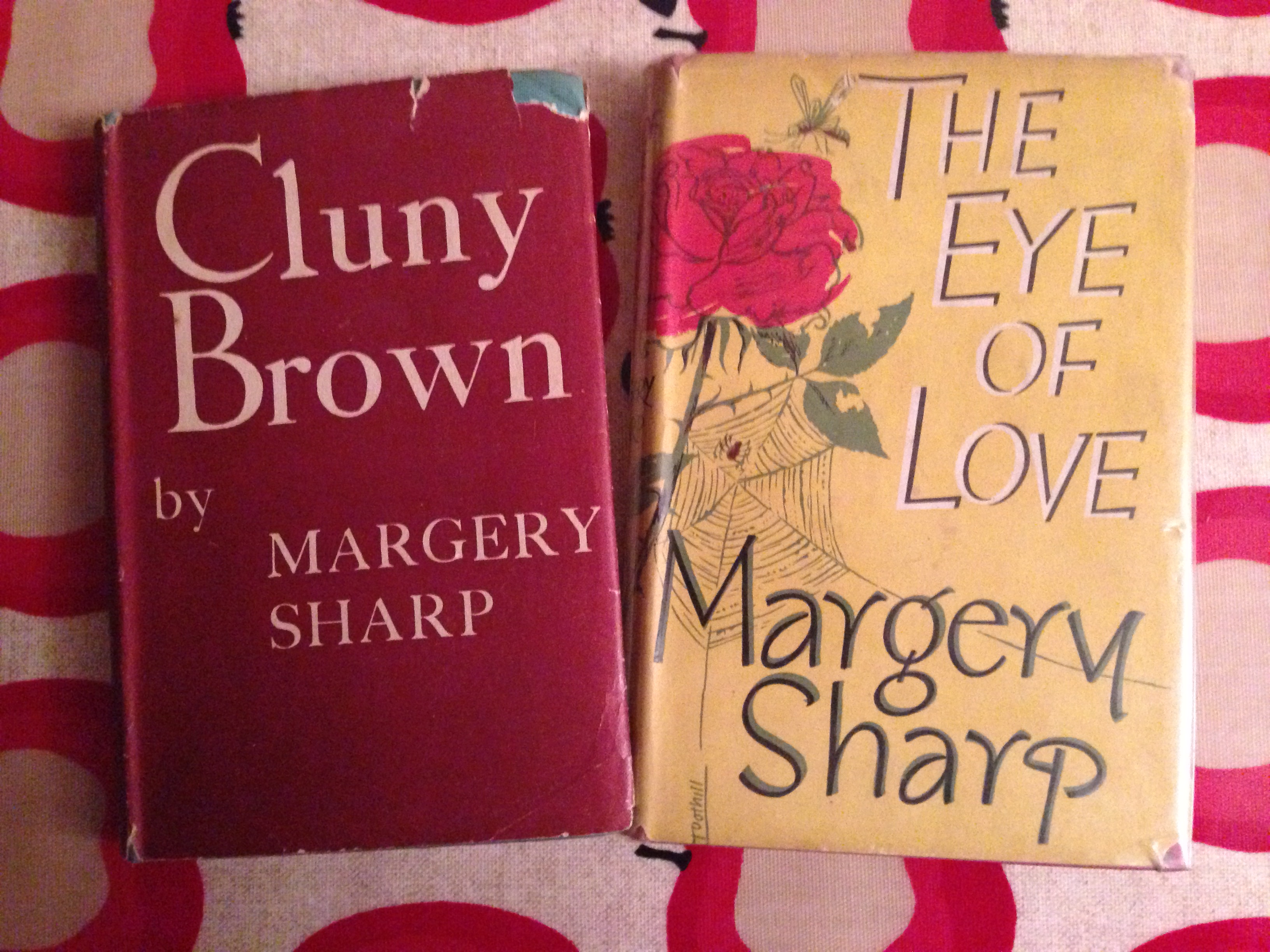
First, Cluny Brown (1944) which portrays one of the most original, idiosyncratic and appealing fictional heroines I’ve encountered:

“She looked like no one on earth but Cluny Brown, and at the same time, stepping in with the milk, she looked as though she belonged intimately to her surroundings.”

Cluny is a young woman, living with her plumber uncle as both her parents have died. She resolutely goes her own way and harms no-one, and can’t understand why people find her habits – such as the decision to stay in bed all day eating oranges – so objectionable.

“She had got to the Ritz. She had got as far as Chelsea – put her nose, so to speak, to a couple of doors – and each time been pulled back by Uncle Arn or Aunt Addie, people who knew what was best for her, only their idea of the best was being shut up in a box – in a series of smaller and smaller boxes until you were safe at last in the smallest box of all, with a nice tombstone on top.”

After a misunderstanding which sees Cluny fix the blocked sink of an amorous older man in Chelsea, Uncle Arn sends her away to service in Devon.

“She wasn’t resigned, for she was never that, but she felt a certain expectancy. At least something was happening to her and all her life that was the one thing Cluny Brown consistently desired.”

At the country house, Cluny encounters certain types: an upright colonel, a horticulturally obsessed matriarch, the feckless heir, a young society lady leaving a trail of broken hearts in her wake… yet in Sharp’s hands these portraits are wholly believable rather than clumsy stereotypes. A tentative love affair begins, and Cluny Brown is nothing if not contrary…

I won’t say any more for fear of spoilers. This novel is an unmitigated joy.  Comic and affectionate, Cluny Brown would be easy to dismiss as lacking depth. But it is so superbly written, with such verve and understanding of human beings, that to do so would be mistake. Invite Cluny into your life, she’ll charm you, I promise…

img_0841

Secondly, The Eye of Love (1957), the middle-aged love story of Harry Gibson and Dolores Diver.

“For ten years they’d given each other what each most wanted from life: romance. Now both were middle-aged, and if they looked and sounded ridiculous, it was the fault less of themselves than of time.

To be fair to Time, each had been pretty ridiculous even at the Chelsea Ball.”

To outsiders they appear ordinary, and laughable.  But to one another, viewed through the eye of love, they are brave, noble and glamorous:

“ ‘My Big Harry! My King Hal!’ cried Miss Diver.

‘My Spanish rose!’ cried Mr Gibson.

They clung together in ridiculous grief, collapsed together on the Rexine settee.”

The grief is due to Harry needing to marry the daughter of a business rival, in order to amalgamate the businesses and save his shop.

“He wanted her to want to be married, as he himself wanted not to be made a bankrupt; he had an idea that as between man and woman it came to much the same thing.”

And so it is a novel with lovers parted. We follow Harry’s attempts to integrate into a new family, and Miss Diver’s attempts to earn money without his support by taking in a lodger (Mr Phillips, who finds the house – which he believes his landlady owns – very attractive). Meanwhile, around the edge of all this trauma, is Miss Diver’s niece, Martha. A self-contained child who Sharp frequently describes as “stolid” Martha does as she pleases. She doesn’t attend school – Miss Diver didn’t arrange it and Martha has no inclination to go – and instead walks around town, sees her shopkeeper friends, and soon discovers an all-consuming passion for drawing.

“To say she didn’t like the new lodger would have been an over-simplification: and the true root of her malaise lay so deeply entwined with her innermost feelings, she couldn’t bring it to light. Put briefly, while Martha didn’t mind carrying up Mr Phillips tray, to have to look at him and say Good morning represented an imposition of alien will.”

I adored Martha. Stubborn, self-possessed, strong-willed and lacking any sentimentality, she was just wonderful. Sharp wrote two sequels about this unforthcoming heroine,  Martha in Paris and Martha, Eric and George, which I will hunt down forthwith.

Back to the adults. The Eye of Love is quite a feat, because while Sharp does not expect her readers to view Harry and Miss Diver as they view each other, at the same time she does not present them as harshly as the other characters judge them (particularly Miss Diver’s pretensions of Spanishness (real name Dorothy Hogg)). Her writing is acutely observed, with dry humour, but it is also kind.  The foibles of the characters are funny but oh-so-human.

 “At least once a day he took out Dolores’ comb, and warmed it back to life between his hands. He had to hang on hard to his Britishness, not to press it to his lips. A sad and ridiculous sight was Harry Gibson – large, stout, fifty years old – holding himself back from mumbling a wafer of tortoiseshell, as a child hangs back from sucking a forbidden sweet.”

Poor Harry. Poor Dolores.  Will they find their way back to one another? All I’ll say is, as with Cluny Brown, I thought the ending of The Eye of Love was perfect.

Well, it’s early days in 2017 but already things are looking up. I’ve met a new love in my life and I make no apologies for the gushing superlatives she inspires in me. Margery: where have you been all my life?

13Enthusiast--articleLarge-v2

Image from here

If you’d like to know more about this wonderful author, do check out The Margery Sharp blog as well as all the other posts today 🙂

To end, I was going to go for a song from the period, but ultimately I chose this, as I think Cluny and Martha would approve of the sentiment:


“She had books, thank Heaven, quantities of books. All sorts of books.” (Jean Rhys, Quartet)

This is a further (mini) contribution (not my usual two-work blog post) to Jean Rhys Reading Week, hosted by Jacqui at JacquiWine’s Journal and Eric at Lonesome Reader. Do check out their blogs and join in!

Jean Rhys

This time I’m looking at Sleep It Off Lady (1976) which is Rhys’ final collection of stories, published 3 years before she died. The stories are presented in a chronological order of the age of the protagonist, so it almost feels like a dipping into and out of someone’s life at various points; from the two young sisters living in Dominica in the first story Pioneers, Oh Pioneers to the young woman in Paris in Night Out 1925, to the elderly woman living alone in the titular penultimate story.

This approach is not dissimilar to her longer fiction, such as Good Morning Midnight, which used stream of consciousness to build up a picture of a life from fractured parts. All the things I enjoy in Rhys’ longer fiction are evident in her short stories. For example…

Her humour used to highlight a serious issue – such as mental illness encountered by repressed Edwardian Brits in the colonies:

“‘If,’ said Mr Eliot ‘the man had apologized to my wife, if he’d shown the slightest consciousness of the fact that he was stark naked, I would have overlooked the whole thing. God knows one learns to be tolerant in this wretched place. But not a bit of it. He stared hard at her and came out with: ‘What an uncomfortable dress – and how ugly!’ My wife got very red.  Then she said: ‘Mr Ramage, the kettle is just boiling. Will you have some tea?’” (Pioneers Oh Pioneers)

Her unblinking look at sexual politics which degrade women and empower men. This takes an even darker turn when she documents the sexual assault of a twelve year old (this is written very sensitively and not at all gratuitously, but neither does it let the reader off the hook – we can’t ignore what has happened):

“He talked of usual things in a usual voice and she made up her mind that she would tell nobody of what had happened. Nobody. It was not a thing you could possibly talk about. Also, no one would be believe exactly how it had happened, and whether they believed her or not she would be blamed.” (Good-bye Marcus, Good-bye Rose)

And her startling observations that disconcert yet articulate something fundamental:

“But it was always the most ordinary things that suddenly turned round and showed you another face, a terrifying face. That was the hidden horror, the horror everyone pretended did not exist, the horror that was responsible for all the other horrors.” (The Insect World)

I’m so glad I took part in Jean Rhys Reading week as it encouraged me to explore this writer much sooner than I otherwise might have done.  I’ve no idea why, having rated Wide Sargasso Sea so highly when I first read it in my teens, I allowed Rhys to slip off my radar. Her writing seems drawn directly from her life yet she is able to explore themes that you don’t need to be an ex-colonial, chorus girl, artist’s model, thrice-married Parisian who is friends with Ford Madox Ford to find meaning in (at least I assume so, since that’s basically my life in a nutshell).

“Very widespread now – heart condition.” (Sleep It Off Lady)

I’m really looking forward to reading the rest of her work, I only wish there was more of it.


 Jean Rhys  (1894-1979)

Images from here and here

“Reading makes immigrants of us all. It takes us away from home, but more important, it finds homes for us everywhere.” (Jean Rhys)

This is my contribution to Jean Rhys Reading Week, hosted by Jacqui at JacquiWine’s Journal and Eric at Lonesome Reader. Do check out their blogs and join in!

Jean Rhys

Firstly, After Leaving Mr Mackenzie (1930).

My edition is this 1970s Penguin - the subtitle manages to be both cheesy and misleading - bad Penguin!

My edition is this 1970s Penguin – the subtitle manages to be both cheesy and misleading – bad Penguin!

I feel I should have found this novel much more depressing I did. Julia is a woman whose looks are fading, an impending disaster for her, as she has no money and lives off the handouts of lovers who will find her easier to discard the older she gets. At the moment she has an ambiguous quality:

“Her career of ups and downs had rubbed most of the hallmarks off her, so that it was not easy to guess at her age, her nationality, or the social background to which she properly belonged.”

People tend to judge her harshly rather than kindly, particularly because she is a woman and at a time of more rigid social rules, they can read her lifestyle in her clothes, hair and makeup.  The men who use her escape more lightly, such as the titular lover with whom her relationship is breaking down:

“He was of the type which proprietors of restaurants and waiters respect. He had enough nose to look important, enough stomach to look benevolent. His tips were not always in proportion with the benevolence of his stomach, but this mattered less than one might think.”

After her cheques from Mr Mackenzie stop, Julia returns to England from France. Not quite estranged from her family but not on fond terms with them either, she lives in seedy Bloomsbury boarding houses:

“But really she hated the picture. It shared, with the colour of the plush sofa, a certain depressing quality. The picture and the sofa were linked in her mind. The picture was the more alarming in its perversion and the sofa the more dismal. The picture stood for the idea, the spirit, and the sofa stood for the act.”

I find that an astonishing piece of writing. To take a description of a dilapidated room and show how that reflects the mood of the person in it is one thing, but to extend it in such a way, so original and startling, really demonstrates why Rhys deserves to be lauded.

Julia ricochets around London, trying to find a man to take care of her. Rhys does not judge her protagonist which must have been quite shocking for 1930. Julia is sexually active, unmarried, childless, and is not punished by Rhys for such deviation from the feminine ideal. While she is a sad figure, even tragic, Rhys shows how we share a commonality with Julia rather than marking her out as Other.

 “She was crying now because she remembered that her life had been a long succession of humiliations and mistakes and pains and ridiculous efforts. Everybody’s life was like that. At the same time, in a miraculous manner, some essence of her was shooting upwards like a flame. She was great. She was a defiant flame shooting upwards not to plead but to threaten. Then the flame sank down again, useless, having reached nothing.”

After Leaving Mr Mackenzie is a sad novel, but what keeps it from being depressing, for me, are the gentle touches of Rhys’ humour, such as in the description of Mr Mackenzie, and the fact that Julia holds on to her resilience. She is not a victim, despite being treated appallingly, but rather a realist, who knows that her options as a woman in her circumstances are limited. Rhys has a great deal to say but does so in a non-didactic way, leaving the reader to reach their own conclusions.

Secondly, Good Morning Midnight (1939). Superficially, this sounds very similar to After Leaving Mr Mackenzie: Sasha Jansen returns to Paris alone and broke. She is losing her looks and feels lonely and desperate… but it is quite different.

A more recent Penguin edition - blessedly free of a cheesy subtitle

A more recent Penguin edition – blessedly free of a cheesy subtitle

Sasha does not flail around trying to extract money from everyone.  Rather, Rhys writes this novel in the first person, using a degree of stream of consciousness to explore how a single woman at this point in history comes to terms with her life and the future that awaits her. Sasha is fragile:

“On the contrary, it’s when I am quite sane like this, when I have had a couple of extra drinks and am quite sane, that I realise how lucky I am. Saved, rescued, fished-up, half-drowned, out of the deep, dark river, dry clothes, hair shampooed and set. Nobody would know I had ever been in it. Except, of course, that there always remains something. Yes, there always remains something…”

She is self-destructive and lonely:

“I’ve had enough of these streets that sweat a cold, yellow slime, of hostile people, of crying myself to sleep every night. I’ve had enough of thinking, enough of remembering. Now whisky, rum, gin, sherry, vermouth, wine with the bottles labelled ‘Dum vivimus, vimamus….’ Drink, drink drink…As soon as I sober up I start again. I have to force it down sometimes…Nothing. I must be solid as an oak.”

And yet, amidst the sadness, there is resilience. We learn of Sasha’s past in Paris as she walks the streets, meets new people and is drawn back into her memories. The stream of consciousness and flitting between past and present is a highly effective. Rather than feeling like a contrived literary style, Rhys is able to create a real sense of being inside Sasha’s head and how someone would think: not in straight lines but (to steal an analogy from Jeanette Winterson) in spirals, back and forth.

paris1932

Image of 1930s Paris map from here

Based on these two novels, I would say Rhys is brilliant at creating flawed, vulnerable women who are somehow survivors – they have a strength which is not immediately obvious, that perhaps they don’t even recognise themselves.

“I am trying so hard to be like you. I know I don’t succeed, but look how hard I try. Three hours to choose a hat; every morning an hour and a half trying to make myself look like everybody else. Every word I say has chains around its ankles”

A single woman with a sexual history who is no longer young does not have the most rosy prospects in interwar society and Rhys does not shy away from this. However, there is a sense that Sasha (and Julia) is not alone in her struggles. The search for meaning in a society that can degrade through disregard affects many and there is fellowship and sympathy to be found.

“I look thin – too thin – and dirty and haggard, with that expression that you get in your eyes when you are very tired and everything is like a dream and you are starting to know what things are like underneath what people say they are.”

Wiki tells me that when first published, (male?) critics found this novel well written but too depressing. I thought it was beautifully written and sad, but not depressing. I think for me depressing comes with a certain bleakness, and I didn’t find either novel bleak: neither Julia or Sasha ever quite lose hope.

To end, if anyone can capture the vicissitudes of a life well-lived in Paris:

“Rough winds do shake the darling buds of May” (William Shakespeare)

Last week I looked at The Enchanted April, so this week for May Day I thought I’d look at another Virago that helpfully has the current month in the title, Frost in May by Antonia White (1933). Virago was founded in 1973, with the Modern Classics imprint starting in 1978 “dedicated to the rediscovery and celebration of women writers, challenging the narrow definition of Classic”. Frost in May was the first Modern Classic title, so for this post I’ve paired it with the first Persephone title, as Persephone, founded in 1998, have a similar remit to publish lost or out of print books which are mainly written by women.

200 (2)

Frost in May is Antonia White’s autobiographical first novel, telling the story of Nanda Gray and her schooling at the Convent of the Five Wounds from the ages of 9 to 14. Nanda begins school as a devout child, finding her way in Catholicism:

“St Aloysius Gonzaga had fainted when he heard an impure word. What could the word have been? Perhaps it was ‘belly’, a word so dreadful that she only whispered it in her very worst, most defiant moments. She blushed and passionately begged Our Lady’s pardon for even having thought of such a word in her presence.”

White charts Nanda’s development throughout her school career.  She is from an ordinary middle-class family, her father a recent convert, and the other girls from aristocratic European Catholic families are glamorous and much more worldly:

“Leonie and Rosario were seasoned retreatants. They went into this solitary confinement with as little fuss as old soldiers going into camp. Rosario supplied herself with a great deal of delicate needlework if a vaguely devotional nature, while Leonie announced frankly that she was going to use her notebook to compose a blank verse tragedy on the death of Socrates.”

As Nanda becomes older, she begins to struggle with her faith, although there is never a sense that she will abandon it all together. Rather it is the story of a young person trying to find a true sense of meaning within her faith, rather than without it.

“She had often been rewarded by a real sense of pleasure in the spiritual company of Our Lord and Our Lady and the saints. But over and over again she encountered those arid patches where the whole of religious life seemed a monstrous and meaningless complication.”

If this sounds like it has no place in today’s secular world, I’ve not done Frost in May justice. The novel is about a young person’s growing realisation of self, explored with sensitivity. As a heathen book lover, I related to Nanda’s discovery of poetry:

“She read on and on, enraptured. She could not understand half, but it excited her oddly, like words in a foreign language sung to a beautiful air. She followed the poem vaguely as she followed the Latin in her missal, guessing, inventing meanings for herself, intoxicated by the mere rush of words. And yet she felt she did understand, not with her eyes or her brain, but with some faculty she did not even know she possessed.”

Frost in May is a short novel and a quick read, and I can see both why it was marginalised and why Virago chose it to launch its Modern Classics imprint. It is easy to overlook: a school story in which little happens, five years in a young girl’s life and no intrusive authorial voice to proclaim any wider profundity beyond the immediate story. Yet it has plenty to say about what is profound for the individual, the influences and experiences that shape us and leave an indelible mark. White’s light touch should not be mistaken for a lack of something to say.

“Do you know that no character is any good in this world unless that will has been broken completely? Broken and reset in God’s own way. I don’t think your will has quite been broken, my dear child, do you?”

IMG_0699

Secondly, William – An Englishman by Cicely Hamilton (1919) who was a suffragette and wrote this novel during the last year of World War I. The eponymous Mr Tully is a young man who prior to the war is a socialist, fired less by idealism and more by the need for something with which to occupy himself.

“The gentlest of creatures by nature and in private life, he grew to delight in denunciation, and under its ceaseless influence the world divided itself into two well-marked camps; the good and enlightened who agreed with him, and the fool and miscreants who did not…in short, he became a politician.”

William meets and marries a similarly dim suffragette, Griselda, and Hamilton’s satire of their unthinking politicking is relentless.  They are shown as well-meaning but avoiding any challenge to their ideals and any opportunity for genuine original thought. When a certain archduke is assassinated in Sarajevo, they pay it little mind as it does directly affect their parochial politics, and they head off on honeymoon to Ardennes. When they emerge from the Forest of Arden three weeks later, they are captured by soldiers and face a traumatic awakening as to the state of the world:

“So they trotted down the valley, humiliated, dishevelled, indignant, but still incredulous – while their world crumbled about them and Europe thundered and bled.”

Hamilton does not baulk from the realities of war – of which she had first-hand experience – and it is shown as bloody and brutal. The satire falls away as William becomes the everyman caught up in circumstances far beyond his control.

“It had not seemed to him possible that a man could disagree with him honestly and out of the core of his heart; it had not seemed to him possible that the righteous could be righteous and yet err. He knew now, as by lightening flash, that he, Faraday, a thousand others, throwing scorn from a thousand platforms on the idea of a European War, had been madly, wildly, ridiculously wrong – and the knowledge stunned and blinded him.”

Hamilton’s master stroke is that the things she satirised – William and Griselda’s lack of understanding, ignorance and youthful certainties – become the very things that drive home the human tragedy of the war. They are ordinary people who just wanted to live the life they imagined for themselves, and their powerlessness and profound losses are what makes this so very sad. The devastation of World War I is left in no doubt.

After all this talk of devastation, let’s pick ourselves up with some love poetry: the wonderful Harriet Walter reading the sonnet from which this post takes its title:

“Students, eh? Love ’em or hate ’em, you can’t hit them with a shovel!” (Terry Pratchett, Making Money)

Despite being woefully slow in my blogging, I’ve managed a second post for Reading Ireland Month hosted by Cathy at 746 books and Niall at Raging Fluff. Sláinte!

ireland-month

I’ve picked two novels linked by undergraduate protagonists – one a classic of Irish literature which is on Cathy’s 100 Irish Novels list, the other a little-known first novel by an author who has gone on to huge success.

youngones372_52

Ah, those heady student days…

Image from here

Firstly, the classic At Swim-Two-Birds by Flann O’Brien (1939). The unnamed narrator is in many ways a typical student:

“Whether in or out, I always kept the door of my bedroom locked. This made my movements a matter of some secrecy and enabled me to spend an inclement day in bed without disturbing my uncle’s assumption that I had gone to the College to attend to my studies.  A contemplative life has always been suitable to my disposition.”

His dissolution is perhaps a bit more extreme than most students however:

“It was in the New Year, in February, I think, that I discovered my person was verminous.”

Yuck. Gradually clues emerge that this student may be more literate than he first appears, such as how he describes his friend offering to buy him a drink:

“I rejoined that if his finances warranted such generosity, I would raise no objection, but that I (for my part) was no Rockefeller, thus utilising a figure of speech to convey the poverty of my circumstances.

Name of figure of speech: Synedoche (or Autonomasia)

The three of us walked slowly down to Grogan’s…”

The splintering of the narrative with the definition also hints at what is to come, as soon the story begins to be invaded by other stories the student is writing: about a devil Pooka and a fairy in his pocket; about Furriskey, born a fully grown man; a Western; versions of Irish folklore.  All the narratives start to reflect and echo each other, eventually they overlap and boundaries break down.  In other words, this is classic modernist brilliance, layering up myth and meta-narratives to create something astonishing. If you want to read Ulysses but you’re not sure you’re up to the task, At Swim-Two-Birds could be a good gateway novel 🙂 As Dylan Thomas said:

“This is just the book to give your sister if she’s a loud, dirty, boozy girl.”

In other words, if she’s a student.

Secondly, Stir Fry by Emma Donoghue (1994), who would go on to have enormous success with Room sixteen years later. This is the sort of first novel that doesn’t seem to be published as much now – perfectly decent efforts of thinly disguised biography whereby an author gets to grip with their craft. I’ve no actual facts to back up my theory, but it seems that while more and more books are published, first novels now have to have a huge wow factor – not necessarily a bad thing, but there’s an awful lot of truly dreadful writing being published because it will make money, while these better written but modest efforts flounder. I hope potentially good novelists are not being put off: hang in there budding writers!

Anyway, back to Stir Fry. Maria is seventeen and leaves her rural home to start university in Dublin.

“Dirty blue clouds were scudding over slate roofs. A good cold smell in the air and the whiff of turf smoke as she turned the corner made her think of home. The dusk lasted much longer in the country; nothing to get in the way she supposed. In Dublin there was only half an hour of grey, then the street lamps blinked on and all the shoppers hustled home in the dark.”

She is remarkably naïve, even given her young age, and takes forever to realise that her two flatmates are in a same-sex relationship:

“Now suddenly here were two friends of hers kissing on the table she ate at every night. Rapt faces and library books and garlic, how bizarre.”

She considers moving out, which may seem ridiculous, but Maria’s world sees discussions like this occur in all earnestness:

“‘Look, they’re both very nice. And they wear skirts sometimes too.’

‘Oh, I know,’ said Yvonne wisely, ‘but they’d have to, wouldn’t they, as cover?’”

What follows is a sweet story of Maria coming to realise who she is and what she wants. The characters are all very believable and they and Dublin are drawn with real affection. Stir Fry is a quick read, a bildungsroman in which nothing and everything happens. It doesn’t contain the brilliance Donoghue displayed with Room, but it still made me think it’s a pity we don’t see these types of first novels much anymore.

To end, an Irish band that first came to prominence when I was student – this song was played at many a sticky-floored student club back in my day:

“Mothers are all slightly insane.” (JD Salinger)

You’re not wrong, JD. Mine is in definite box-of-frogs territory. It’s the thing I like most about her. I’ve been extraordinarily lucky, but a relationship such as ours will never be immortalised in literature given that we get on well and it would be inexorably dull. So for mother’s day (which it is today in the UK) I’m looking at two portrayals of mothers that are nothing like my own but which make for great reads. This post is dedicated not only to my own mother, but also to my sister-in-law, for whom today is her first mother’s day as a mother 🙂

My mother and I have never been this adorable

My mother and I have never been this adorable

Image from here

My first literary mother is Mrs Ramsay from To the Lighthouse by Virginia Woolf. I chose this because Virginia Woolf is one of my mother’s favourite writers, and like the homebrew peach schnapps I once allowed past my lips, I deeply regret this now. How on earth do you write about anything by Virginia Woolf? Her writing is so rich, so multi-layered, so dense and yet so subtle that I don’t feel adequate to the task – which I’m sure the following discussion will prove beyond a doubt 😉

In To the Lighthouse, the Ramsay family descend on their holiday home in the Isle of Skye. Woolf’s stream-of-consciousness technique is perfect at capturing everything that occurs beneath the surface of an ordinary day, the deep significance below the seemingly insignificant:

“the monotonous fall of the waves on the beach, which for the most part beat a measured and soothing tattoo on her thoughts and seemed consolingly to repeat over and over again as she sat with the children the words of some old cradle song, murmured by nature, ‘I am guarding you – I am your support’, but at other times suddenly and unexpectedly, especially when her mind raised itself slightly from the task in hand, had no such kindly meaning, but like a ghostly roll of drums remorselessly beat the measure of life, made one think of the destruction of the island and its engulfment in the sea and warned her whose day had slipped past in one quick doing after another that it was all as ephemeral as a rainbow – this sound which had been obscured and concealed under the other sounds suddenly thundered hollow in her ears and made her look up with an impulse of terror.”

Mrs Ramsay is a nurturing and dedicated mother but here Woolf exposes the fractures that threaten a seemingly harmonious exterior.  I think this passage is just brilliant – the setting up of the monotonous background noise that lulls yet twists in a moment, the mind rebelling against the self, the pure terror that we can be overwhelmed by our own feelings – all while domesticity continues undisturbed.

The family are surrounded by Mrs Ramsay’s nuturing love and the sea, and as the passage  above shows, these are bound together in their constancy being mistaken for predictability. To the Lighthouse uses water imagery to great effect, the sustaining essence that can imperil and kill:

“how life, from being made up of little separate incidents which one lived one by one, became curled and whole like a wave which bore one up with it and threw one down with it, there, with a dash on the beach”

This is my experience of reading Woolf: small incidents, layered up into writing of such power that you surface from her novels feeling dashed by a powerful force.

If you’d like to read some proper reviews of this wonderful novel, there have been insightful and interesting posts written lately by bloggers including Lady Fancifull and Simon at Stuck in a Book. If you’d like to know more about the man Mrs Ramsay married, a man given to views such as: “He wondered if she understood what she was reading. Probably not, he thought. She was astonishingly beautiful.” Sarah has written a typically witty and entertaining post over at Hard Book Habit.

Secondly, The Blue Room by Norwegian author Hanne Orstavik (trans. Deborah Dawkin) one more stop on my Around the World in 80 Books Reading Challenge, hosted by Hard Book Habit. I can’t remember which blogger made me aware of this so if it was you please leave a comment! Peirene Press publish contemporary European novellas, and group them in sets of three, linked by theme. The Blue Room is part of the Coming-of-Age series, and concerns Johanne’s intense relationship with her mother; they live together while Johanne trains to be a psychologist. Her career choice is deeply ironic, given that she has no insight into the manipulative, controlling behaviour her mother directs towards her, or her own victimhood.

“She’s right, I thought, we belong together like two clasped hands.”

Well, two clasped hands can be affectionate, reassuring, but also restraining and restrictive. The novel takes place over the course of a day, when Johanne was due to leave to spend six weeks in the States with her boyfriend, yet wakes to find herself locked in the titular space and unable to leave. As she thinks back over recent events, relationships with her mother, boyfriend and God emerge and the reader is left to piece together what is going on beyond what Johanne doesn’t say. She is an unreliable narrator of her own life as we all are, because her perspective is limited by what she cannot see.

Her mother is deeply controlling and Johanne has the victim’s hypersensitivity to her abuser’s every need and whim. At no point does she articulate that it is her mother who has locked her in, unwilling to let her leave.

“Perhaps I’m locked in here as part of an experiment. Perhaps somebody’s pumping gases in and changing my consciousness.”

Johanne’s sexual fantasies abruptly break into the narrative, filled with violence,  with herself as the dominated party in BDSM scenarios. Again, despite her training, she cannot see how this is bound up in her relationship with her mother:

“And what exactly, I asked, is the meaning of this pain? Don’t we grow when we’re happy? Mum looked at me: she seemed angry and said nothing.”

Johanne is young and naïve, lacking insight, both sweet and shocking. The Blue Room is a powerful novella about our closest relationships and how they influence us in ways we barely comprehend.

To end, a little treat for my mother and any other LDP fans out there – enjoy!

“I don’t know where I’m going from here but I promise it won’t be boring.” (David Bowie)

David Bowie died on 11 January (and then Alan Rickman 3 days later – 2016 is rubbish so far).  Although I have never been personally moved by a celebrity death, shocking and sad as they are, on Monday I found myself weeping in the middle of King’s Road (lesson: don’t look at the BBC News app in public).  In common with his worldwide legions of fans, Bowie had a special place in my heart and it’s a horrible shock that our hero has gone.

Consoling myself through the internet, I discovered he had listed his 100 Must Read books, so I thought I would look at two in this post. Sarah over at Hard Book Habit also wrote about this list, do pop over and read her lovely post. One of my choices is also my first stop on Hard Book Habit’s Around the World in 80 Books Reading Challenge, which you can read all about here.

Firstly, The Prime of Miss Jean Brodie by Muriel Spark (1961), probably her most famous novel.  Miss Brodie is a romantic teacher in a conservative girl’s school in Edinburgh in the 1930s. Eschewing the curriculum, she educates her girls in the ways of art, love… and fascism. Boasting “Give me a girl at an impressionable age and she is mine for life.” Miss Brodie has a group of girls who form the ‘Brodie set’, and the novel, slipping back and forth in time, is told mainly from their points of view, despite a third person narrator.

“Miss Brodie had already selected her favourites, or rather those whom she could trust; or rather those whose parents she could trust not to lodge complaints about the more advanced and seditious aspects of her educational policy.”

Miss Brodie repeatedly insists that she is in her prime; she is silly and vain, and the school are out to get her. But Spark does not judge her harshly, suggesting she is just in the wrong place at the wrong time:

 “It is not to be supposed that Miss Brodie was unique at this point of her prime…there were legions of her kind during the nineteen-thirties, women from the age of thirty and upward, who crowded their war-bereaved spinsterhood with voyages of discovery into new ideas and energetic practices in art or social welfare, education or religion.”

We learn quite early on that she is betrayed, and that it one of her set who betray her, forcing her into early retirement.  Miss Brodie is a complex character: charismatic; aspirational for herself and others; entirely inappropriate towards her pupils and with truly hideous politics.  She is an independent spirit who vastly underestimates her own vulnerability.

“It was then that Miss Brodie looked beautiful and fragile, just as dark heavy Edinburgh itself could suddenly be changed into a floating city when the light was a special pearly white and fell upon one of the gracefully fashioned streets. In the same way Miss Brodie’s masterful features became clear and sweet to Sandy when viewed in the curious light of the woman’s folly”

Dame Maggie Smith as Miss Brodie in the 1969 film

Dame Maggie Smith as Miss Brodie in the 1969 film

The Prime of Miss Jean Brodie is a short novel – 128 pages in my edition – which shows just how much a brilliant writer can say in a short space. Spark has created one of the legendary characters of modern fiction who truly stays with you: like her or loathe her, its almost impossible not to be drawn in, becoming one of the ‘Brodie set’.

Secondly, The Leopard by Giuseppe Tomasi di Lampedusa, set during the nineteenth century Risorgimento, whereby the different states of the Italian peninsula unified into a single state. Telling the story of the aristocratic Sicilian Salina family, particularly Fabrizio, the Prince, the novel has an elegiac quality as it documents the decline of the family and change of a way of life.

“Between the pride and intellectuality of his mother and the sensuality and irresponsibility of his father, poor Prince Fabrizio lived in perpetual discontent under his Jove-like frown, watching the ruin of his own class and his own inheritance without ever making, still less wanting to make, any move toward saving it.”

The Prince is surrounded by people, between political responsibilities and social engagements, yet he is an isolated figure, partly due to his “contempt for all his own relatives and friends, all of whom seemed to him mere driftwood in the languid meandering stream of Sicilian pragmatism”.

But the Prince cannot resist the forces of all that surrounds him, and while the military action of the Risorgimento takes place only by report, he and his family are dragged towards modernisation, such as having his aristocratic gene pool diluted by the daughter of a clerical man who:

 “moved through the forest of life with the confidence of an elephant which advances in a straight line, rooting up trees and trampling down lairs , without even noticing scratches of thorns and moans from the crushed”

The domestic is resolutely tied with the political and historical, even during the intimacy of seduction:

“he felt as if by those kisses he were taking possession of Sicily once more, of the lovely faithless land which now, after a vain revolt, had surrendered to him again, as always to his family, its carnal delights and golden crops.”

Sicily_Map

Yet while the people are tied to the land and its history, a recurring theme is of human insignificance, of the transitory nature of humans and their constructs, of all around us falling away. This isn’t depressing, and indeed there is a subtle humour in The Leopard, but it is sad and there is a sense of existential crisis. This wider theme is distilled into the Prince’s relationship with his beloved stars:

“As always, seeing them revived him; they were distant, they were omnipotent and at the same time they were docile to his calculations; just the contrary to humans, always so near, so weak and yet so quarellsome”

The Leopard is a short novel but it took me a while to read it as it so densely written, not a word is wasted. Lampedusa’s use of imagery is strikingly beautiful and he is not afraid to tackle huge ideas.

“the real problem is how to go on living this life of the spirit in its most sublimated moments, those moments that are most like death”

To end, a memory from last summer.  I accompanied my friend’s children – aged 4 and 7 – to an open-air showing of Labyrinth.  There are contradictory reports about Bowie’s feelings towards this film, but for me it has a special place in my heart because it was the point at which, aged nine, I first fell in love with him.

Prior to the showing, there were many jokes about indoctrination and my brainwashing of children, but on arrival I found my flash cards on The Life and Times of David Bowie were not needed.  There were a number of avid Labyrinth-watchers dressed up in oversized mullet wigs and inappropriately large codpieces, a la Jareth the Goblin King.  The kids squealed with delight and ran around to greet them all, crying “David Bowie! David Bowie!” When my friend’s son arrived back where we were sitting, he flopped down, breathless with joy, and simply said “David Bowie.”

“I know just how you feel.” I told him.