“I always write with the Caribbean in mind.” (Merle Collins)

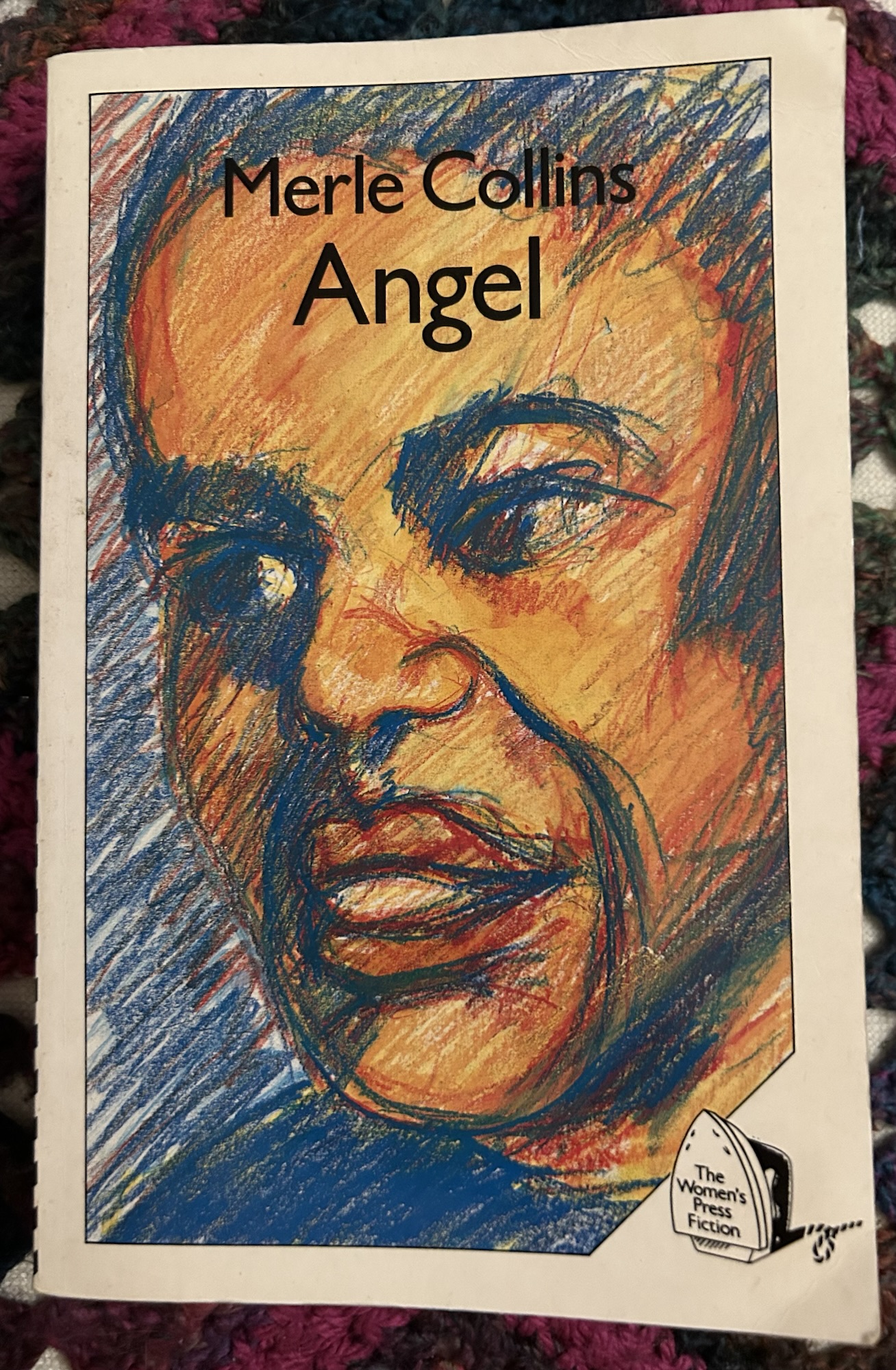
It feels somewhat inevitable that having been searching for my final read for Around the World in 80 Books, it turned out not to be tricky to source at all, but a book that had been languishing in the TBR  for a while. Angel by Merle Collins (1987) explores politically turbulent years in Grenada through the life of the young titular character.

It opens with Angel in her mother Doodsie’s arms, as workers strike and set fire to the plantations.

“The men held their cutlasses firmly. Held up on Doodsie’s shoulder, Angel clung round her mother’s neck. Mother and child kept their eyes riveted on the fire, Angel wide-eyed, Doodsie suddenly very afraid as she saw the De Lisle plantation houses enveloped in flames, a burning glow in the red and sky.

Just under the hill from the crowd, Ma Ettie sat down in her house and secured the folds of her headtie.”

The strikers follow union boss Leader (based on Eric Gairy). Angel’s father Allan has great faith, but Doodsie is more sceptical. She was my favourite character – some attitudes of her generation but a fiercely intelligent, independent- spirited, hard-working woman, who does not have an easy life. Allan comes and goes, providing little money as it is spread between his children with other women. Meanwhile Doodsie raises her family and tries to enable the choices she has been denied.

“Doodsie looked across at her daughter as she combed her fingers through the doll’s blonde hair. She wondered what Angel would grow up to be. One thing if I have anything to do with it, she not going to have my kind of life. She thought of Simon, sleeping quietly inside. He looked so hurt if you ever shouted at him, you just had to shut up after a while. Angel, on the other hand, looked as though she wanted to find out how long you could go on shouting for. She wouldn’t take no for an answer when she decided she wanted something.”

As Angel grows up she is intelligent but somewhat unmotivated, passing her exams except for West Indian history, which she finds dull and not as interesting as British history. It is at university in Jamaica where she starts to think politically, both on an international level and a personal level when she stops ironing her hair.

“She remembered always that day during her first year at school, when one of the nuns who took a deep interesting her welfare told her she should ask her mother to have her hair ironed or straightened so that it would look decent. Angel had held her head down, her hands had fingered her tie, she had muttered some answer of assent, then slithered along the wall of the corridor around the corner to the notice board. She stood staring up at it through her tears, feeling untidy and stupid, rolling and unrolling the grey tie around her neck.”

Angel heads back to Grenada after she gets her degree, to teach. Grenada achieves independence from Britain, and the family are still divided over Leader, whose portrait Allan has on the wall, before Angel smashes it. Her younger brother Rupert is part of the revolution which overthrows Leader (based on the New Jewel Movement).

“‘Civil war is blood, Rupert.’

‘Which side you on, Angel?’

‘I not on no blasted side. Side talk is war talk.’

‘That is rubbish. That opportunist nonsense could only mean you not on the side of the people. Why you don take a stan? The ting that frighten me about you is dat you able to support everybody. You always balancin! That is pure opportunism! Dammit to hell, Angel! Follow you mind! Come down on one side!’”

Much of the novel is written in patois and I found this evocative and powerful, and straightforward to follow although there is also a useful glossary at the end for non-speakers.

The story finishes with the dramatic events of the US invasion, before shifting to symbolic scenes in Doodsie’s backyard, and with Angel at the Delicia river. It is a fitting end to a book that expertly balances the story of a Grenadian family alongside major national events, never losing sight of either but showing how they are completely interwoven.

To end, a song quoted several times in the novel:

Title quote from an interview on Caribbean Literary Heritage.

“I love cats because I enjoy my home; and little by little, they become its visible soul.” (Jean Cocteau)

Once again, I completely failed to read I Am a Cat for the fab event Reading the Meow 2026 hosted by Mallika at Literary Potpourri. It’s just such a whopper! Next year I’m going to make a start in March 😊

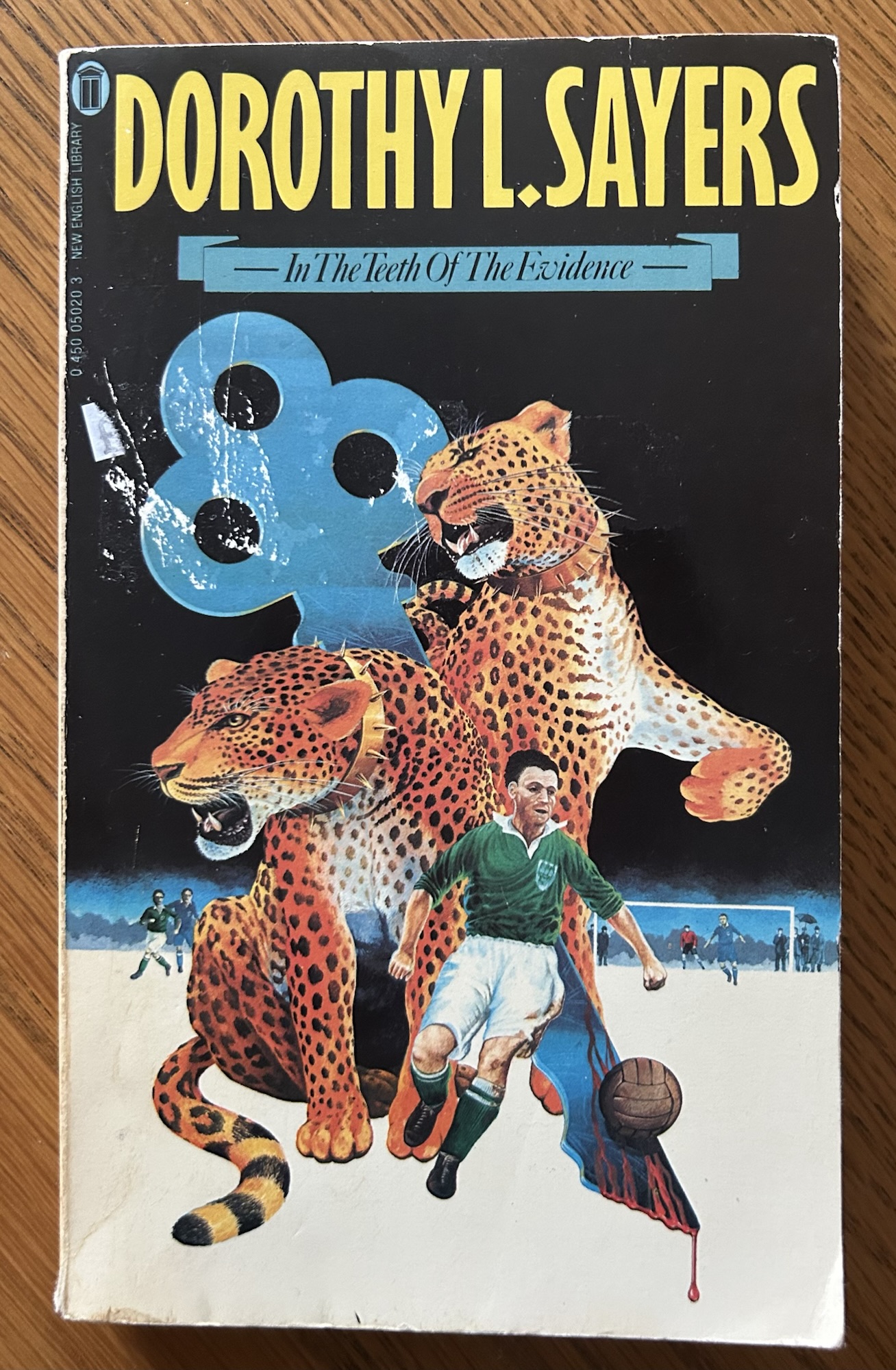
I decided I’d see if I could find something shorter in the TBR in order to take part, and was hunting about in golden age crime. Mallika had also suggested looking for a short story, and so checking In the Teeth of Evidence by Dorothy L Sayers (1939) came up trumps, because the final story in the collection is The Cyprian Cat. My cheesy 1980s edition even has some Big Cats on the cover:

It’s a very short tale, only 13 pages in my edition. It takes the form of a monologue, with a man in serious trouble for seemingly having shot at a cat (there’s no animal cruelty in the story, despite his horrible plans) and speaking to his K.C as silent interlocutor. It opens:

“It’s extraordinarily decent of you to come along and see me like this, Harringay. Believe me, I do appreciate it. It isn’t every busy K.C. who’d do as much for such a hopeless sort of client. I only wish I could spin you a more workable kind of story, but honestly, I can only tell you exactly what I told Peabody. Of course, I can see he doesn’t believe a word of it, and I don’t blame him. He thinks I ought to be able to make up a more plausible tale than that—and I suppose I could, but where’s the use?”

He and his old schoolfriend Merridew both seemed to be following the bachelor life, until Merridew marries a woman fifteen years younger than him. She has never left the Norfolk village in which she was raised, but about a year after the nuptials, they all arrange to meet in Somerset.

Describing the train journey down, we learn of the narrator’s extreme aversion to cats:

“I found a horrible feeling creeping over me that there was a cat in the compartment somewhere. I’m one of those wretched people who can’t stand cats. I don’t mean just that I prefer dogs—I mean that the presence of a cat in the same room with me makes me feel like nothing on earth. I can’t describe it, but I believe quite a lot of people are affected that way. Something to do with electricity, or so they tell me. I’ve read that very often the dislike is mutual, but it isn’t so with me. The brutes seem to find me abominably fascinating—make a bee-line for my legs every time. It’s a funny sort of complaint, and it doesn’t make me at all popular with dear old ladies.”

He passes the time staring at the attractive young lady opposite him, who of course turns out to be Merridew’s new wife. And so they spend time together as planned, the peaceable atmosphere only spoilt by the titular feline, and others, at night:

“Every night the garden seemed to be haunted by them—the Cyprian cat that I had seen the first night of my stay, and a little ginger one and a horrible stinking black Tom were especially tiresome, and one night there was a terrified white kitten that mewed for an hour on end under my window. I flung boots and books at my visitors till I was heartily weary, but they seemed determined to make the inn garden their rendezvous. The nuisance grew worse from night to night; on one occasion I counted fifteen of them, sitting on their hinder-ends in a circle, while the Cyprian cat danced her shadow-dance among them, working in and out like a weaver’s shuttle.”

Sayers builds an increasingly tense atmosphere of oppressive summer heat and the narrator being driven to distraction by the nighttime caterwauling.

But how did he end up shooting a gun? And why is what happened so implausible? Well, you can read the story online here. Sayers leaves plenty unexplained in this unnerving tale, although I know what I think happened… Lord Peter Wimsey would never believe it!

Review-along: Lady Audley’s Secret

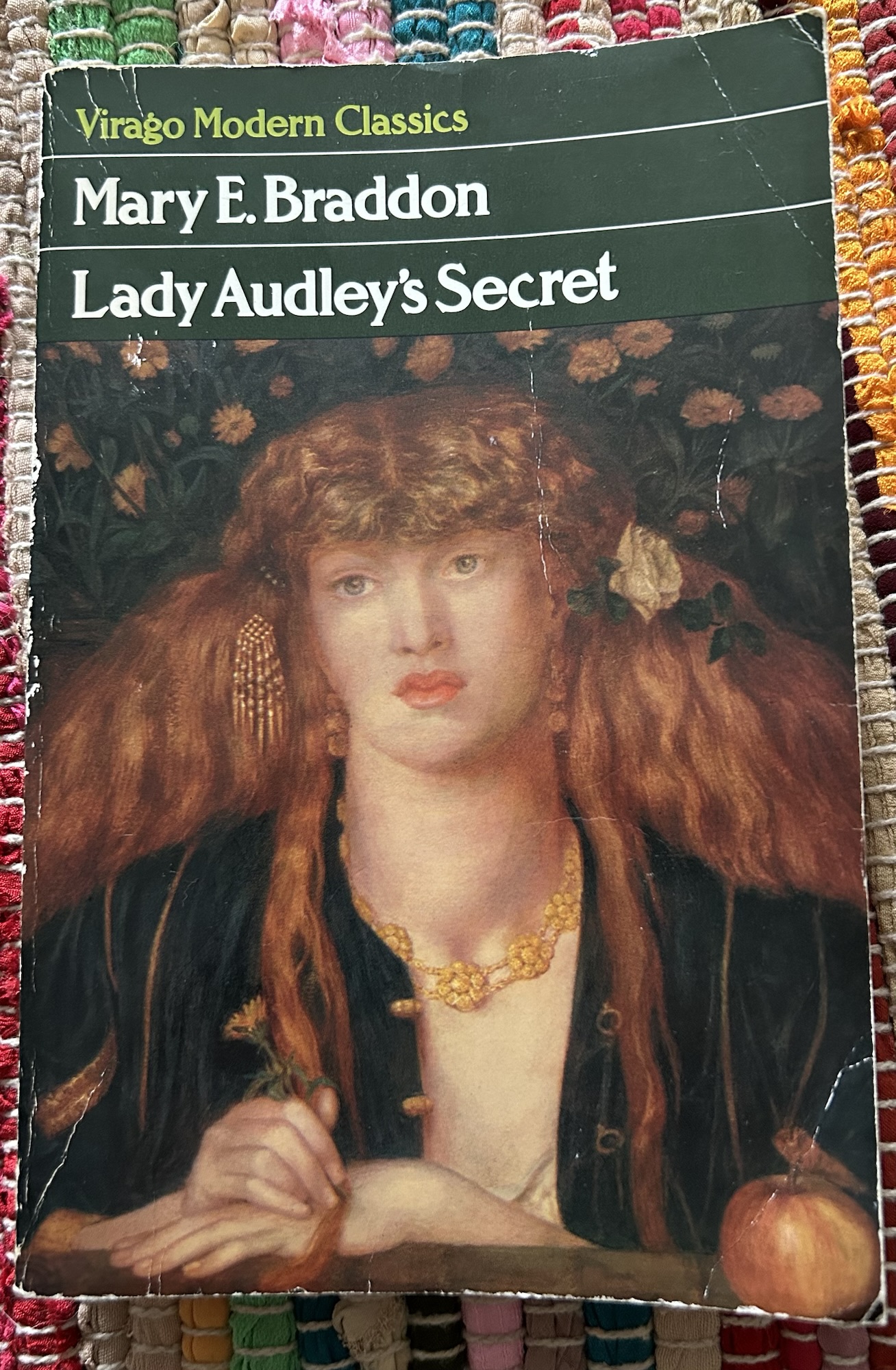
I really wanted to join in with the review-along for Lady Audley’s Secret by Mary Elizabeth Braddon (1862), as it’s a long-standing part of Mount TBR. Novellas a Day in May meant it was beyond me to post on 1 June, but here is my late entry!

The titular woman is introduced to the reader as a penniless but beautiful governess, Lucy Graham:

“Wherever she went she seemed to take joy and brightness with her. In the cottages of the poor her fair face shone like a sunbeam […] and when she tripped away, leaving nothing behind her (for her poor salary gave no scope to her benevolence), the old woman would burst out into senile raptures with her grace, beauty, and her kindliness, such as she never bestowed upon the vicar’s wife, who half fed and clothed her. For you see, Miss Lucy Graham was blessed with that magic power of fascination, by which a woman can charm with a word or intoxicate with a smile. Every one loved, admired, and praised her.”

Is it me or is there some sly humour there? This woman elbowing her way into the cottages of the poor, assuming that to bask in her presence is payment enough? I don’t think Braddon takes a humorous approach generally to this sensation story, but maybe there’s a bit happening…

Lucy catches the eye of Sir Michael Audley, windowed and stinking rich, so of course they are married. But here Lucy’s charms find their limit, with spiky step-daughter Alicia who is only a few years younger:

“She is a vain, frivolous, heartless little coquette,” said Alicia, addressing herself to her Newfoundland dog Caesar, who was the sole recipient of the young lady’s confidences; “she is a practiced and consummate flirt, Caesar; and not contented with setting her yellow ringlets and her silly giggle at half the men in Essex, she must needs make that stupid cousin of mine dance attendance upon her. I haven’t common patience with her.”

The stupid cousin is feckless Robert Audley:

“Sometimes, when the weather was very hot, and he had exhausted himself with the exertion of smoking his German pipe, and reading French novels, he would stroll into the Temple Gardens, and lying in some shady spot, pale and cool, with his shirt collar turned down and a blue silk handkerchief tied loosely about his neck, would tell grave benchers that he had knocked himself up with over work.”

However, when Robert’s friend George Talboys disappears on a visit to Audley Court, Robert can’t shake off his feeling that something is deeply amiss, and begins to investigate.

“The lazy bent of his mind, which prevented him from thinking of half a dozen things at a time, and not thinking thoroughly of any one of them, as is the manner of your more energetic people, made him remarkably clear-sighted upon any point to which he ever gave his serious attention.”

This pulls him into a convoluted tale, whereby George had abandoned his wife and baby to seek his fortune in Australia, fully expecting her to be patiently waiting after three and a half years in which he didn’t contact her once. On his return, George found his wife had died and his son was being raised by his father-in-law, a man who spends all his money on alcohol.

Robert soon realises that the new Lady Audley may be involved with George Talboys’ disappearance…shocker! The secret is quickly worked out by the reader and we watch as Robert tries to unravel her history and prove what has happened to his friend.

His investigation will see him uncover murder, arson, thefts, lies, manipulations, impersonations, conspiracies… well, it is a sensation novel after all!

The exploration of women’s roles in Lady Audley’s Secret is interesting. Lucy is constantly referred to as beautiful, doll-like, with a halo of golden curls. She revels in material wealth, but like a child.

“Her fragile figure, which she loved to dress in heavy velvets, and stiff, rustling silks, till she looked like a child tricked out for a masquerade, was as girlish as if she had just left the nursery. All her amusements were childish. She hated reading, or study of any kind, and loved society. Rather than be alone, she would admit Phoebe Marks into her confidence, and loll on one of the sofas in her luxurious dressing-room, discussing a new costume for some coming dinner-party; or sit chattering to the girl with her jewel-box beside her, upon the satin cushions, and Sir Michael’s presents spread out in her lap, while she counted and admired her treasures.”

But what is also made clear is that this love of money has grown from a background of poverty. Lucy knows what it is to be poor, and she never wants to be that way again. The way to ensure this, is to use her looks and marry for money. In Victorian society that is the best use of her resources.

Meanwhile Alicia enjoys being sporty and active, and is rubbish at running a household. She seems to spend a lot of time being furious, which seems borne of frustration that she doesn’t have a lot of options as to what to do with her sharp mind and talents, as well as Robert’s failure to realise she is in love with him.

There’s some anti-women rhetoric in the novel too, mainly from Robert, but this seemed a source of humour and I felt Braddon was more on the side of questioning the limited choices for women at the time. I also found among the sensation, a nudge towards compassion and moderation, particularly in the character of George’s father, the wonderfully named Harcourt Talboys:

“There were no shady nooks in his character into which one could creep for shelter from his hard daylight. He was all daylight. He looked at everything in the same broad glare of intellectual sunlight, and would see no softening shadows that might alter the sharp outlines of cruel facts, subduing them to beauty. I do not know if I express what I mean, when I say that there were no curves in his character—that his mind ran in straight lines, never diverging to the right or the left to round off their pitiless angles. With him right was right, and wrong was wrong. He had never in his merciless, conscientious life admitted the idea that circumstances might mitigate the blackness of wrong or weaken the force of right. He had cast off his only son because his only son had disobeyed him, and he was ready to cast off his only daughter at five minutes’ notice for the same reason.”

All in all I enjoyed Lady Audley’s Secret, but it was repetitive and overlong. This is a bit of an unfair criticism; like many Victorian ‘baggy monsters’ it was serialised and the repetition was to get readers up to speed/remind them of what had gone before. But reading it as a 376 page novel with teeny-tiny type meant I felt it could have easily stood to lose 100 pages.

However, it was also a ripping yarn, an interesting portrait of various aspects of Victorian society written in a readable style, had some lovely descriptions (if repeated too often) and some complex characterisation in Lady Audley. I’m so pleased the read-along meant I finally got to this one.

Here is Fiction Fan’s Review which also has the links to other bloggers who were much more organised than I am and posted on time!