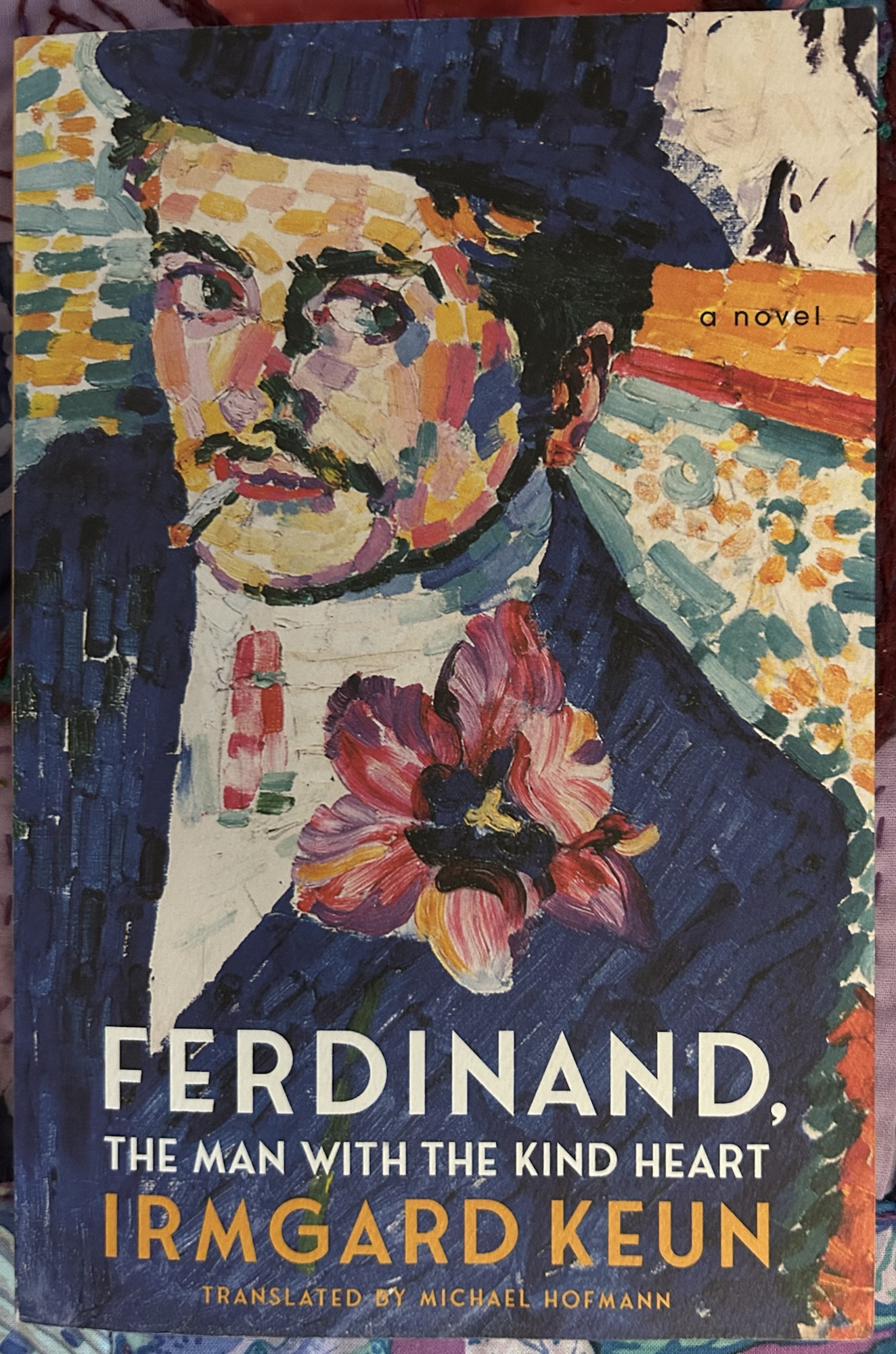
“Without a watch, there’s just a spinning on through alcohol and human entanglements.” (Irmgard Keun, Ferdinand)

I really enjoyed my first experience of Irmgard Keun when I read Child of All Nations last year, and so I was looking forward to picking her up again. Women in Translation Month provided the perfect opportunity. Ferdinand, The Man With the Kind Heart (1950, transl. Michael Hoffman 2020) was her final novel, written not long after the end of World War Two, and just a year after the division of Germany. (There is some dated language in the novel).

The story is told from the point of view of titular Ferdinand as he somewhat listlessly makes his way around war-torn Köln (Cologne). The privations continue and the illicit economy thrives. Keun is so witty and gives her narrator an inventive turn of phrase:

“The Moselle tastes as flaccid and murky as the decayed philanthropy of an unhappily married vintner. The Belgian cigarettes taste of rancid hay.”

His landlady Frau Stabhorn is thriving in her own way, renting her hallway to him as a room, making jam to sell and caring for her grandchildren.  Ferdinand’s experience of this brood is expressed with a degree of tolerant irony:

“Children are the bonny little blossoms in the mouldering garden of life. As I write, a couple of the bonny little blossoms are trying to spread a mixture of jam and plaster of paris all over my arms and legs.”

The book is really a series of portraits, with the plot mainly existing as the passage of time. We meet fellow lodgers:

“Lily is the victim of her beautiful feet. She studies chemistry and earns money on the side from knitting sweaters and writing.”

And poverty-stricken Ferdinand is later employed by a snake-oil salesman:

“Liebezhl draws horoscopes, reads palms, swings crystals, lays cards, sells amulets, and does a little podiatry.”  

Who offers him work as a sort of agony uncle:

“Waiting for me outside my office I had, among others, a man with broken fingernails, a wine grower who wanted to get married for the fourth time five deserted wives, and a sixth who wished to be deserted because her husband snored. I had my work cut out for me.”

Meanwhile, Ferdinand is trying to work out how to get out of his engagement, again observed with a certain ironic detachment:

“There are three items that Luise managed to hang onto throughout the war: a stove, an electric iron, and me. All three of us are a little impaired, and not quite good as new. But Luise is hanging tenaciously, not to say grimly, on to all of us. Her favourite is the stove, and next, even ahead of the iron, is me.”

So, there is a lot of humour in Ferdinand, but there are some very serious points that Keun makes too. And in fact I found the listless, plotless, artless quality to the character and the story to be a serious point too. Ferdinand was a solder and a prisoner of war. To me, his narrative style, his detachment, numbness, ironical distancing, lack of real interest in anything, was a portrait of trauma.

He doesn’t dwell on his past, but when mentioned it is striking:

“My only feeling was fear. I was swimming in an ocean of fear… I was afraid of the NCOs, headquarters, uniforms, barracks, corporals, the officers’ voices—the whole massive machinery of it.

I no longer saw human beings, all I saw were the mechanical manifestations of a force that hypnotised me to the point of crippling despair.”

There is also disgust and cynicism regarding former Nazis living their daily lives, such as Luise’s father:

“He settled down among the spoils of his wife and pouted. His wife and daughter waited on him, the household was his to command, and gradually he clambered back up to the temporarily vacant throne of the family dictator, and everyone tried to be as satisfied and dissatisfied as they’d been previously, in the good old days.”

And sadly of course, his observations have not dated, although specifics change:

“Dictatorships are always very strict about what they understand as morals and public ethics. Our former unlimited German dictatorship has, in the way of lower life forms, procreated by simple fission, and is now called democracy.”

All in all, I found Ferdinand an intriguing read. There was a sense at the end that despite being the titular character and first-person narrator, he had slipped through my fingers. But as I thought about how this was the point, I found this very affecting. Cologne and its citizens were in a process of recovery, trying to understand what remained and how to live after devastation (60% of the city was bombed). As an exploration of the aftermath of war on individuals and on society, it was skilled, subtle and truly moving.

“There are people to whom the whole world is a toy, and who love it and take it as seriously and carefully as they take their toys.”
“Human nature is essentially unpredictable in the long run.” (Muriel Spark, The Fortune Teller)

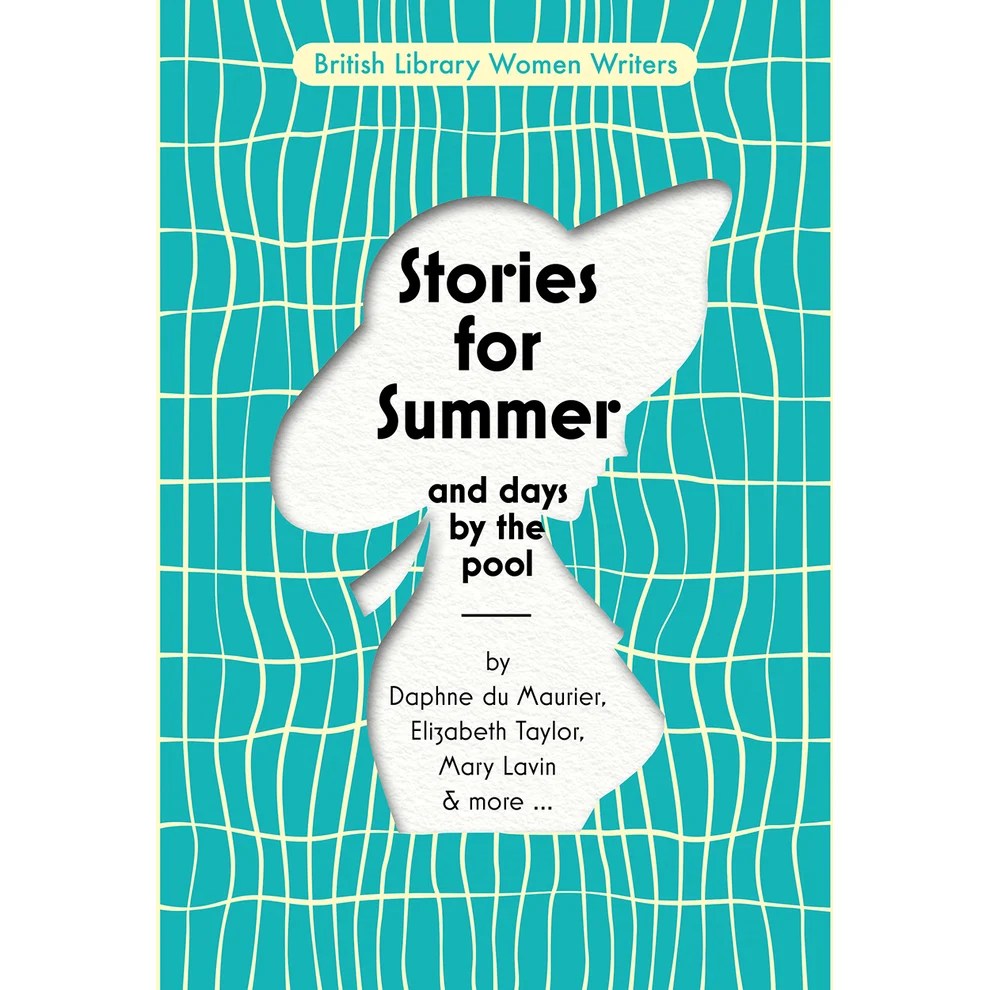
I cannot wait for autumn. I completely reject the idea that our fifth heatwave is pending: it’s been one long, hot, horrible summer interspersed with some cooler days on occasion. In an effort to be less grumpy about the humidity and try and embrace it to some extent, I read Stories for Summer and Days by the Pool. This short story collection is published as part of the marvellous British Library Women Writers series, edited by Simon at Stuck in a Book who provides a great Introduction.

Short story collections can be variable but this is consistently strong, as you would expect from big-hitters including Elizabeth Taylor, Daphne du Maurier, Katherine Mansfield, Virginia Woolf, Maeve Brennan, Sylvia Townsend Warner, Muriel Spark…

While, as previously established, I despise London in summer, it is an appealing setting in Black Cat For Luck by GB Stern.

“The sea has its enchantment, and the woods have their witchery, and even a meadow full of cows shambling down to drink from the brook is all very well; but there is that about a big city in early June which can surpass all these via magic of its own: a promise in the flicker of sunshine through the flat leaves, and on the pale, shining, mottled trunks of the plane trees, more exciting than the broadest fulfilment.”

It follows the intrigues of a summer garden party in the more exclusive areas of the city: an ambitious young man called Maurice Jodelet, a savvy young woman named Barbara, and Sir Nicholas Broadfoot “of the Foreign Office” are drawn into a wittily conveyed, slightly twisty tale of small-scale drama.

This was a great example of how a plot-driven tale can be set-up and perfectly executed in a short space.  The characterisation, particularly of the two young people, was well realised. I have some GB Stern novels buried in the TBR somewhere and on the strength of this story I’m keen to dig them out.

Phyllis Bottome was an author I didn’t know among such lauded company, and her story The Shark’s Fin is a more typical summer setting, with a newly married couple on honeymoon in the Caribbean. Dorothy is young and pretty, and fully aware of her appeal:

“Her eyes were not quite the blue of the Caribbean sea, but they sustained the comparison.”

In just eight pages Bottome creates a perfect mini-portrait of a spoilt, naïve young woman, and the significant ramifications that self-centred, impulsive actions can have even when a situation appears outwardly unchanged. It’s the sort of story perfectly suited to the short-form.

I highly recommend this collection; a carefully chosen range of great writing which is hugely enjoyable.

To end, my local lido is not as glamorous as the Caribbean, but it is the largest freshwater outdoor pool in the UK and has been incredibly warm this summer (I’m not one of the hardy types who swim there all year round, when they smash the surface ice in winter):

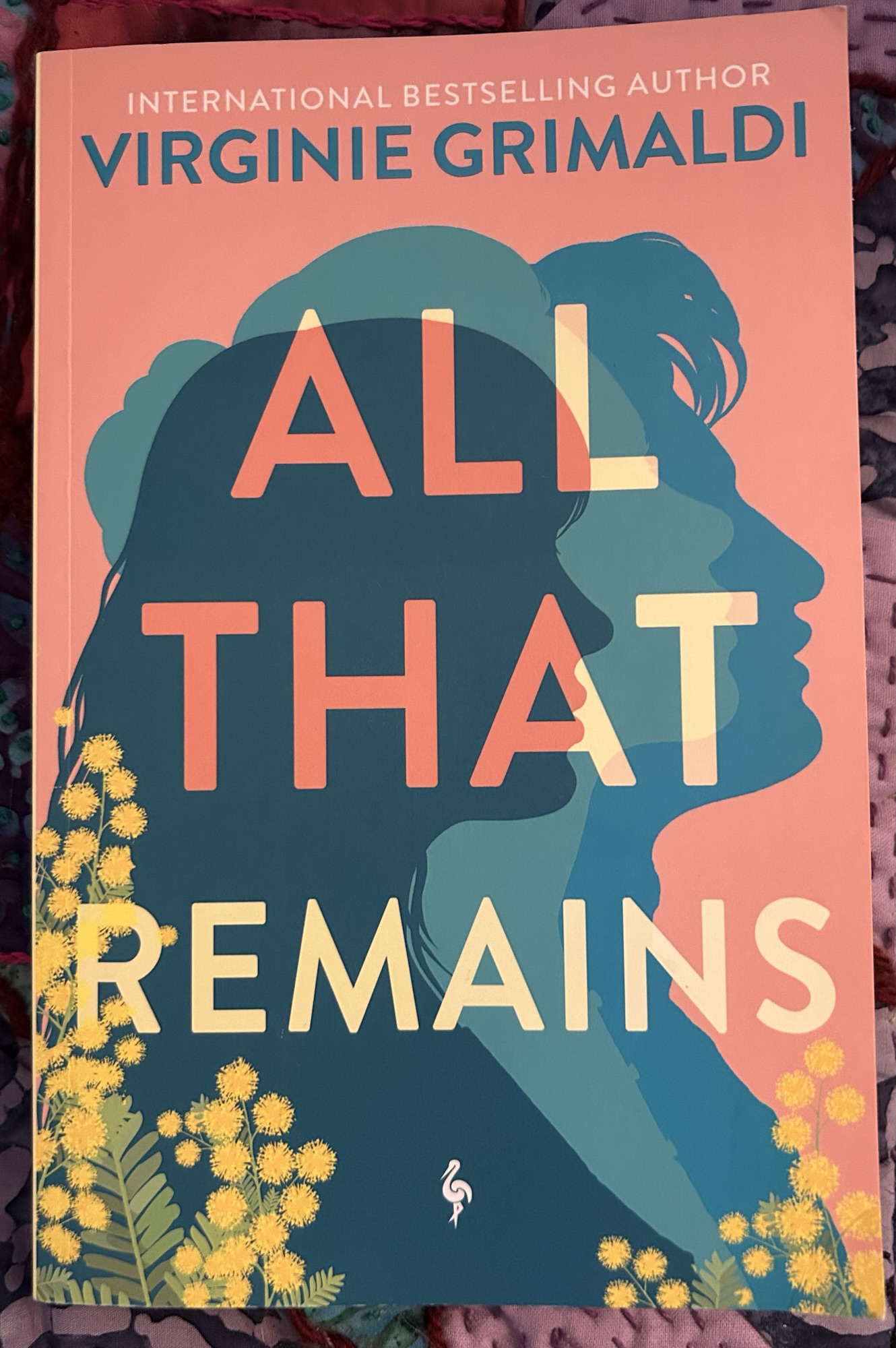
“Life is to be found on the other side of that gate.” (Virginie Grimaldi, All That Remains)

It was Claire at Word by Word whose blog post last year alerted me to All That Remains by Virginie Grimaldi (2022, transl. Hildegarde Serle 2025). This story of inter-generational friendship was so appealing, and it turned out to be a lovely read for Women in Translation Month 2026.

Jeanne’s husband of many years has died, leaving her spiralling through the disorientation of immense grief. Each day she visits him:

“That was her husband’s habit, cluttering up his stories with superfluous details. How often had she switched off while he was talking to her? Jeanne’s parents had taught her only to open her mouth when it was strictly necessary. And here she was, at seventy-four, telling a gravestone about the TV programme on the dangers of sugar that she’d watched yesterday.”

At the bakery near her house, eighteen-year-old Théo is an apprentice baker. Each chapter is headed with one of three character’s names and told from their point of view. I loved Théo’s voice, so bolshy and insecure. He goes to a karate class each week and tries to partner with younger boy Sam, who is still better than him at the martial art. One day his teacher takes charge of the pairs:

“Laurent, a guy who’s two heads taller than me and has shoulders I could do the splits on. Only the fenders are missing to mistake him for a 4×4. He’s not a man, he’s scaffolding. A wardrobe with feet and arms. But a large wardrobe, right, the sort Beyoncé would have.”

When Jeanne realises she needs to do something drastic or she risks losing the home she had with Pierre, she takes in lodgers. And so she ends up sharing her apartment with Théo and thirty-three year-old Iris.

At first Iris and Théo butt against each other almost like siblings:

“I left home at the same time as Theo, who is always as pleasant as a pap smear. From the very top step, I sensed I wasn’t going to reach the ground floor in a vertical position. My foot slipped without asking my permission, the rest of my body didn’t have time to register the information, it fell limply.”

But gradually the three of them feel-out how to live together. At first it is logistical adaptation, around meal times and use of the bathroom. Théo takes on Jeanne’s lack of housekeeping:  

“I’ve seen some right messes, but on this scale, never. Every time I open a drawer, it looks like burglars have rifled through it. You’d never think it, entering the apartment … But don’t open the cupboard, unless you want your brow busted by a Breton bol.”

While Iris overcomes her apathy to Boudine, Jeanne’s dog.

Then slowly, they start to become friends. Watching the relationships grow between the three is undoubtedly feel-good, without being sentimental. All have secrets: Jeanne is seeing a psychic and receiving strange letters; Théo has left the children’s home where he largely grew up but has found his troubled past less easy to shake; and Iris is skulking around the city, working as a carer although she loved her vocation as a physiotherapist – why?

Together they learn all that friendship can offer, from the most surprising people in the most unlooked-for places. I found it genuinely moving, a comfort read without being saccharine or fantastical. A major contrivance occurs at the end but by that time I was so won over I couldn’t have cared less.  

“My mother always preferred people with flaws to those without. She’d often say that two smooth surfaces slide over each other, whereas two dented surfaces catch on to each other and become stronger together. She wasn’t always wrong.”

A little gem.

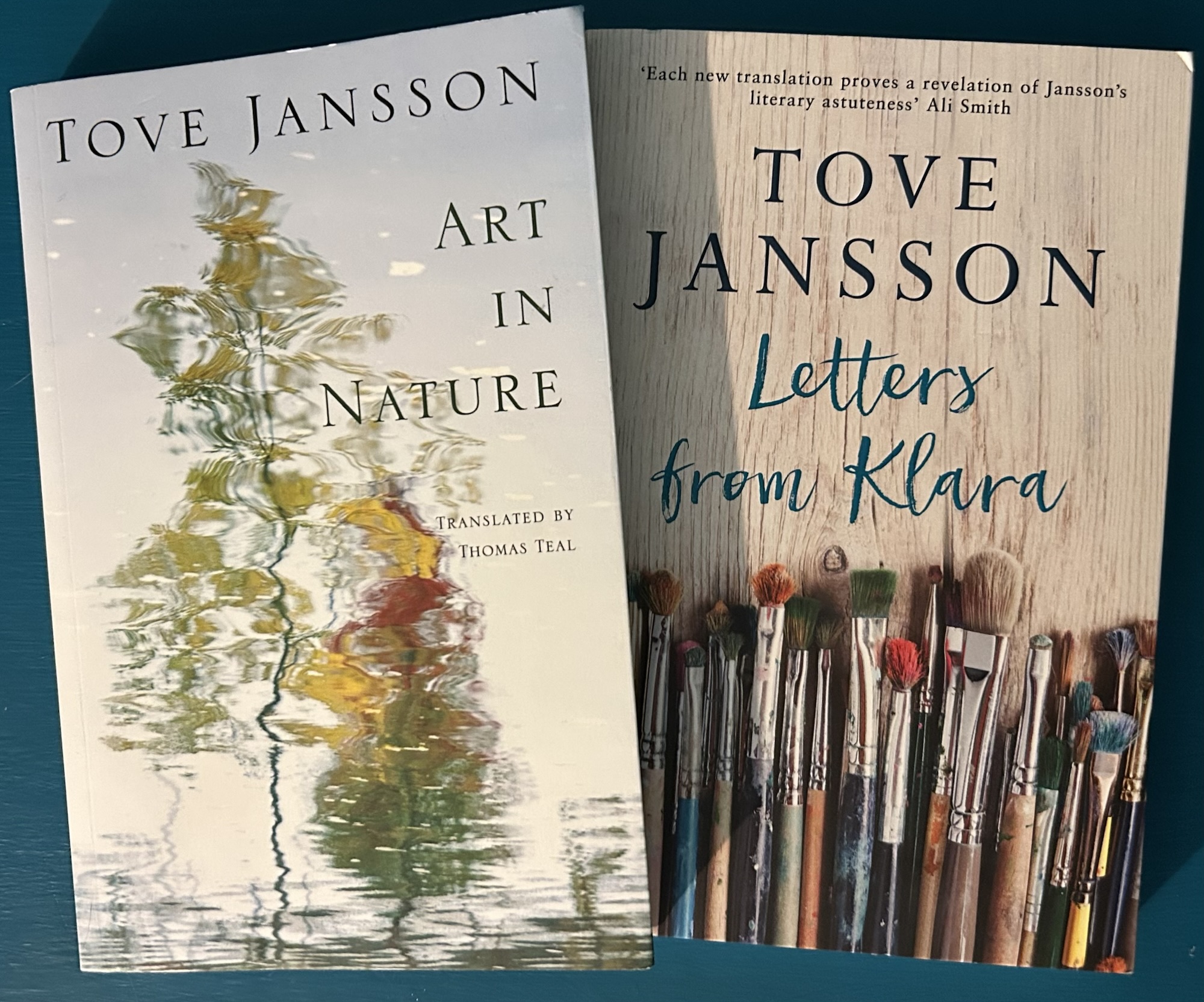
“It’s the mystery that’s important, somehow very important.” (Tove Jansson, Art in Nature)

Those of you who follow Paula’s Book Jotter blog will know what a huge fan she is of Finnish author Tove Jansson, creating the wonderful resource Tove Trove. When Paula pointed out 9 August was Tove Jansson Day, I resolved to read the two collections of short stories I had in the TBR, also perfect for Women in Translation Month. I read one, then promptly forgot all about today until this morning, so apologies in advance for this hastily written post!

Art in Nature (1978, transl. Thomas Teal 2012) and Letters From Klara (1991, transl. Thomas Teal 2017) are both published by Sort Of Books, who have done such a brilliant job of making Jansson’s work readily available in English translation.

I’m going to pick one story from each, as I find writing about short story collections really difficult.

Art in Nature was the collection I preferred, with some truly unnerving psychological studies within it. However, I’ll choose one of the lighter stories, White Lady.

Three women in their sixties are dressed up and slightly tipsy, ready for a good time at a restaurant on an islet. Ellinor is a writer who “loved similes” and is tempting to read as a self-portrait; nostalgic Regina and troubled, girlish May make up the threesome.

“They were going to eat and drink well, and for this one evening they had left everything behind and were going to enjoy themselves in a new, unusual place, an island from the turn of the century, a building that was almost old when they were children.

‘That’s what’s so exciting,’ Regina said. ‘Having it all ahead of us. I’ll have a White Lady. I’m wearing a white dress, so I want a White Lady.

‘Is that strong?’ May asked. ‘I’ll have the same.’”

Over just fourteen pages, Jansson conveys so much. The women are fully realised as individuals. Their determination to have a good time is underpinned by grief and pain, yet is resilient more than sad. Their coming to terms with aging and lost time is sensitively portrayed. It has moments of humour and moments of great pathos.

“The young people were not dancing. Why should they? They could afford not to. Wherever they went, their own music followed them.”

In Letters from Klara, the titular story opens the collection in great style. Klara is spiky, affectionate, clear-sighted, uncompromising. As she explains to her solicitor, she has decided to change her will to give an annuity to a retirement home:

“The idea –  as I’m sure you understand, cunning as you are – is that, with this income in mind, the home will try and keep me alive as long as possible. I will be their mascot and will be allowed certain obvious liberties. Whatever is left when I die will be distributed exactly as specified earlier.

I will only add that I am at the moment in excellent health and hope you are the same.”

But as she explains to her sad friend Cecilia, clearing out belongings towards the end of life isn’t so easy:

“The little treasures you try to give young people just make them uncomfortable – more and more polite and more and more uncomfortable. Have you noticed that?

You know what? There’s now a flea market on Sandvik Square every Sat and Sun. What do you think of that? People can wander around and find stuff for themselves and no one has to feel ill at ease or grateful. Brilliant idea.”

I could have read a whole book of Klara’s letters, she was such a forceful joy. Alas, I had to make do with just ten pages.

I highly recommend both these collections. Jansson has a perfect understanding of the short story form and doesn’t waste a word. They are precisely written yet never feel lacking; each is story is fully realised in itself. Concision is never at the expense of depth or insight.

To end, I didn’t know the Moomins had a YouTube channel! As well as their own adventures they’ve uploaded this lovely clip about the tradition of Tove’s birthday flower wreath:

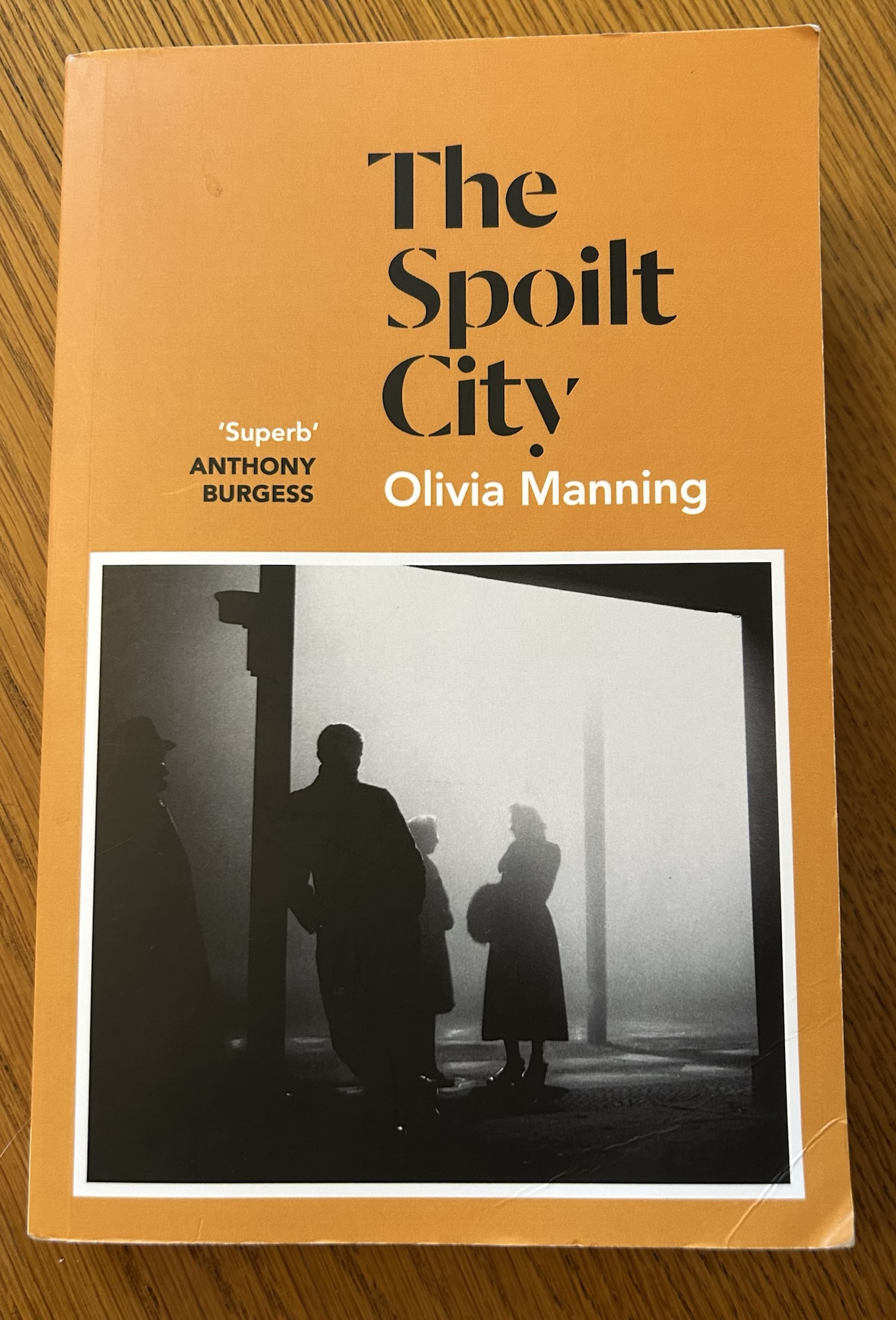
“Here they were, wrecked together on the edge of Europe as on an island and she was learning to keep her thoughts to herself.” (The Spoilt City, Olivia Manning)

It was a conversation with Marcie in the comments of Jacqui’s Levant Trilogy post which led to us doing a buddy read for all three volumes of Olivia Manning’s Balkan Trilogy this year. We started with The Great Fortune (1960) in June, and now onto the second instalment, The Spoilt City (1962).

It took me a while to get into The Great Fortune, but by the end I was whizzing through and couldn’t wait to start The Spoilt City. I’m clearly in the rhythm of Manning’s writing now because I sank right in and absolutely loved this second volume.

(What I decided I didn’t love was the omnibus edition I started with, so I’ve bought these Windmill Editions now and I’m much happier).

The city is Bucharest in 1940, and we follow still-fairly-recently married Guy and Harriet Pringle as the physical and social environment they are used to disintegrates around them.

“On the pavement the Guardist youths with their banners and pamphlets, were still trying to rouse revolt. Although a sense of revolt agitated the nerves like an electric storm that would not break, the city was lethargic, the palace dormant, its white blinds drawn down against the tedium of the afternoon.”

This volume is increasingly tense, the Nazi threat growing ever-closer. Guy is still teaching English at the university, but both students and the staff group are rapidly dwindling.

“With uncomplaining enthusiasm, Guy did much more than was expected of him; but he was not imposed upon. He did what he wanted to do and did it, Harriet believed, to keep reality at bay.”

Guy’s boss Inchcape is also determined to keep the Department open, even as dangers grow. This volume is more emotionally affecting than the first, I found this particularly true in a scene with the older single women of the department being forced to leave for their own safety, as well as Inchcape having to face his vulnerabilities to a shocking extent.

This forms the shifting and stressful background to the Pringles’ early marriage. Both Harriet and Guy have to acknowledge their profound differences in how they approach life and see things:

“It was probably significant that he was physically short-sighted. He could not recognise people until almost upon them. Their faces were like so many buns. good-natured buns, he would have said, but Harriet did not agree. She saw them in detail and did not like them any the better for it.”

“He saw her muddled and lost in anarchy and a childish mysticism.”

Guy’s belief in communism gives him more certainty, a grounding as the ground constantly shifts beneath them. Still, their marriage seems underpinned by a great deal of love for each other, although the reader is not privy to any declarations.

My favourite character Yakimov is still racketing around, trying to sell his beloved Hispano-Suiza car even as no-one has money for fuel. He is still living with the Pringles and Harriet despairs.

“If she wanted to get rid of him, she would have to pack his bags herself and lock him out. And if she did that, he would probably sit on the doorstep until Guy brought him back in again.”

Yaki behaves appallingly in the first part of the novel, before redeeming himself beautifully at the end, making his portrayal one of the most comedic, disturbing and complex in The Spoilt City. Apparently based on Julian Maclaren-Ross, I really should learn more about this Fitzrovian dandy poet. Anthony Powell based X Trapnel on him in A Dance to the Music of Time, and he certainly seems a character…

What struck me most in this volume, apart from the evocation of physically crumbling environs, was the ambivalence, or perhaps resignation, of most of the people Harriet interacts with. As long as they are safe and their lives continue in a way that works for them, they don’t seem to particularly care who is in charge. This made me realise the oppositional Second World War narratives I’ve taken for granted until now; I am used to films and books where people are firmly on the side of the Allies or the Axis powers, not indifferent between the two.

This is brought into sharp focus by Harriet’s English friend, Bella:

“Her skin apricot, her hair bleached by the sun, Bella was looking extremely handsome and seemed almost intoxicated by the night’s happenings.

‘How wonderful to have a strong man in power!’ she said. ‘Everyone is saying that Romania will regain her territory.’

‘What makes them think that?’

‘Because Antonescu is a real dictator. He knows how to deal with Hitler and Musso. He’s one of them. I don’t mind betting, within three months, this country will be on its feet again.’”

Later they meet again, Bella delighting in all she can buy as prices tumble, when they run into each other under a newly erected swastika flag:

“Elated by her rising fortune, she looked up and smiled at the flag and the clear pale sky beyond it. ‘I love this time of year,’ she said. ‘so delicious after the fug of summer. It makes one feel so alive.’

She seemed aglitter with life, almost dancing in her new green lizard skin shoes.”

Astonishingly, it is only Guy who overtly acknowledges what is behind the flag, the only one who says “I couldn’t stand it. I kept thinking of the concentration camps.”

Manning leaves spaces in her narrative so we assume Harriet is of a similar mind, although her primary worry is for the safety of Guy, vulnerable under the new regime because of his communist beliefs and willingness to teach Jewish students.

The Pringles are also at risk as they still have sweet Sacha Drucker in their flat, and early on we know they have been betrayed and are likely to be raided…

“Truth is a luxury. We can only afford it now and then.”

The Spoilt City is a novel which conveys the physical and human devastation wreaked by war for those not directly caught in conflict. It is deeply moving without being remotely sentimental, and feels entirely believable. I found myself completely caught up in the Pringles’ lives and even (shock horror!) warming to Guy. I’m impatient to read volume three, Friends and Heroes.

I wound up googling Hispano-Suiza cars as Yaki describes his so lovingly. I can’t drive and I’m entirely uninterested in cars, but even I can see this is a lovely machine: