Novella a Day in May 2022 No.20

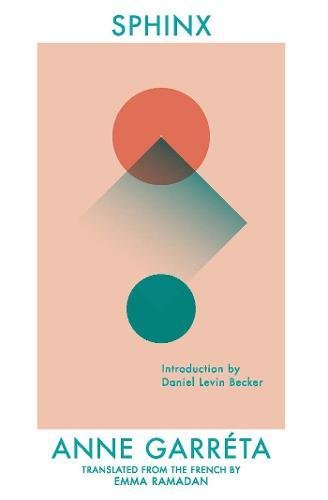
Sphinx – Anne Garréta (2015, trans.Emma Ramadan 2015) 121 pages

Sphinx is a novella which details a young protagonist falling in love with A***. Anne Garréta is a member of the OuLiPo and the particular constraint that she writes to in Sphinx is for both for lover and beloved to be genderless.

The narrator is taken to a club on Place Pigalle where they immediately fall for the charms of the dancer A***. Garréta evokes a seedy and glamorous nightlife that is both enticing and repellent:

“The wheezing of the ceiling fan, the rumble from the nearby stage, the sight of the red velvet sofa covered in holes, burned through buy cigarettes, and the feeling of exile between blue walls defiled with the imprints of dirty hands, brought me all the closer to that single, splenetic feeling so difficult to define: melancholia. I relished it to the point of drunkenness.”

Sphinx is a love story which I felt engages the mind rather than the emotions of the reader. This is because the narrator – although currently working as a DJ – is an academic and seems to approach documenting affairs of the heart in the same way as they would writing a research paper.

“I can’t define A*** as being anything other than both frivolous and serious, residing in the subtle dimension of presence without insistence.”

This includes some overblown, tortured sentences at times:

“Is there anything more vertiginous than gustative reminiscence?”

In her fascinating translators note at the end of the novella, Emma Ramadan explains how the constraints around gender (which is much more demanding for a French writer than an English-language writer) means that this tone needs to be adopted, and then:

“It becomes part of the narrator’s identity – he or she is a rather pretentious bourgeois(e) scholar who does not shy away from praising his or her own intelligence”

So although not overt, there is a thread of humour running through Sphinx, whereby we are not supposed to take the narrator nearly as seriously as they take themselves. And it is a novella that is definitely all about the narrator, not about A***. While limiting the characterisation of A*** serves the constraints around which Sphinx is written, it also succeeds in capturing the self-obsession that can be projected onto a supposed loved one.

“Perhaps I had only ever delighted in my own suffering, which I considered the purification of passions that, deep down I judged as absurd.”

Although Sphinx made me think more than it made me feel, and generally I hope for a reading experience that does both, I did find myself drawn into the narrator’s story, in spite of their distancing voice. I also thought the night-time scene was captured beautifully.

“I was about to turn 23, and for the three years the night crowd had passed before my eyes, I had seen reputations be made and dismantled. I had seen temporary passions transport places and individuals to the apex, and then, burning what they had once adored, those notorious night owls who make up the club scene would abandon them for no apparent reason for other idols destined for glory just as brief.”

Novella a Day in May 2022 No.14

Madame Verona Comes Down the Hill – Dimitri Verhulst (2006 trans. David Colmer 2009) 145 pages

Madame Verona Comes Down the Hill has been on my radar since Kate’s review four years ago – I’m slow but I get there in the end, hopefully 😉

It’s a fable, but a recognisably real one. The titular beauty lives with her husband “in a house that could have been lifted from a biscuit tin” on top of a hill on the outskirts of the remote town of Oucwègne, where there has only been one female baby in recent generations.

When her husband dies, the townsfolk – including the vet who doubles as the town doctor, the man who pays his local shop tab in full after decades, overseen by a cow who is mayor – expect Madame Verona to leave. Instead she stays, mourning her husband, waiting out her time and growing old with her memories.

“the trees had their rings; Madame Verona did not begrudge her skin its wrinkles, the signature of all her days.”

Until one snowy day, she burns the last of the logs her husband cut for her and descends the hill into the town, knowing she will not have the strength to return.

“She is counting on strength of will to die today”

Madame Verona Comes Down the Hill has its share of whimsy but it also has a spikiness to it and it isn’t remotely sentimental. It’s about the different ways we live alongside grief, and how a life with a lot of sadness does not mean a life of misery.

“The one characteristic element with which she would summarise her eighty-two years of existence was that dogs had always sought out her company.”

Novella a Day in May 2022 No.13

Love – Hanne Ørstavik (1997, trans. Martin Aitken, 2018) 136 pages

It’s been six years since I read Hanne Ørstavik’s powerful novella The Blue Room and I had high expectations when I picked up Love from one of my favourite publishers AndOtherStories.

Like The Blue Room, Love features a dysfunctional parent/child relationship, although not one as determinedly destructive as Johanne and her mother in The Blue Room. Whereas that was suffocating and controlling, Jon and his mother Vibeke are almost at the opposite extreme with a child at risk of neglect.

I don’t have kids but I would say that having your eight year-old son roam the snowy streets in northern Norway alone in the depths of the night with no gloves on, while you prevaricate over whether to sleep with a man who picked you up at a funfair, is probably not the best parenting style…

Jon is waiting for his mother Vibeke to return from work. Tomorrow is his birthday and he believes she is going to bake him a cake.

“And then she comes, and he recognises the sound in an instant; he hears it with his tummy, it’s my tummy that remembers the sound, not me, he thinks to himself.”

Although in the same house and having dinner together, they’re not overly communicative. Vibeke has a shower and makes herself look good should she bump into her attractive work colleague in town. Jon leaves the house, returns again, then leaves again, with Vibeke only vaguely conscious of his whereabouts.

The town is far north and it has been snowing. Jon wanders the dark streets:

“Sounds become weightless in the cold. Everything does. As if he were a bubble of air himself, ready at any moment to float into the sky and vanish into the firmament.”

Meanwhile Vibeke has found the library closed, so she wanders round the newly arrived fairground. An attractive fairground worker picks her up and takes her back to his caravan.

“She feels like they share something now. It feels like pushing a boat from the shore, the moment the boat comes free of the sand and floats, floats on the water.”

We know Vibeke had Jon when she was young and that it has been the two of them for a while. However, Vibeke seems pretty oblivious not only to the safety of her son but to the feelings and motivations of other people. Despite being attracted to one another, the situation between Vibeke and the man never really takes off. She keeps holding back because she thinks that talking too much has hampered previous relationships.

“My mistake is to think too much when I talk, it slows everything down, repartee just isn’t there for me.”

However, there comes a point where you do actually have to communicate in some way. When they go to a bar and he chats to the barmaid, then disappears back inside leaving Vibeke in the car outside, she thinks:

“Maybe he’s working on keeping a hold on himself, and the control he thereby achieves is something he needs to cling to.”

Um, no. He’s just lost interest and moved onto the next pretty and more available girl.

Meanwhile Jon has spent some time with a schoolfriend (whose parents are happy to have him leave and wander back home alone at midnight) and ends up getting into a stranger’s car, which at least offsets hypothermia for a while.

Although remarkably self-possessed and bright, Jon is clearly suffering from his mother’s lack of care. He is trying to stop himself blinking and people comment it.

“He wishes no one noticed and that what was wrong with him was under his clothes or inside him.”

Throughout, he clings to the idea that Vibeke is at home baking him a birthday cake which I found completely heart-breaking.

The narrative of Love alternates between Vibeke and Jon almost paragraph by paragraph. This isn’t nearly as confusing as it sounds, it works well as the two of them have evenings that echo and reflect each other in surprising ways. They also both put themselves in risky situations and the story is tense and very believable. It’s a novella that creeps under your skin and stays there.

“She wishes she could read all the time, sitting in bed with the duvet pulled up, with coffee, lots of cigarettes and a warm nightdress on.” 

Novella a Day in May 2022 No.12

Sweet Days of Discipline – Fleur Jaeggy (1989, trans. Tim Parks, 1991) 101 pages

Sweet Days of Discipline is told in a straightforward, clear style, as is evident from its opening line:

“At fourteen I was a boarder at a school in the Appenzell.”

The narrator is a loner at her 1950’s boarding school, full of the confusing, contradictory desires of someone on the brink of adulthood.

“I ate an apple and walked. I was looking for solitude, and perhaps the absolute. But I envied the world.”

She has to sleep in the part of the school for younger girls as there isn’t room for her. Her mother is in Brazil, her father is disinterested. She gets up at 5am every day to take long solitary walks. Then Frédérique, a banker’s daughter, arrives into this isolated and lonely life. Frédérique has a remote, unknowable quality. She is a nihilist and the narrator vows to dominate her: 

“I still thought that to get something you had to go straight for your goal, whereas it’s only distractions, uncertainty, distance that bring us closer to our targets, and then it is the target that strikes us.”

The story isn’t overtly sexual and the sado-masochism is burgeoning, implicit rather than explicit. The narrator is scarcely aware of the sexual drives that surround her “passione” for Frédérique. It’s a psychologically complex and unarticulated morass of feeling, and it stays that way as she looks back from adulthood.

“Even now, I can’t bring myself to say I was in love with Frédérique, it’s such an easy thing to say.”

Frédérique remains mysterious and unknowable. She has a quality which sets her apart from her peers, which is both compelling and disturbing.

“She already knew everything, from the generations that came before her. She had something the others didn’t have; all I could do was justify her talent as a gift passed on from the dead.”

Although the narrator is looking back, Sweet Days of Discipline is not remotely sentimental. It has a brittle clarity which means that although very little happens, reading it is an immersive experience.

“And perhaps they were the best years, I thought. Those years of discipline. There was a kind of elation, faint but constant throughout all those years of discipline, the sweet days of discipline.”

Novella a Day in May 2022 No.3

Maigret Mystified – Georges Simenon (1932, trans. Jean Stewart 1964) 139 pages

This is the first Maigret I’ve read, despite Simenon being such a prolific writer and despite my love of golden age detective fiction. I picked it up in a pleasingly battered old green Penguin edition and I enjoyed it greatly. I’m sure it won’t be the last time I accompany the insightful French detective in his ruminations 😊

This may well be the shortest post I ever write, given that it’s about a novella and a mystery, so I want to avoid spoilers!

Maigret is called to the scene of a murder in an office of a pharmaceutical company, Doctor Rivière’s Serums. Monsieur Couchet, the owner, has been shot dead. The mystifying element is that he was also robbed of 360,000 francs, but his chair was jammed against the safe. So did he face his murderous thief? Or did he not know of the theft? Did the same person carry out both crimes?

As the office is adjacent to a block of flats, Maigret must interview possible witnesses from the various homes in Place des Vosges.

Image from Wiki Commons

There is the concierge who called the police; Madame Martin who seems to torture her husbands with their failure to live up to her expectations (the first of whom was the murdered man, their son now self-medicates with ether and lives close by); Mathilde who eavesdrops on everyone; new parents the de Sant-Marcs…

There are also the lovers of the victim to contend with: his second wife and his girlfriend Nine, a cabaret dancer, the portrayal of whom is pleasingly non-judgemental.

I suspect this isn’t the greatest Maigret offering, but it is a quick, entertaining and atmospheric read. I also found it a welcome antidote to the overly convoluted plot lines of many contemporary detective dramas – much as I enjoy those, it was a nice change to just see Maigret get on with it, in no time at all.

“ ‘You old rascal, Couchet!’

The words had sprung to his lips as if Couchet had been an old friend. And he felt this impression so strongly that he could not realise he had only seen him dead.”

A previous English title used for this mystery was The Shadow in the Courtyard, which to me is a much better. After all, at 139 pages, Maigret isn’t mystified for long…

“It was ten o’clock at night. The iron gates of the garden were shut, the Place des Vosges deserted, with gleaming car tracks on the asphalt and the unbroken murmur of the fountains, the leafless trees and the monotonous outline of identical roofs silhouetted against the sky.”

To end, this year sees a cinematic outing for Maigret:

Novella a Day in May 2022 No.2

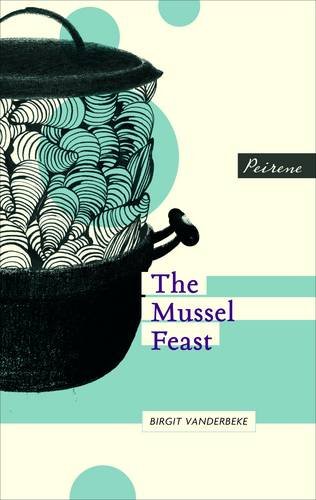
The Mussel Feast – Birgit Vanderbeke (1990 trans. Jamie Bulloch 2013 Peirene) 105 pages

Trigger warning: discussion of domestic violence

Peirene Press are one of my favourite publishers, with a focus on European contemporary novellas which so far have given me some wonderful reading experiences. The Mussel Feast is no exception, as it carefully and precisely builds a picture of a family tyrannised by the father, over the course of one evening.

Narrated by the teenage daughter of the family as she prepares the titular celebratory meal alongside her mother and brother, they await the return of their father who has bagged a promotion. The daughter doesn’t much like mussels, but it is how the family traditionally celebrates.

“Anyway, the noise came from the pot and as I glanced over I couldn’t help looking at the clock, too: it said three minutes past six. And at that moment my mood changed abruptly. I stared at the noisy pot […] it was a distinctly strange noise, which made me feel creepy; we were already twitchy and nervous, and now there was this noise.”

The father is late back, and the narrator reflects on what is happening that evening and on what has gone before:

“He couldn’t stand my mother’s knackered face, and so she switched to her after-work face, which she would paint on quickly in the bathroom at half-past five, before my father came home. But this after-work face only lasted for an hour and needed reapplying.”

Everyone in the family remains unnamed, fitting with thesense that they are all trying to fulfil a role for the father and that who they actually are is of secondary importance:

“We all had to switch for my father, to become a proper family as he called it, because he hadn’t had a family, but he had developed the most detailed notion of what a proper family should be like, and he could be extremely sensitive if you undermined these notions.”

The father is a deeply inadequate man, ashamed of his past in the GDR, and trying to convince his family of his superiority. His children don’t conform to gender stereotypes which annoys him. His wife isn’t pretty enough by his standards. The fact that he squanders their money and is fairly useless all round, is by-the-by:

“My mother earned money and did menial work, boiling the nappies in a huge pot, and cooking and shopping and children, all of which drove him nuts; my father was not cut out for such trivial jobs , and back then we would have frozen if my mother hadn’t lugged sacks of coal.”

By the time the following passage came I already had a clear idea of what was going on in this family, but I still found the matter-of-fact tone in describing such abuse truly shocking:

“He was extremely assured in his taste; he didn’t like his taste being questioned. I couldn’t bear the wall unit, as I told them that evening, due to my head having been smashed against it on a number of occasions.”

The tension in the novella builds expertly as, like the family, we wait for the father to return. The ending is ambiguous, but we know there are huge ramifications, because at the start of the novella the narrator tells us:

“what came in the wake of our abortive feast was so monumental that none of us have got over it yet”

Birgit Vanderbeke wrote this just before the fall of the Berlin Wall because “I wanted to understand how revolutions start.” In The Mussel Feast, it is a long time coming and also a matter of a few moments:

“Suddenly I no longer wanted him to come home, […] Mum looked at me, not as horrified as I’d expected, but with her head to one side, and then she smiled and said, well, we’ll see, and she didn’t sound as if she’d find it surprising or even terrible if he didn’t come home.”

The Mussel Feast has become a set text in Germany and deservedly so – the domestic setting is completely compelling but also has wider resonance which it carries lightly, the metaphorical never undermining the portrayal of abuse.

Novella a Day in May 2022 No.1

It’s always with some trepidation that I start a Novella a Day in May project. Last year I couldn’t face it at all (pandemic testing my resilience, work pressure, cat deaths taking a toll – even so I know I’ve been very lucky). But I seem to be able to read more now, so fingers crossed…

Also, I never run NADIM as an event because I never thought anyone else would want to undertake such a task, but I’m delighted that this year I will be joined by Simon at Stuck in a Book! So do join us for lots of novella love 😊

Away we go!

Without Blood – Alessandro Baricco (2002, trans. Ann Goldstein 2004) 87 pages

Without Blood is a short, sharp shock. It opens with a brutal, bloody and deadly attack on Nina’s family when she is a small child.

Men arrive at the remote farmhouse where she lives with her father and brother. Her father helps her to hide  in the cellar, but she hears them accuse him of the torture of prisoners during the (unnamed) war.

“Nina closed her eyes. She flattened herself against the blanket, and curled up even tighter, pulling her knees to her chest. She liked to be in that position. She felt the earth, cool, under her side, protecting her – it would not betray her. And she felt her own curled up body, folded around itself like a shell.”

Her brother fires a gun at the men and is killed. One of the soldiers, a young man called Tito, sees Nina under the trapdoor and keeps quiet. Nina is taken in by a local man who then bets her away at cards when she is a teenager. Adult Nina devotes herself to revenging the death of her family.

Barrico raises a lot of big questions in this novella but wisely doesn’t attempt to find answers. The nature and purpose of war; who is guilty and to what extent; the brutalisation of humans; the justification and consequences of violence; revenge versus redemption…

“There were a lot of things we had to destroy in order to build what we wanted, there was no other way, we had to be able to suffer and to inflict suffering – whoever could endure more pain would win, you cannot dream of a better world and think it will be delivered just because you ask for it.”

When Nina finds Tito fifty-two years later, it is not easy to predict what will happen. They have both been irrevocably changed by the events of that night, events which have overshadowed the rest of their lives and bound them together throughout their separation.

“The man thought the way she spoke was strange. As if it was a gesture she wasn’t used to.”

It is a quick read in length but Without Blood invites longer consideration.

Novella a Day in May 2019 #23

The Year of the Hare – Arto Paasilinna (1975, trans. Herbert Lomas 1995) 135 pages

Following on from The Cat yesterday, I thought I’d look at another novella about a relationship with an animal today; the international bestseller about a man who leaves his life behind after injuring a wild hare.

Vatanen is a journalist deeply unhappy with his career, metropolitan life, and his marriage.

“Their flat had become an extravagant farrago of shallow and meretricious interior-decoration tips from women’s magazines. A pseudo-radicalism governed the design, with huge posters and clumsy modularised furniture. It was difficult to inhabit the rooms without injury; all items were at odds. The home was distinctly reminiscent of Vatanen’s marriage.”

The novel opens with him in a car with his photographer, hitting a hare with their car. The hare limps off and Vatanen follows it. He splints its leg and takes care of it, deciding never to return to his life.

What follows is a series of episodes in which Vanaten meets various eccentric characters as he travels further north in Finland, having adventures and finding the presence of the hare promotes honest and open conversations with people.

“If it’s difficult to teach an old dog to sit, as they say, then it’s even more difficult to teach an old Lapland roue to swim.”

The Year of the Hare is picaresque, and the emphasis is on the escapades rather than the characters. I didn’t feel I really knew Vananten any better by the end of the novella, but it had been mostly fun spending time with him and the hare.

I say mostly, because there were a couple of episodes I had to skip. These involved cruelty to animals. There was one particularly horrible incident where Vatanen tortures a raven, and there’s an extended bear hunt towards the end. But skipping over these parts still left a lot to enjoy, and the sense of Finland and its landscape is beautifully evoked.

“When, that evening, Vatanen slowly ski’d back from Vittumainen Ghyll to Laahkima Gorge, accompanied by his hare, he no longer thought about Kaartinen’s strange world. There was a half-moon, and the stars were glimmering faintly in the frozen evening. He had his own world, this one, and it was fine to be here, living alone in one’s own way. The hare ambled silently along the trail ahead of the skier, like a pathfinder. Vatanen sang to it.”

A slightly bonkers, occasionally surreal tale about following your own path and keeping an open mind as to who might accompany you part of the way.

The Year of the Hare was made into a film two years after publication, but I can’t find a trailer for that Finnish version. Its been a bestseller in France, so here is a trailer for the French film adaptation from 2006. Christophe Lambert is immediately too likeable as Vatanen but the atmosphere and scenery look spot-on:

Novella a Day in May 2019 #22

The Cat – Colette (1933, trans. Antonia White, 1953) 96 pages

Back in January when I wasn’t sure I’d manage NADIM this year (I’m still not sure – 9 posts to go!) I did a week of novellas by Colette. I loved immersing myself in her writing that week so I couldn’t resist including another of her novellas this month.

The Cat is familiar Colette territory: a young, slightly feckless couple failing to communicate. The difference is that there are three beings in this marriage: Alain, Camille, and Alain’s Russian Blue cat Saha.

Alain is from old money that is rapidly dwindling; Camille is new money that is much more abundant.

“Alain listened to her, not bored, but not indulgent either. He had known her for several years and classified her as a typical modern girl. He knew the way she drove a car, a little to fast and a little too well; her eye alert and her scarlet mouth always ready to swear violently at a taxi driver. He knew that she lied unblushingly”

They desire one another but they don’t communicate in any meaningful way. Alain almost seems to despise Camille at times – finding her tacky and invasive – unlike his pedigree cat, whom he adores. The three of them move temporarily to a friend’s flat while their home is being refurbished:

“He was incessantly and increasingly aware of his repugnance at the idea of making a place for this young woman, this outsider, in his own home. He nursed this resentment and fed it with secret soliloquies and the sullen contemplation of their new dwelling.”

For Camille, the resentments and disappointments which begin to build in their marriage become focussed towards Saha. As she points out, it is worse than another woman. Saha isn’t a competitor, but Alain loves her unconditionally and has an easy sensual relationship with his cat, whereas his sexual relationship with Camille is complicated by his feelings of contempt.

“As soon as he turned out the light, the cat began to trample delicately on her friend’s chest. Each time she pressed down her feet, one single claw pierced the silk of the pyjamas, catching the skin just enough for Alain to feel an uneasy pleasure.”

Spoiler alert: I must admit I did what I never do and skipped to the end of this story before reading very far, to check the cat wasn’t killed. I couldn’t face a story where that happened. But thankfully Colette is more subtle than that. Saha doesn’t die, which means the failures in the human relationship occur not in the rage of grief, but in something more subdued and sadder. Saha is a focus for the confused, antagonistic feelings the young couple have for one another. The cat brings these feelings to the surface more quickly than perhaps they would have done without her, but there is no doubt they would have occurred at some point.

You don’t need to be a cat lover to enjoy this story. It is a study of a young, naïve, selfish couple and the unthinking damage they do to one another, while professing their love. This being Colette, alongside the psychological insights, there are beautiful descriptions of the natural world:

“High in the sky a hazy moon held court, looking larger than usual through the mist of the first warm days. A single tree – a poplar with newly opened glossy leaves – caught the moonlight and trickled with as many sparkles as a waterfall. A silver shadow leapt out of a clump of bushes and glided like a fish against Alain’s ankles.

‘Ah! There you are Saha! I was looking for you. Why didn’t you appear at table tonight?’”

To end, here’s the lady herself with a couple of her beloved pets:

Novella a Day in May 2019 #21

The Ice Palace – Tarjei Vesaas (1963, trans. Elizabeth Rokkan 1966) 176 pages

This novella is like the titular structure: impressive, delicate, beautiful and disturbing. It’s impossible to review without giving away plot points, so apologies in advance and do skip to just the quotes if you don’t want to know but still want an idea of the gorgeous writing!

The Ice Palace tells the story of two eleven-year-old girls, Siss and Unn. Siss is a leader among her peers, newcomer Unn is quiet and shy. She stands alone at break times, yet the popular Siss finds herself drawn to Unn.

The girls have a deep unspoken bond that they don’t understand themselves. The first time Siss goes to Unn’s house after school, they have an almost spiritual experience gazing into a mirror together. Unn wants to tell Siss something, but Siss feels overwhelmed and leaves, thinking:

“You can tell me more another time. Whenever you like another time. We couldn’t have gone further this evening. It had been a great deal as it was. But if they were to go further it would make things impossible. Home again as quickly as she could. Otherwise they might get involved in something that would shatter it for all of them. Instead they had shone into each other’s eyes.”

The next day, Unn feels too embarrassed to see Siss again, and decides to visit the local Ice Palace, a frozen waterfall.

“She lay flat on the ice, not yet feeling the cold. Her slim body was a shadow with distorted human form down on the bottom.

Then she changed her position on the shining glass mirror. The delicate bracken still stood in the block of ice in a blaze of light.”

The natural descriptions are stunning, but never overwhelm the narrative:

“Unn looked down into an enchanted world of small pinnacles, gables, frosted domes, soft curves and confused tracery. All of it was ice, and the water spurted between, building it up continually. Branches of the waterfall had been diverted and rushed into new channels, creating new forms. Everything shone. The sun had not yet come, but it shone ice-blue and green of itself, and deathly cold.”

Unn goes missing, and it doesn’t take much for the villagers to work out where she might be. Finding her proves impossible though:

“The men continued to search. They had life and light on their side. They were visiting an unknown fortress, and it looked like the fortress of death. If one of them struck the wall with his stick it proved to be as hard as rock. The blow recoiled and vibrated in his arm. Nothing opened up. They struck all the same.”

Siss is devasted. She makes Unn a promise that sees her withdraw from her family and friends, taking Unn’s place alone at the edge of the playground.

“I promise to think about no-one but you. To think about everything I know about you. To think about you at home and at school, and on the way to school. To think about you all day long, and if I wake up at night.”

The Ice Palace is a novel that doesn’t spell out its characters’ feelings but leaves you in no doubt as to how strong they are. It is a study of grief in pre-adolescents; Unn is an orphan and Siss is overwhelmed by her feelings when Unn goes missing. The atmosphere of a Norwegian village in winter is beautifully evoked and it is haunting without being creepy. The novella doesn’t give trite answers but instead asks how we learn to live with pain, with the things to which there are no answers.

“Slowly the palace changes colour. The shining green ice whitens in the warmth of the sun. The transparent chambers and domes grow dim as if filled with steam, concealing all they may possess, drawing a cover over themselves and concealing it. The whole palace draws the white colour over itself and starts to dissolve on the surface. Inside it is still ringing hard. The ice no longer sends out lightening among the fields. But shines, whiter than before, shines quietly.”