This week’s post was prompted by a discussion I had with a friend at the weekend. We hadn’t seen each other for about six weeks, and last time we met we’d discussed the new BBC cat-and-mouse crime drama we had just begun watching, The Fall. For those of you who haven’t seen it, Gillian Anderson plays a police detective hunting a serial killer in Belfast. We know who the killer is from the off, the drama came from watching how they closed in on each other. When we started watching it, we were full of enthusiasm – I love Gillian Anderson as a screen actor, she’s just got one of those incredibly sensitive faces that registers every flicker of emotion. We thought Model Boy (so called because we only knew him from the smoking hot Calvin Klein ads with Eva Mendes) who I now know is called Jamie Dornan, was doing a great job as a creepy family man/serial killer. This weekend we spent time discussing how fed up we were with the whole thing. So what happened? The ending. Or rather, the ending didn’t happen. Without giving away too many spoilers, it just…ended. Then there was a trailer for the next series. As a viewer I felt they were taking the piss, frankly. It wasn’t two series, it was one series cut in half. I’ve seen some claims that it was a cliffhanger ending. It wasn’t. I don’t mind a cliffhanger ending, the 1969 version of The Italian Job is one of my favourite rainy-Sunday-afternoon films. I don’t mind ambiguity – I don’t want to know what Bill Murray whispers to Scarlett Johansson in Lost in Translation. That night I dreamt about the video for The Prodigy’s Smack My Bitch Up (viewers of a sensitive nature please approach that hyperlink with caution) I’ve no idea why – because it really wasn’t that sort of night, I assure you – except to remind me that I also don’t mind having my assumptions undermined in the final few frames either. I think the difference between The Fall and the examples I’ve just given is that the others all felt crafted towards their respective endings, whereas The Fall, which must have also been crafted towards its end, didn’t give that impression. It just stopped. And yet sometimes, even when the ending isn’t what the author had in mind, reading an unfinished book can still be worth doing (see? We got to books in the end. My diatribe is over, almost). So here are two books that were left incomplete due to the authors’ deaths (do you hear that, producers of The Fall? They died – a valid reason. OK, now my diatribe is over.) I think it’s good to go in knowing that the stories are unfinished, but these novels are beautifully written and although it’s sad that the endings are lost, it doesn’t diminish the work.
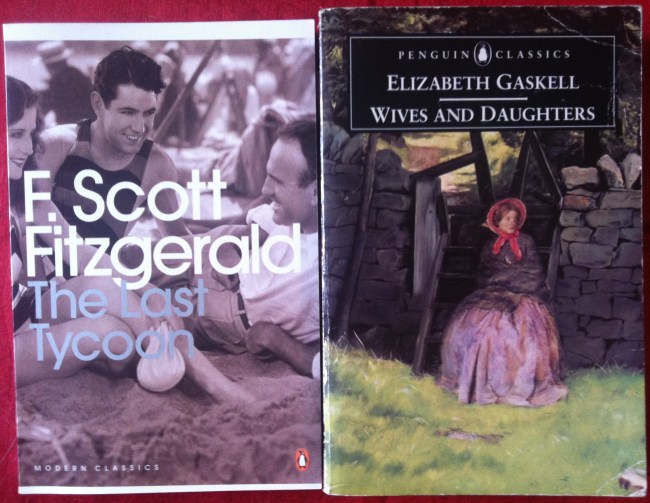
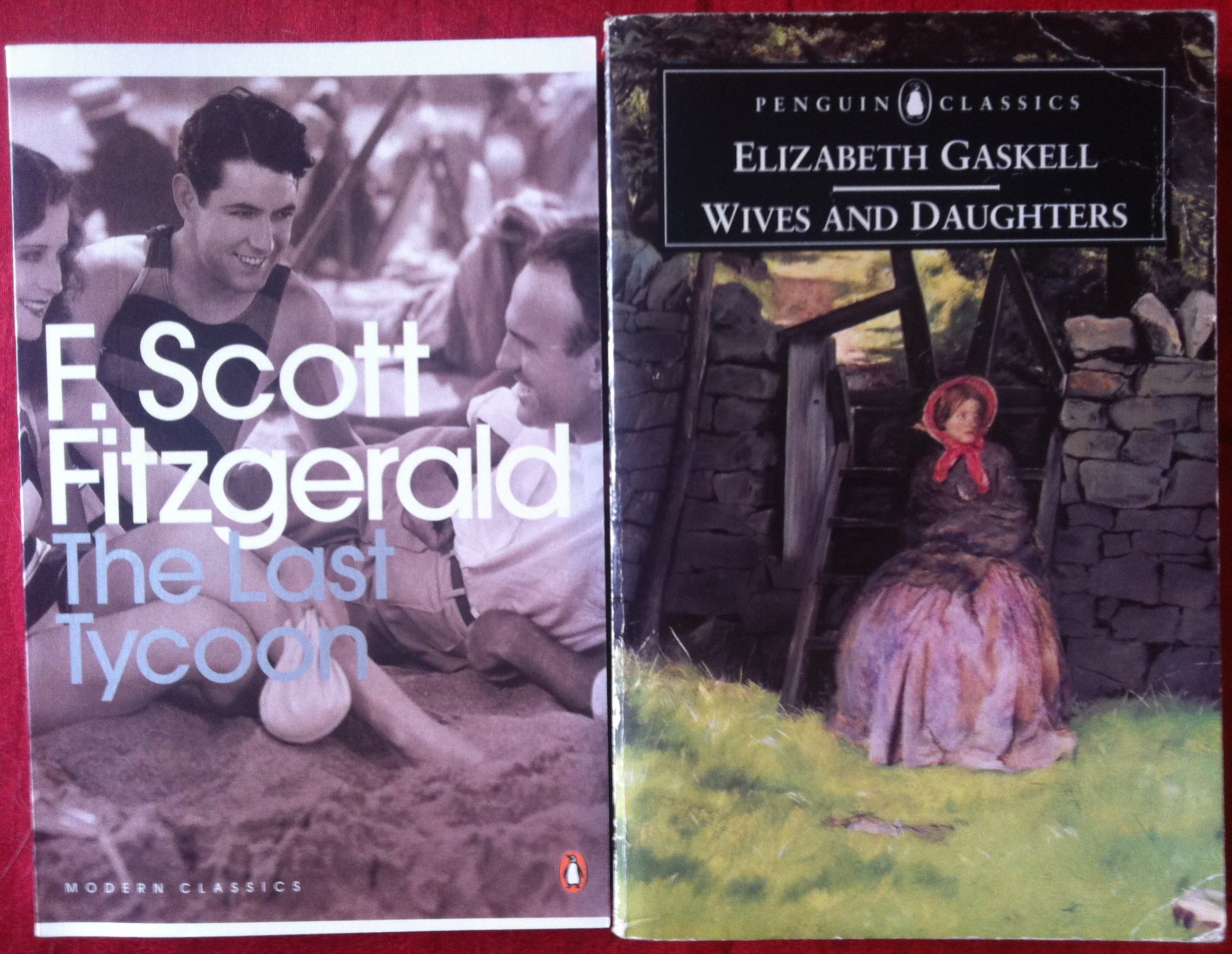
Firstly, The Last Tycoon by F. Scott Fitzgerald. This is the story of Monroe Stahr, Hollywood producer, told by Cecelia Brady, the daughter of another producer. The narrative voice isn’t consistent though, and Cecelia often narrates things she couldn’t know. I felt this worked well, as it highlighted the artifice of storytelling, and was wholly in keeping with a tale of Hollywood. It’s the topic Fitzgerald was born to write about, and it’s such a shame he didn’t complete it. He is brilliant at capturing why we acknowledge the artificiality of Hollywood, and yet why it continues to hold our fascination:
“Under the moon the back lot was thirty acres of fairyland – not because the locations really looked like African jungles and French chateaux and schooners at anchor and Broadway at night, but because they looked like the torn picture books of childhood, like fragments of stories dancing in an open fire.”
Hollywood offers audiences a chance to believe in magic, and recapture that feeling often lost in childhood. However, Fitzgerald also exposes the less-than-glamorous reality behind facades, and yet why those façades remain special:
“Stahr stopped beside her chair. She wore a low gown which displayed the bright eczema of her chest and back. Before each take, the blemished surface was plastered over with emollient, which was removed immediately after the take. Her hair was the colour and viscosity of drying blood, but there was a starlight that actually photographed in her eyes.”
The plot concerns Stahr’s affair (the planned title may have been The Love of the Last Tycoon) with a woman who, in movie fashion, he sees across a crowded room, and the machinations of Hollywood tycoons that surround him. The plot stops short of these being fully played out, and my edition then gives a plot outline based on Fitzgerald’s notes. The novel is very much a work in progress, but I hope the quotes I’ve used have demonstrated why it’s still worth reading – the beauty of Fitzgerald’s writing shines even before it’s polished. For all you aspiring writers out there, I’ll finish this part with some of Cecelia’s cynical observations on the profession:
“Writers aren’t people exactly. Or, if they’re any good, they’re a whole lot of people trying so hard to be one person. It’s like actors, who try so pathetically not to look in mirrors, who lean backward trying – only to see their faces in the reflecting chandeliers.”
“I grew up thinking that writer and secretary were the same, except that a writer usually smelled of cocktails and came more often to meals.”
At almost the opposite end of the spectrum from Hollywood glamour is a tale subtitled “An Every Day Story”, the novel Wives and Daughters by Elizabeth Gaskell. For those of you who don’t like Victorian fiction, or saw the BBC version of Cranford and think Gaskell is all parochial tales of small town personal politics, please stick with me. W&D is one of my favourite novels and it’s wonderfully written. Gaskell is not a highly moralising Victorian writer, nor is she blinkered in her view. She presents the characters and the situations, and then leaves the reader to make up their own mind. There is no omnipresent narrator (like George Eliot) to instruct you how to react. Although W&D is a tale of small town life, Gaskell was a writer who concerned herself with big issues – unmarried mothers in Ruth, the destructiveness of industrial life and urban poverty in North and South.
In W&D there is not such an obvious political drive, instead Gaskell uses the small setting to look at society at large, and on the brink of change. There is much (as the title would suggest) around the role of women, and frequent mentions of the incoming railway, which will revolutionise society. There is also a strong theme of Darwinism. The main hero, Roger Hamley, is a highly intelligent, gentle, and serious natural scientist. Gaskell was related to Darwin through the Wedgwood family and knew him personally. It’s fascinating to see this revolutionary scientist presented in such an intimate way. Roger provides the romantic drive of the plot with the heroine Molly Gibson, but there’s much more going on than a straightforward romantic arc. Molly’s father remarries and his new wife and her daughter come to live with Molly and her father. His new wife is utterly self-serving and vacuous, but in her daughter, Cynthia, Gaskell takes the pretty coquette of Victorian fiction and gives the character real depth. As a result, Cynthia and Molly become friends and allies, not enemies. The Hamleys are a local family with a bloodline that Squire Hamley is snobbishly proud of. His wife is befriended by Molly, and she becomes involved in the family and the dramas around their two sons, Osborne and Roger, neither of whom are quite what their parents think. The personal relationships are drawn with such insight and sensitivity, to create a novel of human understanding which I found deeply moving. To be honest, I could go on about this novel forever, so I’m going to reign myself in by quoting just one section at length. Squire Hamley is sitting by the fire, smoking his pipe. His wife has died and he is losing his estate piece by piece. He feels utterly alone and desolate, and then his son Roger arrives in the room.
“The Squire sat and gazed into the embers, still holding his useless pipe-stem. At last he said, in a low voice, as if scarcely aware he had got a listener,—”I used to write to her when she was away in London, and tell her the home news. But no letter will reach her now! Nothing reaches her!”
Roger started up.
“Where’s the tobacco-box, father? Let me fill you another pipe!” and when he had done so, he stooped over his father and stroked his cheek. The Squire shook his head.
“You’ve only just come home, lad. You don’t know me, as I am now-a-days! Ask Robinson—I won’t have you asking Osborne, he ought to keep it to himself—but any of the servants will tell you I’m not like the same man for getting into passions with them. I used to be reckoned a good master, but that’s past now! Osborne was once a little boy, and she was once alive—and I was once a good master—a good master—yes! It’s all past now.”
He took up his pipe, and began to smoke afresh, and Roger, after a silence of some minutes, began a long story about some Cambridge man’s misadventure on the hunting-field, telling it with such humour that the Squire was beguiled into hearty laughing. When they rose to go to bed his father said to Roger,—
“Well, we’ve had a pleasant evening—at least, I have. But perhaps you haven’t; for I’m but poor company now, I know.”
“I don’t know when I’ve passed a happier evening, father,” said Roger. And he spoke truly, though he did not trouble himself to find out the cause of his happiness.”
Someone terribly important thought that this was one of the most perfect scenes in English literature, but I’ve wracked my brains (and google) and I can’t remember who it was. I think it may have been Henry James. I hope it gives you a feel for how artfully drawn the characters in Wives and Daughters are, and with what subtlety the relationships are evoked. The story ends at a point where you can see how everything will play out and you’re just enjoying getting there. Gaskell was extremely close to finishing the novel, and my copy just has a note at the end by the editor of Cornhill Magazine, which was publishing the novel in serial form, to confirm the author’s plans. W&D is a deserving classic of English literature, even in its unfinished state.
I couldn’t think how to represent “unfinished” in the photo of the books this week, so here they are straight up. However, in the spirit of this week’s theme I will leave the text of this post unfini….