Hollow Inside is the debut novel of Asako Otani (2023, transl. Ginny Tapley Takemori 2026), published by the ever-wonderful Pushkin Press. At only 108 pages it is an accomplished portrayal of a woman trying to find peace within and without.
The narrator is Hirai, self-described as:
“A plain woman just shy of forty in a grey skirt. I had the feeling that by blurring my focus I could be completely assimilated into the jostle of strangers around me on the swaying train. I crossed my eyes slightly and concentrated on erasing my existence.”
We join her when she has been living for four months with Suganuma, slightly older at the age of forty-two. They met at work bonding over their love of the same boyband from their youth.
It is Suganuma who suggests they live together, fed up with the cramped flats and loneliness of living alone.
“As far as I was concerned, my decision to move in with Suganuma meant that I’d given up. A future in which I was married and had children was looking impossible.”
Suganuma is more sanguine, seemingly content in her life choices, and overjoyed at living together as Hirai wryly observes:
“It happened so fast I couldn’t help thinking that if she only handled her work in the same way she’d be able to live in a larger flat of her own.”
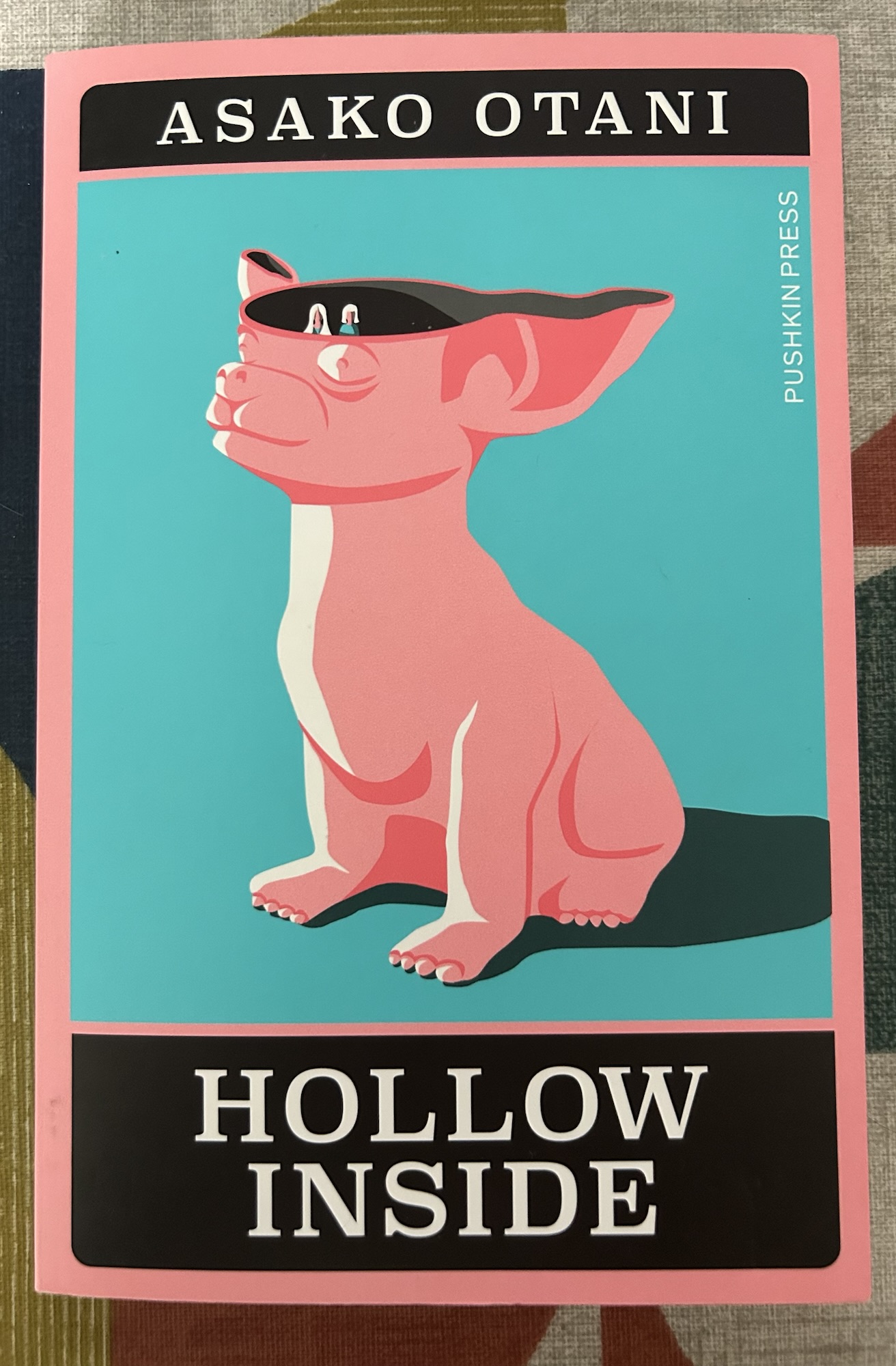
Suganuma works mainly from home, 3D printing pets for bereaved owners. The title comes from the figurines and from Hirai’s identification with them.
Hirai also has no sexual attraction to men and ambivalence towards being a mother, both of which she wishes were different. She feels she doesn’t fit, and limits social contact with colleagues and with her family.
“Every single one of my childhood and college friends now had their own family, and for years now the only contact I had with them was liking each other’s social media posts.”
In a very short space, Otani establishes a sympathetic but not sentimental character study of Hirai, showing her pain and confusion as she struggles to find a place for herself. By the end of the novel, she will made some significant decisions, but the author avoids trite conclusions or neat resolution.
To end, regular readers will know I never shy away from an entirely obvious choice:


That first quote is so understated yet poignant. Pushkin Press is a small gem of a publisher, isn’t it.
LikeLiked by 1 person
It really is, such interesting work they find and make available.
LikeLiked by 1 person
The first quote pretty much sold this to me too! And I love Pushkin Press so this is another one for my wishlist.
LikeLiked by 1 person
So glad this appeals! Pushkin really are great in their choices.
LikeLike
That cover is oddly disturbing! As is the idea of 3D printouts of deceased pets…
LikeLiked by 1 person
Yes, I think the 3D print outs are definitely meant to be unnerving!
LikeLiked by 1 person
This sounds good!
LikeLiked by 1 person
It is – it was actually better than I expected!
LikeLiked by 1 person
I don’t know that I would have necessarily picked the book up, as the cover is kind which puts me off a bit, but it sounds really good Madame B!
LikeLiked by 1 person
Yes, I must admit it was the publisher that caused me to pick it up rather than the cover design! It is a really good read though, so I’m glad I did.
LikeLike
I do agree about the cover it’s certainly unnerving, but a plain women in a grey skirt – who wouldn’t want to read about her?!
LikeLiked by 1 person
She’s a really compelling character 😁Her development over the course of the book is very believable.
LikeLiked by 1 person
I can’t tell if I really like the cover… (I mean, it’s clearly a cartoon/illustration, not a real creature) … or, if I really don’t. /scrunchyface But that seems appropriate. For a story that doesn’t really resolve (as things often don’t, IRL).
LikeLiked by 1 person
It does fit the story. And yes, the lack of resolution felt realistic, which I liked.
LikeLike