It was a conversation with Marcie in the comments of Jacqui’s Levant Trilogy post which led to us doing a buddy read for all three volumes of Olivia Manning’s Balkan Trilogy this year. We started with The Great Fortune (1960) in June, and now onto the second instalment, The Spoilt City (1962).
It took me a while to get into The Great Fortune, but by the end I was whizzing through and couldn’t wait to start The Spoilt City. I’m clearly in the rhythm of Manning’s writing now because I sank right in and absolutely loved this second volume.
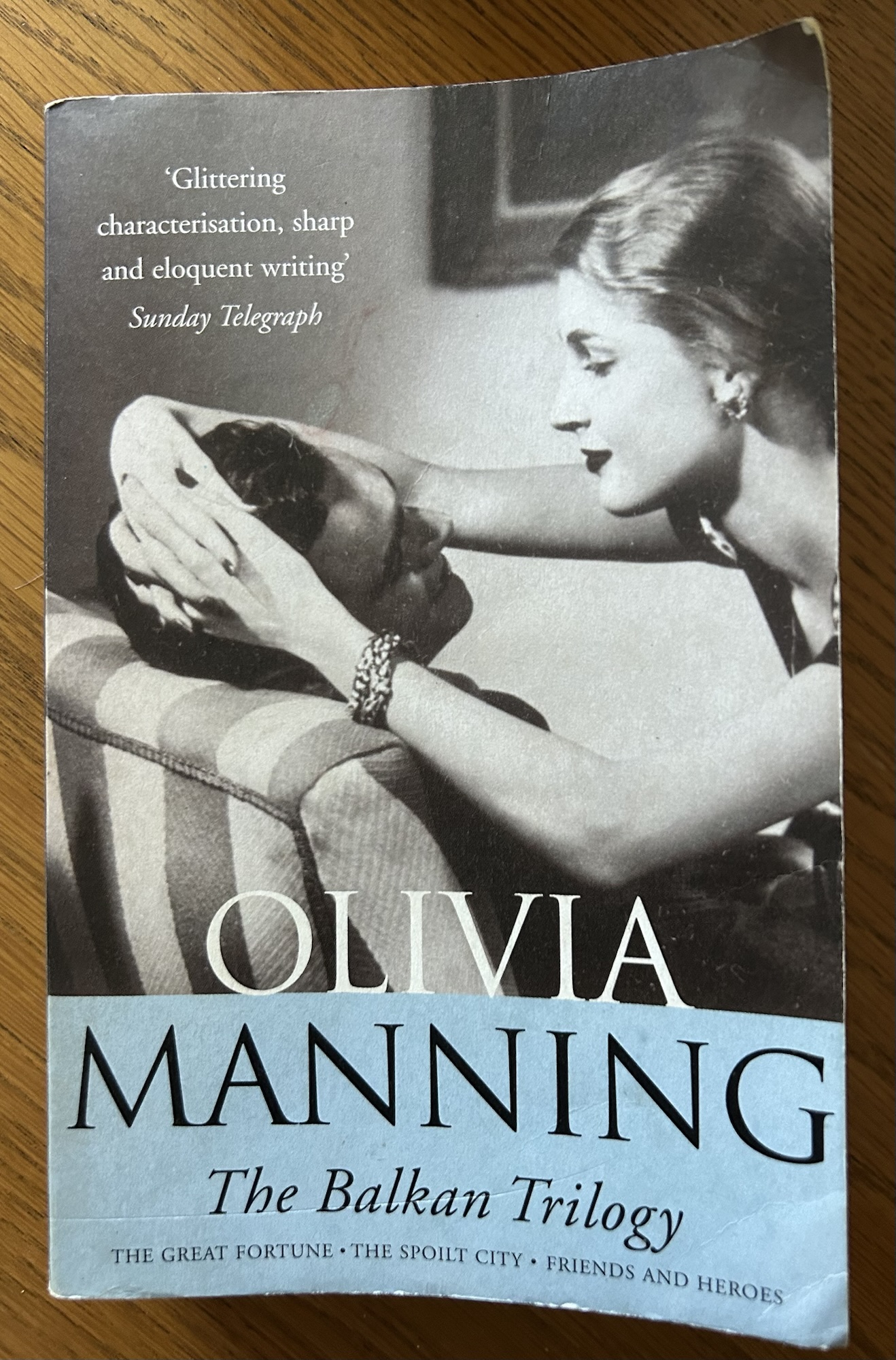
(What I decided I didn’t love was the omnibus edition I started with, so I’ve bought these Windmill Editions now and I’m much happier).
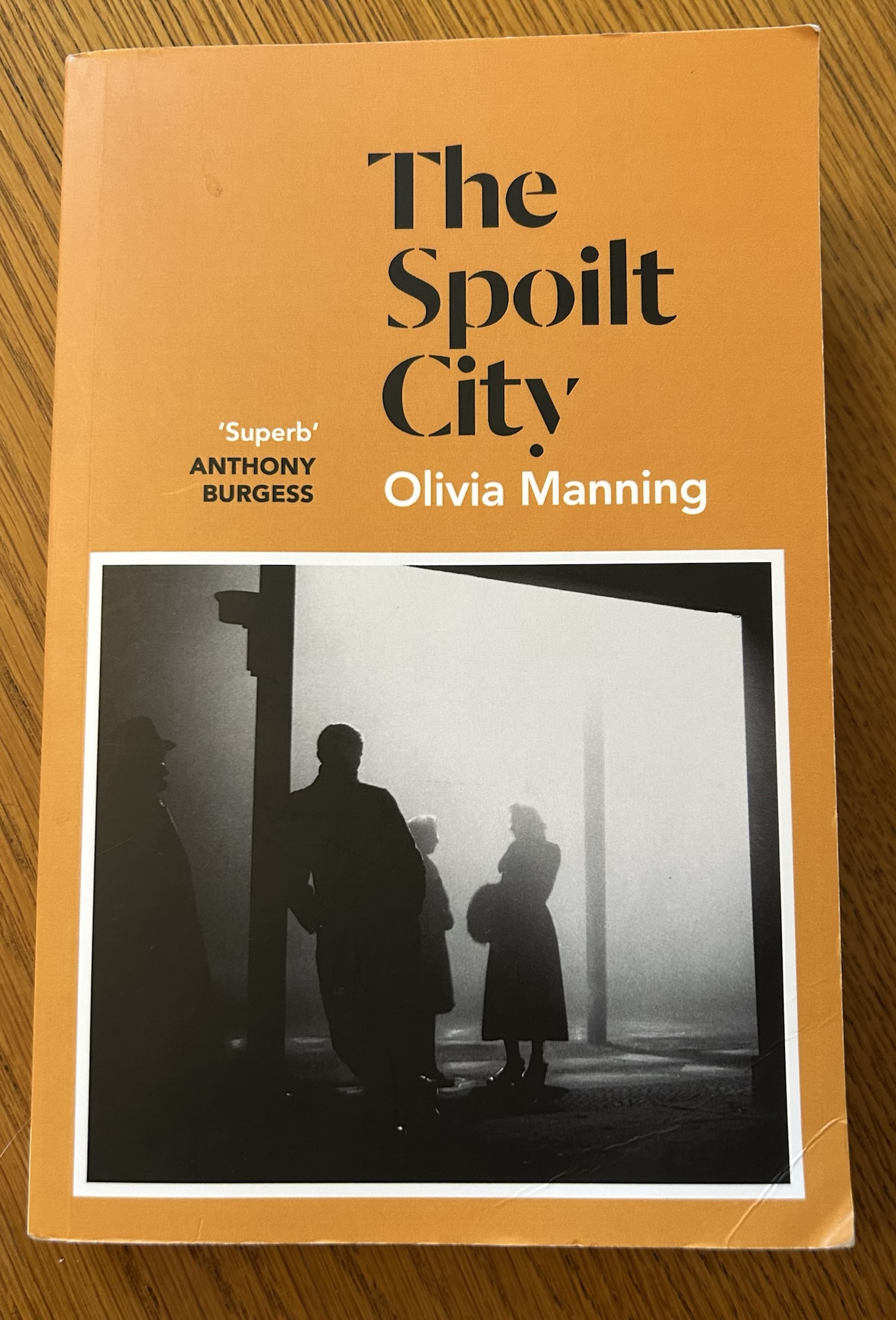
The city is Bucharest in 1940, and we follow still-fairly-recently married Guy and Harriet Pringle as the physical and social environment they are used to disintegrates around them.
“On the pavement the Guardist youths with their banners and pamphlets, were still trying to rouse revolt. Although a sense of revolt agitated the nerves like an electric storm that would not break, the city was lethargic, the palace dormant, its white blinds drawn down against the tedium of the afternoon.”
This volume is increasingly tense, the Nazi threat growing ever-closer. Guy is still teaching English at the university, but both students and the staff group are rapidly dwindling.
“With uncomplaining enthusiasm, Guy did much more than was expected of him; but he was not imposed upon. He did what he wanted to do and did it, Harriet believed, to keep reality at bay.”
Guy’s boss Inchcape is also determined to keep the Department open, even as dangers grow. This volume is more emotionally affecting than the first, I found this particularly true in a scene with the older single women of the department being forced to leave for their own safety, as well as Inchcape having to face his vulnerabilities to a shocking extent.
This forms the shifting and stressful background to the Pringles’ early marriage. Both Harriet and Guy have to acknowledge their profound differences in how they approach life and see things:
“It was probably significant that he was physically short-sighted. He could not recognise people until almost upon them. Their faces were like so many buns. good-natured buns, he would have said, but Harriet did not agree. She saw them in detail and did not like them any the better for it.”
“He saw her muddled and lost in anarchy and a childish mysticism.”
Guy’s belief in communism gives him more certainty, a grounding as the ground constantly shifts beneath them. Still, their marriage seems underpinned by a great deal of love for each other, although the reader is not privy to any declarations.
My favourite character Yakimov is still racketing around, trying to sell his beloved Hispano-Suiza car even as no-one has money for fuel. He is still living with the Pringles and Harriet despairs.
“If she wanted to get rid of him, she would have to pack his bags herself and lock him out. And if she did that, he would probably sit on the doorstep until Guy brought him back in again.”
Yaki behaves appallingly in the first part of the novel, before redeeming himself beautifully at the end, making his portrayal one of the most comedic, disturbing and complex in The Spoilt City. Apparently based on Julian Maclaren-Ross, I really should learn more about this Fitzrovian dandy poet. Anthony Powell based X Trapnel on him in A Dance to the Music of Time, and he certainly seems a character…
What struck me most in this volume, apart from the evocation of physically crumbling environs, was the ambivalence, or perhaps resignation, of most of the people Harriet interacts with. As long as they are safe and their lives continue in a way that works for them, they don’t seem to particularly care who is in charge. This made me realise the oppositional Second World War narratives I’ve taken for granted until now; I am used to films and books where people are firmly on the side of the Allies or the Axis powers, not indifferent between the two.
This is brought into sharp focus by Harriet’s English friend, Bella:
“Her skin apricot, her hair bleached by the sun, Bella was looking extremely handsome and seemed almost intoxicated by the night’s happenings.
‘How wonderful to have a strong man in power!’ she said. ‘Everyone is saying that Romania will regain her territory.’
‘What makes them think that?’
‘Because Antonescu is a real dictator. He knows how to deal with Hitler and Musso. He’s one of them. I don’t mind betting, within three months, this country will be on its feet again.’”
Later they meet again, Bella delighting in all she can buy as prices tumble, when they run into each other under a newly erected swastika flag:
“Elated by her rising fortune, she looked up and smiled at the flag and the clear pale sky beyond it. ‘I love this time of year,’ she said. ‘so delicious after the fug of summer. It makes one feel so alive.’
She seemed aglitter with life, almost dancing in her new green lizard skin shoes.”
Astonishingly, it is only Guy who overtly acknowledges what is behind the flag, the only one who says “I couldn’t stand it. I kept thinking of the concentration camps.”
Manning leaves spaces in her narrative so we assume Harriet is of a similar mind, although her primary worry is for the safety of Guy, vulnerable under the new regime because of his communist beliefs and willingness to teach Jewish students.
The Pringles are also at risk as they still have sweet Sacha Drucker in their flat, and early on we know they have been betrayed and are likely to be raided…
“Truth is a luxury. We can only afford it now and then.”
The Spoilt City is a novel which conveys the physical and human devastation wreaked by war for those not directly caught in conflict. It is deeply moving without being remotely sentimental, and feels entirely believable. I found myself completely caught up in the Pringles’ lives and even (shock horror!) warming to Guy. I’m impatient to read volume three, Friends and Heroes.
I wound up googling Hispano-Suiza cars as Yaki describes his so lovingly. I can’t drive and I’m entirely uninterested in cars, but even I can see this is a lovely machine:


 madame bibi lophile recommends