“It’s the mystery that’s important, somehow very important.” (Tove Jansson, Art in Nature)

Those of you who follow Paula’s Book Jotter blog will know what a huge fan she is of Finnish author Tove Jansson, creating the wonderful resource Tove Trove. When Paula pointed out 9 August was Tove Jansson Day, I resolved to read the two collections of short stories I had in the TBR, also perfect for Women in Translation Month. I read one, then promptly forgot all about today until this morning, so apologies in advance for this hastily written post!
Art in Nature (1978, transl. Thomas Teal 2012) and Letters From Klara (1991, transl. Thomas Teal 2017) are both published by Sort Of Books, who have done such a brilliant job of making Jansson’s work readily available in English translation.

I’m going to pick one story from each, as I find writing about short story collections really difficult.

Art in Nature was the collection I preferred, with some truly unnerving psychological studies within it. However, I’ll choose one of the lighter stories, White Lady.

Three women in their sixties are dressed up and slightly tipsy, ready for a good time at a restaurant on an islet. Ellinor is a writer who “loved similes” and is tempting to read as a self-portrait; nostalgic Regina and troubled, girlish May make up the threesome.

“They were going to eat and drink well, and for this one evening they had left everything behind and were going to enjoy themselves in a new, unusual place, an island from the turn of the century, a building that was almost old when they were children.

‘That’s what’s so exciting,’ Regina said. ‘Having it all ahead of us. I’ll have a White Lady. I’m wearing a white dress, so I want a White Lady.

‘Is that strong?’ May asked. ‘I’ll have the same.’”

Over just fourteen pages, Jansson conveys so much. The women are fully realised as individuals. Their determination to have a good time is underpinned by grief and pain, yet is resilient more than sad. Their coming to terms with aging and lost time is sensitively portrayed. It has moments of humour and moments of great pathos.

“The young people were not dancing. Why should they? They could afford not to. Wherever they went, their own music followed them.”
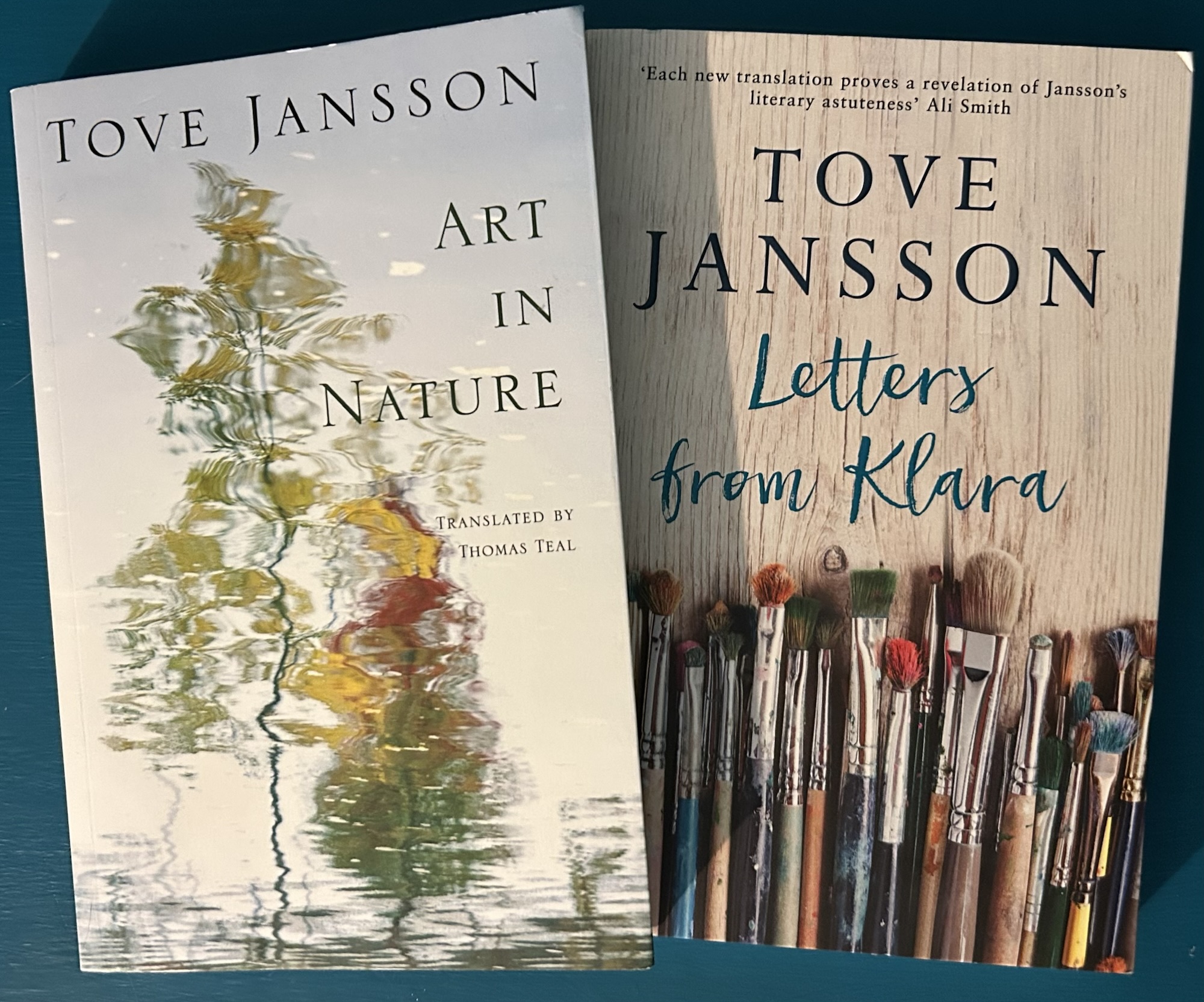
In Letters from Klara, the titular story opens the collection in great style. Klara is spiky, affectionate, clear-sighted, uncompromising. As she explains to her solicitor, she has decided to change her will to give an annuity to a retirement home:

“The idea –  as I’m sure you understand, cunning as you are – is that, with this income in mind, the home will try and keep me alive as long as possible. I will be their mascot and will be allowed certain obvious liberties. Whatever is left when I die will be distributed exactly as specified earlier.

I will only add that I am at the moment in excellent health and hope you are the same.”

But as she explains to her sad friend Cecilia, clearing out belongings towards the end of life isn’t so easy:

“The little treasures you try to give young people just make them uncomfortable – more and more polite and more and more uncomfortable. Have you noticed that?

You know what? There’s now a flea market on Sandvik Square every Sat and Sun. What do you think of that? People can wander around and find stuff for themselves and no one has to feel ill at ease or grateful. Brilliant idea.”

I could have read a whole book of Klara’s letters, she was such a forceful joy. Alas, I had to make do with just ten pages.

I highly recommend both these collections. Jansson has a perfect understanding of the short story form and doesn’t waste a word. They are precisely written yet never feel lacking; each is story is fully realised in itself. Concision is never at the expense of depth or insight.

To end, I didn’t know the Moomins had a YouTube channel! As well as their own adventures they’ve uploaded this lovely clip about the tradition of Tove’s birthday flower wreath:
“Images are a way of writing. When you have the talent to be able to write and to draw, it seems a shame to choose one.” (Marjane Satrapi)

August is Women in Translation month, hosted by Meytal at Biblibio. Do head over to her blog to read more about WITMonth and join in!

Throughout August I’m hoping to post entirely about women in translation, and this week I’m looking at two women who are famous animators as part of their writing.

Firstly, Tove Jansson, who was the creator of the Moomins.

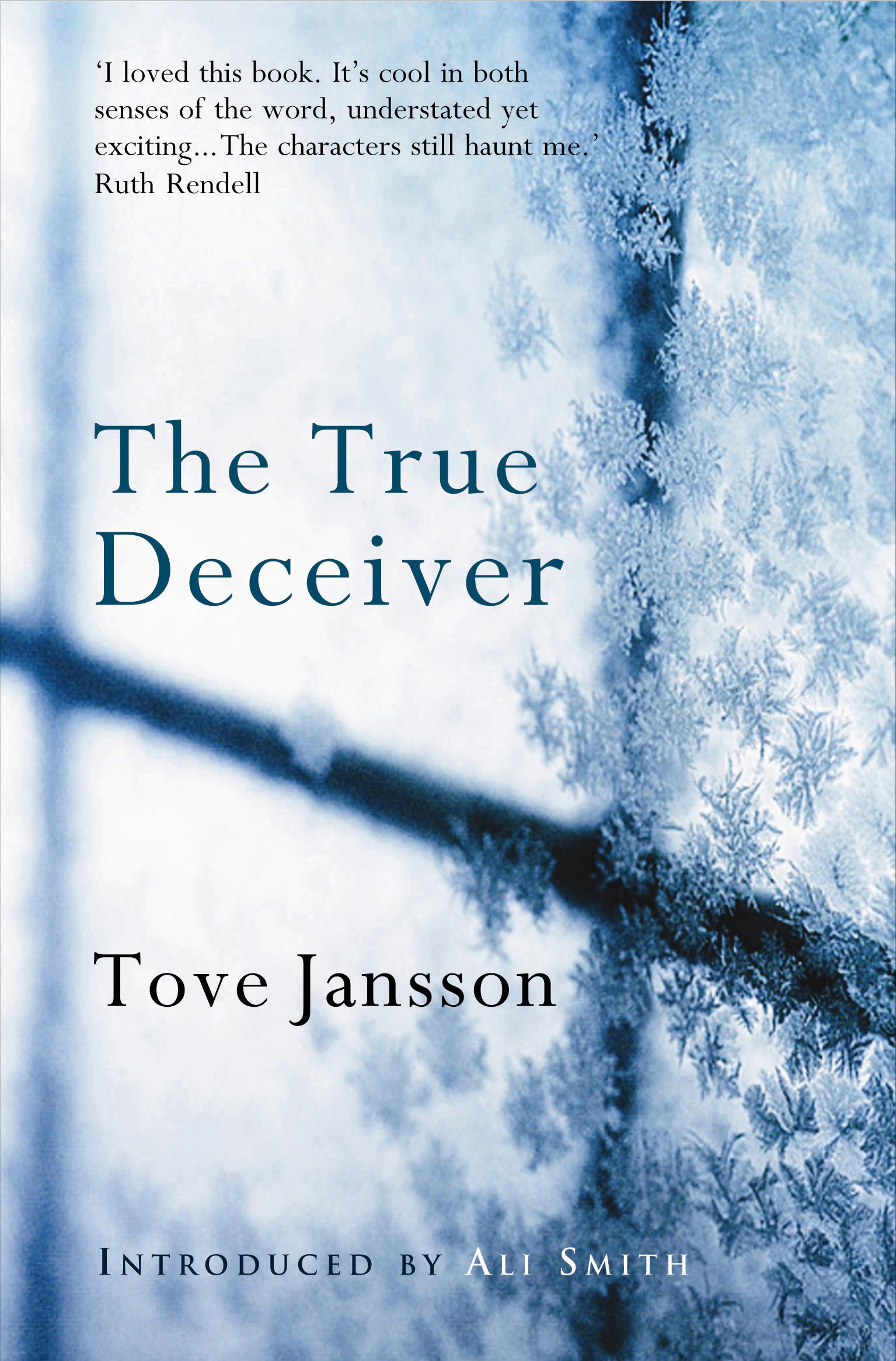
Jansson also wrote novels for adults and Sort Of Books have done a great job making English translations available. The True Deceiver (1982, trans. Thomas Teal 2009) is a simple, unsettling tale set over a winter in a snowbound hamlet in Finland.

Katri Kling is a young woman in her 20s who lives with her brother Mats and her nameless Alsatian dog, keeping herself to herself.

“Every night I hear the snow against the window, the soft whisper of the snow blown in form the sea, and it’s good, I wish the whole village could be covered and erased and finally be clean…Nothing can be as peaceful and endless as a long winter darkness, going on and on, like living in a tunnel where the dark sometimes deepens into night and sometimes eases to twilight, you’re screened from everything, protected, even more alone than usual.”

Meanwhile, Anna Aemelin is an animator who lives on the outskirts of the village. If Katrin seems old beyond her years, Anna has stayed somewhat infantalised despite now being quite old. She eats soft food out of tins, has a cleaner to take care of the huge house she’s lived in her whole life, and has no idea how to manage her money.

“Perhaps the reason people called Anna Aemelin nice was because nothing had ever forced her to exhibit malice, and because she had an uncommon ability to forget unpleasant things. She just shook them off and continued on her own vague but stubborn way. In fact, her spoiled benevolence was frightening, but no-one ever had time to notice.”

Katrin sets her sights on Anna’s house, and so the two women collide:

“That’s where she lives. Mats and I will live there too. But I have to wait. I need to think carefully before I give this Anna Aemelin an important place in my life.”

What follows is a study of the tense, odd relationship that these two women build together. They are both quite damaged in different ways, and they are both loners. Mats has an unspecified learning difficulty and so he operates outside of this dynamic; it is very much about the two women. Mats is Katrin’s motivation though, and they are close without communicating much to one another:

“They owned a silence together that was peaceful and straightforward.”

This is not a story for those who like dramatic events and everything explained. What Jansson does expertly is portray these two women and the development of their relationship. She is entirely unsentimental – neither woman is particularly likeable – but the quiet, suffocating way she builds the story is compulsive.

“Anna walked faster, looking only down at the road. Several neighbours passed by, but she didn’t notice their greetings, just wanted to get home, home to the dreadful Katri, to her own altered world which had grown severe but where nothing was wicked and concealed.”

I really adore Jansson’s writing. It is beautiful but not overdone; pared down to its essence, she takes an incisive look at human relationships and never wastes a word. The True Deceiver is compelling and totally believable.

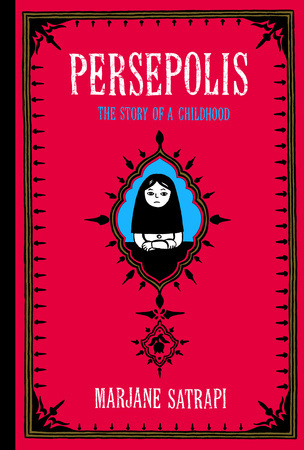
Secondly, Persepolis by Marjane Satrapi (2003, trans. Anjali Singh 2004). This is a graphic novel so please bear with me as I hardly ever read graphic novels and I’ve no idea how to write about it. Set in Iran, this is one more stop on my Around the World in 80 Books Reading Challenge, hosted by Hard Book Habit.

Persepolis was made into a film in 2007 and uses the animation from the novel (it was co-written and co-directed by the author), so this trailer gives a good idea of the artwork:

Satrapi’s drawings are stark and simple in black and white and without excessive detail. As a result her images are incredibly strong and impactful, with nothing to distract from the central message each picture conveys.

The story is a powerful one. Marjane, born in 1970, grows up in tumultuous times in Iran. Her parents are liberal Marxists who allow their daughter a great deal of freedom, but after the Islamic Revolution in 1979 she has to wear a veil and be careful how she behaves in public. Young Marjane is religious and converses with God, but her favourite book is Dialectic Materialism where Marx and Descartes debate the meaning of the material world. “It was funny to see how much Marx and God looked liked each other. Though Marx’ hair was a bit curlier.”

Marjane learns about the history of her country and her family, having descended from Iran’s last emperor. Western culture appeals, while at the same time she knows that Britain conspired with the CIA in 1953 to depose Mossadeq after he nationalised the oil industry, to return the Shah to power (side note: when our previous Prime Minister Tony Blair was busy starting illegal wars in the Middle East, he had to be told who Mossadeq was, because he couldn’t understand Iranian hostility to Britain. I don’t even know where to begin with that.)

Her beloved uncle Anoosh is arrested and asks to Marjane for a final visit before he is executed. The scene where he holds her and calls her “Star of my Life” I found so moving. You can view it on Pintrest here (it’s really hard to write about a graphic novel without images! But I’m worried about copyright infringement ☹)

Persepolis follows Marjane as she leaves Iran for Austria, and her return four years later. We see her growing up, meeting boys, trying drugs, going to parties. She struggles to accept herself, feeling too Persian in Europe and too European in Iran. At times she loses her way, but always returns to her grandmother’s advice:

“There is nothing worse than bitterness and vengeance…always keep your dignity and be true to yourself.”

Persepolis covers absolutely massive themes and is a remarkable achievement. International politics, religion, feminism, identity, social responsibility, extremism, idealism, familial love, are all here. The fact that it’s in graphic novel form mean that it never feels a heavy read and yet Persepolis doesn’t pull its punches or aim to make difficult truths easy for the reader. I’ve not remotely done it justice here.

To end, Marjane loves her hard-won Kim Wilde tape. Here’s the lovely lady herself aged 20, making her TOTP debut:

“Brevity is the soul of lingerie.” (Dorothy Parker)

Apparently you can have too much of a good thing.  This is not something I’ve experienced myself, but as it seems to be a truth universally acknowledged, I’ll go with it.  So even if you are an inveterate bibliophile there can be times when humungous, bicep-busting books can be off-putting, particularly if like me, you’re a non-Kindle using commuter.  You don’t want to be lugging The Count of Monte Cristo onto the train (or so my osteopath insists).  This week I thought I’d look at books that are small and perfectly formed: 1 novella and 1 short story collection that are little gems.

Firstly, Fair Play by Tove Jansson (1989 my edition trans. Thomas Teal 2007, 127 pages). Jansson is most famous for creating those weird hippo/mouse hybrid creatures the Moomins:

Recently I kept reading about how good her writing for adults is, so when I saw Fair Play in a bookshop I decided it was A Sign.  A Sign for me to spend money, which admittedly is what every bookshop says to me.  But Fair Play was worth every penny.  It is a beautifully observed, delicate portrait of two artistic women sharing a life together.  Jonna is a visual artist, Mari a writer:

“They never asked, “Were you able to work today?” Maybe they had, twenty or thirty years earlier, but they’d gradually learned not to.  There are empty spaces that must be respected  – those often long periods when a person can’t see the pictures or find the words and needs to be left alone.”

This is what Fair Play captures so well, the unspoken subtleties that exist in a long-term relationship, with the person you know better than anyone.  With a restrained lightness of touch, Jansson presents moments in time between the two women,  detailing events that seem simultaneously fleeting yet loaded with meaning.

“They hadn’t noticed the fog moving off….suddenly the sea was open and blue and they found themselves a long way out toward Estonia.  Jonna started the motor.  They came back to the island from a totally new direction, and it didn’t look the same.”

The novel has no ostensible plot, and there is no sense of time – each chapter could occur chronologically, or could be moving back and forth across the trajectory of their long relationship.  It doesn’t matter.  You finish the novel with the feeling of being allowed glimpses into two unique, intertwined lives, while understanding how we all essentially remain unknown.

“It’s gone so quiet,” Jonna said. “What did you think? Wasn’t that a good storm?”

“Very good,” Mari said. “The best we’ve had.”

Jansson’s writing is stark, yet beautiful. I will definitely be seeking out more by this writer.

Secondly, The Madman of Freedom Square by Hassan Blasim (2009, Comma Press, trans. Jonathan Wright, 90 pages). The cover of this collection includes a quote from The Guardian, proclaiming Blasim “perhaps the best writer of Arabic fiction alive”. Like Fair Play, this was the first time I’d read this author, and it seems like such an oversight as he has so much to say that is important.  Blasim is a deeply political writer, by which I mean not that he is polemical, but that he is engaged with how literature works within a wider society:

“Because literature in this country is literature that goes through phases. Since the fall of Saddam Hussein there have been incessant calls for writing to be intelligible, realistic, factual and pragmatic.  They are lamenting readers that don’t exist. They claim the writers of the past made the readers defect, whereas in fact for hundreds of years there were no readers in the broad sense of the word.  There were only hungry people, killers, illiterates, soldiers, villagers, people who prayed, people who were lost and people who were oppressed. Our writers seem to have grown tired of writing for each other.” (‘The Market of Stories’)

Blasim’s stories detail lives caught up in war: illegal immigrants, hostage experiences, propaganda- makers, asylum-seekers.  He is acutely aware of how stories are manipulated in this media-saturated world, and how there can be many truths held within the one story:

“This story took place in darkness and if I were destined to write it again, I would record only the cries of terror which rang out at the time and the other mysterious noises that accompanied the massacre. A major part of the story would make a good experimental radio piece.” (‘The Truck to Berlin’)

The short stories in The Madman of Freedom Square are all the more powerful for their brevity: there is a sense that in such unstable times, words are a luxury, and every one must count.  Certainly Blasim’s words count; his stories are powerful, extraordinary, bleakly funny on occasion, and deeply moving.

Back to frivolity: to end, a reminder that smaller is sometimes better (although frankly, when it comes to cookies, I’m still not entirely convinced…)