Novella a Day in May 2026 – No.8

I rarely read historical fiction, or modern crime, but having enjoyed Louise Welsh’s first two Rilke thrillers (I haven’t read the third published this year) I decided to give her 2005 historical novella Tamburlaine Must Die a try. I also have a fondness for Early Modern theatre and so a story about Christopher ‘Kit’ Marlowe’s last days was tempting.
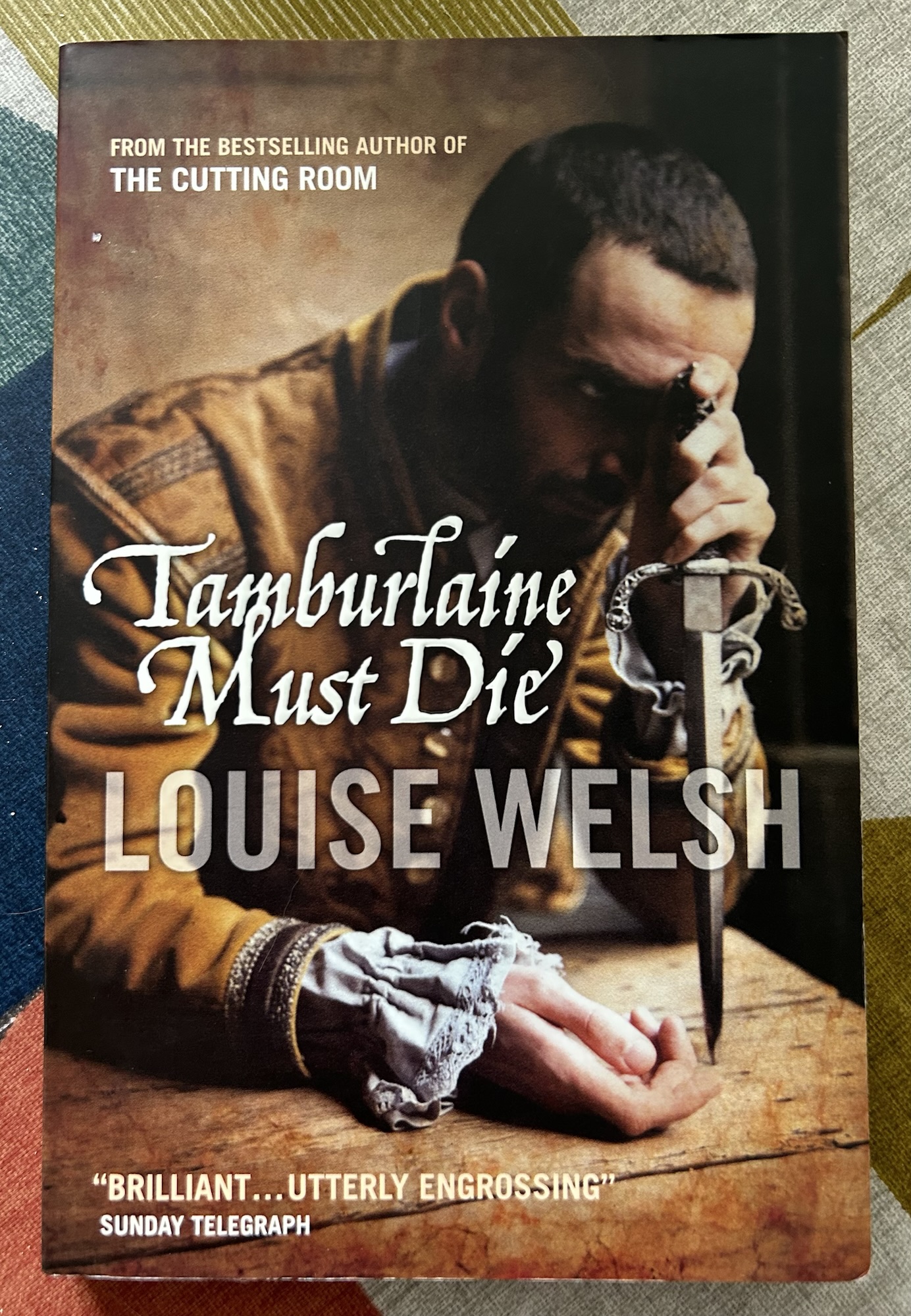
Kit Marlowe was stabbed in a pub in Deptford in 1593, after an argument over the bill. He was 29 years old, already a successful playwright, probably a genius, more than likely a spy for Elizabeth I’s government, outspoken atheist (whether he believed it or not), and unapologetic about his sexual encounters with men and women. The last three in that list all put him at considerable risk in the society of the time, meaning that from the start questions have been raised as to the motivations behind his murder.

Tamburlaine Must Die takes the form of a letter written by Marlowe the day before his death, neatly side-stepping attempts to answer who was truly behind his murder and why. Instead we follow Marlowe as he knows his days are likely numbered.

“I like best what lies beyond my reach, and admit to using friendship, State and Church to my own ends. I acknowledge breaking God’s laws and man’s with few regrets.”

Someone using the name of Marlowe’s famous anti-hero Tamburlaine is distributing heretical tracts around London. Marlowe is summoned before the Privy Council, and resolutely denies it is him. Unfortunately, his friend and former roommate, playwright Thomas Kyd, has confessed under torture that Marlowe made him copy such texts:

“They made him sing until he hit the high notes, then they chorused your name and he picked up the refrain.”

Generally I would have liked more characterisation of Marlowe throughout the novella, but his deep sense of betrayal by Kyd was truly affecting.

Marlowe travels around London trying to find out who Tamburlaine is, feeling this is his main chance of survival. Welsh evokes Elizabethan London viscerally and naturally, never weighed down by her research. She also avoids too much foresight which is usually tedious, although I did like this observation by Marlowe:

“Suddenly I felt sure this place could not survive. There was so much energy, so little space. One day the City must surely combust.”

Marlowe encounters the great and not-so-good of society in his quest:

“The room swam and I was at one with the tavern dwellers, the prostitutes and sinners. I was with my own kind and this low place suited me better than all of Walsingham’s luxury and Ralegh’s philosophising.”

This includes a memorable encounter with necromancer Dr Dee and a consideration of a deal with Sir Walter Raleigh:

“Raleigh is the most calculating of men, and reckless with it. Raleigh is a fine pirate and a bad spy. He’s adept at fiction and poor at deceit. He can weigh smoke.”

Ultimately though, a sense of defeat hangs over everything and even without knowing the history, the reader realises young Marlowe is up against far greater forces than he can combat or outrun.

“‘Are you Tamburlaine?’ I asked, half dazed.

And he laughed. ‘Put that impostor from your mind. Whoever he might be, his threats are nothing compared to ours.’

‘Death is the same whoever brings it.’

He gave me a last look and asked ‘Do you really think so?’”

Looking at the Wiki page for this book, apparently it had mixed reviews, some really positive but one that described it as ‘buccaneering tosh’. As someone who loved Errol Flynn films as a child, such an assessment would raise my expectations rather than lower them, but regretfully I have to disagree with the reviewer. Tamburlaine Must Die thankfully takes a low-key approach to what is a potentially highly dramatic story. Swords are drawn but Marlowe doesn’t crash wildly through his final days, unlike many of his preceding ones.

Tamburlaine Must Die is evocatively written, descriptive without losing sight of the story. I personally would have liked more of a sense of desperation and the sadness at such a young life cut short, but it is still an immersive read.  

To end, an entertaining turn by Rupert Everett as Marlowe in Shakespeare in Love:
Novella a Day in May 2026 – No.7

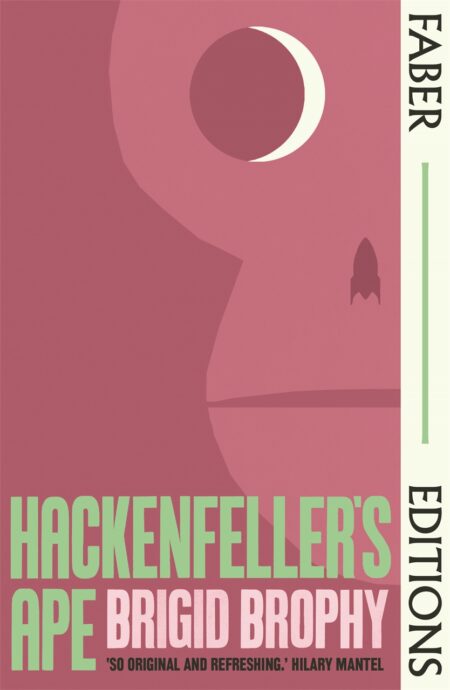
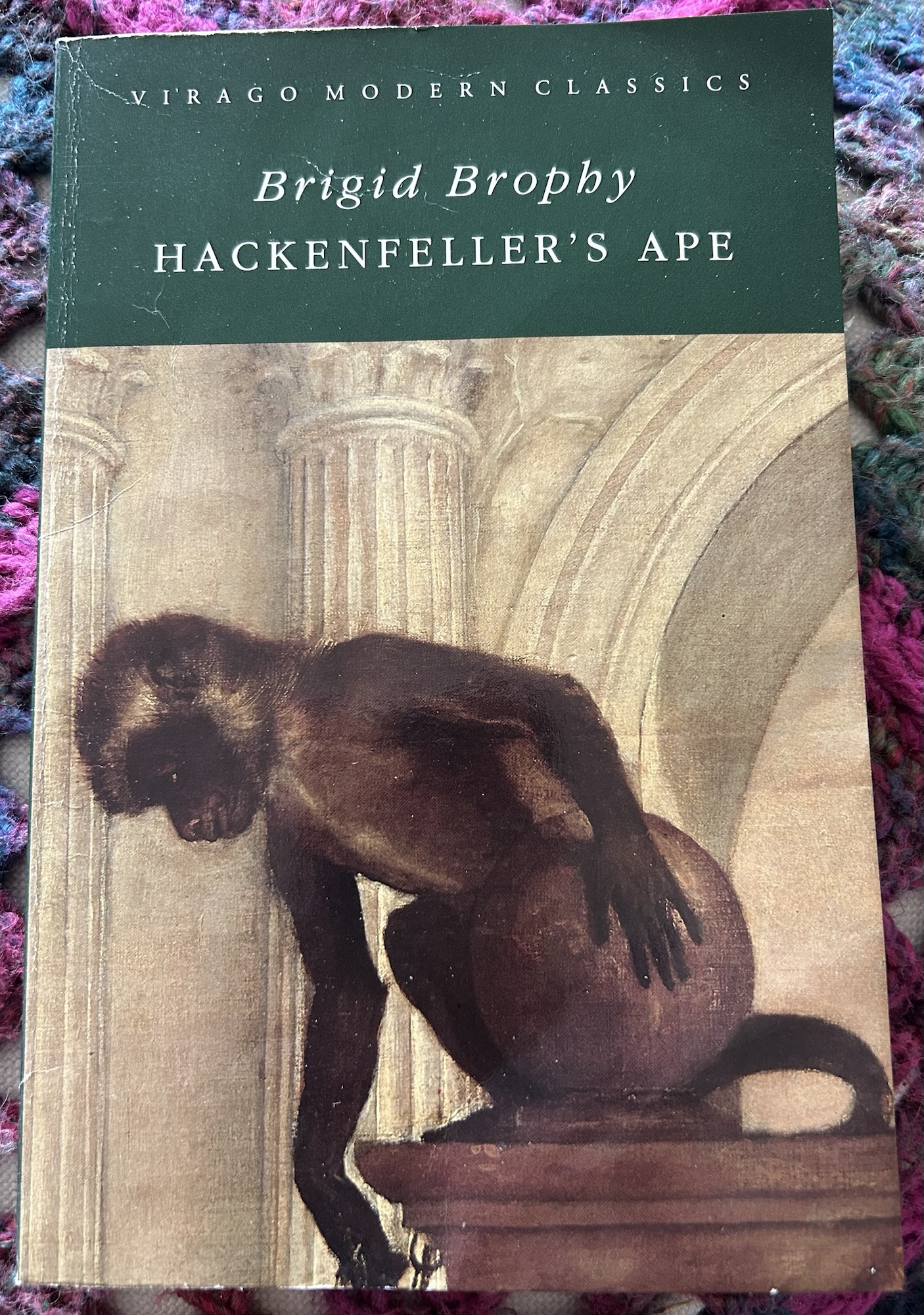
Last year for this project I read Brigid Brophy’s The Snow Ball, which made me keen to read more. Hackenfeller’s Ape (1953) was her debut novel and already demonstrates what an accomplished stylist and storyteller she was.

Professor Clement Darrelhyde is at London Zoo watching two Hackenfeller’s apes, Percy and Edwina. The apes are thought to be the closest to humans, and Brophy draws her parallels with a light comic touch.

“In captivity it moved on all fours; but in the jungle, as Hackenfeller had noted, it ran erect with its hands holding onto branches overhead. Children sometimes used a similar method when they learn to walk, but in the adult man it was forgotten until he had to relearn it in crowded buses and trains.”

Both the Professor and Edwina hope for a mating to occur, but Percy is not obliging, despite the Professor’s ritual of singing Mozart to them.

“Here was an animal discontent with his monkeydom, already exercising the first characteristic of Man, which Man had never satisfactorily explained, self-restraint.”

Very quickly we learn that the Professor is under time pressure. An arrogant young researcher named Kendrick wants to send Percy to space in a rocket. The Professor is outraged, disparagingly drawing parallels in his mind between Kendrick and Rossini! He has only a few days to try and rescue Percy (although, keeping him in a cage is an odd kind of rescue).

“He looked like a scholastic grasshopper, crossing Regent’s Park and shattering its pastoral calm.”

The Professor undertakes interviews of comic misunderstanding with a journalist, and the inappropriately named Colonel Hunter at the League for the Prevention of Unkind Practises to Animals. Brophy has great fun satirising the press bias and well-meaning inactivity of organisations.

Eventually the Professor is aided by Gloria, a young pickpocket and burglar who, having been in prison, is up for setting Percy free.

But what does Percy want? Brophy takes us inside his mind in a way that works perfectly. It never seems clunky or whimsical, and she never sentimentalises Percy. I particularly enjoyed this reflection of his:

“Physically, he was exhausted. The Professor had not let him have his sleep out; and that at first seemed typical of the Professor’s nattering officiousness.”

The Professor and Gloria seemed doomed to failure and I couldn’t work out how Brophy would end this tale, but it is surprising and sensational, and she carries it off with aplomb.

I should warn readers there are some upsetting moments with the animals, but these are sentences not scenes. Brophy was a leading campaigner for animal rights and she knows how to make her points without didacticism or horror.

This really is an astonishing novel, finely balancing serious issues with comedy, philosophy with outright silliness.

Hackenfeller’s Ape has been reissued by Faber as one of their wonderful Editions series. More than 70 years after it was written, I’m sure it will resonate with a new generation of readers.

Novella a Day in May 2026 – No.6

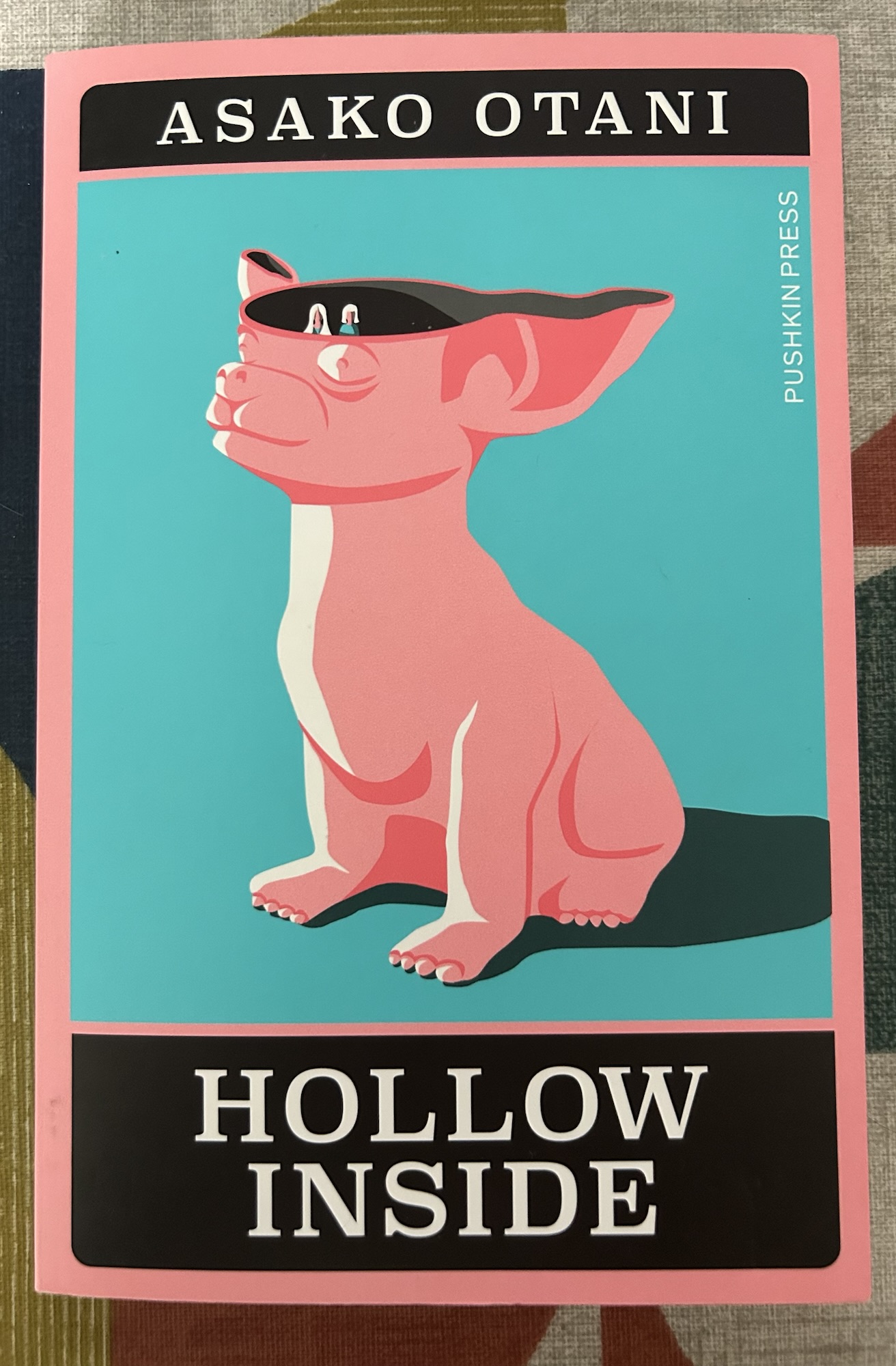
Hollow Inside is the debut novel of Asako Otani (2023, transl. Ginny Tapley Takemori 2026), published by the ever-wonderful Pushkin Press. At only 108 pages it is an accomplished portrayal of a woman trying to find peace within and without.

The narrator is Hirai, self-described as:

“A plain woman just shy of forty in a grey skirt. I had the feeling that by blurring my focus I could be completely assimilated into the jostle of strangers around me on the swaying train. I crossed my eyes slightly and concentrated on erasing my existence.”

We join her when she has been living for four months with Suganuma, slightly older at the age of forty-two. They met at work bonding over their love of the same boyband from their youth.

It is Suganuma who suggests they live together, fed up with the cramped flats and loneliness of living alone.

“As far as I was concerned, my decision to move in with Suganuma meant that I’d given up. A future in which I was married and had children was looking impossible.”

Suganuma is more sanguine, seemingly content in her life choices, and overjoyed at living together as Hirai wryly observes:

“It happened so fast I couldn’t help thinking that if she only handled her work in the same way she’d be able to live in a larger flat of her own.”

Suganuma works mainly from home, 3D printing pets for bereaved owners. The title comes from the figurines and from Hirai’s identification with them.

Hirai also has no sexual attraction to men and ambivalence towards being a mother, both of which she wishes were different. She feels she doesn’t fit, and limits social contact with colleagues and with her family.

“Every single one of my childhood and college friends now had their own family, and for years now the only contact I had with them was liking each other’s social media posts.”

In a very short space, Otani establishes a sympathetic but not sentimental character study of Hirai, showing her pain and confusion as she struggles to find a place for herself. By the end of the novel, she will made some significant decisions, but the author avoids trite conclusions or neat resolution.

To end, regular readers will know I never shy away from an entirely obvious choice:

Novella a Day in May 2026 – No.5

Following on from yesterday’s post on Gentleman Prefer Blondes, today I read the sequel But Gentlemen Marry Brunettes by Anita Loos (1927).

(Please note – some spoilers for Gentlemen Prefer Blondes!)

I’ll start with the negatives: I don’t think this quite has the sparkle of Gentlemen Prefer Blondes and it has less of the vignette style which suited Lorelei’s voice so well. I would hesitate to recommend it as a standalone novel, but as a short, diverting companion-piece to Blondes, there is still much to enjoy.

It opens with Lorelei expressing some quite modern views on marriage:

“I am full of ambitions and I think that practically every married girl ought to have a career if she is wealthy enough to have the home life carried on by the servants. Especially if a girl is married to a husband like Henry. Because Henry is quite a homebody and, if a girl was a homebody to, she would encounter him quite often.”

As Lorelei settles into married life and motherhood, Dorothy is still on hand with cynical commentary:

“And even Dorothy says that “a kid that looks like any rich father is as good as money in the bank.” I mean sometimes Dorothy becomes Philosophical, and says something that really makes a girl wonder how anyone who can make such a Philosophical remark can waste her time like Dorothy does.”

When Lorelei decides to follow a career as a writer, she heads to the Algonquin Round Table. I don’t know what Loos’ relationship was with this group, but she’s pretty biting about these literary wits:

“So then they all started to tell about a famous trip they took to Europe. And they had a marvelous time, because everywhere they went, they would sit in the hotel, and play cute games and tell reminisences about the Algonquin. And I think it is wonderful to have so many internal resources that you never have to bother to go outside of yourself to see anything.”

Lorelei decides to write about her friend Dorothy’s life, from travelling carnival, to school:

“Well, the Principal went down to Dorothy’s class and told all the girls that Dorothy had not had the advantage of a pure home, so they must form themselves into a little Committee, and help her not to stray. And after that, Dorothy really became the center of attraction, until one of the girls took a false step with a visiting football team and Dorothy lost her novelty.”

To joining the Ziegfeld Follies:

“Because hardly any broker seems to have enough Psychology to realize that the real ideal of his dreams is some small town village bell that he used to weave a romance around when he was age sixteen. But Mr. Ziegfield knows all about Psychology so that is the kind he picks out. And Dorothy says that about all Mr. Ziegfield does to “glorify” them, is to get them to comb the hay out of their hair, and give up starch in lingeray.”

For a story about Dorothy, there’s quite a lack of her biting observations, which was a shame. However, there are still some good lines:

“Gloria warned Dorothy that it would be fatal to marry a saxaphone player, without giving yourself an opertunity to get sick of him first.”

(Very reminiscent of Some Like It Hot!) And one that had a slightly Wodehouse turn of phrase:

“I mean, he could not take to drink, because he had already done that for years.”

So all in all, Loos’ wit means there is enough to enjoy if you enjoyed Blondes, and at novella-length Brunettes doesn’t outstay its welcome.

To end, we’ve had blondes and brunettes, now an extremely famous redhead, who like Dorothy was part of the Ziegfeld Follies:

Novella a Day in May 2026 – No.4

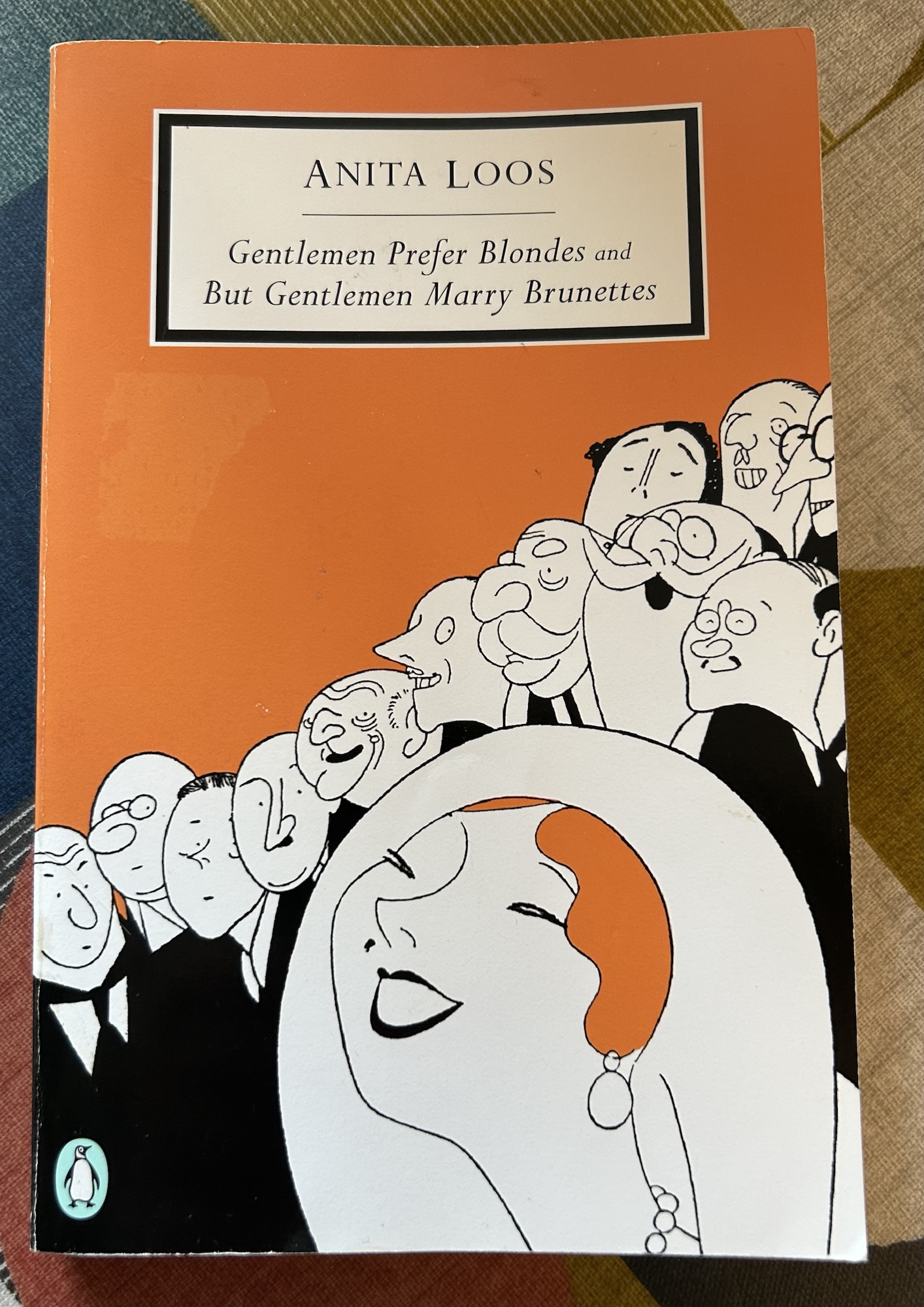
I knew of Anita Loos’ Gentlemen Prefer Blondes (1925) from the iconic 1952 filmed musical, but somehow I never got round to reading it. I found this Penguin edition of the novella plus the sequel with the original illustrations by Ralph Barton, and realised now was the time for me to spend with Lorelei Lee, gold-digging flapper.

Told in diary form, we follow Lorelei around New York and then Europe, as she dates a series of men, trying to get them to spend as much money on her as possible.

“So by the time Piggie pays for a few dozen orchids, the diamond tiara will really seem like quite a bargain. Because I always think that spending money is only just a habit and if you get a gentleman started on buying one dozen orchids at a time he really gets very good habits.”

Lorelei is also on a constant quest to improve her mind, aided by Mr Eisman who suggests she keep a diary, although it never quite works. Her attempt to host a literary salon ends thusly:

“So Sam asked if he could bring a gentleman who writes novels from England, so I said yes, so he brought him. And then we all got together and I called up Gloria and Dorothy and the gentleman brought their own liquor. So of course the place was a wreck this morning and Lulu and I worked like proverbial dogs to get it cleaned up, but Heaven knows how long it will take to get the chandelier fixed.”

She does, however, attract a novelist:

“As soon as he found out that I was literary. I mean he has called up every day and I went to tea twice with him. So he has sent me a whole complete set of books for my birthday by a gentleman called Mr. Conrad. They all seem to be about ocean travel although I have not had time to more than glance through them.”

Ultimately though, she asks her maid to read Lord Jim and then tell her what happens.

The diary forms a series of vignettes as Lorelei and her acerbic friend Dorothy ricochet from one party and one man to another, before they travel to Europe. Dorothy is quick-witted and incisive, but also much more romantic. While she falls in love on the ship to England, Lorelei bemoans the lack of spending opportunities.

“I mean I really hope I do not get any more large size imitations of a dog as I have three now and I do not see why the Captain does not ask Mr. Cartier to have a jewelry store on the ship as it is really not much fun to go shopping on a ship with gentlemen, and buy nothing but imitations of dogs.”

It is this humour and the guilessness of Lorelei’s tone that make this such an enjoyable read. She is relentlessly materialistic,  but there is nothing vicious about her.

Loos also has some serious points to make among the light comedy. Lorelei was sexually assaulted in the past, and shot her assailant. In court, she was subject to misogynistic destruction of character. As she observes:

“I mean a gentleman never pays for those things but a girl always pays.”

There is a sense that she feels that men are still getting the better deal, when all they lose is money.

“I mean I always seem to think that when a girl really enjoys being with a gentleman, it puts her to quite a disadvantage and no real good can come of it.”

The reader also questions who is using who. Lorelei wants money, but what do this succession of men really want – do any of them truly care for Lorelei and are they even taken in by her?

When she and Dorothy are in London, they are mistaken for rich and subsequently invited to a series of aristocratic homes because people want to flog them things:

“So we went to tea to a lady’s house called Lady Elmsworth and what she has to sell we Americans seems to be a picture of her father painted in oil paint who she said was a whistler. But I told her my own father was a whistler and used to whistle all of the time and I did not even have a picture of him but every time he used to go to Little Rock I asked him to go to the photographers but he did not go.”

This is a perfect example of how Loos captures Lorelei’s ignorance but she is not the butt of the joke. Not knowing who Whistler is stops her being ripped off. Similarly, I usually dislike non-standard spellings to demonstrate a character’s poor education as condescending, but with Lorelei it serves to remind the reader that she is young and naïve and not to judge her actions too harshly.

“The Eyefull Tower is devine and it is much more educational than the London Tower, because you cannot even see the London Tower if you happen to be two blocks away. But when a girl looks at the Eyefull Tower she really knows she is looking at something. And it would even be very difficult not to notice the Eyefull Tower.”

I mean, she’s not wrong…

The other way Loos achieves balance is through Dorothy’s reported comments, cutting through any suggestion of whimsy:

“Dorothy looked at me and looked at me and she really said she thought my brains were a miracle. I mean she said my brains reminded her of a radio because you listen to it for days and days and you get discouradged and just when you are getting ready to smash it, something comes out that is a masterpiece.”

Gentlemen Prefer Blondes is a clever, entertaining satire on early twentieth century materialism, relationships between the sexes, and the choices available to women. Lorelei is somehow charming, and Loos never loses sight of the comedy – a protracted farce with a diamond tiara is particularly entertaining!

I think I’ll try the sequel for tomorrow, but I understand its not quite as accomplished. Fingers crossed that it is still enjoyable…

“I mean champagne always makes me feel philosophical because it makes me realize that when a girl’s life is as full of fate as mine seems to be, there is nothing else to do about it.”

The tone of the film is frothier, but of course I’ll end with the trailer of Marilyn Monroe as Lorelei and Jane Russell as Dorothy:

Novella a Day in May 2026 – No.3

I hadn’t heard of Rock Crystal by Adalbert Stifter (1945, transl. Elizabeth Mayer, Marianne Moore 1945) before, despite the fact that according to the back cover, Thomas Mann called Stifter “one of the most extraordinary, the most enigmatic, the most secretly daring and the most strangely gripping narrators in world literature”.  I picked it up because NYRB Classics always prove interesting, and this was no exception.

It opens with beautiful descriptions of its alpine setting:

“Among the high mountains of our country there is a little village with a small but needle-fine church-spire. Conspicuous above the green of abundant fruit trees, this spire—because the slates are painted vermilion—can be seen far and wide against the faint blue of the mountains.”

Rock Crystal is a Christmas story, and so the weather is very different:

“On the mountain, in winter, the two pinnacles called ‘horns’ are snow white and on clear days stand out in the dusky atmosphere with blinding brilliance; all the alpine meadows at the base of the summits are white then, as well as their sloping shoulders; even the precipitous rock faces or walls as the people call them, are coated with a white velvet nap of hoar-frost and glazed with ice tissue.”

And so the scene is exquisitely set for a fable, almost a fairytale. Certainly Rock Crystal’s central premise is a fairytale trope: two young children Conrad and Sanna, live in a village high in the Alps and walk through the forest to visit their grandparents in the valley.

They visit, collect their presents, and their grandmother warns them not to dawdle as they head back home. On the way home, the clear bright day changes rapidly with snow fall.

“There had descended upon everything a pervading sense of peace. Not the sound of a bird, although a few birds usually flit about in the woods even in winter, and the children on their way to Millsdorf that morning had heard them twitter.”

I thought the detail of the birds was so clever, horribly foreboding even as the children enjoy the snow.

Gradually the snow obliterates everything, so they lose their markers and without realising it walk onto a glacier.

“It was entirely dry, and they had smooth ice to walk on. But the whole cavern was blue, bluer than anything on earth, a blue deeper and finer than the vault of heaven itself, blue as azure glass with a faint light inside. There were massive ribs overhead, and more delicate ones, with pendant icicles, point lace, and tassels, the way leading further still—they knew not how far but they did not go on.”

Stifter places the reader alongside the children as they find some shelter as night falls and struggle not to fall asleep, knowing the dangers of doing so. I really couldn’t determine how this would work out.  

And so the story, beautifully told, becomes unbearably tense. The complete disorientation is vividly conveyed, and these two small children against the immensity of the environment seem utterly lost.

In the introduction, WH Auden amusingly observes that Stifter takes “breathtaking risks of appalling banalities” yet somehow avoids them all. Who am I to disagree?

Rock Crystal quietly evokes the power of love of family, of community, and of place. A truly memorable read.

Novella a Day in May 2026 – No.2

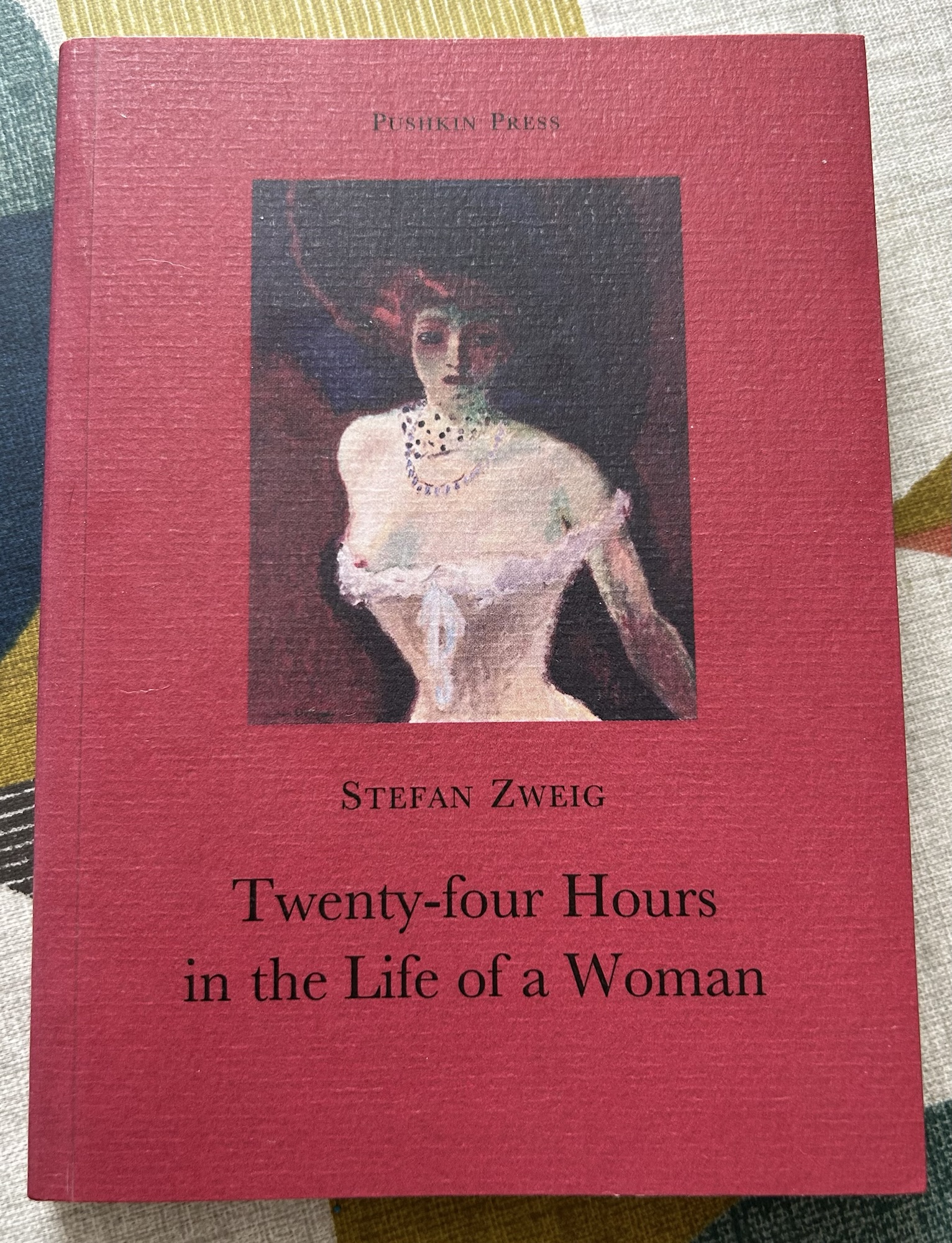
Stefan Zweig is a favourite writer of mine, I find him so insightful and compassionate. I also really like Pushkin Press Classics published in the smaller editions with the French flaps, so I was pleased to find just such a copy of his 1927 novella Twenty-four Hours in the Life of a Woman (transl. Anthea Bell 2003).

It opens at a guesthouse on the French Riviera, “ten years before the war” with the unnamed first-person narrator remembering the arrival of an attractive single man who quickly absconds with Henriette, the wife of a manufacturer. Her absence causes quite a stir:

“Silently, one by one, as if put to shame by so shattering an emotional outburst, we crept back to our rooms, while that stricken specimen of mankind shook and sobbed alone with himself in the dark as the building slowly laid itself to rest, whispering, muttering, murmuring and sighing.”

The narrator takes a more liberal view of Henriette’s conduct, which puts him at odds with the other guests. I enjoyed Zweig’s gentle humour here:

“Well, it’s of no importance here to go back in every detail over the stormy course of an argument conducted between soup and dessert: only professionals of the table d’hôte are  witty, and points made in the heat of a chance dispute at table are usually banal, since the speakers resort to them clumsily and in haste.”

The narrator’s assertion that “I’d rather understand others than condemn them.” attracts the attention of Mrs. C, who from the way she’s initially described sounded easily in her nineties, but as it turns out is sixty-seven! She deliberately builds an intimacy with the narrator in order to tell her story, and he becomes the silent interlocutor to her tale.

“It is intolerable to spend one’s whole life staring at a single point in it.”

She describes how, at the age of forty-two, grieving her husband and with her sons fully grown, she arrived at Monte Carlo.

“I came there out of tedium, out of the painful emptiness of the heart that wells up like nausea, and at least tries to nourish itself on small external stimulations.”

She is not a seasoned gambler, but her husband enjoyed the casinos so she visits, and there becomes consumed by the vision of a young man compulsively placing bets.

“His face spoke the same fantastically extravagant language of extremes as the hands”

[…]

“A fear of something dreadful, something I had felt invisibly enveloping the young man like a miasma from the first moment.”

What follows is a character study of Mrs C and a portrait of addiction which is entirely believable. With his characteristic humanity, discernment and understanding, Zweig considers the supressed tragedies of people’s lives and how we continue to live.

Twenty-four Hours in the Life of a Woman possibly felt more dramatic on initial publication – for twenty-first century readers nothing especially unpredictable takes place. But that is not to diminish it in any way. The evocation of strong feeling, and of trauma, is so sensitively realised that it remains a deeply affecting read.

This story has been filmed several times, including a made for television version with Ingrid Bergman. However, in its depiction of the glamour, seediness, seductions and betrayals of gambling, it also reminded me of a film I saw recently with lovely JacquiWIne, Bay of Angels:

Novella a Day in May 2026 – No.1

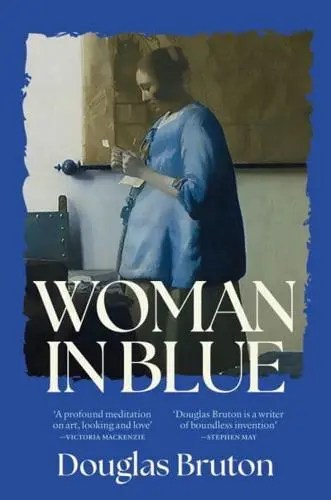
Douglas Bruton is a relatively recent discovery for me, thanks to the blogosphere. It was only last year that I read With or Without Angels, Hope Never Knew Horizon, and Blue Postcards. His writing weaves real lives with fiction and is strongly concerned with art, human relationships, and the quality of silence that exists in these. He is sparsely poetic, unpretentious and experimental without being alienating. I knew I would start NADIM this year with his 2025 novella, Woman in Blue published by Fairlight Books.

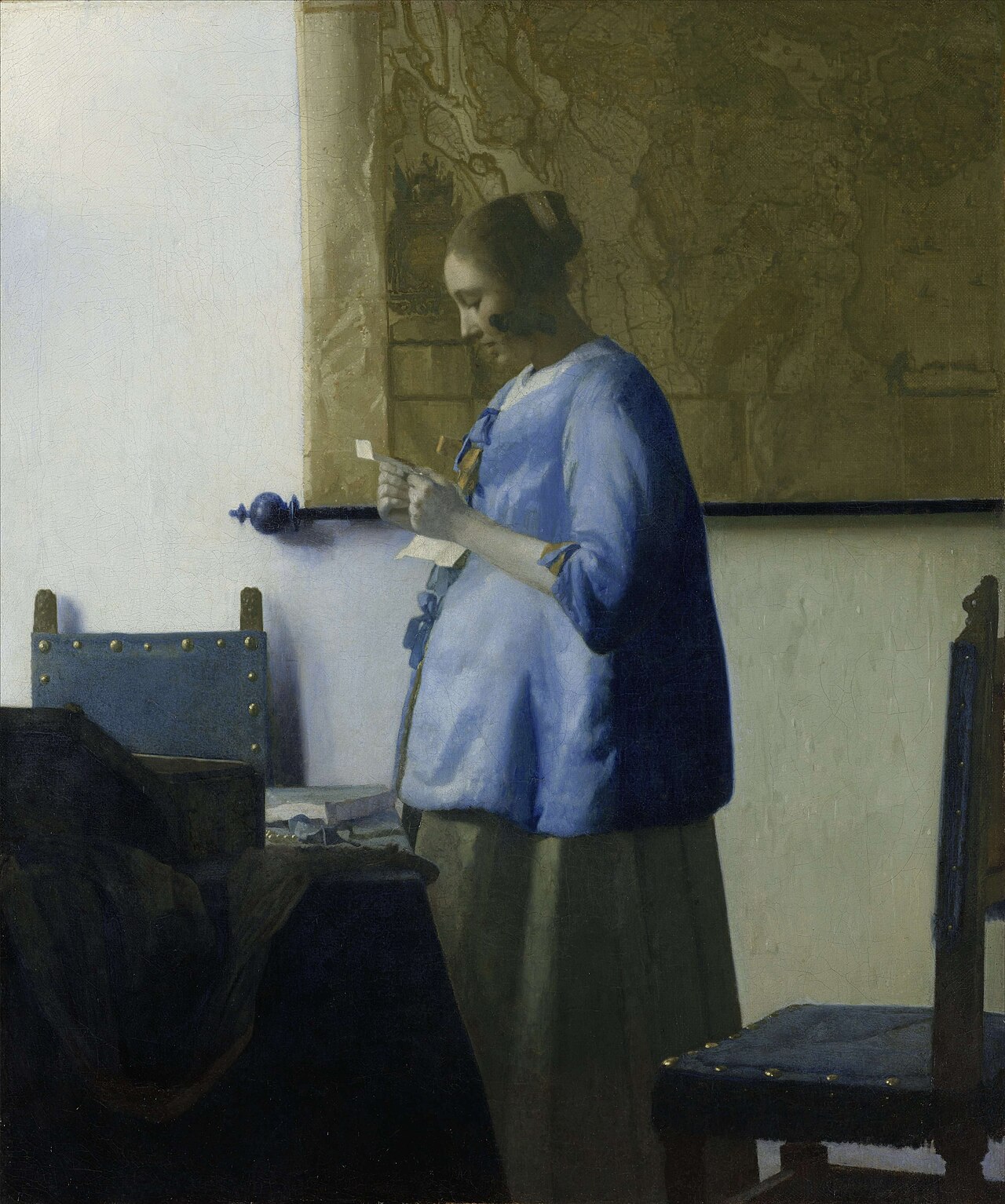
The novella takes its title from the seventeenth century portrait by Vermeer of the same name, sometimes also called Woman Reading a Letter, housed at the Rijksmuseum in Amsterdam. The unnamed male narrator is a writer living in the city with his wife. He visits the museum daily to gaze at the painting.

“There is almost no sound in the gallery, for I am the first. Then it is just the Woman in Blue and me, and I come upon her as though I have turned a corner in a house and seen her through an open door.”

He becomes obsessed with the painting, and yet somehow it isn’t pitiful or creepy. He is trying to understand, and the enigma of the painting means he is always fully aware of the limits of his understanding.

“Things belong in their own time and space and taking them out of that time changes everything.”

His chapters are interspersed with the chapters of Angelieke, the model for the painting. As she describes the process of being painted by Vermeer, she also exists metaphysically, able to comment on all the people who come to visit her portrait, including the other narrator.

If this sounds overly whimsical, it really isn’t. I think this is due to Bruton giving Angelieke the most grounded, earthy voice in the novel. She is from a poor family, she needs money. She sees Vermeer and knows how to attract him. She holds the most agency and the most knowledge. This means that while she is necessarily objectified by Vermeer in the act of painting, and by the narrator in the act of viewing, she is never diminished.

Bruton carefully balances plot driven aspects around the male narrator and his wife, and Angelieke and her family, with wider considerations about viewpoint, acts of art, acts of love.

I think ‘tender’ is always the word I arrive at when writing about Bruton, and Woman in Blue is no exception. But I think I could also mention his elegance and beauty. Both these qualities can be distancing, but in his writing they never are. He closely examines lives and evokes them with such care and compassion that we are always placed alongside.

“Watching the woman in blue reading her letter it is as though I stop existing and I’m just the pared-back pure act of looking.”

Reading Ireland Month: Two novellas by Clare O’Dea

I’m late joining Reading Ireland Month, hosted by Cathy at 746 Books which is such a shame as I really enjoy this event every year. But I’m hoping to squeeze a few reads in before the end of the month and so far I’ve manged two novellas by a new-to-me author.

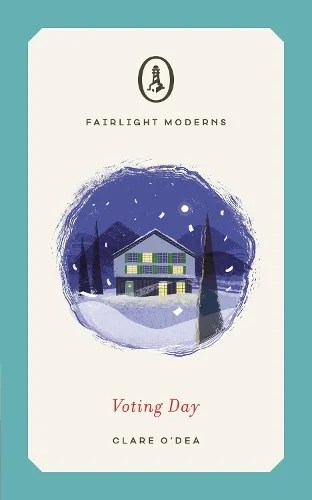
Voting Day by Clare O’Dea (2022), is published by indie Fairlight Books. The author is originally from Dublin but has been living in Switzerland for more than two decades. The novella explores the failure of women’s suffrage in the referendum of 1959; Swiss women didn’t get the vote until 1971.

We start the day of the referendum with Vreni, exhausted wife of a farmer, who believes:

“The system worked well and women didn’t know enough about politics.”

She is travelling to Bern, for surgery on her prolapsed womb. I really felt for her when she reflected:

“Rest was the word that jumped out at her when he explained the ins and outs. She was giddy about the prospect of rest. She would be looked after, two weeks in hospital and one week in the convalescent home.”

Meanwhile, her daughter Margrit is one of the first generation of young single women to work independently in the city, encountering misogynistic assumptions from male colleagues about what this means for her sexual availability:

“They did not profess their profound respect for you before beginning a campaign of casual touching that seemed to reflect special understanding between you […] nor were they handsome and cultured, these dangerous men. They hid their claws until it was too late.”

On her admission to hospital, Vreni catches the eye of the cleaner Esther, who is from the Yenish traveller community. She has suffered under the racist policies of social services:

“Somebody somewhere decided that our little home was too full and too free. They took three of us away and left the younger ones. They wanted to see children in straight lines with clean dresses and plaited hair.”

Esther subsequently struggled as a single mother:

“I had to solve my problem during Ruedi’s naps before the money ran out. When he fell asleep in my arms after a feed, I would gently place him in the playpen where he would be safe if he woke. And I would run, run from one end of the town to the other, looking for solutions.”

And we realise that Ruedi is Vreni’s foster child. The situation is so heart-rending, Vreni unintentionally exacerbating Esther and Ruedi’s pain. Pivotal is Beatrice, Esther’s boss and the only one of the four protagonists truly concerned with the referendum.

“She thought she had braced herself for this, but hope would always wriggle in, that treacherous friend.”

Voting Day effectively demonstrates the way women’s rights are circumscribed in society by both formal and informal systems of power. It does so without losing sight of its characters and conveys so much of their individual stories in an incredibly short space. I found it highly readable, whizzing through it to an end that was reassuring without being entirely unrealistic.

“Can you be content and heartbroken in the same bed on the same night? It seems you can.”

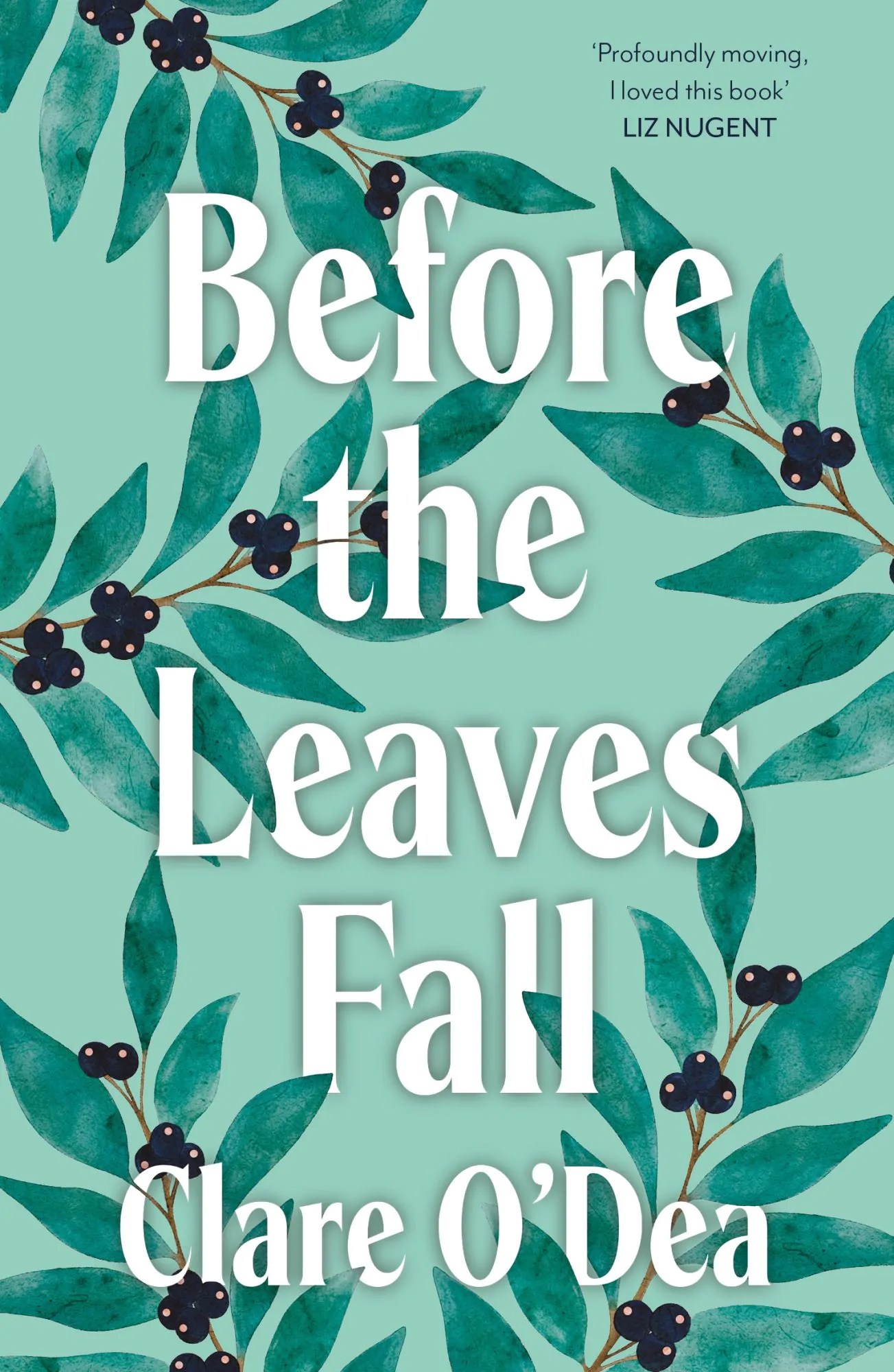
In Before the Leaves Fall (2025, also Fairlight Books) O’Dea revisits Ruedi and Margrit, now both in old age. There are some lovely echoes throughout, such as the opening scenes of rösti, Vreni’s homemade expertise contrasting with Ruedi’s ‘slimy’ shop-bought version.

Margrit is in a care home, spiky and determined to avoid the enforced social niceties at all costs:

“Better this than the nonsense Nadja was peddling, yoga and meditation. Margrit had been caught in a talk about mindfulness the other day because her legs were acting up, and she hadn’t been able to leave the dayroom quickly enough. You had to be vigilant in this place.”

Ruedi is retired, widowed and now working for Depart, an assisted dying organisation. This is the decision Margrit has taken, reluctant to live through another winter (hence the title) and struggling with her significantly reduced mobility and lack of independence. Ruedi is her assigned volunteer, to ensure she is comfortable with her decision. He mustn’t become emotionally involved.

“She was not only escaping. She was also reaching for something. Not freedom necessarily, not oblivion, but the feeling of putting herself first. She wanted to own herself once and for all, regardless of what the others – her husband, had children, the experts, even the people in this home – might think or want.”

But of course, once they realise who one another are, feelings are quick to grow. Margrit was a beacon of kindness and compassion in Ruedi’s difficult childhood.

“Margrit, a person who finally looked at him and saw something worth kindling. Margrit Sutter with the lovely wavy hair and smart clothes, the girl who smiled and played Ludo with him and told stories of Bern.”

He now becomes one of the few she allows beyond her tough carapace, as they remember the old days and learn who one another became. Both are disappointed in the relationships they have with their children and grandchildren. Both are grieving their spouses, particularly Ruedi who had a happy marriage.

“‘I grew old.’

‘It happens to the best of us.’ She smiled for the first time since he had met her.”

O’Dea is very good at writing children – sweet Ruedi in Voting Day and now his grandson Florian, perhaps less likeable but entirely believable.

Before the Leaves Fall follows the developing friendship between Margrit and Ruedi, as they both reflect on seemingly uneventful lives and how well these have been lived, as well as what living there is left to do. It’s deeply moving in its portrayal of how we hurt the ones we love and how insurmountable gaps in communication can seem.

As different relationships grow and develop through Before the Leaves Fall, they are evoked with compassion but without sentimentality.

Both novellas tackle Big Issues but without any didacticism. The interest is not in what should or shouldn’t be happening, but in what does happen and how this affects ordinary people.

“The bottle of grief was never empty. Always another sip to take, and another sip after that. You got used to the taste.”

To end, how I first learnt of women’s suffrage, dubbed into the language of the characters of these books:

“It’s not a brandy sour if it doesn’t make you bitter.” (Constantia Soteriou, Brandy Sour)

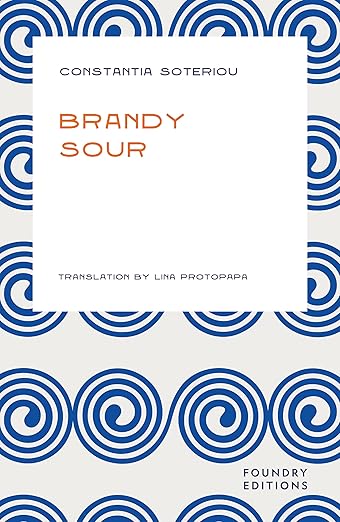
I first heard about Brandy Sour by Constantia Soteriou (2022, transl. Lina Protopara 2024) on Winston’s Dad’s blog – I thought quite recently but I can see it was August 2024! I get there eventually…

This is a contribution to the marvellous #ReadIndies event hosted by Kaggsy, and it also means Cyprus is the next stop on my Around the World in 80 Books reading challenge (3 stops to go!)

Brandy Sour published by Foundry Editions, an independent publisher focussed on Mediterranean authors who are new to Anglophone readers.  I love their styling, where their (French flap!) covers are “designed to capture the visual heritage of the Mediterranean”. This one is based on a third century BCE Hellenic vessel.

This short novella builds the stories of a cast of characters around two central constructs: their relationship to the Ledra Palace Hotel, and the drinks they have (with one colourful exception – I was relieved the chapter’s titular fluid was not imbibed!) The 22 vignettes work brilliantly, as Soteriou charts the history of Cyprus in the latter part of the twentieth century with the lightest of touches.

It begins with the bartender who takes the recipe for the titular drink to the new hotel, having first made it for King Farouk of Egypt:

“It’s a Cypriot drink, with ingredients from our island, that you serve in a tall glass after you sugar its rim, a drink full of cognac and lemonade that seems and tastes innocent but is not. It’s a drink worthy of kings who want to deceive people, a drink that isn’t what it seems to be, that looks like iced tea and that you can drink publicly without anyone knowing what it contains. It’s a drink full of secrets — that’s why it was made here.”

We meet the staff of the hotel and the guests, as it offers luxury and glamour through the 1950s and 1960s, from colonialism to independence. But as we know from ‘The Guerilla Fighter’ and his VSOP brandy straight from the bottle, discontent is brewing.

When the coup occurs ‘The Turk’ can no longer move freely past the hotel and the street vendor for his salted yogurt drink:

“The last time he attempts to walk past the big hotel, they stop him and tell him he needs to go back. He needs to find another way to work, another way to get his ayran; or maybe he needs to stop drinking it altogether—or find another place to buy it from. In a matter of days, everything will change.”

The upheaval of the war is evoked dramatically but not sensationally, through the individuals. The hotel is the site of a terrible battle, and the chapter ‘Water: The Mother’ demonstrates this with direct, effective simplicity.

The hotel ends up in the UN buffer zone, housing officials and falling to ruin.

But Soteriou also weaves in the flora of Cyprus, showing the natural beauty of the island. There is the lavender tea beloved of the architect of the hotel; jasmine tea drunk by ‘The Poet’ guest; elderflower used by ‘The Fiancee’ who bathes her eyes after her betrothed – and dreams of a wedding in the hotel – are snatched during the coup. The two mayors of the split city of Nicosia try and find common ground over spearmint tea, an old lady reminisces about Seville orange liqueur which she made and sold as a young woman.

My favourite of these was the melancholy ‘Doorman’ and his rosebud tea.

“You can have your rose tea hot or iced, you can have it in the winter and in the summer too, and it’s also good for your stomach, it helps digest the indigestible. It’s a little sweet and a little spicy – it reminds you of the village and of your mother.”

He sneaks the hundred petal Cypriot damask rose into the English rose garden in the grounds and plants it there. Later the garden is razed to build a pool, bar and tennis courts. He manages to save a few roses, but the infusion is bitter.

In just 104 pages I thought Brandy Sour was a brilliant achievement. Ambitious but never weighed down by its ambition; exploring seismic events without losing sight of the human cost; both sad and funny and always intensely readable. It consistently demonstrates the importance of small rituals shared by ordinary people as moments of resistance and resilience.  

And now my TBR will spiral as I explore Foundry Editions further… 😀