Today I’m taking part in a blog tour for Corylus Books, a lovely indie publisher with a focus on translated crime fiction. I really enjoyed Black Storms, the first in Teresa Solana’s stories featuring Norma Forester of the Barcelona police, when I read it back in 2024, so I jumped at the chance to catch up with her – and her wonderful family! – again.
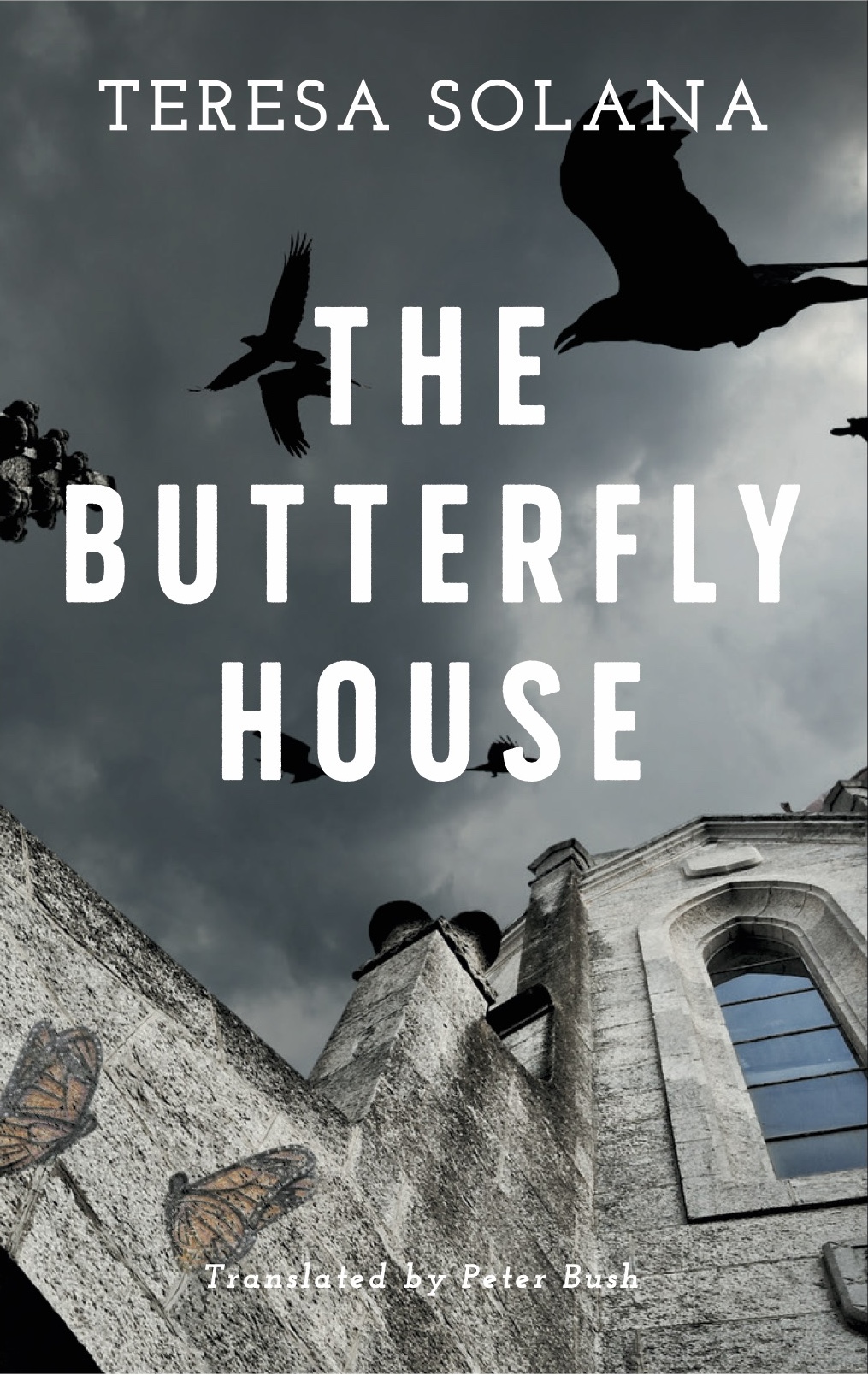
Here is the summary from Corylus Books:
“No money, no future – a motive for murder?
The economic crisis has hit Barcelona hard, and a personal crisis might be about to hit Deputy Inspector Norma Forrester’s family.
When a body is found in the grounds of a former grand villa, now a student squat, Norma finds the case uncomfortably close to home. The downturn has turned the city into a breeding ground for crime, or is the motive more personal? Unable to stay away, although this case may represent a conflict of interest, Norma can’t even count on the support of her forensic pathologist husband Octavi, who has more than enough to cope with following a major incident at the city’s Prat Airport. When a face from his past appears, he and Norma are faced with choices and conflicts – just as her focus should be on finding the killer.
With her trademark dark humour, Teresa Solana paints the portrait of a contradictory vibrant Barcelona, where nothing is ever black and white.”
At just over 200 pages The Butterfly House gets on with the story, doesn’t waste a word, isn’t overly convoluted and still manages believable characterisation. I really enjoyed it.
Norma’s daughter Violeta is still living in a squat, when her new maybe-boyfriend finds a woman’s body in the grounds. She calls her mother, despite the other squatters concerns. I found the particular history of the distrust of the Mossos d’Esquadra interesting, stemming from the time of Franco:
“quite the opposite of the caricature of the inept … force in Franco’s time. Deputy Inspector Carrasco was definitely an exception, but even with his coarse manners, he didn’t harbour the slightest sympathy for the dictatorship. Educated by the clergy, he oozed a deep hatred for anything smelling of sacristies, and, given the choice, he preferred the company of petty criminals”
Carrasco is supposed to lead the investigation due to Norma’s personal involvement, and you can practically smell him off the page:
“The moment she opened the car door, Norma had the dubious honour of verifying the urban myth according to which Deputy Inspector Carrasco’s vehicle was a mobile laboratory of biological warfare. Inside the policeman’s car were all kinds of organic material in various stages of decomposition, from crumbs and bags of mouldy food to mutant insects, ash, fag-ends, tins and empty bottles, dirty, screwed-up paper, filthy clothes, sand, dust and an alarming amount of unclassifiable objects”
But of course Norma isn’t staying away, and she finds present day socio-political forces exerting their power too. Not even the area around Sagrada Família with all its tourist money can escape:
“Before going into the premises, they took a look around the area and saw that many businesses had closed, with signs advertising that their premises were up for rent or leasing. On that side of the street alone they also counted six balconies with boards advertising flats for sale or rent.
‘Soon or later, this is all going down the pan,’ said Norma, shaking her head.
‘I thought it already had. Do you think things can get any worse?’
‘People’s patience has its limits. Never forget that despair can be a powerful lever.’”
Yet at the same time Norma and her team wonder how much money can be a motivator when everyone is in the same corrupt, broken boat:
“‘But it doesn’t really make much sense. The whole country is in debt and everybody owes someone money,’ said Norma. ‘People aren’t killing to avoid paying debts on money that was almost certainly dirty.’”
As Norma investigates, the reader is aware of more going on with her family than she is. I was concerned that my favourite characters from the first book weren’t going to make an appearance, but her mother Mimí arrives in one of the novel’s funniest scenes, with the incomparable Aunt Margarida not far behind:
“For a moment Norma imagined the expression on her colleague’s face if she’d told him her own private hacker was a nun in an enclosed order who lived in Pedralbes, and who, coincidentally, was a relative of hers.”
The story balances humour alongside the seriousness of the investigation perfectly. The pace is rapid but not overwhelming and I whizzed through The Butterfly House. As previously, I loved the characterisation of Norma’s family, and her colleagues were well-realised too. I’m so grateful to Corylus Books for translating this entertaining, astute series.
“‘For the moment the husband hasn’t asked for a lawyer. That’s a good sign,’ remarked Norma as they left the interview room.
‘Maybe, or perhaps he just doesn’t watch much telly,’ hissed the deputy inspector.”
Here are the stops from the rest of the tour, so do check out how other bloggers got on with The Butterfly House:



This was a super follow up to the first. I love Norma’s family – they make it a different type of crime novel.
LikeLiked by 1 person
Absolutely! They’re so distinctive and engaging.
LikeLike
I’m not a crime fan but a thumbs up from both you and Annabel suggests I should add this one to my list.
LikeLiked by 1 person
There’s a lot to enjoy here that isn’t crime related – the history of Spain and the current political/economic situation is really interesting, and her family are a delight! I hope you enjoy it if you try it Susan.
LikeLiked by 1 person
I love the sound of this, having a female DI and her family for a change, and also the way a country’s politics is always there in the atmosphere
LikeLiked by 1 person
It’s really well done Jane, it all blends together!
LikeLiked by 1 person
Carrasco reminds me a bit of Jackson Lamb from Slow Horses. I’m not a huge fan of crime fiction, but I do make exceptions when the stories weave in larger issues and have memorable characters. This brings me back to Slow Horses…
LikeLiked by 1 person
Lamb is probably a bit more likable, but there are definitely parallels!
LikeLiked by 1 person
Oh, my! Lamb more likeable?
LikeLiked by 1 person
Haha! But Lamb will seek justice for his Joes, whereas Carrasco I’m not so sure!
LikeLiked by 1 person
So true! Excellent point.
LikeLiked by 1 person
😁
LikeLike
I’ve seen this one getting a lot of love, Madame B, and it does sound as it if it lives up to the first!
LikeLiked by 1 person
Yes, it’s a good sequel for sure!
LikeLike
Sounds good – I’ll stick it on my wishlist! Unless… would it be better to read the first one first?
LikeLiked by 2 people
They can definitely be read individually, but I think it would be better to start with the first one ideally!
LikeLiked by 1 person
Pingback: The Butterfly House by Teresa Solana – Nordic Lighthouse